
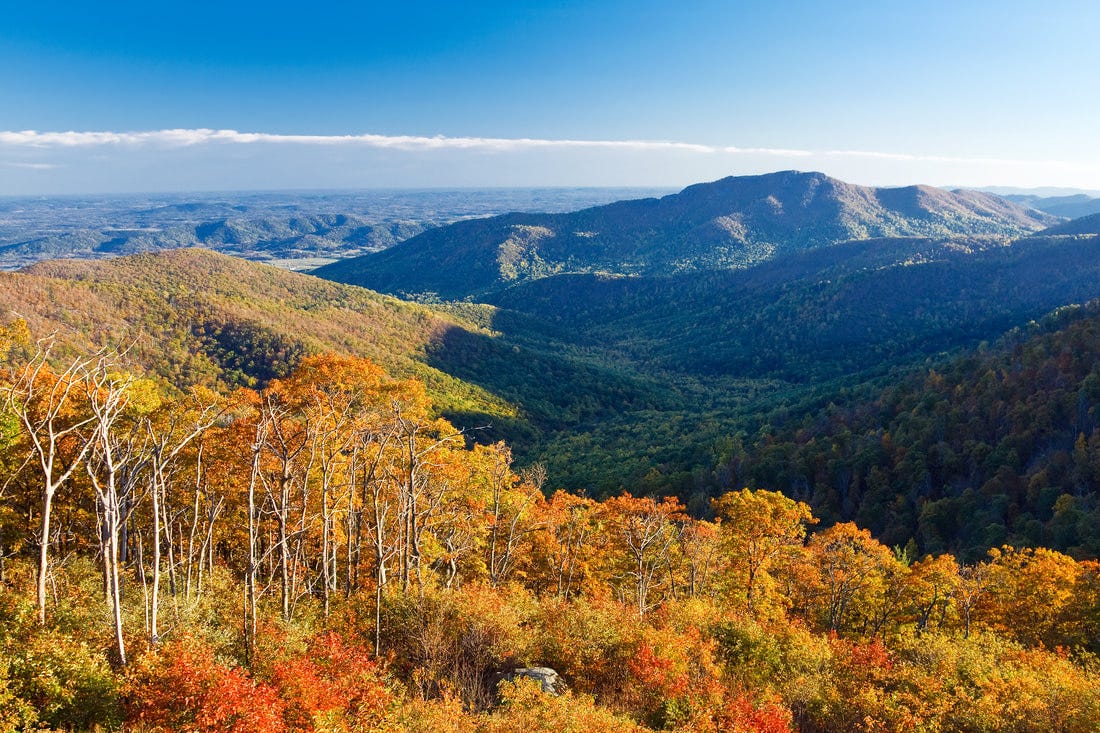
I love the mountains. I have for as long as I can remember. My native Illinois is flatter than Kansas and about as far from anything even resembling a mountain as one can get on the continent.
The Midwest was good and wholesome, but boyhood camping trips to the Appalachians and Rockies left indelible marks. The mountains are just so wild, unpredictable; so full of adventure and wonder.
Few sights are as awe-inspiring as a mountain vista. Gazing out at the vastness of creation, one cannot avoid the corresponding awareness of one’s comparative insignificance. Seeing the incomparable beauty of creation, one cannot but marvel at what sort of Creator could make it so.
It’s a short but important step from there to marveling that the Creator of such majesty and beauty would make creatures like us–miniscule as we may be–who are capable of appreciating the beauty of what he has wrought. The beauty of creation is made to be seen, and it says a lot about the kinds of creatures we are that we were made to behold it.
The Psalmist sums it up perfectly:
When I see your heavens, the work of your fingers,
the moon and stars that you set in place—
What is man that you are mindful of him,
and a son of man that you care for him?
Yet you have made him little less than a god,
crowned him with glory and honor.
From Olympus to Ararat, Sinai to Athos, mountains have always been considered privileged places for encountering the divine. What more natural way to approach heaven than to climb as close to the heavens as possible? “Come, let us go up to the mountain of the Lord!”
It is one thing to observe the power and wonder of creation. It might even seem trite. But it is another thing to notice how difficult it sometimes is, in the modern world, for us to experience the wonder that creation instills.
For most of human history, almost everyone knew what it was like, for example, to see brilliant stars spread across the sky at night. But what was the last time you saw the Milky Way with your own eyes? Air planes allow us to cross continents and oceans in a matter of hours, but how many of us know the loneliness of being at sea or have crossed a mountain range on foot?
Or, for that matter, how many of us see oceans or mountain ranges as nearly nearly-insurmountable limits to what we can know and experience?
Our technology allows us to do wonderful things, but it also has a way of taming the natural world, and in so doing, taming our imaginations.
St. Carlo Acutis, canonized on Sunday, once said, “Conversion is nothing more than shifting your gaze from below to above; a simple movement of the eyes is enough.” No doubt he was speaking metaphorically.
But the observation is more than a metaphor. Our experience of natural wonder alters our perspective; it changes the way we see the world and — sometimes subtly, sometimes dramatically — it alters the way we see ourselves.