
The U.S. Conference of Catholic Bishops announced earlier this month the creation of a Task Force on Preserving Human Dignity in the Age of Artificial Intelligence, in response to Pope Leo XIV’s repeated calls for a responsible approach to the rapidly developing field of AI.
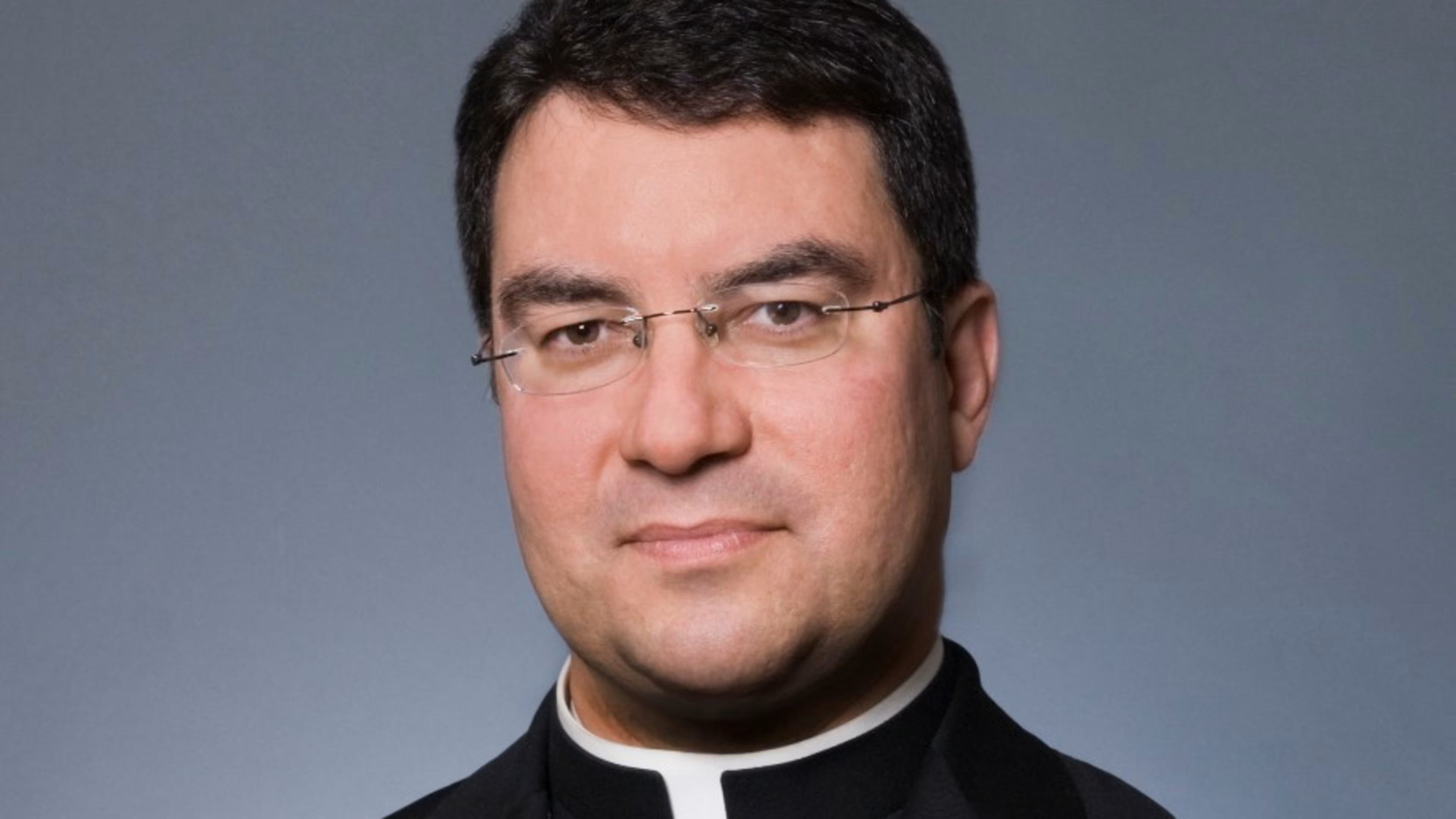
Bishop Oscar Cantu of San Jose, whose diocese includes the Silicon Valley region, was named head of the new task force.
Bishop Cantu spoke with The Pillar about the new task force, its goals, and how he approaches the question of boundaries for AI use within the Church.
This interview has been edited for length and clarity.
Your Excellency, what do you see as the goals for the bishops’ new task force on AI?
There are three areas the task force will be working in. One is to maintain dialogue with the AI labs. We’ve already started that, and we want to maintain those relationships to get to know each other on a personal level, but also to listen to the developers of the machines, to listen to what their hopes are with the technology, but also their concerns and to take those seriously.
And then also to share some of the principles of the wisdom of the social teachings of the Church, the moral teachings of the Church, the dignity of the human person, the common good. I think those are things that any person of goodwill will agree upon. They have been asking for some guidance in that regard. They’re good at what they do, but not always all that great in the humanities. And so they appreciate the treasure of centuries of wisdom that the Church brings to the table.
Secondly will be advocacy — both ad extra and ad intra, to use Church terms. Certainly with state houses and in Washington for regulation and possibly legislation that protects human dignity.
There’s some low hanging fruit: There are many, many legislators that are already working on bills, and we want to lend our support to the principles of keeping children safe, protection of families, protection of privacy, concern about deep fakes and how that can be damaging to people’s reputation, safeguarding financial and banking industries. There are some things that I think we can all agree upon that need some regulation. So we want to lend our voice to that with advocacy.
And the third leg of our work would be formation. Bringing our bishops across the United States up to speed on what the technology is, how it works, what its benefits are, how to use it responsibly, but also what are some of the dangers and some of the things to be aware of. And then to provide that kind of formation for dioceses as well. So those are the basic three legs that we’re looking at.
Are you also going to be looking at internal policies within the Church?
We may get to a point where the bishops decide to provide some national policy. We’re not there yet. Usually we start with some best practices and some guidelines. That’s what we’ve done here in my diocese so far: as we learn about the issues of the technology, we put out some best practices and guidance. As the technology develops, we may learn new things, so we don’t want to create hard and fast rules at the moment. But basic things, like no confidential information should go into an AI model. So that means for schools, no student records; for parishes, no sacramental records, personnel files, donor information, certainly not using deep fakes or voice cloning for clergy or anyone else for that matter. And also admitting when we use AI to develop a flyer or a document -- that kind of transparency. So those are some of the things that we’ve begun to put forward, and I think people have appreciated that kind of guidance in our parishes and schools.
Similar to what you’re describing, the policies and guidelines in many dioceses today tend to focus on transparency and data confidentiality. Do you think that’s sufficient, or is that just a starting point?
I don’t know yet. I don’t have a crystal ball to see into the future, or to see what questions are going to develop in a month’s time or a year’s time. The important thing is that we stay vigilant, and I think we can all agree that this technology and what we’re learning about it is developing week-to-week. So I don’t want to put forward something that’s definitive where it may not be definitive.
Certainly. But without knowing what AI is going to be capable of, or how it’s going to be used, in the future, do you think the guidelines you have in place are sufficient for now? You’re not in the process of creating more?
We will constantly monitor them and adjust as needed.
You mentioned that you’re hoping to start with best practices and guidelines rather than policies. Right now, there is a patchwork of different practices in dioceses across the country. It seems like this creates an incoherent message on what is acceptable use of AI. Do you think there will eventually be a need for something national, to have more consistency?
Probably so, but we want to take one step at a time. I think the first step will be lifting up best practices so that we can learn together. Each bishop is the head of his own diocese. The authority of the bishops’ conference does not supersede the authority of the bishop in his own diocese. So we will first lift up best practices and then possibly move to guidelines, and if it makes sense, some policy with the authority of the bishops’ conference.
Do you think there are some human activities that are intrinsically tied to our humanity that we shouldn’t use AI for, even if we can save time and money by doing so?
Again, I don’t have a crystal ball, but we operate with principles. What safeguards human dignity and the fact that God created us in his image and likeness?
Chapter two of Genesis presents God creating the world in a very creative way. He’s sort of presented as this horticultural expert in creating the garden, and then molding humanity out of the clay of the earth, and then providing a suitable partner, but also brings the animals in front of Adam. There’s sort of this playfulness, God as this divine artist who is creating the world.
And God invites us to use our human creativity as well, and that becomes part of our participation in the act of creation. So with regard to, especially, sacred artwork, it’s not just the finished product, it’s the process as well, that it truly be something human.
When we present the gifts at the altar in the Eucharist, we say this is ‘the fruit of the earth and the work of human hands.’ And so it’s not just the bread and the wine that is the work of human hands, but also anything that we offer to God. So certainly in sacred settings, it should be the work of human hands.
So you would say that we shouldn’t use AI to create sacred art…
I didn’t quite say that. I certainly didn’t say we can’t use it for certain aspects of it, but at the end of the day, it should be the work of the human mind, the creativity and the human heart.
What aspects of it would be an acceptable use for the creation of sacred art?
That’s something we’ll have to determine in the future. I’m not going to pretend to know all of those intricacies.
That’s part of the dialogue and part of the wisdom that will emerge from the bishops themselves with their own advisors and dioceses. And we’ll likely talk about it in the task force in due time.
How about in liturgy? Would it be okay, in your view, for an AI to create hymns used at Mass or prayers of the faithful? Or to write homilies? Is there a clear line in your mind on where there’s a hard ‘no’?
We can’t delegate worship to a machine. That is the principle we need to work with. That is the principle that pastors need to keep in mind, liturgists need to keep in mind, bishops will keep in mind. And so no, I don’t have specific how that plays out in specific decision-making. Perhaps eventually there will be some hard lines, but that is the principle with which we will work.
What about prayer apps and devotionals? Is it ok for an AI to be writing prayers?
I think we could employ AI to brainstorm, to give us ideas, to organize our thoughts, to help develop. But at the end of the day, it has to be something human that puts together the pieces. And then eventually it has to be the human heart and the human mind, the human soul that prays. We can’t simply push a button and say, ‘This app is going to pray for me.’
Do you think there need to be boundaries in Catholic schools? Right now, some dioceses allow teachers to use AI for grading or creating booklets, and students can use AI to help them write or do their homework. Do you think there need to be clear boundaries in that realm?
I think using the synodal process, we need to listen to educators. I taught many years ago, but I haven’t been in the classroom for a couple of decades. So I think it’s important to listen to educators about how AI can be used responsibly, and use the synodal process before we begin to dictate.
In Magnifica humanitas, Pope Leo says the ultimate question about AI is, does it “make human life on earth more human in every aspect of that life.” How would you answer that question?
Well, it can. It depends on how we use it. We can use it to do research. We can use it to prompt our own creativity. We can’t use it to replace human creativity or human encounters. So much is going to depend on how we use this tool.
When Pope Leo talks about AI a tool, he says we cannot consider it to be just a tool like any other. He says it is not morally neutral, because it reflects the biases of its developers. And he says that it has the potential to weaken our personal creativity and judgment. How do we avoid those pitfalls as we think about what constitutes acceptable AI use?
Prudential judgment is critical. Prudence is one of the four cardinal virtues. As a matter of fact, it’s been described as the lead of the four cardinal virtues. So we can’t simply fall on rules to default to a virtue. Some of those virtues need to be developed personally and modeled and led. Not to say that policy is not wanted or doesn’t function in our Church or society. It is important, but we have to remember that we can’t simply look at a list of rules. That is not the best practice of moral virtue.
We need to develop prudential judgment in many of these cases, and it’ll be up to bishops in their own dioceses if they want to establish policies in this regard. That’s the proper authority in the Church.
Given the historic beatification last week, do you think that Fulton Sheen should be the patron saint of AI?
I’ll leave that up to the Holy Father and to the Vatican. I don’t want to preempt anybody.