What happened in Nigeria’s deadly Holy Week?
Christians in Nigeria once again celebrated Holy Week and Easter against the backdrop of violence.
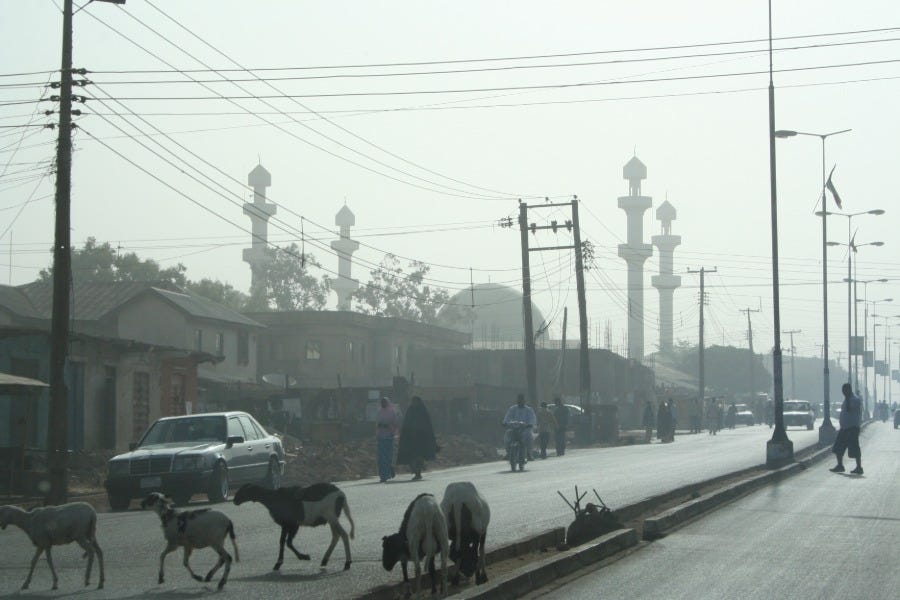
That is sadly unsurprising given the general lack of security in the West African country and the relentless attacks on the Christian community in recent years.
But while it’s clear that much blood was shed in the past few days, it is surprisingly difficult to determine what exactly happened.
Trainee news reporters are taught to address “the 5 Ws” in their stories: who, what, when, where, and why.
Reports over the past few days are generally clear about where the incidents took place: mainly in Nigeria’s Middle Belt, a flashpoint between the country’s mainly Christian south and predominantly Muslim north.
The victims’ identities are also largely comprehensible. They are identified as either Christian worshipers or residents of mainly Christian areas, though whether they are Catholics or members of other Christian communities is often not specified.
The perpetrators’ identities are less clear. Many reports, especially in the international media, refer generically to “gunmen.” Local reports often point specifically to militants from the predominantly Muslim Fulani ethnic group. The militants are also known as Fulani herdsmen, a traditionally nomadic people who migrate in search of grazing land, leading to clashes with local farmers, who are in many cases Christian. Global media coverage tends to frame the violence as a land dispute, while local sources note the ethno-religious dimension.
What, precisely, took place in each incident is hard to ascertain, with reports differing on core facts such as the number of people killed. This is likely because most attacks take place in areas with limited media coverage. News tends to filter out from social media to Nigerian news media, and from there to international NGOs and global media.
But the “5 Ws” are nevertheless important to determine, because anti-Christian incidents in Nigeria are being monitored in the U.S., following President Donald Trump’s threat to cut aid if the government fails to curb the violence.
So, what do we know about this year’s Holy Week and Easter attacks? And what remains unclear?
Palm Sunday: Jos
What we know: On March 29, gunmen opened fire on people gathered on the streets in Jos, the capital of Plateau state, in north-central Nigeria. The attack took place as residents of the city’s predominantly Christian Angwan Rukuba area were returning from Palm Sunday services.
What’s unclear: Some international media quoted police as saying that at least 12 people were killed in the attack, while others said the police had confirmed 26 dead. The advocacy group Open Doors reported that 27 people died, 14 at the scene and 13 in the hospital.
The New York Times did not identify the assailants, but noted a regional history of clashes “between farmers, who are mostly Christian, and herders, who are mostly Muslim.” But Rep. Riley Moore, R-W.Va., described the perpetrators as “radical Islamic terrorists.”
Monday of Holy Week: Kautikari
What we know: On the evening of March 30, suspected members of the Islamic State West Africa Province attacked a predominantly Christian community in Kautikari, in the Chibok Local Government Area, Borno state, northeastern Nigeria.
What’s unclear: Nigeria’s Vanguard newspaper reported nine dead, while truthnigeria.com said 12 were killed.
Holy Thursday and Good Friday: Nasarawa
What we know: On April 2-3, at least 11 people were killed and 52 houses were set on fire in Nasarawa state, north-central Nigeria.
What’s unclear: Nigeria’s mainstream media said the deaths resulted from a clash between two unidentified communal groups.
The website truthnigeria.com disputed this framing, saying that residents had told it that the attacks were “coordinated assaults carried out by Fulani ethnic militia” and the targets were the predominantly Christian communities of Gidan-Ogiri, Akyewa-Baka, and Udege-Kasa.
Holy Saturday: Mbalom
What we know: Armed men killed at least 17 people in an attack on the Mbalom community in the Gwer West area of Benue state, in north-central Nigeria.
What’s unclear: The AP described the attack “as part of a long-running cycle of violence in north-central Nigeria, where disputes over land and grazing between mostly Muslim Fulani herders and largely Christian farming communities frequently escalate into deadly clashes.”
International Christian Concern, an NGO in Washington, D.C., explicitly identified the victims as Christians.
Easter Sunday: Ariko
What we know: On April 5, gunmen opened fire on people attending Easter services in Ariko, a village in Kaduna state, in north-central Nigeria. The assailants targeted an Evangelical church, followed by a Catholic church dedicated to St. Augustine.
What’s unclear: The AP said five people were killed in the attack, while truthnigeria.com put the death toll at 12.
The AP said the gunmen’s identity was unknown, but truthnigeria.com described them as Fulani ethnic militia.
The Nigerian army claimed it had rescued 31 civilians taken hostage after the attack. But locals said kidnapped villagers were still unaccounted for.
Easter Sunday: Maro Kasuwa
What we know: On April 5, gunmen attacked Maro Kasuwa, a community in the Kajuru Local Government Area of Kaduna state.
What’s unclear: International Christian Concern said at least three Christians were killed in the early morning attack and others were reportedly kidnapped.
International media have so far not reported on the incident, perhaps because it was overshadowed by the Ariko attack elsewhere in Kaduna state.
The events of the past week will likely fuel criticism that Nigeria’s central government is failing to address attacks on Christians, despite declaring a “nationwide security emergency” in November.
Government supporters will probably argue that it’s too soon to judge efforts to bolster security forces in a sprawling country of around 242 million people.
Policy makers in Washington, meanwhile, may no longer be watching Nigeria quite as closely following the outbreak of the Iran war and an upsurge in attacks across the Middle East.


This is such a helpful (and sad) overview: thank you, and prayers for Nigeria.