
The generation of Americans born between 1946 and 1964 –the Baby Boomers– is slowly on its way out of the upper echelons of American society. Once the largest generation America had ever seen, the Boomers’ way of seeing the world, their memories of how things once were (for better and for worse), their hopes for how things might be, their baseline for what is “normal” when it comes to culture, society, politics, and religion: all of these are coming to an end, too.
For most of their lives, the Boomers have known nothing but the liberal-democratic order which took shape in the years after the Second World War and which gave shape to our social, cultural, economic, and political norms for well over half a century. The Boomers grew up with the Civil Rights movement and the sexual revolution. They witnessed the arrival of television and the golden age of rock and roll. They saw the arrival of the Great Society and they saw us land on the moon. They lived through the Summer of Love and the Vietnam War.
Today, many of the institutions that marked that post-War order appear to be coming apart at the seams. Uncertainty about whether it can be restored, or about what will replace it, explains a great deal of the anxiety that marks so much of our social and political life these days.
The point here is neither to eulogize the Boomers nor to take impious potshots at them. The point is simply that this has been the Baby Boomers world for a great long while and that’s not the case anymore. It’s certainly not going to be the case a decade from now. Our politics will be very different. I don’t say better or worse, but different.
And so will be the Church.
There are 196 archdioceses, dioceses, and eparchies in the Catholic Church in the United States and, by my count, 150 of those are headed by a bishop born between the years 1946 and 1964. That is, by Boomers. With five sees currently vacant, 79% of the ordinaries in the United States are Boomers.
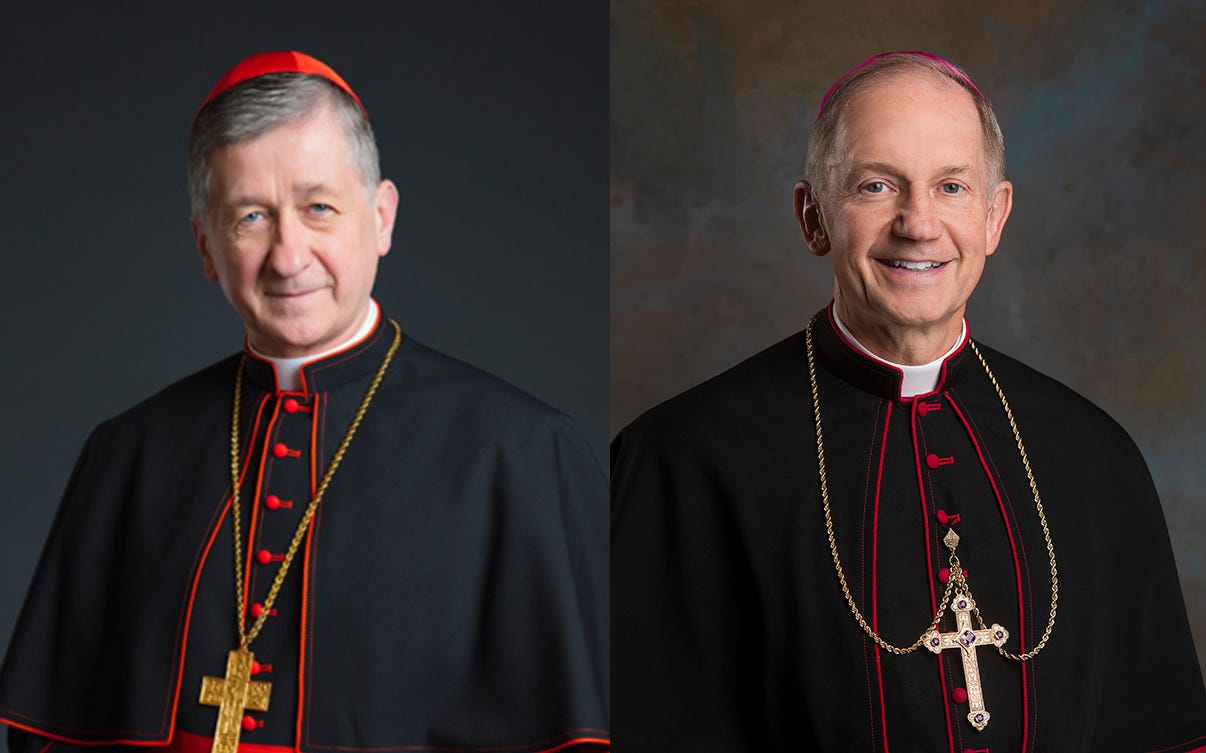
It should go without saying that these men vary widely in their ecclesial approaches. Cardinal Blase Cupich of Chicago and Bishop Thomas Paprocki of Springfield, to pluck two episcopal names from the headlines, are both Boomers. The point is, we can’t tell all that much about a bishop based merely on what year he was born in.
But we can tell something about his contemporaries. And we can tell something about the way his contemporaries view themselves, the Church, and the world.
We can, for example, tell something about American priests ordained in a given year view their own politics or theology.