Pope Leo XIV issued on Saturday a reform to the Code of Canons for Eastern Churches, the common legal framework for the 23 Eastern Catholic Churches sui iuris. The new law creates a mechanism for the synods of the Eastern Churches to depose from office their patriarchs if they cause “irreparable damage” to the communion of Church.
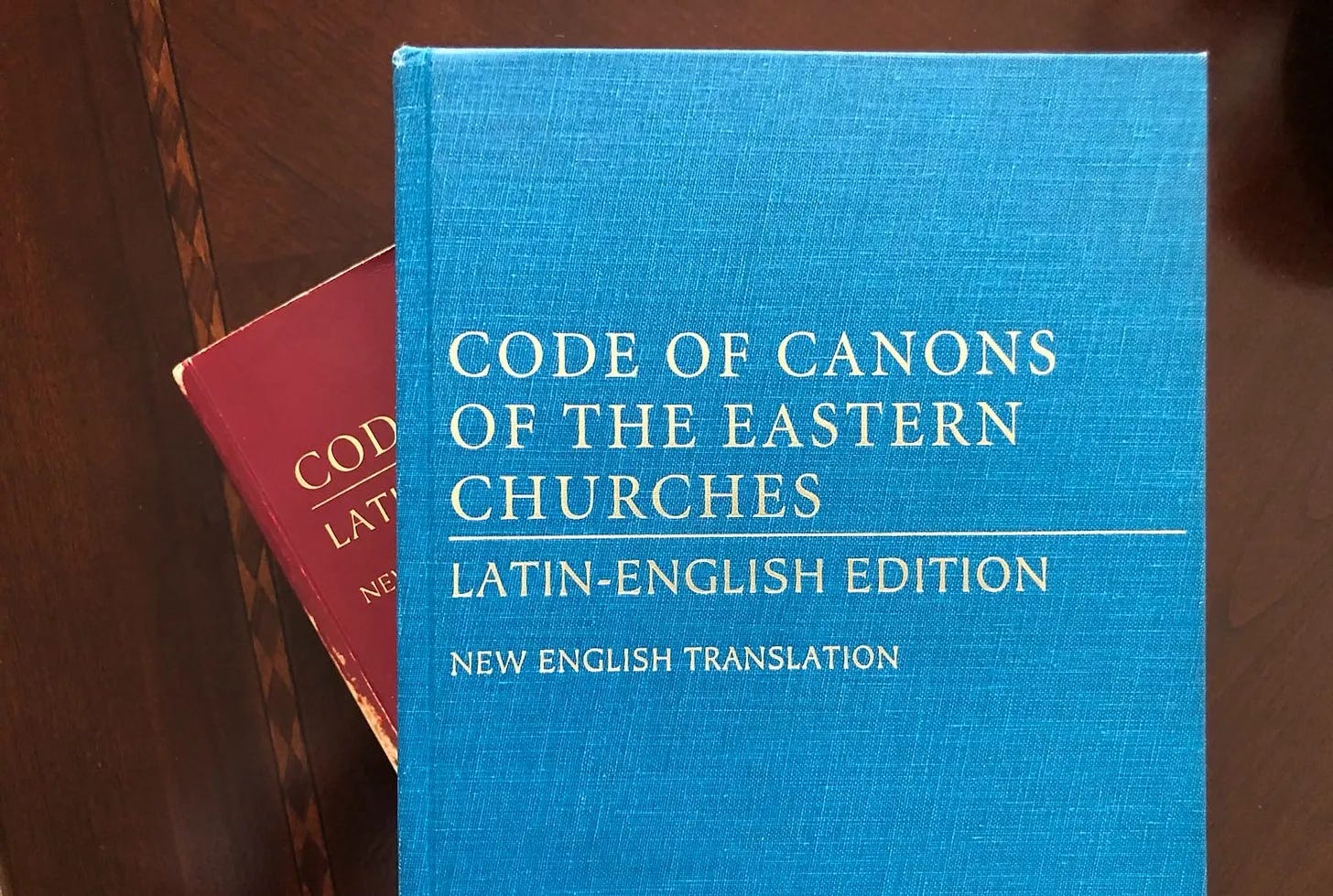
The text of the reform was principally drafted by the Vatican’s Dicastery for Eastern Churches, The Pillar understands, and couches the change to the law as an exercise of collegiality and expression of the synodal nature of the Eastern Churches. It also notes that similar provisions exist in the Eastern Orthodox Churches and the change, therefore, also has a kind of ecumenical dimension.
One reading of the change is — as the plain text of the motu proprio states — a recovery of the distinctly and historically collegial and synodal ecclesiology of the Eastern Church tradition.
But among many Eastern Catholic clergy and canonical experts, the move is being taken differently. In fact, an emerging understanding of the reform is that it actually suits the Dicastery for Eastern Catholic Churches, and in particular the prefect Cardinal Claudio Gugerotti, who has privately expressed frustrations with the heads of several Eastern Churches and the difficulty in effecting changes at the top.
While the new legal mechanism locates the power to effectively depose a patriarch within the individual Churches’ synods, some Eastern Catholics see it as a back door for more assertive Roman intervention.
—
The role of synods in the governance of the Eastern Catholic Churches is one of the most ancient ecclesiological structures in the Church. The Eastern Catholic Churches headed by patriarchs — six in total — and those headed by major archbishops — another four — each have a leadership and governance institution called the “synod of bishops.”
The synod of bishops is composed of all the bishops who belong to the particular Eastern Church — or nearly all of them, though Francis restricted the deliberative voting rights of bishops over 80 years old in 2023.
Strictly speaking, the word “synod” means “coming together,” or “journeying together.” In the Eastern sense, a synod is a far more precise and governance-focused concept than it is in the Latin Church, in which in recent years the “synod on synodality” and global “synodal process” have rendered the word both ubiquitous and devoid of any real definition in the common Catholic understanding.
Synod of bishops have deliberative governing authority in the Eastern Catholic Churches in which they exist: they elect the patriarch, are involved directly in the appointment of bishops and the creation of new dioceses (called eparchies), and are required to be either consulted by the patriarch, or to give consent, on a number of important financial, administrative, or personnel decisions for the Eastern Catholic Church in question.
Those responsibilities were given a significant legal enhancement with the Aug. 29 motu proprio, formally styled Mutua concordia — though its significance actually concerns the practical failure of mutual harmony.
According to the text, because the synod of bishops elects the patriarch or major archbishop in each of the Eastern Churches to have them, the body “carries with it an intrinsic vocation to collegiality in the exercise of his primatial ministry, which is deeply rooted in an ancient and wonderful tradition.”
“In the Eastern Catholic Churches, the opportunity is highlighted to recognize and increase the capacities of the Synods of Bishops, which seems appropriate, also taking into account the relationships between the different confessions, especially the theological sense and practice of the Orthodox Churches,” the motu proprio says.
The text states that “several Eastern Bishops have demanded” a remedy for situations in which “the sacred bond between the Father and the Head and the other Bishops [has been] irreparably damaged.”
“Therefore, in particular situations of necessity, in which communion is seriously and irreparably harmed, the Synod of Bishops is bound to exercise the canonical authority by which it can call the Patriarch to account for his work.”
But while stressing “Patriarch’s right to defend himself before the Synod itself,” and the need for the pope to assent to a vote of removal, the motu proprio offers essentially no legal criteria to trigger a vote to remove a patriarch on the grounds of damaged communion.
And according to the reform’s text, any bishop can trigger a vote to remove a patriarch. While the text makes reference to the concept of seniority among the bishops of the synod, its only real function is to provide that the senior bishop in favor of the vote formally call it. In practice this would seem to mean such a motion could be triggered by even the most junior member, if necessary. In practice this would seem to allow any bishop of the synod, without any proof of wider support, to effectively trigger impeachment proceedings against the patriarch.
It also seems significant that while the right of the bishop to “defend himself” is a legal one, inasmuch as it appears now in canon law, there is no provision for any evidentiary standard to establish or disprove an asserted failure of communion. In practice, the new law creates the power for Eastern Church synods to depose patriarchs with a two-thirds majority vote as a simple matter of no-confidence.
Several Eastern Catholic Churches, most notably the Chaldean Catholic Church and the Syro-Malabar Church, have experienced leadership crises in recent years.
In Iraq, the leadership of Cardinal Raphael Louis Sako was severely disrupted by divisions within the Chaldean Church’s synod, with a sizable portion under the leadership of Archbishop Bashar Warda boycotting a meeting in 2024 — leading the patriarch to petition Rome to back him in considering charges of schism against the bishops.
That dispute was the nadir of a long running dispute with Sako and several bishops of his synod, over both internal ecclesiastical affairs and relations with secular authorities. Still, Sako’s resignation was abruptly announced earlier this year in relation to a somewhat separate series of events, after it was reported by The Pillar that he had sought to secure a sideways reassignment for a Chaldean bishop facing accusations of financial crimes and moral scandals.
However, while both those instances give an indication of how patriarchs’ ministries can become ineffective or even demonstrative of a lack of communion within an Eastern Church, numerous canonists and clerics across different Eastern Churches have reacted with surprise and concern at the sweep of the new process.
Under the norms of the motu proprio, while the mechanism for removing a patriarch does require a two-thirds majority among synodal members with active voice — bishops under 80 and those not retired — that is virtually the only hard and fast criteria for removal.
One senior Eastern cleric called the reform a “charter for palace coups,” and warned that the absence of any real legal criteria for beginning a process of removal meant simple unpopularity would be enough to see a patriarch deposed. Another noted that, instead of fostering communion, the reform could end up increasing factionalism as there is now a legal mechanism which “rewards” undermining leadership.
Another Eastern canonist also questioned the latitude of the reform, noting that it meant patriarchs could be seen as serving only as long as they remained sufficiently popular, which could in turn discourage “apostolic zeal” among Church leaders.
“It is shockingly analogous to the standards which the Latin Code [of Canon Law] has for the forced removal of a parish pastor,” the canonist said. “The priest doesn’t have to do anything wrong to be removed from his office, he just has to become sufficiently unpopular that his ministry becomes ‘ineffective.’”
“I wonder how a [Latin] bishop would feel about his presbyterial council being empowered to hold votes of no confidence in his leadership as he’s trying to navigate a painful structural challenge, like budget balancing or restructuring parishes,” the canonist said, “because that is what we are doing here for Eastern patriarchs.”
And while the motu proprio might seem like a radical enfranchisement of the synods in the exercise of governance in Eastern Churches, some senior eastern clerics and canonists have received the reform as the creation of a mechanism for more direct Roman intervention in Eastern ecclesiastical leadership.
Sources close to the Dicastery for Eastern Churches have told The Pillar that Cardinal Gugerotti has been at odds with the patriarchal heads of several Eastern Catholic Churches and keen to see a wholesale turnover of leadership among several Churches, not just those who have recently seen change at the top.
And several Eastern clerics and canonists told The Pillar that the move is widely being interpreted among Eastern clergy as a back-door means for the dicastery to remove patriarchs without Rome appearing to intervene directly, and while preserving the impression that the decision and action is coming from within the Eastern Churches themselves.
Eastern patriarchs are, like all ecclesiastical offices in the Catholic Church, subject to the authority of the pope. However, at the level of Vatican bureaucracy, the Dicastery for Eastern Churches often tries to avoid direct involvement in the governance of eastern affairs, for a number of reasons, chief among them a desire not to be seen to negate or render nominal the historic traditions and prerogatives of the Churches.
Several senior canonists and Eastern officials familiar with the dicastery and its relationship with different patriarchal Churches told The Pillar that the new mechanism for removing patriarchs has quickly become seen as a means of bypassing the need for a Roman confrontation with the heads of Eastern Catholic Churches. The motu proprio allows the Vatican simply to make known to a Church synod its wishes, with the expectation that bishops will act to effect change at the Vatican’s behest.
At the same time, many senior clerics indicated that Roman concerns with Eastern leadership are not always, or even usually groundless, and that many of the Churches, including the Syro-Malabar and Chaldeans, has serious leadership issues which had gone unresolved for years and, at times, led to tense standoffs with Rome or appeals for its intervention.
That leaves the motu proprio in an unusual position. Many Eastern Catholic clerics have told The Pillar they do wish to see more accountability for the leaders of their churches, who are often seen to operate without the attention to administrative procedure and accountability expected of Latin prelates. But they have also said that a move allowing the deposition of those leaders flies in the face of their own ecclesiologies, and the paradigm through which they understand their Churches’ relationship to Rome. And they remain concerned about the fractious relationship between their Churches and the Dicastery for Eastern Churches.
So is the motu proprio a match in a powder keg? As they say in the East, that is — for now — a mystery.


Well, here I thought it was actually helpful in letting the sui juris churches manage their own affairs, rather than having to go to the Latin Pope to get a corrupt patriarch removed. Silly me.