What’s next for Archbishop Biord?
Is an upcoming meeting between Pope Leo and the Caracas archbishop a precursor to Vatican action?
Following a string of controversies in the Archdiocese of Caracas, Archbishop Raúl Biord, SDB, is scheduled to meet privately with Pope Leo in the coming days.
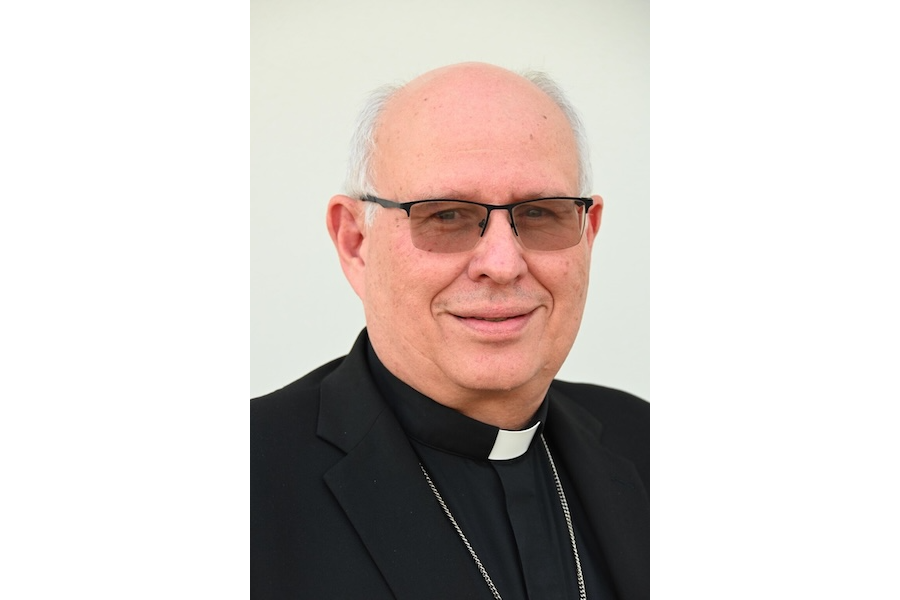
Several sources, both at the Vatican and in Caracas, have confirmed the meeting to The Pillar.
The meeting comes as the archbishop continues to be mired in controversy. Biord has consistently refrained from public criticism of the Venezuelan regime, and is widely perceived to be close to regime officials, especially former dictator Nicolás Maduro’s son, Nicolás Jr.
Biord was recently accused of helping to facilitate the extortion of a political prisoner’s family member.
He has also been accused of mistreating his predecessor, Cardinal Baltazar Porras – long seen as the face of the episcopal resistance to the regime in Venezuela. Biord has removed economic support from Porras and taken a house intended for his retirement away from him.
The meeting between Pope Leo and Biord raises questions about what, if anything, the pontiff intends to do about the ecclesial situation in Venezuela.
Nearly a month after the U.S. capture of former dictator Nicolás Maduro, the situation in the Latin American country remains delicate.
But if the Vatican is contemplating action in the case of the embattled archbishop, a swift move may be the most likely to succeed.
The relationship between Cardinal Porras and Archbishop Biord is a tense one. Statements from both sides in recent days have been interpreted in Venezuela as veiled comments directed at each other.
In a Jan. 23 homily, Porras stressed that prudence must not be confused with inaction and said that evil is present in the Church.
Meanwhile, the Archdiocese of Caracas’ pastoral council published a Jan. 25 statement in defense of Biord, saying, “We deeply regret some reports that pretend to tarnish our archbishop and his pastoral ministry’s integrity, causing restlessness, confusion, and pain in many of our faithful. As the clergy of Caracas, we reject any narrative that attempts to cause internal division or fracture the trust between the pastor and his people.”
Then, on Jan. 28, Porras and Biord concelebrated Mass at a diocesan clergy retreat, in what appeared to be an effort to project unity and peace.
But despite the public display, it’s not clear what relationship the two have now. It remains to be seen whether Biord will allow Porras to move back into his residence or receive his pension again.
“There’s also the issue of Porras’ passport, Biord hasn’t said anything publicly about it, and the presbyterial council came in support of Biord after all this criticism, but they didn’t say anything at all when the Cardinal’s passport was confiscated,” a source in the Archdiocese of Caracas told The Pillar.
And both Vatican and Caracas sources have told The Pillar that the Holy See remains dissatisfied with how Biord has handled the controversy, leaving his future in Caracas an open question.
One source close to the Vatican secretariat of state told The Pillar that senior Vatican officials believe Baird may have participated in the meetings in which the alleged extortion of a political prisoner’s family members took place.
But replacing him would be complicated.
A concordat between Venezuela and the Holy See gives the government the right to veto episcopal appointments.
Porras himself served nearly five years as apostolic administrator of Caracas because the regime refused to confirm his appointment as archbishop.
The Vatican did not want to repeat the deadlock when it was time to select a successor for Porras. This led to the selection of Biord, who seemed likely to receive the approval of the regime, but who was widely seen as a compromise candidate, rather than as the first choice of Pope Francis.
If the Vatican attempts to replace Biord, the concordat could lead to another standoff, with the government refusing to approve a new archbishop, or insisting on a candidate even more problematic than Biord.
However, the current political environment in Venezuela following the U.S. capture of dictator Nicolás Maduro may present a unique opportunity if Pope Leo decides to act.
Delcy Rodríguez’s interim government appears fragile. Rodríguez was rumored to be planning a trip to the United States and had confirmed she was planning to travel to Colombia, only to dismiss the rumors of an American trip and cancel her visit to Colombia a day later.
Many local observers saw this as a sign of uncertainty, as Rodríguez might think a coup could take place in her absence.
Observers have also questioned whether there may be an internal struggle between Rodríguez and her interior and defense ministers. The government announced a release of 400 political prisoners two weeks ago, but only about 200 have been released, prompting speculation about internal discord in the government.
With U.S. Secretary of State Marco Rubio stating that the use of force remains “on the table” if Rodríguez fails to cooperate with Washington, the interim government is in a position where it cannot afford to alienate the Vatican or the local hierarchy.
So if the apostolic nuncio were to deliver a letter to Rodríguez requesting the government’s approval of a new archbishop of Caracas, it is unlikely she could refuse without jeopardizing whatever goodwill she has with the Holy See and Venezuelan bishops.
On the other hand, if the Holy See does not act to replace Biord, it could find itself bound to a bishop perceived as complacent toward the Maduro regime in the country’s most important see for many years to come.
This could create a particularly uncomfortable situation if Venezuela ends up making the transition to democracy.
Vatican officials told The Pillar that informal talks have already taken place about replacing Biord, possibly by appointing him to a minor curial position or a leadership position within the Salesian order, to which Biord belongs.
Those talks remain speculative and it is unclear whether the pope has been involved. Pope Leo XIV has so far avoided abrupt governance decisions, but has not hesitated to ask controversial bishops to step aside following investigations.
Still, if the Vatican concludes that Biord’s position in Caracas has become untenable, there may be no better moment to act.
At 63, Biord still has at least 12 years in Caracas before he must submit his resignation.
With the future of Venezuela uncertain, it is not clear when the current window of opportunity for the Vatican to act might close.


"If the Vatican attempts to replace Biord, the concordat could lead to another standoff, with the government refusing to approve a new archbishop, or insisting on a candidate even more problematic than Biord."
To the extent that Washington is wielding leverage over Caracas, could there also be an opportunity for the Vatican and U.S. to team up on appointments in Venezuela? I'm thinking Cardinal Parolin calls Secretary Rubio and says, "We'd like to see Rodriguez accept our guy", and Rubio tells Rodriguez that's how it's going to be via stick or carrot. If +Biord is being replaced and the Pope has someone more in the mold of Cardinal Porras, that would be appealing to Rubio as he ultimately wants to see the country transition to democracy.
On the other hand, bolstering an institution that could help lead to democracy (as in the Philippines and South Korea) doesn't appear to be a priority for the White House at the moment. Further, I could see this Administration having no interest in doing the Vatican any favors in light of criticism over immigration.
Nevertheless, there seems an alignment in Venezuela that could lead to some trust, for lack of a better word, between the two states.