
Since Archbishop Laurent Ulrich turned 75 in September, the buzz around who will succeed him as Archbishop of Paris has grown louder.
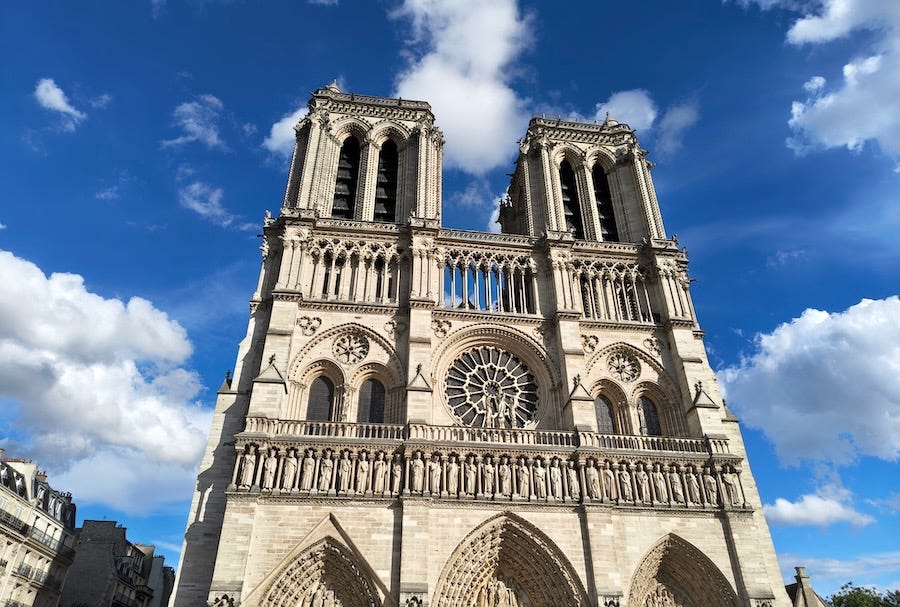
That’s not surprising: the Archdiocese of Paris is one of Europe’s most prominent sees. It serves around 1.3 million Catholics and is often at the forefront of trends in French Catholicism — for example, the recent surge in adult baptisms.
Canon law asks diocesan bishops to offer their resignations to the pope when they reach their 75th birthdays. There is no public confirmation that Ulrich has done so.
In any case, Pope Leo XIV is under no obligation to accept a 75-year-old metropolitan archbishop’s resignation. Cardinal Juan José Omella served until the age of 80 as the Archbishop of Barcelona. His successor, Bishop Octavi Vilà Mayo, was only named on Nov. 11.
Ulrich only became Archbishop of Paris at the age of 70, following the early resignation of Archbishop Michel Aupetit. Leo XIV might therefore wish to give Ulrich a few more years in the post.
On the other hand, Ulrich has already overseen two defining events of his tenure: the reopening of Notre-Dame Cathedral in December 2024 and Pope Leo XIV’s visit to Paris in September 2026. So there would be a certain neatness if he were to retire now.
Before we consider his potential successors, what do we know about Pope Leo’s criteria for appointing metropolitan archbishops? The evidence so far is rather slim. But he has made big appointments in Cebu, Kraków, New York, Vienna, and Westminster, so a track record is emerging.
Broadly, we can say that he is inclined to appoint metropolitan archbishops in their late 50s to early 60s. But he is willing to make exceptions. Archbishop Richard Moth of Westminster, for example, was 67 when he was appointed.
Given the complexities of the Paris archdiocese, some prior local knowledge or experience of overseeing major institutions might be helpful.
So who might fit the bill?
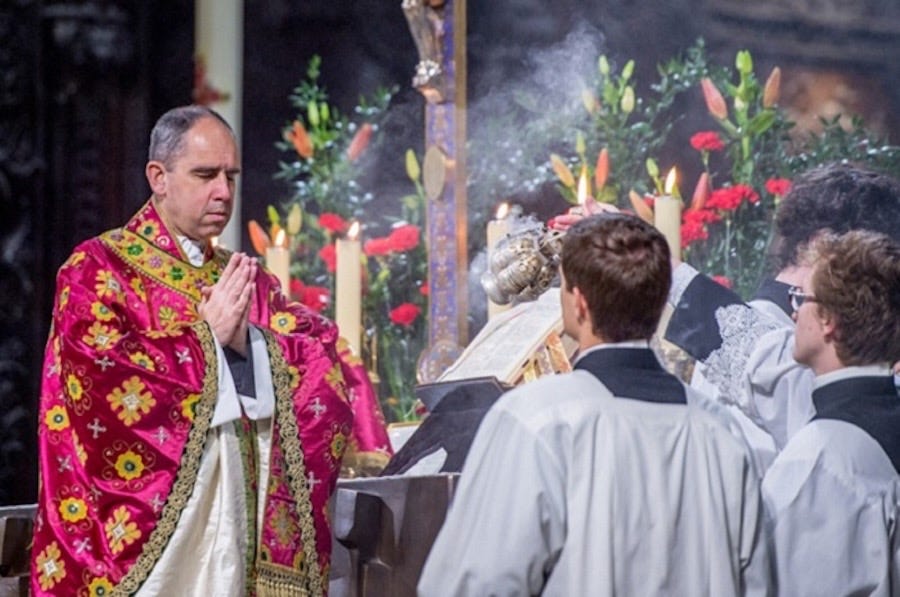
Frequently mentioned
One figure often mentioned in discussions of potential candidates is Archbishop Éric de Moulins-Beaufort, 64, the Archbishop of Reims.
De Moulins-Beaufort served as president of the French bishops’ conference from 2019 to 2025, when he stepped down after serving the maximum two three-year terms. His tenure was eventful, coinciding with the publication of the 2021 final report by the Independent Commission on Sexual Abuse in the Church, which shook French Catholics. De Moulins-Beaufort oversaw the bishops’ response to the report’s recommendations.
His full name is Éric Marie François de Moulins d’Amieu de Beaufort, indicating his aristocratic background.
Also frequently mentioned is Bishop Matthieu Rougé, 60, the Bishop of Nanterre, who is known beyond France for his commitment to evangelization. He was ordained as a priest of the Paris archdiocese in 1994 and served from 2000 to 2003 as private secretary to Cardinal Jean-Marie Lustiger, the highly influential Archbishop of Paris. He was chaplain to French parliamentarians from 2003 to 2012, giving him considerable insight into the political world.
Another figure who features prominently in discussions is Bishop Antoine de Romanet, 64, Bishop of the Diocese of the French Armed Forces. His full name is Antoine Pierre Louis Marie de Romanet de Beaune, pointing to his aristocratic origins. Indeed, he officiated in 2019 at the wedding of a descendant of Napoleon.
He graduated from the prestigious Paris Institute of Political Studies (Sciences Po) and went on to earn a doctorate in economics. He was ordained a priest of the Archdiocese of Paris in 1995. He served from 2002 to 2010 as pastor of the Saint-Louis-de-France parish in Washington, D.C., and chaplain to Rochambeau French International School.
After returning to France, he was appointed pastor of the Auteuil parish in Paris and, from 2014, dean of the Auteuil deanery. From 2011 to 2017, he co-directed the politics and religions department at the Collège des Bernardins and taught social ethics at Saint-Sulpice Seminary.
He has led the armed forces diocese since 2017. Each year, he presides over the International Military Pilgrimage to Lourdes. In 2024, a record number of French military personnel were baptized during the pilgrimage.
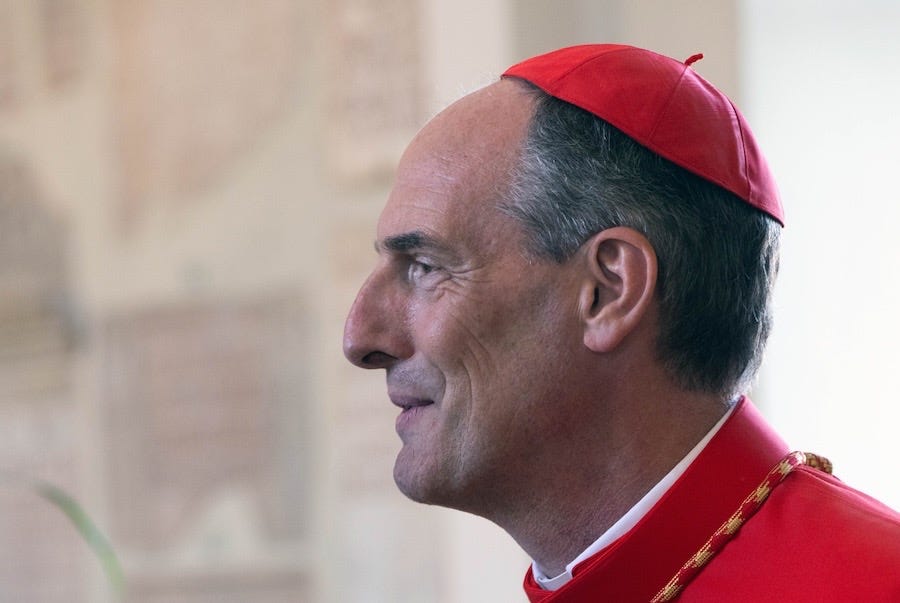
Sometimes mentioned
Cardinal François-Xavier Bustillo, O.F.M. Conv., 58, the Bishop of Ajaccio, Corsica, has the unusual distinction of being mentioned as a candidate for both Archbishop of Barcelona and Archbishop of Paris. He was born in Pamplona, Spain, and became a naturalized French citizen in 2006.
His diocese is relatively small (around 280,000 Catholics). He is internationally prominent. And he is a relatively young cardinal. This is probably why he is frequently tipped for greater responsibilities.
Some French commentators don’t regard Bustillo as a frontrunner for Paris, noting his deep attachment to Corsica. But if Pope Leo XIV wanted to appoint a member of a religious order to Paris, as he has just done in Barcelona, he is a possible candidate.
Archbishop Vincent Jordy, 65, the Archbishop of Tours, has served as vice president of the French bishops’ conference since 2022, giving him significant national-level experience. He was a member of the Emmanuel Community from 1988 to 1995, and was ordained a priest of the Archdiocese of Strasbourg in 1992. He directed and then led Strasbourg’s major seminary from 1997 to 2008, before being appointed an auxiliary bishop of the archdiocese.
De Moulins-Beaufort praised Jordy in 2025 for “the subtlety of his thinking, his attentiveness to the nuances of Catholic sensibilities, and his perceptiveness in finding the right moment to share his judgment.”
A final figure sometimes mentioned in succession speculation is Archbishop Antoine Hérouard, 70, the Archbishop of Dijon. While his age might seem to rule him out, he has considerable experience, serving as general secretary of the French bishops’ conference from 2007 to 2013, and apostolic delegate to Lourdes from 2019 to 2022. He would appear to offer a steady institutional hand.
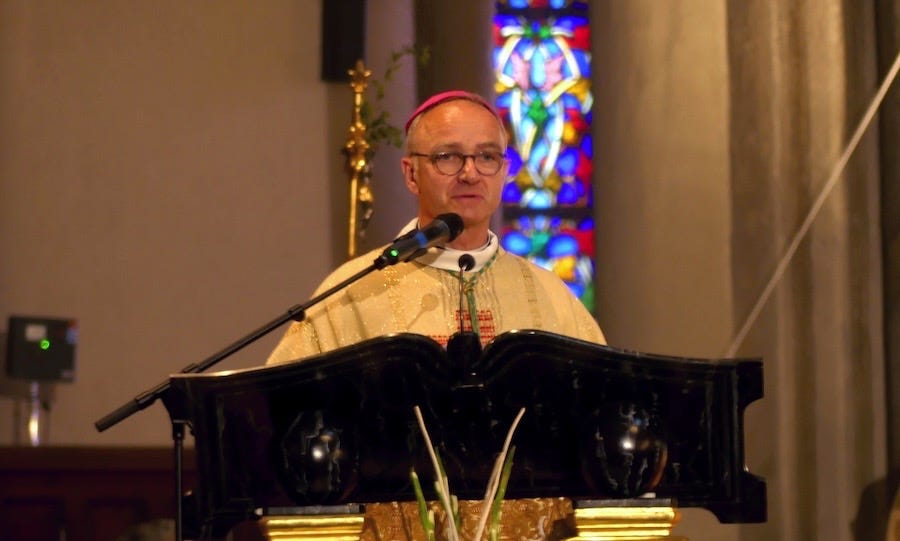
The wider field
Figures mentioned in passing as potential candidates include Archbishop Thibault Verny, 61, the Archbishop of Chambéry, who served as an auxiliary bishop of Paris from 2016 to 2023.
There is also Bishop Bruno Valentin, 54, the Bishop of Carcassonne and Narbonne. He is a former auxiliary bishop of Versailles, a diocese in the Ecclesiastical Province of Paris.
Also named are Bishop Emmanuel Gobilliard, 58, the Bishop of Digne, Bishop Alexandre Joly, 55, the Bishop of Troyes, Bishop Matthieu Dupont, 52, the Bishop of Laval, and Bishop François Durand, 53, Bishop of Valence.
Two bishops currently serving in the Ecclesiastical Province of Paris are also mentioned: Bishop Étienne Guillet, 50, the Bishop of Saint-Denis, and Bishop Dominique Blanchet, 60, the Bishop of Créteil.
Finally, there is Bishop Jean-Philippe Nault, S.J.M.V., 61, the Bishop of Nice and a member of the Society of St. John Vianney, and Bishop François Touvet, 61, the Bishop of Fréjus-Toulon, who succeeded the prominent Bishop Dominique Rey in 2025.