Who’s in and who’s out? Leo’s revamp of Vatican supreme court
Pope Leo’s changes see the first non-bishops replacing non-canonist members at the Apostolic Signatura
Pope Leo XIV appointed seven new members to the Supreme Tribunal of the Apostolic Signatura, the Church’s highest canonical court of appeal, on July 25, including the first three non-bishops ever appointed as members of the tribunal.
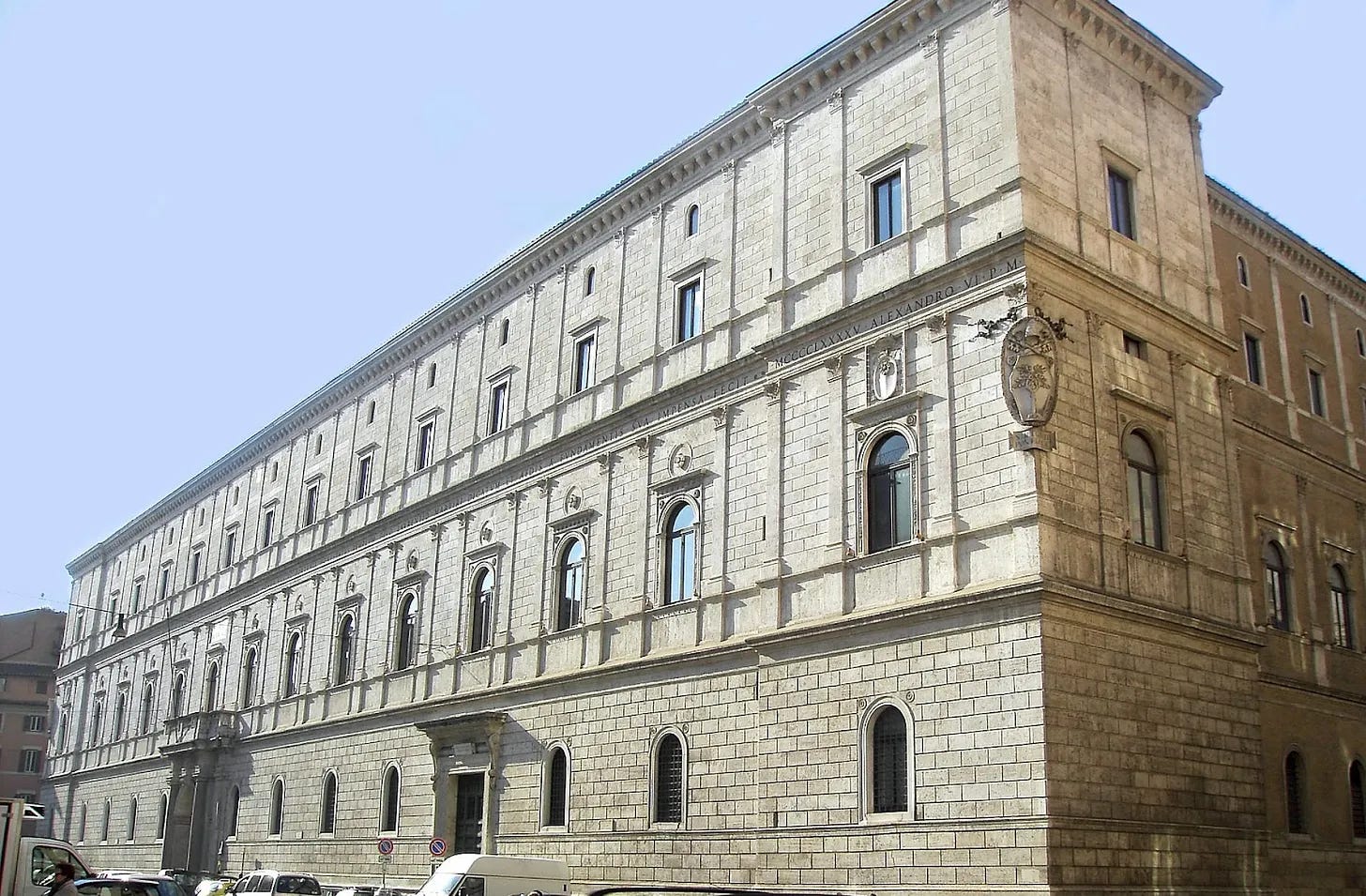
The appointments by Leo also marked the conclusion of the five-year terms for Cardinals Joseph Tobin, C.Ss.R., of Newark and Gerhard Ludwig Müller, prefect emeritus of the then-Congregation for the Doctrine of the Faith — the only two non-canonist members of the tribunal.
The appointments and departures appear to close a practice by Pope Francis to appoint non-canon lawyers to the Signatura, while instead bringing in the first full members who are legal experts but not bishops.
Archbishop Salvatore Joseph Cordileone of San Francisco; Bishop Krzysztof Nitkiewicz of Sandomierz; Bishop Juan Ignacio Arrieta, secretary emeritus of the Dicastery for Legislative Texts; Bishop Edward M. Lohse of Kalamazoo; Fr. Eduardo Baura, professor at the Pontifical University of the Holy Cross; and Msgr. Gianpaolo Montini and Fr. Ulrich Rhode, S.J., professors at the Gregorian University were all appointed as new members of the tribunal.
Although Pope Benedict XVI changed the tribunal’s law in 2008 to permit non-bishops as members, neither he nor Pope Francis exercised the provision.
The Vatican did not immediately clarify which existing members’ terms had expired, fueling speculation and prompting mistaken reports that Pope Leo had dismissed all members Francis appointed to the tribunal in 2021.
What actually happened with the Apostolic Signatura? The Pillar takes a look.
Who is being replaced?
While Pope Leo XIV became the first modern pope to appoint non-bishops to the Signatura, he did not continue Pope Francis’ practice of appointing non-canon lawyers to the tribunal, passing the seats of Cardinals Tobin and Müller to canonists at the conclusion of their five-year terms.
In 2017, Francis appointed Cardinal Juan José Omella of Barcelona and Cardinal Edoardo Menichelli of Ancona-Osimo, who were not canon lawyers, to the Apostolic Signatura. In 2021, he appointed Tobin and Müller.
Menichelli died in 2025 and Omella previously stepped down from the court.
The Holy See press office bulletin typically announces only new appointments without identifying which existing members have had their terms renewed or extended. Members are instead notified privately by letter, either thanking them for their service or informing them their terms have been extended for another five years, until they turn 80, or that they were confirmed until their terms expire.
Complicating matters further, while cardinals must step down from other dicasteries at 80, the Signatura’s governing law contains no retirement age provision, making it difficult to determine which members had been replaced until publication of the Annuario Pontificio.
For example, Cardinals Leonardo Sandri and Giuseppe Versaldi are still members of the Signatura despite both being 82 years old.
While the online version of the Annuario Pontificio is updated almost immediately, it doesn’t provide information about which members were renewed for a full term, confirmed in their current terms, or renewed until their 80th birthday.
Responding to questions from The Pillar, the Holy See press office said that all the new members but Arrieta were appointed for a full five-year term, while Arrieta – who turned 75 in April – was appointed until his 80th birthday.
The two sole non-canonists in the tribunal, Tobin and Müller, did not have their terms renewed by Leo, along with Archbishop Fernando Monteiro Guimaraes, military ordinary emeritus of Brazil, Bishop Christoph Hegge, auxiliary bishop of Münster, and Bishop Mark Leonard Bartchak, bishop of Altoona-Johnstown.
Cardinals Giuseppe Versaldi, Leonardo Sandri, and Raymond Leo Burke, together with Bishop Jan Hendriks of Haarlem-Amsterdam, were confirmed for the balance of their current terms, which are due to expire between 2027 and 2028.
Cardinal James Harvey, archpriest of the Basilica of St. Paul Outside the Walls, and Bishop Celso Morga, emeritus bishop of Mérida-Badajoz in Spain, were confirmed until their 80th birthdays.
Cardinal Mario Grech, Secretary General of the Synod of Bishops; Cardinal Péter Erdő, Archbishop of Esztergom-Budapest; Archbishop Cyril Vasil’, S.J. of Košice for Byzantine-rite Catholics; Archbishop Stanislav Zvolenský of Bratislava; Bishop Dominicus Meier, O.S.B. of Osnabrück; Bishop Ryszard Kasyna of Pelplin; Bishop Andrea Migliavacca of Arezzo-Cortona-Sansepolcro; Bishop Egidio Miragoli of Mondovì; Bishop Pierantonio Pavanello of Adria-Rovigo were all confirmed for another five-year term.
Who was appointed?
Pope Leo XIV appointed seven new members to the Supreme Tribunal of the Apostolic Signatura on July 25.
The list includes two American bishops: San Francisco Archbishop Salvatore Cordileone and Bishop Edward Lohse, Bishop of Kalamazoo.
Cordileone has been the Archbishop of San Francisco since 2012 and has significant canonical experience, including having served as an assistant in the Signatura between 1995 and 2002, when he became an auxiliary bishop of the Diocese of San Diego.
Lohse was ordained in the Diocese of Erie in 1989. After serving in various diocesan posts, he worked in the then-Congregation for the Clergy between 2010 and 2015, receiving a doctorate of canon law from the Gregorian University, before returning to Erie to work in the chancery and becoming Bishop of Kalamazoo in 2023.
The pope also appointed Polish Bishop Krzysztof Nitkiewicz of Sandomierz who previously taught canon law at the Białystok seminary. He went on to work in the Dicastery for Eastern Churches in 1992, becoming its undersecretary in 2002. He was appointed bishop of Sandomierz in 2009.
Bishop Juan Ignacio Arrieta, one of the Vatican’s most renowned and longest-serving canon lawyers, was also named by Leo to the Signatura on Saturday. Arrieta served for nearly 20 years as secretary of the Dicastery for Legislative Texts until his retirement this June after turning 75 years old in April.
Ordained as a priest of Opus Dei in 1977, he was the founding dean of the Faculty of Canon Law at the University of the Holy Cross between 1984 and 1993 and then from 1995 and 1999. He also served as the dean of the Institute of Canon Law Saint Pius X in Venice between 2003 and 2008, and between 2004 and 2019 he was a canon prelate of the Apostolic Penitentiary.
He has also previously served as legal secretary of the Apostolic Signatura and judge of the Ecclesiastical Tribunal of the Vatican City State and as consultant of several dicasteries.
He currently serves as coordinator of the General Secretariat of the Synod’s commission to review the Code of Canons of Eastern Churches.
While the Apostolic Signatura could in theory have non-bishops as members since 2008, Leo is the first pope to exercise the option, naming three non-bishops as members of the tribunal: Fr. Eduardo Baura, Fr. Ulrich Rhode, S.J., and Msgr. Gianpaolo Montini.
Baura, also a priest of Opus Dei, succeeded Arrieta as dean of canon law of the University of the Holy Cross between 1999 and 2007 and currently teaches canon law at the same university and at the Institute of Canon Law Saint Pius X in Venice.
Rhode is a professor of canon law at the Gregorian University and was dean of the canonical faculty between 2019 and 2025.
He has also served as a consultant for the Dicastery for Culture and Education; Laity, Family and Life, and Legislative Texts. He had been an expert consultant of the Apostolic Signatura since 2021.
Montini is one of the preeminent experts in the Signatura’s procedures and an emeritus professor of the Gregorian University’s faculty of canon law and has taught canon law at various universities and seminaries in Italy. He also served as judge at the Lombard regional ecclesiastical tribunal between 1988 and 2000.
He worked as a referendary between 1990 and 1995, substitute defender of the bond between 2000 and 2004, substitute promoter of justice between 2004–2008, and promoter of justice between 2008 and 2019.
What is the Apostolic Signatura?
The Apostolic Signatura functions as the Church’s final court of appeal, both for canonical matters and in some cases in the civil courts of Vatican City. It is the court which hears cases appealing decisions or decrees from almost all Vatican departments treating all categories of Church life, though appeals.
Among the few exceptions to this are disciplinary cases concerning crimes reserved to the Congregation for the Doctrine of the Faith, which has its own Supreme Apostolic Tribunal delegated by the pope to handle especially sensitive criminal matters concerning crimes against the faith and sacraments.
The bulk of the Signatura’s caseload concerns appeals regarding the exercise of ecclesiastical governance through executive authority. If, for example, an individual or group with legal standing appeals against an act of governance placed by a diocesan bishop, that case is referred to the relevant Vatican department, usually the Dicastery for Clergy. Following the dicastery’s decision, either party from the original appeal can then make further, final, recourse to the Signatura.
The Apostolic Signatura also functions as a final court of appeal for cases decided by the Roman Rota, the Vatican appeals court for judicial processes throughout the global Church’s canonical system.
However, the Signatura does not rehear cases appealed from the Rota on the merits of the case — only procedural questions are considered. The court decides whether the Rota followed the rules of a proper trial, not whether its decision, if it did follow the rules, was a good one.
If procedural law wasn’t followed, the Signatura can vacate a Rotal decision and order a new hearing, but it cannot retry the case itself on the merits.
The Signatura’s decisions often primarily treat questions of administrative procedure and legal process, and rule on the proper exercise of authority in the Church. Members of the tribunal are, therefore, often appointed in recognition of their technical expertise in the practice of canon law.

