Why has the Netherlands’ nuncio resigned?
Only 10 months into the job, there's no shortage of speculation about Archbishop Speich's early departure.
Pope Leo XIV accepted the resignation of Archbishop Jean-Marie Speich on Feb. 21 after he spent only 10 months in office as apostolic nuncio to the Netherlands.
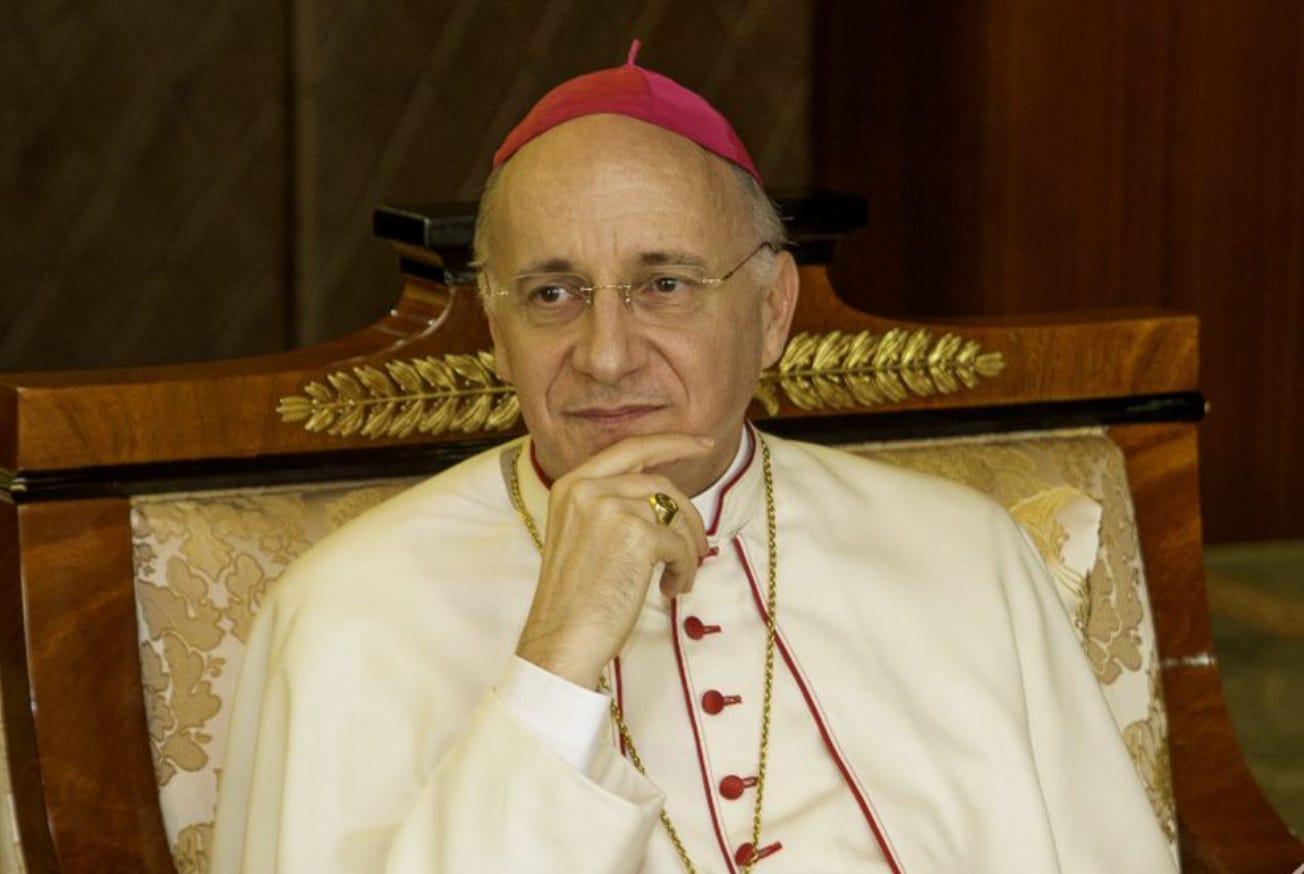
Nuncios are allowed to present their resignations at 70 years old, Speich’s age, but the archbishop’s resignation raised eyebrows because he has been seen as something of a high-flyer in the Vatican diplomatic service, had only recently been appointed to his post, and had shown no indication of wishing to retire or having health issues.
Speich has privately spoken of a desire to care for his family estate in France, while Dutch media have speculated that Speich’s resignation might be due to a complicated renovation of the nunciature in the Hague. Others have pointed to Speich’s role in the Rupnik scandal during his tenure as apostolic nuncio to Slovenia.
—
The nuncio’s sudden and officially unexplained departure from office comes after he reached the official though by no means mandatory or even customary retirement age for the diplomatic service of 70 years old in June last year.
While that would make the departure unusually prompt, it is made more curious to Vatican watchers since Speich was only appointed to his role in the Netherlands in April last year — just weeks before his 70th birthday.
His departure also follows what would otherwise seem to many as a model career in the Vatican’s diplomatic service.
Speich was born in Strasbourg in 1955 and was ordained a priest of his home archdiocese in 1982, before entering the Pontifical Ecclesiastical Academy in Rome two years later, graduating to the Vatican’s diplomatic service in 1986.
He went on to serve in the nunciatures in Haiti, Nigeria, Bolivia, Canada, Germany, the UK, Egypt, Spain and Cuba, later becoming the head of the francophone section in the Secretariat of State in 2008.
In August 2013, Pope Francis appointed Speich as apostolic nuncio to Ghana, and personally consecrated him a bishop in October of the same year. In March 2019, he became nuncio to Slovenia and apostolic delegate to Kosovo. Just nine days before he died, Pope Francis appointed Speich as nuncio to the Netherlands on April 12, 2025. Less than a year later, his resignation was accepted by Pope Leo this week.
A source close to the Dutch bishops’ conference told The Pillar that the Dutch bishops weren’t told much about the reasons behind the resignation, with the Dutch newspaper Nederlands Dagblad saying that Speich sent an email to some Dutch clergy and bishops saying that he was resigning for “personal reasons.”
“The nuncio had said some time ago that he is the last living person of his [family] dynasty and that he had to take care of all the possessions [and family estate] now that his parents and sister have passed away,” the source told The Pillar.
Dutch public broadcaster KRO-NCRV quoted an anonymous source saying that the retirement might be due to “stress” regarding the renovation of the nunciature in The Hague, in which asbestos was discovered.
Meanwhile, Italian website Silere Non Possum connected Speich’s resignation to his tenure as nuncio in Slovenia and the events surrounding the disgraced priest, iconographer and former Jesuit, Fr. Marko Rupnik, who has been accused of sexually abusing approximately 30 religious sisters.
Rupnik was previously convicted by the DDF of sexual crimes related to the sacrament of penance and briefly excommunicated in 2019.
After his alleged crimes became public in December 2022 — including that he sexually abused women religious as part of his creative process — the Vatican initially declined to waive the canonical statute of limitations to allow a new prosecution, before Pope Francis cleared the way for a new trial to go ahead in October of 2023.
In between, the Society of Jesus convened its own internal process against the priest, eventually expelling him for disobedience. Silere claimed that Rupnik sent a letter to Bishop Jurij Bizak of Koper, Rupnik’s home diocese, in June 2023, just a month before he was expelled from the Society of Jesus, asking for the disgraced priest to be received ad experimentum in his home diocese.
While the bishop wasn’t convinced of allowing Rupnik to be incardinated in Koper, he consulted Speich, who reportedly said that the incardination was an “excellent” solution because there was no active penalty against Rupnik. The website also claimed that Speich was very close to Rupnik and helped ensure that many priests close to the former Jesuit were appointed as bishops.
According to Nuova Bussola Quotidiana, Speich also helped two Slovenian former Jesuits connected with Rupnik, Fr. Milan Zust and Fr. Andrej Brozovic, to be received in the Diocese of Celje in Slovenia by Bishop Maksimilijan Matjaž.
However, a source close to the Secretariat of State told The Pillar that suggesting that Speich’s resignation was accepted early due his connection in the Rupnik scandal and the potential fallout of a future verdict was “giving the Secretariat [of State] too much credit.”
“If that didn’t play a role [for them] in his appointment last year, why would it suddenly become important now?” the source said.
The source added that Speich was “tired” and may have seen an early retirement as “a way out before his role in dealing with Rupnik blew up in his face.”
The Dutch nunciature has been a revolving door in recent times with only Archbishop François Bacqué, who retired in 2011 after serving more than six years in the post in the 21st century.
Widely considered a senior yet relatively uncomplicated post, many nuncios arrive in The Hague near retirement age, with each of the last eight nuncios to the Netherlands retiring after serving there.
Speich’s predecessors, Archbishop Paul Tschang In-Nam served for two and a half years before retiring at age 75, Archbishop Andre Dupuy, served for three years and a half before retiring at 75 in 2015, and Cardinal Angelo Acerbi served for four years before retiring in 2001 at 76.
Speich’s successor will have significant work ahead, as many Dutch dioceses remain engaged in sweeping parish reorganization processes, including closures, mergers, and the sale of church buildings. While the country has experienced a recent uptick in adult baptisms, the vocational situation continues to be bleak, with most Dutch dioceses in the single digits of seminarians and barely ordaining any priests.
In addition, three of the country’s seven dioceses are led by bishops approaching retirement age: Cardinal Wim Eijk of Utrecht, 72 and recently affected by health issues; Bishop Jan Hendriks of Haarlem-Amsterdam, 71; and Bishop Gerard de Korte of Den Bosch, 70.


“If that didn’t play a role [for them] in his appointment last year, why would it suddenly become important now?” Because there's a new Pope in town, & he ain't gonna put up with the nonsense.