Why is Cardinal Parolin visiting an insurgency hotspot?
Northern Mozambique is a perilous place for Christians.
Vatican Secretary of State Cardinal Pietro Parolin arrived Monday in one of the most dangerous places in the world for Christians.
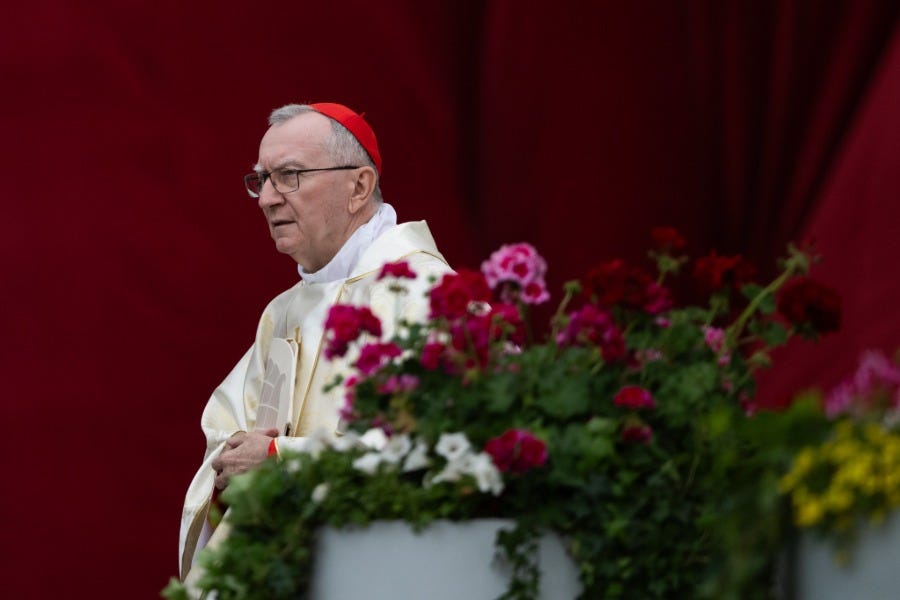
The Vatican’s most senior diplomat traveled Dec. 8 to Pemba, the capital of the strife-torn Cabo Delgado province in northeastern Mozambique.
He visited the area, which has suffered since 2017 from an Islamist insurgency, during a Dec. 5-10 trip to the southeastern African nation.
What is happening in Cabo Delgado province? Why did Parolin make the trip? And what’s likely to happen next?
The Pillar takes a look.
What’s happening?
Mozambique is a country of around 35 million people that borders Tanzania, Malawi, Zambia, Zimbabwe, South Africa, and Eswatini. Roughly two-thirds of the population is Christian. The largest minority religion is Islam. The country has a secular government and a history of largely peaceful relations between Christians and Muslims.
Mozambique gained independence from Portugal in 1975, but was engulfed by civil war two years later. The conflict was only brought to an end in 1992, thanks to mediation efforts by the future Cardinal Matteo Zuppi and the Rome-based Sant’Egidio Community.
In a mark of its turbulent recent history, Mozambique is the only country in the world to feature a modern firearm on its flag. The design, adopted in 1983, depicts an AK-47 assault rifle.
Although Mozambique is rich in natural resources, including natural gas, most of the population lives in poverty. Poverty is especially concentrated in the three northern provinces: Cabo Delgado, Niassa, and Nampula.
The country is also politically unstable. Mozambique’s 2024 general election was marred allegations of fraud. Hundreds of people were killed when police and armed forces repressed mass protests following the vote.
In 2017, mostly homegrown jihadists launched an insurgency in Cabo Delgado province, in the northeastern corner of the country, bordering Tanzania. Their goal was to establish an Islamic state in the province, which is 53% Muslim and 36% Catholic.
The main insurgent group is known as Ansar al-Sunna (Arabic for “Supporters of the Tradition”). It is also sometimes called Al-Shabaab (Arabic for “The Youth”), but it is not directly connected to the better-known Somali organization of the same name.
The jihadists target not only Mozambican security forces, but also local Christians. Their documented violations include beheadings, forced conversions and sexual enslavement, abductions, church burnings, and the destruction of villages.
The insurgents have also burned down mosques and the homes of fellow Muslims in indiscriminate attacks on villages.
The advocacy group Open Doors lists Mozambique — which is home to more Catholics than Ireland — as the 37th worst country in the world in which to be a Christian, citing the rise of Islamist extremism in the north.
Cabo Delgado province has a population of around 2.8 million people, including more than half a million internally displaced people. To add to the province’s woes, Tropical Cyclone Chido crashed into the coast near Pemba in December 2024, leaving devastation in its wake.
The province is covered by the Diocese of Pemba, led since 2022 by Bishop António Juliasse, who has repeatedly voiced fears that his suffering flock is being forgotten amid other more widely reported conflicts around the world.
Why is Cardinal Parolin there?
The chief purpose of Cardinal Parolin’s trip to Pemba was to convey the Vatican’s solidarity with Cabo Delgado’s Catholics.
According to a Vatican News report, Parolin said that “the Holy Father does not forget Cabo Delgado,” as he preached at a Mass in the city on the Solemnity of the Immaculate Conception. He added that the worldwide Church was praying for peace and reconciliation in the region.
In Pemba, the Vatican Secretary of State also met briefly with local civil authorities and pastoral workers.
On Dec. 9, he was due to meet with internally displaced people and attend an interreligious meeting.
Parolin began his six-day visit to Mozambique with a Dec. 5 meeting with the country’s President Daniel Chapo and attended an event marking the 30th anniversary of diplomatic relations between the African nation and the Holy See, the overarching reason for his trip.
The following day, he met with more political leaders and the Catholic bishops of Mozambique.
On Sunday, Dec. 7, he presided at a Mass marking the country’s third national youth day in Maxaquene Stadium in the capital, Maputo.
On Dec. 10, his final day in Mozambique, he is due to visit a Sant’Egidio Community center in Zimpeto, an area on the outskirts of Maputo.
What’s next?
Cardinal Parolin’s visit is likely to lift the spirits of Cabo Delgado’s beleaguered Catholics. International figures of his rank are rarely seen in the province, which the U.S. State Department advises travelers not to visit due to the prevalence of terrorism.
But the morale boost may be short-lived because there is little sign that life is improving for Catholics — or anyone else — in Cabo Delgado.
In its 2025 Religious Freedom in the World report, the pontifical foundation Aid to the Church in Need suggested there were no grounds for optimism.
“The outlook for religious freedom in Mozambique remains deeply negative,” it said. “The period under review, particularly 2024, was marked by a sharp escalation in anti-Christian violence, including systematic attacks on churches, religious symbols and faith communities, most notably in Cabo Delgado province.”
It added: “Against the backdrop of expanding jihadist influence, political turmoil and weak state authority in much of the north, the environment for human rights and religious freedom remains profoundly compromised.”
Given the shroud of gloom over northern Mozambique, there is little the Vatican can do beyond offering encouragement to the region’s Catholics to persevere in faith. The Holy See can also raise their plight at international forums such as the United Nations.
From time to time, Pope Leo XIV can also draw attention to their sufferings, as he did during an Aug. 24 Angelus address, when he called for prayers for Cabo Delgado’s population.
The Vatican is likely aware that it lacks the capacity to improve life for the province’s population. That can only come from pressure from the wider international community and decisive action by local political leaders.


Thanks - I was unaware of this situation. I have been very aware of Nigeria for many years - in large part due to the Pillar