Why the cardinals ‘felt like a college again’ after consistory
Pope Leo XIV’s second extraordinary consistory officially came to an end June 29.
Pope Leo XIV’s second extraordinary consistory officially came to an end June 29, with the Mass for the Solemnity of Saints Peter and Paul.
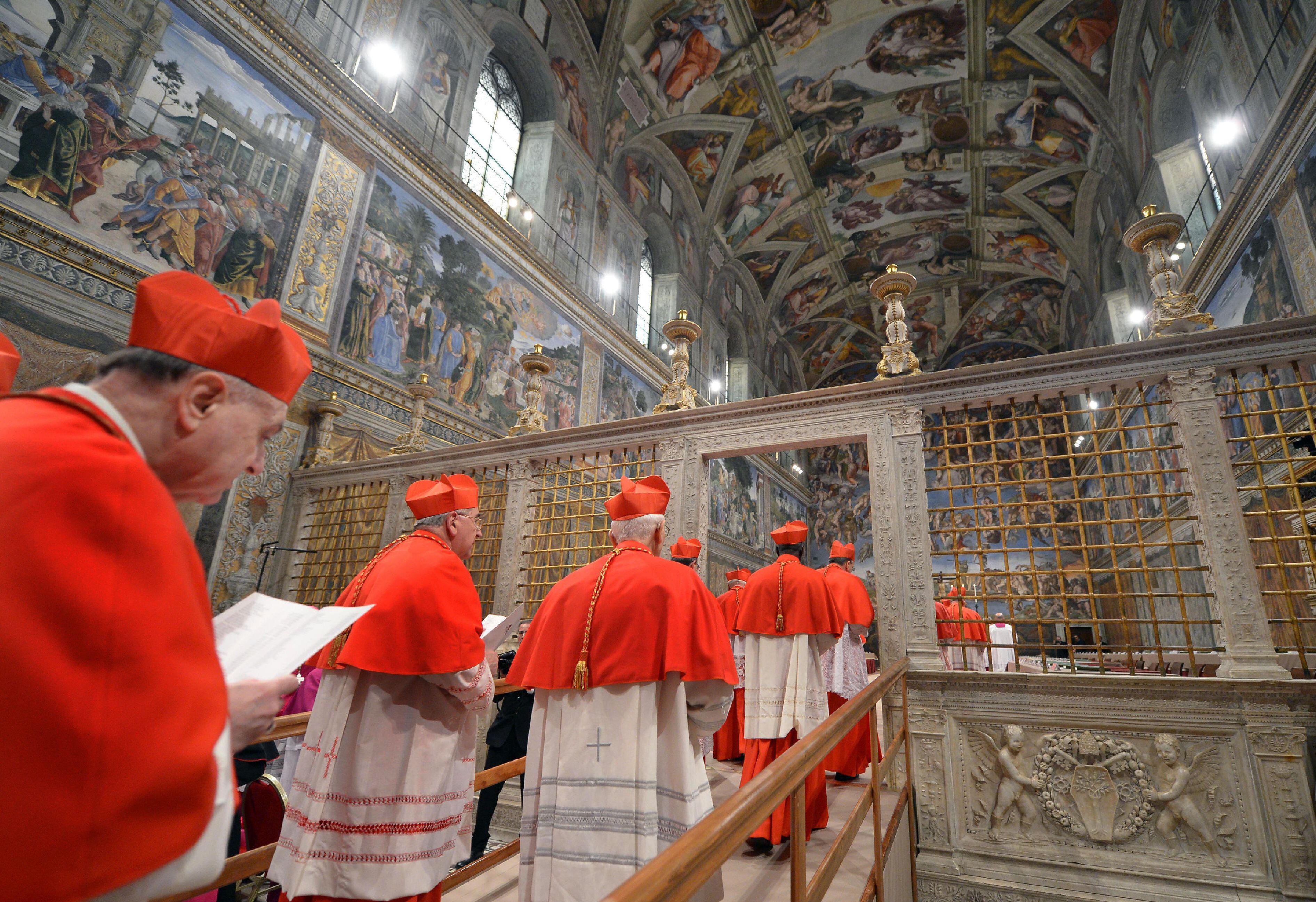
After the overwhelmingly positive response to his first consistory in January, some cardinals had expressed concern ahead of the June meeting, over both the topics chosen and the methodology to be used.
But while some cardinals remain apprehensive about that methodology, the overall response among cardinals after the June meeting was positive, especially about Leo’s ongoing intention to consult regularly with cardinals in future consistories.
—
Most cardinals welcomed in January what they saw as Pope Leo’s sincere intention to use the College of Cardinals as a consultative body, after Pope Francis had convened only three consistories in his 12-year pontificate and rarely consulted a wide body of cardinals.
The impression that Leo was doing something different was reinforced when the pope announced that another extraordinary consistory would be held in June, and that he intended to convene an extraordinary consistory lasting several days each year thereafter.
After the June meeting, cardinals told The Pillar that the most positive and lasting effect of that consistory was the sense that the College of Cardinals has been consolidated as the pontiff’s preeminent consultative body.
While no topics or date were announced, several cardinals told The Pillar that the pope told cardinals that he intended to convene another consistory in 2027.
“I think the best thing about the consistory is that we finally feel like a College of Cardinals again,” a retired cardinal told The Pillar. “Francis didn’t consult us that much, many of us didn’t know each other, and that seems to have changed.”
“I would say that’s also the main difference between January’s consistory and this time around. Back in January, many of us had only met during the general congregations before the conclave. Now, the feeling is different, there seems to be much more of a relationship between cardinals, even among cardinals who see things very differently,” the same cardinal added.
“I think consistories are also an important thing for the retired cardinals, they deserve to be heard,” a cardinal in active service told The Pillar. “And they have a wealth of experience that we all need to hear from.”
While reactions are broadly positive, cardinals still reflected a divide on the consistory’s methodology, which is focused on small-group discussions, with only a single session devoted to a plenary discussion inclusive of all cardinals.
While most of critics of the consistory’s methodology seem to be of a “conservative” theological persuasion, the deeper divide is more interesting: Cardinals appointed by Francis seem most comfortable with the current approach, while those appointed by Benedict XVI or John Paul II, who had experienced consistories in the traditional format, expressed a preference for more plenary sessions.
Still, while some cardinals said they would prefer a return to plenary sessions, they also made clear they were not entirely discontent with the current structure.
“I think I’ve now gotten the hang of it,” a retired cardinal told The Pillar, “but I think plenary sessions would be much better.”
“Some of us took part in consistories under Benedict XVI, some even under John Paul II, so we know it’s a different thing to be able to hear the whole assembly and not just your group. I think many of us want to be able to listen to all cardinals and not just a small number of them,” the same cardinal told The Pillar.
But another retired cardinal disagreed, highlighting that the small groups allowed for deeper conversations.
“Don’t get me wrong, I’m old school, but I think this methodology is better in some aspects. You can have more focused discussions, you get to know each other more deeply, so, while I understand why some cardinals want to return to a more traditional methodology, I don’t think this methodology is without its merits,” the cardinal added.
Historically, consistories have usually lasted one or two days. But in January, cardinals told the press that the pope announced plans to hold an annual consistory lasting three or four days. For many, that length makes an exclusively plenary format impractical, since it would mean two daily sessions of three to four hours each, with cardinal after cardinal speaking in succession for up to four days.
One cardinal told The Pillar that he felt the methodology used in the synods of bishops during the John Paul II and Benedict XVI pontificates could be a reasonable compromise for those who want more plenary sessions — a format in which discussion centered around a working document of recommendations to the pope.
“Both methodologies have their merits, plenary sessions mean everyone in the hall hears you and you can also hear everyone else. Small groups allow for deeper conversations. In the synods of bishops back in the day there was a bit of a mixed methodology, in which you had first plenary sessions, and then the relator general made a relatio of the plenary to be discussed in smaller groups of around 20 people,” the cardinal said.
“But, in general, I’m happy. The pope seems sincere in his desire to listen to the College of Cardinals. The last time we were called by Francis was in 2022, and I didn’t see the point of that meeting. We came to Rome, and they explained Praedicate Evangelium, Francis’ reform of the curia, but we weren’t consulted, it was just an informative session — everything was said and done by then,” the cardinal added.
—
Ahead of the June consistory , some cardinals had expressed to The Pillar apprehension about the consistory’s topics. Some cardinals said they couldn’t add much to the discussion on Magnifica humanitas, or were confused by what seemed to be contradictions in the explanation of the topics, or felt that there were more pressing issues to be discussed.
For example, when Cardinal Giovanni Battista Re, Dean of the College of Cardinals, sent a letter convening the consistory, he said one of the sessions would entail the discussion the doctrine of just war based on paragraph 192 of Magnifica humanitas. However, the official schedule of the consistory made no such mention, with one cardinal telling The Pillar he expected the discussion on just war would be “marginal.”
At the meeting, it turned out the introductory presentation for the second consistory session, given by DDF prefect Cardinal Víctor Manuel Fernández, was almost entirely about the right to legitimate defense and the doctrine of just war.
Although some members of the college were uneasy about Fernández presenting the topic — given his reputation among many cardinals for theological ambiguity — there was broad agreement that the presentation itself was clear and unambiguous.
“But it didn’t leave much room for discussion. At the same time, it’s not like there is much room for discussion with the ‘just war’ doctrine beyond semantics. Gaudium et Spes already, in a way, killed that doctrine in modern circumstances due to the capacity of destruction of nuclear weapons and now you add AI to the discussion. But the doctrine seems clear, there was a wide agreement on the issue, the doctrine seems clear, what the pope intends to want seems clear, so I didn’t see much of the point of the discussion,” a cardinal told The Pillar.
However, the presentation on the 2027-2028 synodal assemblies by Cardinal Mario Grech left some cardinals wishing they could’ve engaged in a more substantive discussion on the issue.
“I think there’s still a lot of confusion about synodality. In January, the conversations on evangelization were very good, but I felt that we had a hard time really getting anywhere when talking about synodality,” a cardinal told The Pillar.
Some were critical of the vision on synodality proposed by some cardinals.
“The pope said synodality is a spirituality, not a procedure. I think that’s very interesting, but it seems like many still see synodality as a means to an end. I don’t know about that.”
“They call this synodal methodology ‘conversations in the spirit.’ I think it’s fine to sit down and listen to one another with respect, I’m not sure if the Holy Spirit is involved as deeply as many suggest. And with the things some people try to present as synodality, I think it might be the case that is not the Holy Spirit, but another spirit.”
Several cardinals praised a speech from Cardinal Antonio María Rouco, archbishop emeritus of Madrid, in the open session about synodality.
Rouco was critical of certain interpretations of synodality, saying it should be properly understood within the ecclesiology of the Second Vatican Council, and criticizing the centrality that has been given to the concept in some circles.
“I think it was very pertinent,” a cardinal told The Pillar. “We need to understand synodality within collegiality, we need to restore the proper relationship between the pope and the episcopal college.”
Some cardinals felt that some of the most fruitful discussions came with the first session of the consistory, in which cardinals followed a biblical meditation on the Good Samaritan, and then reflected on two questions 1) “What sufferings, tensions and questions are most forcefully affecting the peoples and ecclesial communities entrusted to your care today?” and 2) “What signs of hope, of fidelity to the Gospel, and of possible reconciliation are important to bring to common listening?”
Cardinals said the session allowed them to return to several questions related to evangelization — one of the main topics of January’s consistory — which many said should continue to be discussed from different perspectives in future meetings.
“In January, we spoke about evangelization as the main purpose of the Church. In the first session this time, we were able to talk about that in our specific circumstances. A lot of different things came up, especially catechesis and the liturgy. There’s a great need to form people in the faith,” a cardinal said.
“And we also spoke about the liturgy in connection with evangelization, as bringing the life of Christ to our people. And I think it needs to be something that we continue discussing, the liturgy needs to be a topic in future consistories,” he added.
But not all cardinals shared that perspective. As one cardinal in active service put it, he wanted the “dust” from the upcoming July 1 consecrations of SSPX bishops, and their expected excommunications, “to settle” before the issue was addressed.
“We need to talk about it, but in due time and with serenity. We can’t simply react to circumstances. The liturgy is essential to the life of the Church, it’s important to talk about the liturgy as a mystery, because we might have lost that a bit,” the cardinal said.
“The pope is leading with his example,” another cardinal said. “You see he takes the liturgy very seriously, he’s very solemn. That’s a positive first step. I think the main thing here is that we’re not applying the Second Vatican Council’s liturgical reform very faithfully. The Old Mass deserves a space in the life of the Church patiently and mercifully, but the main liturgical issue affecting most Catholics is not the Old Mass, but the liturgical abuses and the lack of reverence in many places.”
The Pillar asked several cardinals what they thought should be the topic for the next consistory.
“I think Magnifica humanitas is a very rich document, and there’s still a lot more to discuss about it,” a cardinal told The Pillar. “I think we still have so much to talk about what the encyclical has to say about the world and about the Church.”
“I think it has to be about evangelization and about catechesis,” another cardinal said. “We’re undergoing a wave of conversions in many parts of the world, both in the West, and in some parts of Africa and Asia, but many Catholics don’t know their faith, and I think it’s something we need to discuss, how to get Catholics to know their faith and become apostles.”
“There’s a big crisis of faith,” another cardinal added. “In Magnifica humanitas, the pope stressed the primacy of human dignity over any economic, political, legal, or social consideration. To get to the bottom of it, we need to respond to the crisis of faith in our world. We’ve forgotten the true meaning of human love, of the family, and there’s no society, no possibility to respect human dignity without the family.”
“But at the same time, there’s a huge hunger for faith. But the young people converting, the young seminarians and young priests being ordained, they’re hugely different from the young people some time ago, they’re more interested in Catholicism as it is, to put it one way, and we need to respond accordingly,” he concluded.


I'm pleased (and not especially surprised) that once again the cardinals seem to have walked away largely happy. It was my understanding that next year's consistory was going to be longer than this one. Perhaps that's a good opportunity to add some additional plenary sessions? It seems like there are benefits to both formats and some issues are probably best handled as a large group where subject matter experts can lead, while others (like evangelization, where all of the cardinals have *some* experience they can share) benefit from the deeper discussions of the small group structure. Reading the thoughts and opinions of the cardinals, this just seems like a situation that calls for a both/and approach rather than an either/or, which should become easier to do with longer consistories
I really appreciate how Edgar tries to get the pulse of these ecclesial events, with extensive quotes from people with varying perspectives. And, a side note, I was very happy to hear from one cardinal that Pope Leo is leading by his example of celebrating the Mass with dignity and solemnity. The tide seems to be turning on this. To mix metaphors, I recall Ed's comment that Pope Leo doesn't seem to be interested in wild swings of the pendulum, rather, a calm but persistent movement towards stability.