
In May of 2026, I spent a few days in Front Royal, Virginia, with a group of friends, colleagues, and people I admire as my fellow coworkers in the vineyard of Catholic education. Each of us were Catholic education leaders on the forefront of the reinvigoration of humanizing Catholic education, theologians or philosophers who understand the human person and education, experts in innovative school operations ordered toward human formation, and leading voices on culture and humanity.
Over three days, we split into working groups with a bishop leading each group, and in those groups, higher education leaders, Catholic school superintendents, priests, and members of various think tanks and institutes discussed together the principles of Catholic education. We used those conversations to draft a document: the Front Royal Statement. In it, we summarized the most foundational principles that must be true about Catholic education according to the mind and tradition of the Church, and ended the gathering with those who desired to add their signatures agreeing to the statement itself. We left Virginia galvanized to continue the work reclaiming Catholic education, ever more deeply united.
I signed the Front Royal Statement.
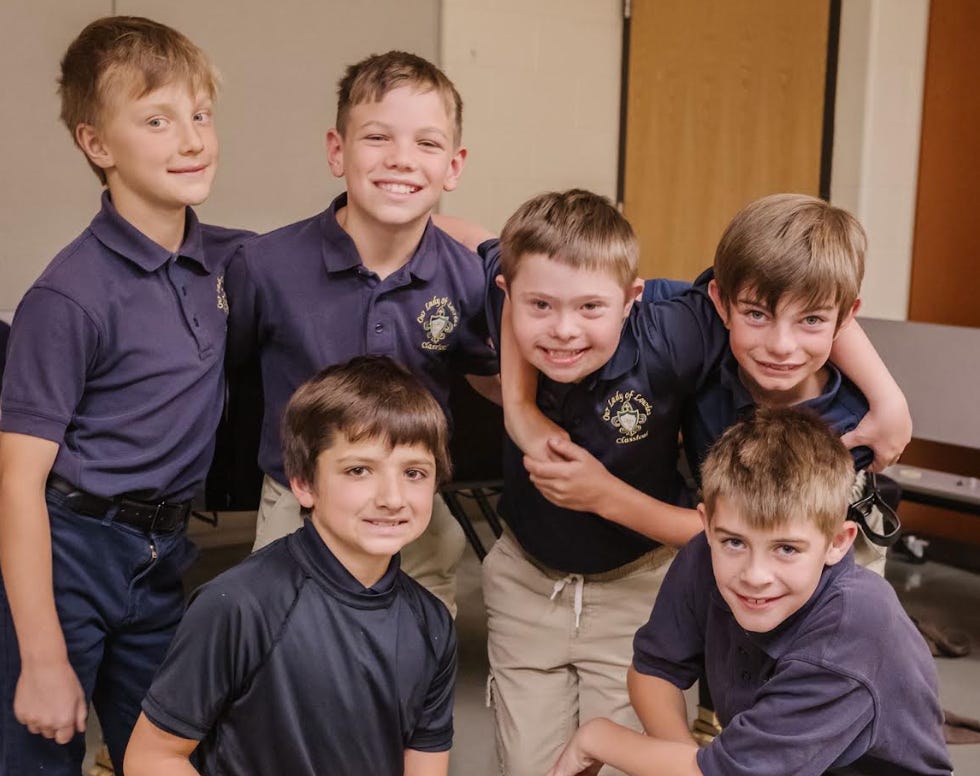
I signed it in part because of my deep personal and professional commitment to helping school pastors, leaders, and teachers educate students with disabilities in schools of Catholic liberal education.
And so I say with confidence: the Front Royal Statement is good news for students with disabilities.
Very good news.
The statement calls for education to be passed on in the perennial mode by which the Church has always understood education: a formation of the human person, a consideration of that which is beautiful, and a call for preparation for teachers to know how to pass on a way of seeing and a way of living to the children whose parents ask the Church for help educating their children.
I’ve spent 19 years in education. I’ve taught hundreds of students with various disabilities, and I’ve led archdioceses in building inclusion of children with disabilities across many schools. I’ve had hundreds of conversations on how to educate children with disabilities well. And in all that, I’ve come to understand one thing: We owe it to the disabled to define education with absolute precision.
Over the past decades, since the early 20th century, a progressive definition and mode of education has swept the United States, and since the mid-20th century, this mode of education has also swept Catholic schools.
Before the 20th century, the wisdom of the Church in education ruled humanity’s vision for education.
But in the United States in the 20th century, education shifted dramatically.
Some of this shift had to do with Enlightenment philosophy which over-indexed for a distorted sense of reason instead of a knowing-from-faith, and framed the individual as a sovereign arbiter of truth and reality. But there were other influences too: among them was the behavioral psychologists’ influence on instruction and measurement of outcomes. The switch to progressive education was also influenced by the obsession with creating workers for the American economy. Often in Catholic education, we generally accept these modes of educating, so long as all this doesn’t purport anything outwardly offensive to Church teaching ideologically.
But, there is grave danger in swimming in the stream of progressive education, and grave danger in defining education as useful only for quantifiable outcomes or economics. And it’s particularly dangerous for the disabled.
If education is for producing workers for the economy, where do people fit if they are not able to be useful workers? Our own American history shows us that in the 20th century, progressive education paved the way for the classification of education of the disabled to be unproductive, a worthless effort if a person with a disability– then classified as “moron” or “idiot” largely by dictates of inexact IQ scoring– wouldn’t make a good factory worker anyway.
All this was demonstrably influenced by the eugenics movement, which used schools as a sorting ground for the institutionalization and forced sterilization of people who were disabled.
How did the redefinition of education happen? Though there was disagreement among those in the progressive movement about what education was for and how to do it best, there was abundant agreement that the Church was out-of-fashion, rigoristic, unscientific, and antiquated. There was agreement that talk of beauty, a telos, the soul, and supernatural reality was not useful, and couldn’t be agreed on anyway. There was full agreement that the Church couldn’t possibly know how to educate children and teenagers, and that something new was needed.
But as Bishop James Conley writes in the Front Royal Statement, “The pedagogical expertise of Holy Mother Church derives not from her antiquity alone, but from the fact that she is the student par excellence of human nature. For two millennia, she has studied the reach of the intellect, the power of the will, the centrality of imagination and memory, and the force of the passions, all of which must be ordered and disciplined in the great work of teaching and learning.”
Education is high stakes stuff when we live in a society that has lost its soul. We live in a time when the disabled are aborted in the womb at sickening rates. We live in a time when people argue that a full grown baby just before the time it leaves its mother’s birth canal can be killed especially if that baby is diagnosed with a disability. We live in a time when parents of children with disabilities have to fight and advocate for their children’s place in schools. We live in a time when quality of life is determined by absolute independence from other people, proposing that a life well lived is one in which none of us bother other people with caring for us.
These cultural, legal, and societal realities say something to people with disabilities: “you are not valued. We do not want to care for you. You are too expensive. You are a burden. Your life is not worth existing.”
But the Church cries out in this wilderness to people with disabilities: “You are not who they say you are! It is good you exist. You exist because God deeply loves you and wanted you to be alive. Your life is wonderful, and we want you, your existence, and your life in the Church. You are a human which means you need a Savior– we have the answer for you! We want to care for you just as Jesus cares for every bit of us, in our poverty, or our physical ache, or in our hearts’ woundedness.”
“Come, learn that which there is to know. Learn in a way in which you can be set free to understand the truth of things, in literature, and math, and science. Come, look at how Christ the Logos invites us to understand all that he has made and given to you so you can know and love. We can help you see the meaning and purpose of all that there is. Come find the joy of knowing and living well! You are worth educating. You belong.”
Education ordered toward utilitarian ends falls too short for the formation of the human person. And it falls especially short for the education of the disabled.
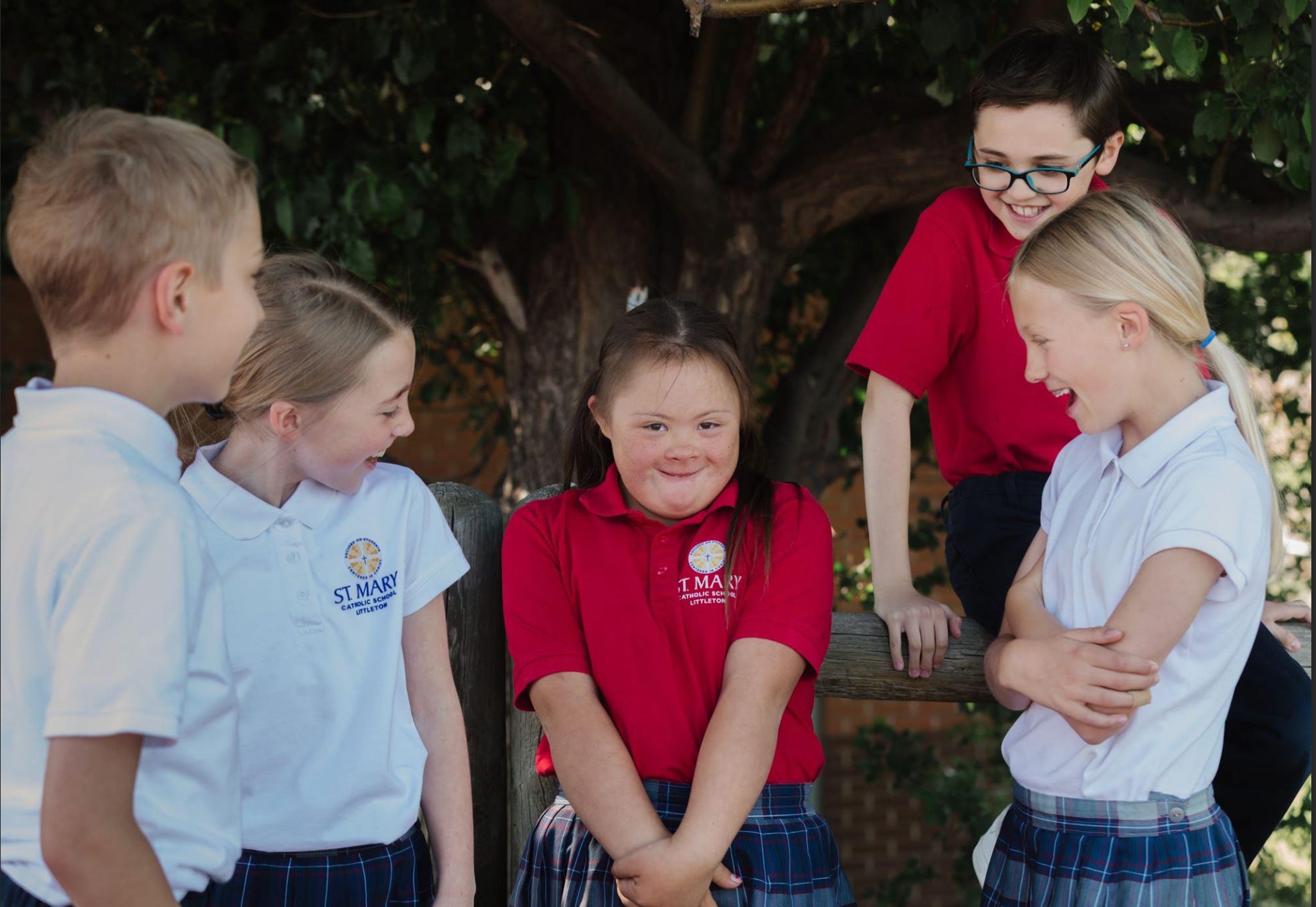
The Front Royal Statement defines education as good news, especially good news for parents with children with disabilities asking the Church for help educating and forming those children.
Teachers, principals, and school pastors can be formed with tangible classroom methods and practical ways to educate children with disabilities and to build inclusion in our Catholic schools. I’ll help.
The work is worth doing — Catholic liberal education can include, educate, and deeply form children with disabilities into seeing and knowing reality well to find Christ the Logos, who is Truth Himself. And that’s very good news.
Abriana Chilelli is Director of Special Projects at Institute for Catholic Liberal Education