Why were the UK Marian Franciscans dissolved?
The association said it could not continue without "practical and canonical support” for future ordinations.
At 11:59 p.m. on Sunday, May 31, a U.K. community known as the Marian Franciscans ceased to exist, in terms of the Church’s canon law.
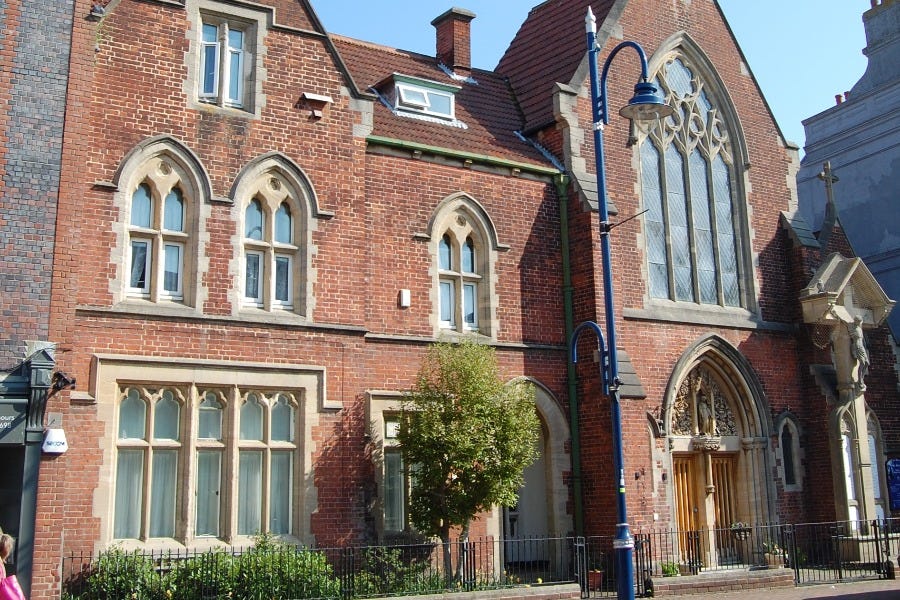
The Marian Franciscans announced May 28 that they had taken the unusual step of dissolving their community because they were unable to secure “practical and canonical support” for future priestly ordinations, despite a growth in numbers.
The announcement raised questions about why a seemingly thriving community would struggle to gain support for ordinations. The news also generated considerable speculation online, with some linking the dissolution to the community’s affiliation with the Extraordinary Form of the Mass.
Sources with direct knowledge of the community told The Pillar that the dissolution came against a background of problems within the community, allegedly including safeguarding complaints, a lack of due diligence in recruitment, severe asceticism that affected members’ health, and the misleading presentation of the community as a religious order.
For their part, the Marian Franciscans rejected the claims in a June 2 statement to The Pillar.
Who are the Marian Franciscans? What led to their dissolution? And what will happen next?
Who are the UK Marian Franciscans?
The U.K. Marian Franciscans were an offshoot of the Franciscan Friars of the Immaculate, a religious institute founded in 1970 in Italy by Fr. Stefano Maria Manelli and Fr. Gabriel Maria Pellettieri.
Under Pope Benedict XVI, the Vatican began an investigation of that institute. In July 2013, the Congregation for Institutes of Consecrated Life issued a decree, with Pope Francis’ approval, placing an apostolic commissioner in charge of the Franciscan Friars of the Immaculate.
The decree required all members to celebrate the post-conciliar liturgy and to apply for authorization if they wished to offer Mass according to the 1962 Missal. The restriction led to an exodus of members.
In November 2014, a group of those departing friars arrived in the Diocese of Portsmouth in southern England. Under the leadership of Bishop Philip Egan since 2012, the diocese had a reputation for being open to communities that had struggled to flourish elsewhere — an approach similar to that of Bishop Dominique Rey in the French Diocese of Fréjus-Toulon.
In June 2015, Egan granted the friars oversight of St. Mary’s Parish, Gosport, as they formed the outlines of a new community. On Dec. 8, 2016 — the feast of the Immaculate Conception — the friars launched the radio station Radio Immaculata, which broadcast out of the parish. The station’s YouTube channel had around 33,700 subscribers as of June 2026.
On May 31, 2018, Egan formally established the community as a public association of the faithful, known as the Association of the Family of Mary Immaculate and St. Francis.
The Code of Canon Law defines a public association of the faithful as a grouping of Catholics that strives “in a common endeavor to foster a more perfect life, to promote public worship or Christian doctrine, or to exercise other works of the apostolate such as initiatives of evangelization, works of piety or charity, and those which animate the temporal order with a Christian spirit.”
A public association can be formed of clerics, of lay people, or a mixture of the two. It is distinct from a religious order.
The Marian Franciscans were inspired by what they described as “the Franciscan-Marian Charism,” seeking to follow the example and teachings of the Auschwitz martyr St. Maximilian Kolbe, who promoted devotion to the Immaculate Virgin Mary. They wore a grey-blue habit that highlighted their Marian devotion.
Their approximately 20 members professed the evangelical counsels of chastity, poverty, and obedience, and made a vow of Marian consecration. Their daily pattern of prayer began at 1:30 a.m. and ended at 9:30 p.m.
The community had a notable devotion to the 1962 Missal. Four of its members were ordained priests in July 2019.
In February 2020, the community opened another house at St. Joseph’s in Copnor, an area of Portsmouth. Their profile rose considerably within the Catholic Church in England, thanks to their offering of Traditional Latin Masses, and the organization of holy hours, men’s groups, retreats, and conferences.
Their ministry extended beyond the Portsmouth diocese to communities in London, including the Tyburn Convent. They also played a prominent role in pro-life initiatives and at events associated with Marian apostolates. But their work was affected by Pope Francis’ 2021 motu proprio Traditionis custodes, which limited diocesan permissions for Old Rite Masses.
Also in 2021, a charity called Friends of the Marian Franciscans was registered with the U.K.’s charity regulator, with the purpose of supporting “the daily sustenance, accommodation, formation, growth, and development of the Marian Franciscans.”
In November 2022, the friars relocated from Gosport to the Diocese of Dunkeld in Scotland, where they were welcomed by local Bishop Stephen Robson.
A diocesan press release said the community had been drawn to the Dunkeld diocese while searching for new properties, because it had outgrown its existing buildings and their leases had ended. It explained that the friars would serve the Traditional Latin Mass community, while also being available for supply work, if asked.
Robson said: “They are an Old and New Rite traditional Catholic community. Though among themselves and in their own community they celebrate Mass and the Office in the Old Liturgy, they are also able to celebrate Mass in the so-called Novus Ordo or New Rite as in all our parishes in the diocese.”
The press release noted that a corresponding community of 20 sisters, known as the Sisters of the Immaculate and St. Maximilian Kolbe, would also take up residency in the diocese, at the Lawside complex in Dundee.
But the Marian Franciscan communities’ future in the Dunkeld diocese was thrown into doubt when Robson resigned in December 2022, on health grounds at the age of 71.
His successor, Bishop Andrew McKenzie, announced in February 2025 that Marian Franciscan communities would return to the Portsmouth diocese.
The reason for the move was unclear. Several sources in the diocese told The Pillar at the time that they believed the liturgy was a source of tension. But McKenzie did not offer any reasons for the decision in his announcement and the Marian Franciscans did not say publicly why they believed they were asked to leave the diocese.
An initial deadline for their departure was later pushed back to Oct. 31, 2026.
On April 27, 2026, the friars voted to petition Bishop Egan for dissolution of the public Association of the Family of Mary Immaculate and St. Francis. The bishop issued the dissolution decree May 24, in accordance with Canon 320 §2 of the Code of Canon Law, which says that “a diocesan bishop can suppress associations he has erected.”
The public association formally disbanded May 31, eight years to the day after its founding. Its twitter.com profile no longer exists.
The Dunkeld diocese said May 27 that the dissolution only applied to the male community and the convent at Lawside would remain “occupied by the Franciscan Family of the Immaculate Heart and of St Maximilian until further notice.”
The diocese noted the gratitude of local Catholics for the friars’ work.
It said: “The diocese recognises the ministry of the Marian Franciscans, and the prayer, generosity and friendship offered to them by the lay faithful and others who have supported the community over their time in Dundee.”
Bishop Egan acknowledged that the dissolution would “be a cause of sadness and concern for many people who have valued the ministry, prayer, and pastoral presence of the friars.”
In a message to the clergy of the Portsmouth diocese, he said the friars intended to “join another association with a similar charism and in the coming months to relocate.”
Egan said that, in the meantime, he had allowed friars incardinated in the diocese “to wear a different Franciscan habit.”
He also permitted them to continue celebrating Masses, administering other sacraments, and leading devotions at St. Joseph’s in Copnor, St. Agatha’s Ordinariate Church in central Portsmouth, and St. Thomas More’s in Iford, an area of Bournemouth. But “members may not continue to act publicly in the name of the Marian Franciscans.”
Egan said the Portsmouth diocese would work with Dunkeld’s Bishop McKenzie “to address the practical arrangements now required, and the pastoral needs of the lay friars and the community in Dunkeld.”
The Dunkeld diocese announced alternative provision for the Traditional Latin Mass, which will continue to be offered at St. Joseph’s Chapel at Lawside.
Why were they dissolved?
A briefing document accompanying the press release announcing the Marian Franciscans’ dissolution explained that the friars’ decision came at the end of “a period of discernment about the long-term future of the community in the U.K.”
The document, issued by the trustees of the Friends of the Marian Franciscans and written in Q&A format, said: “Despite growth in numbers and apostolic activity, it was not possible to secure the practical and canonical support needed for formation, sponsorship, and future priestly ordinations. In those circumstances, the friars concluded that petitioning for dissolution was the responsible course.”
The briefing denied that the dissolution request was “the result of, or reaction to, any single incident or series of incidents,” without referring to any specific events.
It said: “The friars’ request for dissolution arose from broader questions about the future viability of the community and its mission in the U.K.”
It added that the friars had considered options other than dissolution, but “no workable path was identified for the community’s continued development in its present form.”
Multiple sources close to the men’s community and its dissolution told The Pillar that the background to the dissolution was more complex.
The sources, who spoke on condition of anonymity, made the following claims:
Members of the association have been subject to safeguarding complaints.
The association showed a lack of due diligence in recruitment.
Members engaged in acts of severe asceticism that affected their health (for example, eating spoiled food).
Members misleadingly presented themselves as belonging to a religious order, rather than a public association of the faithful.
They also noted that a member was hospitalized with mental health problems and later died after being struck by a train. The member’s death was announced in the Marian Franciscans’ email newsletter dated March 25, 2026.
For their part, the community responded to each of the sources’ claims, in a June 2 statement sent to The Pillar by the Friends of the Marian Franciscans.
Regarding safeguarding complaints, the statement said: “The friars do not wish to engage with generic and vague claims about such a sensitive and important topic.”
But citing the Q&A document, the statement said that “‘The friars’ request for dissolution was not the result of, or a reaction to, any single incident or series of incidents [safeguarding related or otherwise]. The friars’ request for dissolution arose from broader questions about the future viability of the community and its mission in the UK.’”
“Moreover, it is noteworthy that Bishop Egan has permitted the friars who are incardinated in the Diocese of Portsmouth to wear a modified habit and to ‘continue the Masses, sacraments and devotions celebrated at (various locations in the diocese).’ In his public statement, he also ‘recognizes with gratitude the ministry of the Marian Franciscans.’”
“Bishop McKenzie of Dunkeld in his statement also publicly recognized the friars’ ministry and the support and generosity of the lay faithful for them. These statements do not align with there being serious, substantiated safeguarding concerns about the community.”
Regarding a lack of due diligence in recruitment, the statement said: “The friars have a diligent approach to welcoming new vocations. No one is permitted to even visit the religious community for discernment until they have had a personal one-to-one Zoom meeting with the community’s vocations director.”
“Specific questions are asked to establish whether the candidate is deemed suitable for religious life. A medical report of good health is also required before admission, as well as other important documentation.”
“No system of vetting and discernment is perfect, but any instances where critical information later came to light were the result of the candidate withholding information rather than a lack of due diligence on the part of the friars.”
The statement also described the accusation of severe asceticism affecting health as untrue.
It said: “There is no evidence to show that any of the members’ health has been affected by ‘acts of severe asceticism.’ The friars are generally all in good health and have certainly never been instructed to eat spoiled food. Mouldy food is thrown away.”
“The friars rely completely on Divine Providence and do not buy food of their own accord, relying totally on donations from benefactors. Sometimes they do receive food donations which may be past their ‘best before’ date. These are checked carefully before being served at the community meals — if they have spoiled, they are disposed of.”
“This is another calumnious accusation seeking to falsely imply that there are ‘serious problems’ within the community, but with no factual basis or evidence.”
Concerning the claim that members misrepresented themselves as members of a religious order, the statement said: “The Family of Mary Immaculate and St. Francis were a public association of Franciscan friars. In his statement, Bishop Egan referred to the members of the association as ‘friars.’”
“It is a normal, contemporary practice for new religious communities to begin as either private or public associations of the faithful before being erected as institutes of diocesan right. To their knowledge, the friars have never claimed to be a religious institute or a religious order and would ask the accuser to provide evidence of this.”
“The friars wear an approved Franciscan habit and live a Franciscan form of life, all with the approbation of their bishop. If people have thought they are a religious order, then they are mistaken, but this mistake cannot be blamed on how the friars have presented themselves.”
“Even if friars ever presented themselves as belonging to a religious order, it would have been an innocent mistake, never done to confuse or deceive, which the accuser seems to imply.”
The statement added: “Without knowing exactly how the friars supposedly misled people in this way, it is almost impossible to respond, but a canon lawyer that the trustees have consulted says that it is often poorly understood, even among bishops, that Rome actually expects members of a public association, like that of the Marian Franciscans, to wear a habit, to use religious names and titles, and to live as if they were already a religious institute.”
Concerning the recently deceased member, the statement said he was offered support and accompaniment throughout his battle with mental health issues. He was no longer living in the community and no longer a friar at the time of his death, and the friars remain close to his family.
“Some of the trustees knew the ex-friar and his family personally and witnessed the kindness and care with which the friars sought to help their brother in his mental health struggles,” it said.
How have people reacted to the dissolution?
A May 29 article in the German Catholic weekly Die Tagespost said the Marian Franciscans were once considered “one of the most remarkable spiritual success stories in English Catholicism” and their dissolution was symbolically significant for the local Church.
Joseph Shaw, the chairman of the Latin Mass Society of England and Wales, said May 30 that members of the community accepted their present situation with “exemplary and touching” docility.
In a statement that noted his personal encounters with the group, Shaw said: “The inability of the Church in England and in Scotland to make use of these men should be a source of national embarrassment.”
“No doubt their style is not everyone’s cup of tea. But there is no community or association or, for that matter, parish priest, who is everyone’s cup of tea, and the lack of priests in our countries has got to the point that many dioceses are putting up with all sorts of human imperfections to fill gaps in pastoral care.”
“These men have their limitations, because all human beings do, but they are also intelligent, kind, and totally committed to the Faith.”
He added: “It is difficult to avoid the impression, in fact, that it is this very commitment, this zeal, which is the source of their problems. Perhaps I am wrong about that, and I don’t want to be uncharitable to anyone involved. But even the impression, let alone the reality, of this, is a terrible warning sign for the Church in our islands.”
The briefing document issued by the trustees of the Friends of the Marian Franciscans invited Catholics to mark the community’s dissolution by praying for the friars and offering them pastoral support at a time of transition.
It said: “This is a moment of real sadness for many, but also one of gratitude for the prayer, service, and witness the community has offered. It will be understood by many as a significant and difficult transition in the life of the Church locally.”
