ZdK proposes German church tax shakeup
The lay group argued the German system was fair but needed an overhaul.
Germany’s largest lay organization has called for a review of the practice of notifying German Catholics who formally leave the Church — often to avoid paying a mandatory church tax — that they may no longer receive the sacraments.
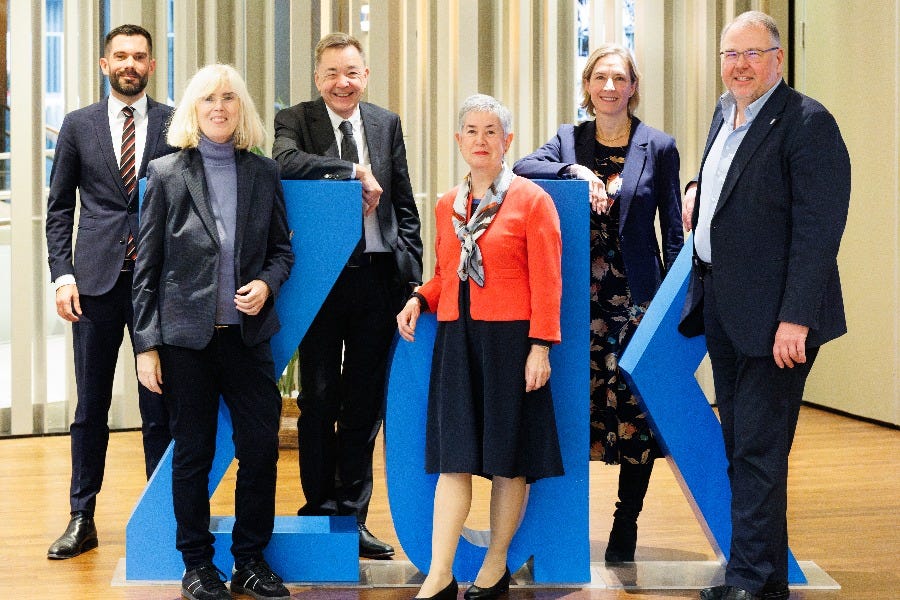
The Central Committee of German Catholics, known by its German acronym ZdK, issued the appeal in a Nov. 28 statement that called for significant alterations to the church tax system, through which the ZdK itself is largely funded.
The more than 3,000-word statement, approved at the ZdK’s Nov. 28-29 plenary assembly in Berlin, offered in-depth proposals for reforming the controversial funding mechanism, while arguing it was superior to other Church funding models.
Everyone living in Germany — including foreigners — who identifies as a Catholic on an official registration form must pay an 8-9% surcharge on top of their income tax liability, depending on the state in which they live.
This sum is collected directly from employees’ paychecks on the Church’s behalf by the state authorities, which retain 2-4% of the total as an administration fee.
The only way for baptized Catholics to opt out of the system is to declare formally that they are leaving the Church, after which they are told they may no longer receive the sacraments, hold Church posts, or serve as baptismal or confirmation sponsors, according to a 2012 general decree issued by the German bishops’ conference.
The ZdK statement noted that, according to the 2012 general decree, formally opting to leave the Church in Germany is not considered a canonical offense. But it nevertheless entails consequences “that largely correspond to those of excommunication.”
“According to the view of many canon lawyers, such a broad interpretation of penal law and the aggressive use of exclusion from the sacraments are unlawful,” it said.
“These consequences appear disproportionate to them, and the decree harms the Church more than it benefits it. After all, it does not prevent people from leaving the Church or the associated loss of church tax revenue; instead, the Church loses credibility.”
Summing up its position, the ZdK said: “On the one hand, believers who formally and officially distance themselves from the Church cannot expect this to have no internal ecclesiastical consequences.”
“On the other hand, the decree must be reviewed to determine whether a church withdrawal declared to the state authorities necessarily has to be tied to exclusion from the sacraments.”
The ZdK statement presented a nuanced defense of the church tax system, which dates back to the early 19th century. The ZdK noted that critics of the system frequently propose two other models common in Europe. In the first, the Church relies primarily on donations. In the second, found in Italy and Spain, taxpayers can voluntarily allocate a small portion of their income tax to the Church.
The ZdK argued that in a donations-based system, Church officials are more dependent on individual wealthy donors and require their support for initiatives earmarked for funding. This makes long-term planning more difficult.
In the Italian and Spanish systems, the ZdK said, the Church is reliant on taxpayers’ annual decisions and on the state, which determines the percentage of tax allocated to the Church.
“As the Church in Italy and Spain competes with other recipient organizations, the funds from this tax allocation system are insufficient in these countries to cover the Church’s financial needs,” it said.
The lay body concluded that, in comparison with the two other models, the German system was “practical, cost-oriented, balanced, and reliable, but also comparatively fair.”
“Ultimately, taxation is based on the economic capacity of individual Church members, and Christian values strive for a fair distribution of the burden,” it said.
But the ZdK said the church tax system could be refined by ensuring greater fairness, promoting transparency and better financial controls, increasing lay participation in economic decisions, and reviewing the link to accessing the sacraments.
The statement noted that the church tax was calculated based on an individual’s annual income, rather than a wider assessment of their wealth, which it said could result in injustices.
One example might be an elderly person who owns a valuable property and receives a moderate pension, which means he or she pays little or no church tax. A young married couple with two average salaries would pay significantly more, though they may also be providing for children and paying a large mortgage.
The statement also criticized significant variations in diocesan financial structures. It noted that in some dioceses, diocesan financial councils are relatively independent of the local bishop, as the majority of their members are elected. But in some dioceses, the councils’ powers are limited.
The ZdK argued that variations in accounting and reporting meant it was difficult to assess the true financial positions of dioceses. It called for financial statements to be produced according to a common code, to ensure the Church in Germany is “prepared for times of increasingly scarce resources.”
Although the Catholic Church in Germany is one of the wealthiest in the world, the country’s bishops’ conference and several dioceses have announced austerity measures, citing a declining number of Catholics and an anticipated fall in church tax income.
One of the ZdK statement’s most contentious proposals concerned the Association of the Dioceses of Germany, a legal entity of the bishops’ conference. The association, known by its German initials VDD, is the central financial and administrative coordinating body of the country’s 27 dioceses.
Major financial decisions currently require the unanimous agreement of all 27 dioceses.
In 2023, four diocesan bishops vetoed a proposal to fund a successor body to the German synodal way via the VDD, leaving the body’s supporters struggling to secure financial backing right up to its first meeting.
The ZdK, a co-sponsor of the synodal way, called for decisions to no longer require unanimity but only a qualified majority — usually significantly more than the 51% approval needed in a simple majority system.
If the VDD adopted the ZdK proposal, the majority of bishops who support the synodal way could release funds without a minority veto.
The ZdK said that if a permanent national synodal body is established in Germany, the VDD should be accountable not only to the bishops’ conference but also to the new body, which will consist of bishops and lay people, including ZdK members.
The VDD has an association council, a body with both advisory and decision-making powers, that consists of 18 voting members. The members are seven diocesan bishops, six vicars general, three diocesan finance directors, and two people nominated by the ZdK.
The ZdK called for its quota of members to be increased from two to four.


Reading about the ZdK reminds me of just how pernicious lay clericalism can be.
The ZdK is the embodiment of what money does to church structures… that combined with poor catechesis is a schism bomb awaiting to blow up