
The bishop of the newest Catholic diocese in Nigeria says the obstacles facing the local Christian community include not only legal restrictions, but also a pervasive sense of fear.
“There are many Muslim leaders who have clearly said that if they became governor, they would not be willing to work with Christians,” Bishop Gerald Mamman Musa of Katsina told The Pillar.
He recounted a story from when he was the secretary to a bishop, years ago.
“We wanted to purchase land from a Muslim, to build a Church for the growing Catholic population in the area,” Musa said. “He was willing to sell us the land, and was going to retire to his village, but when we told him what it was for, he got furious, and said that he would not sell to us for all the money in the world. He said that his neighbors would never forgive him if he did.”
Officially, there is no law against building churches in the region. Nor is there an official law against conversion. But “most of those who wish to be converted are afraid of the consequences,” which could vary from losing their inheritance to being physically attacked, Musa said.
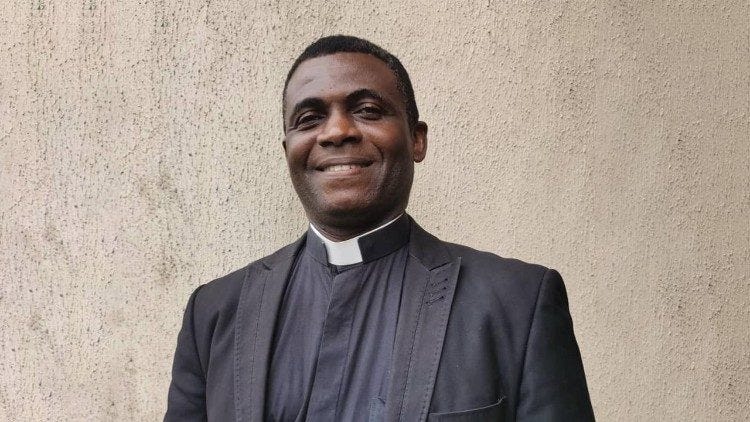
In 2023, Musa became the first bishop of the newly-erected Diocese of Katsina, in the far north of Nigeria.
Katsina is Hausa territory. The Hausa are one of the main tribes in the region, and their language is the most widely spoken in all of northern Nigeria. The vast majority are also Muslim.
Musa is the first Hausa bishop in the Church’s history. His father converted to Catholicism at the age of 12, and though he married a Christian and raised his eight children in the faith, the extended family remained Muslim. The bishop’s middle name, Mamman, was given by a Muslim aunt, and is a Hausa rendering of Mohammad.
Most of the 20,000 Catholics in the diocese are also Hausa, Musa said. Overall, Catholics make up less than 1% of the total population in the diocese.
While the bishop said he has generally good relations with area Muslim leaders, he did not hide the difficulties his community faces.
Katsina was one of the 12 northern Nigerian states to adopt Sharia law in the year 2000.
“Sharia law makes others feel that they are second-class citizens in the same state, and that is how Christians feel,” Musa said.
“When you say that Sharia must be implemented by force, and that democracy and the constitution are useless, it is the Christians who are going to suffer.”
The bishop believes introducing Sharia law was mostly a populist move by local governments, but that promises to end corruption and nepotism fell through, because “the politicians who introduced it are not ready to be subjected to the law.”
In a similar way, last year, some northern states, including Katsina, ordered that all schools be closed during the month of Ramadan.
“These states are among the most backward in terms of education, which leaves us wondering, does the government really want the people to improve? Or does it want to continue to keep them down?” Musa asked, wryly noting that the children of some governors attend schools outside of the state, or even of the country.
“So, who is the beneficiary of all this?” he questioned.
Christians have been facing violent persecution in parts of Nigeria for more than a decade.
Musa stressed that the ongoing violence in the country is complex. Religion is certainly one factor, but conflicts between herders and farmers in Nigeria are age-old, now aggravated by easy access to automatic weapons, he said.
“Poverty, historical grudges and politics all play a role,” the bishop said.
Nigeria is roughly divided into a majority Christian south and a mostly Muslim north. Jihadist groups including Boko Haram and the Islamic State–West Africa Province are active in the north, but much of the conflict between Muslims and Christians takes place in the restive Middle Belt, where the two halves of the country blend into each other.
Tensions in this area are often due to nomadic herders from the mostly Muslim Fulani tribe encroaching on the land of mostly Christian farmers.
“The reason it is often called religious persecution in the Middle Belt is because the victims are predominantly Christians, and when they are attacked by people yelling ‘Allahu Akbar,’ it’s presumed that that person is doing it for religious motives,” the bishop said.
But the traditionally Muslim Hausa are also mostly a farming people, and in the north tension between Fulanis and Hausa have also increased recently, he explains.
He warned against demonizing an entire ethnic group, but said he is concerned that the Fulani are being radicalized.
“There are signs of radicalization, which can often be traced back to politicians, supported by clerics, and then other leaders. So, there are clear and strong signs that there are religious factors in some of the conflicts.”
In 2025, the U.S. Commission on International Religious Freedom named Nigeria as a country of particular concern.
Then, on Christmas Day last year, Trump announced that the U.S. had launched airstrike attacks in northwest Nigeria.
Weeks before the attacks, Trump had threatened to “go into that now-disgraced country, guns-a-blazing” if the Nigerian government did not halt attacks on Christians.
But Musa said a year later, serious challenges still exist.
“People hoped that the dropping of the bomb was going to bring about a change in the attitude of extremist Muslims, but it has not changed anything,” he said. “The area where the bomb was dropped was not even where we have Muslim-Christian conflict.”
The U.S. government said it targeted ISIS jihadist camps in its airstrikes. And security on the ground does seem to have improved in the past year. While most years see dozens of Catholic clergy and religious kidnapped or murdered, there have been only five such instances in 2026.
However, Musa says it is too early to be optimistic, and that the increase in security is more likely due to the upcoming elections in January.
“Just last week some priests in my diocese narrowly escaped kidnapping. The situation may seem to have improved, but when elections are coming you see a lot of window dressing, then things go back to square one.”
Musa said he is “deeply concerned about how bad the relationship between Christians and Muslims has become.”
“What we have seen in recent years, especially in the neighboring states, is segregation. Christians and Muslims who used to live together, now live apart. We are seeing this kind of degeneration of relationships, and it’s really a cause for concern.”
And ultimately, he says, the government has an important role to play in fostering unity.
“Instead of saying that one group or religion has its own law and then the others have another law, we need a law that draws from the daily life of the people, from our cultural values, our religious values and our human values,” he said. “We have not explored that path.”