A six-year dispute between the Spanish Diocese of Barbastro-Monzón and Opus Dei over a Marian image at the shrine of Torreciudad has escalated after almost a year of relative silence, with the local bishop again threatening to resign if the dispute is not resolved in his favor.
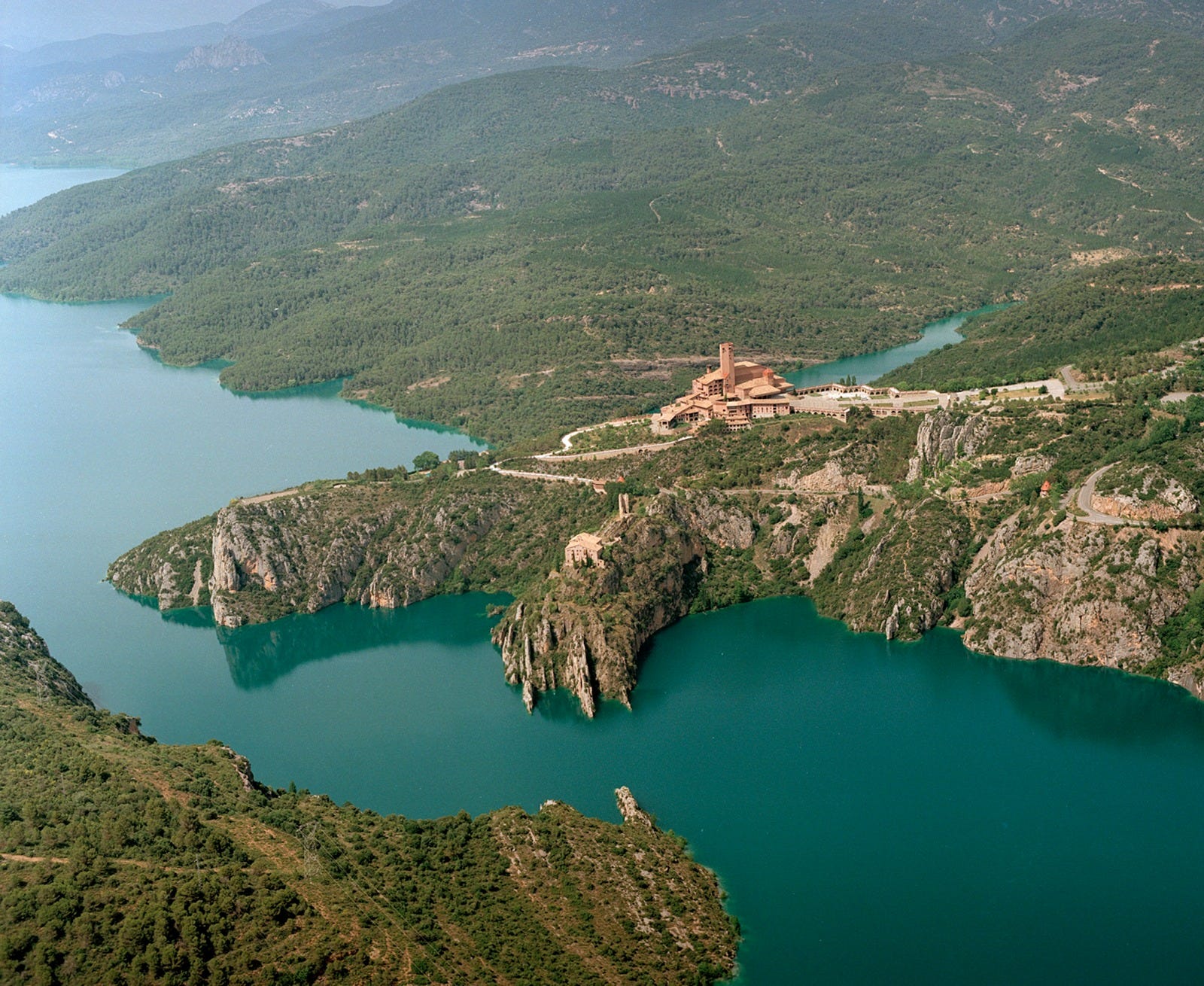
Vatican sources told The Pillar that the Vatican-appointed commissioner resolved the matter almost a year ago with an agreement thought to be largely favorable to Opus Dei, but Bishop Ángel Pérez Pueyo, SOD, has so far refused to accept the agreement.
The Vatican agreement provided for continued Opus Dei control of the shrine complex; for the normalization of its canonical status as a diocesan shrine, with the bishop appointing the rector from a shortlist presented by Opus Dei; and for the image of Our Lady of Torreciudad to visit its original chapel twice a year.
But the bishop has so far rejected all proposed solutions that do not include the permanent return of the image of Our Lady of Torreciudad to its original chapel.
While Archbishop Alejandro Arellano, the Vatican-appointed commissioner to Torreciudad, has the authority to impose the resolution on Pérez Pueyo without his agreement, sources said, the Vatican has tried to handle the situation delicately, even offering to transfer the bishop to a new diocese to avoid prolonging the conflict.
Founded in 1084 as a shrine to Our Lady of the Angels, the Torreciudad site has for decades been under the administration of Opus Dei.
While the shrine is popularly referred to as a shrine, it is not technically a shrine in the canonical sense, by which the local bishop legally designates a site for public pilgrimage.
Instead, the site was designated in the original 1962 agreement between the diocese and Opus Dei as a “semi-public oratory,” canonically intended for the use of only a particular community — Opus Dei.
However, that designation became unworkable as the site grew in popularity, eventually attracting around 200,000 pilgrims annually.
As a result of the growth, both the diocese and Opus Dei voiced interest in formally designating the site as a diocesan shrine, which would remain under the spiritual care of Opus Dei.
While negotiations opened in 2020 between the diocese and the prelature, talks broke down over the practical details of who would control the site.
As part of this settlement, the image of Our Lady of Torreciudad would be taken in procession to the original chapel twice a year, reports said.
But in July 2025, Pérez Pueyo published a letter in which he made a radically different proposal, which would make the site an international shrine under Vatican control, and would give Opus Dei full control of the shrine and the authority to elect its own rector, as long as Opus Dei returned the image of Our Lady of Torreciudad and the old baptismal font of the cathedral.
The addition of the baptismal font to the requests left many observers confused. The font is not and has never been part of the Torreciudad shrine, nor it had been included in any of the previous diocesan requests.
The font has been in the central headquarters of Opus Dei in Rome since the Bishop of Barbastro gave it to Opus Dei founder Saint Josemaría Escrivá in 1959.
In September 2025, Spanish newspaper El País reported that Pérez Pueyo had lost support in the Vatican after the death of Pope Francis, and said that the Vatican-appointed commissioner would rule in favor of Opus Dei.
Pérez Pueyo then threatened to resign, saying in a homily that “if I saw myself forced… to accept what I can’t accept, as a pastor I’d repeat the same words of elder Eleazar: that I can’t do it without ‘defiling and disgracing my old age’ in such a way that would be a bad example to our faithful.”
While the dispute had largely fallen quiet over the past year, Bishop Pérez Pueyo renewed his position in an Aug. 31 letter this year, in which he reiterated his threat to resign rather than accept a Holy See decision against him.
“I cannot sign, approve, or consent to a solution that deprives this town of Barbastro-Monzón of its own Mother, or that turns her into a stranger who pays occasional visits to her children from someone else’s home,” he said.
“That commitment compels me, in good conscience, not to deprive our diocese of its beloved Mother, and rest assured that your pastor would never sign off on such an unthinkable affront to your dignity. In such a case, I would resign from my position out of loyalty to our people.”
He said Pope Francis had personally supported him on the matter and had encouraged him not to yield.
Pérez Pueyo celebrated that the image of Our Lady of Torreciudad would leave the shrine, where it is held, to “return home” for a Sept. 5 pilgrimage, the first time the image will return to its original chapel since the inauguration of the shrine.
The original chapel is about a 15-minute walk from the shrine.
“We’re not asking for privileges. We’re asking for Our Lady to stay in her home, where she stayed for over a thousand years until it was taken, 50 years ago,” the bishop said.
Religión Confidencial reported days earlier that Pérez Pueyo announced the transfer of the image for the Sept. 5 pilgrimage without consulting the pontifical commissioner.
In his Aug. 31 letter, the bishop suggested that the image had been taken from its original site illegally. He said a diocesan review of relevant parish and diocean records found no indication that the removal of the image had been properly authorized.
However, Opus Dei has published a notarized affidavit of a 1966 agreement to move the image of Our Lady of Torreciudad from the old chapel to the new site, approved by Bishop Jaime Flores, then-bishop of Barbastro.
Pérez Pueyo’s ongoing refusal to accept an agreement – and his confrontation with the commissioner he himself requested – have reportedly caused growing frustration within the Vatican, with one Vatican official describing him to The Pillar as “a problem bishop.”
Sources close to the commissariat in both the Vatican and Spain told The Pillar that the commissioner reached a decision about the shrine months ago, but that the Vatican did not want to prompt Pérez Pueyo’s resignation or prolong his confrontation with Opus Dei and the commissioner.
Various solutions have been proposed, including the transfer of the bishop to a new diocese, one source told The Pillar, but the bishop is not willing to accept any of the proposals that have been offered.
“He was [given the offer] to accept an agreement instead of a direct order from the commissioner so it didn’t look like his hand was being forced,” the source said. “But he has refused everything.”

I just don't understand what the prize is, here--for anyone, I guess. I can imagine wanting things a certain way, even pushing for them, but the stakes just don't seem high enough to prevent reaching a modus vivendi, especially one that could be revisited later. It doesn't seem like the right hill to die on. What am I missing?