Hindu nationalist party seeks inroads in Syro-Malabar heartland
India's ruling BJP is fielding Christian candidates in four pivotal constituencies.
India’s ruling Hindu nationalist party is seeking to make new inroads in the heartland of the Syro-Malabar Catholic Church.
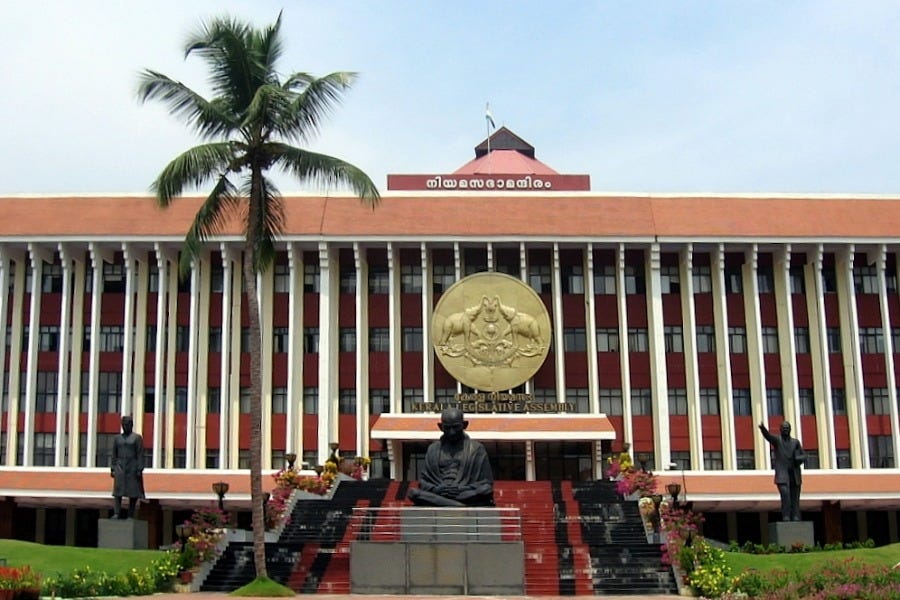
That is the contention of a March 17 analysis published by India TV, following the Bharatiya Janata Party’s release of an initial list of 47 candidates who will contest the April 9 Kerala Legislative Assembly election.
The author, Anurag Roushan, noted that the BJP is fielding Christian candidates in four pivotal constituencies in the southern Indian state of Kerala, where the Syro-Malabar Church is based.
The development is notable because Syro-Malabar Catholics are far from typical BJP voters. Until now, members of the autonomous Eastern Catholic Church in Kerala have tended to support an alliance led by the Indian National Congress, the BJP’s main rival nationally.
If the BJP were to win in these four constituencies, it would signal a political transformation in the area known as the Syro-Malabar Belt.
What’s the background to this development? And will the BJP’s new strategy succeed?
What’s the background?
The Syro-Malabar Church has around 5 million members worldwide, making it the largest of the 23 Eastern Catholic Churches in full communion with Rome after the Ukrainian Greek Catholic Church.
The Syro-Malabar Church considers its founder to be St. Thomas the Apostle, who, according to tradition, brought the Gospel to southern India in the first century AD.
Kerala is the Indian state that runs along the Malabar Coast. India’s most recent census, conducted in 2011, concluded that 33 million people live in Kerala, making it the country’s 13th-most populous state.
Kerala is home to around 6 million Christians, more than in any other state. Christians are, however, still a minority, accounting for 18.38% of the population, behind Muslims at 26.56%, and Hindus at 54.73%.
Syro-Malabar Catholics are the largest Christian community, comprising 40.2% of Christians, followed by Latin Catholics (13.2%), Malankara Orthodox Syrian Christians (8%), Jacobite Syrian Christians (7.8%), and Syro-Malankara Catholics (7.6%).
The BJP emerged from a cultural and political movement that arose in India in the early 20th century. The movement insisted that Hindutva, or “Hindu-ness,” was India’s defining characteristic, as it strove for independence following centuries of domination by foreign powers.
The movement’s advocates argued that India rightfully belonged to those who saw it as their holy land, principally Hindus, but also Buddhists, Jains, and Sikhs, whose faiths also originated in the country.
They expressed doubts about whether Muslims and Christians — respectively India’s largest and second-largest religious minorities — could be integrated into the Hindu nation, given their holy lands lay elsewhere.
The Rashtriya Swayamsevak Sangh, founded in 1925, became an influential umbrella body for Hindu nationalists after India gained independence in 1947. The cluster of Hindutva organizations around the RSS — dubbed “the saffron empire,” after its favored color — includes the BJP, which was founded in 1980.
The BJP’s heartland is central and northern India, where Hindi is the predominant language. Kerala’s main language is Malayalam, which points to its cultural distinctiveness within India.
For decades, the BJP struggled to compete in Kerala, because two political alliances were well entrenched in the state: the Left Democratic Front, led by the Communist Party of India (Marxist), and the United Democratic Front, led by the Indian National Congress.
The LDF tended to do well among lower-caste Hindus and other working-class communities. The UDF appealed to upper-caste Hindus and minority religious groups.
The BJP began to court Christian voters after failing to gain any seats in Kerala in the 2019 general election. Reportedly believing that the Hindu majority’s vote was too divided to provide a path to victory, the party sought support from religious minorities.
After surveying churches in the state, BJP officials identified leaders potentially sympathetic to the party. They also sought to build support through house visits and community programs.
At the national level, BJP Prime Minister Narendra Modi began to hold well-publicized meetings with Church leaders.
In 2024, the BJP made a spectacular breakthrough when it gained its first member of parliament in the state. Its candidate, Suresh Gopi, was a well-known actor in Malayalam-language movies. The BJP’s outreach to Christian voters is believed to have helped elect Gopi, a Hindu.
Will the BJP’s new strategy succeed?
Indian commentators say the BJP is confident it can build on its 2024 breakthrough. It believes that both the LDF and the UDF have lost touch with their traditional supporters, presenting an opportunity to expand BJP influence in Kerala.
The BJP will compete in next month’s Kerala Legislative Assembly election as part of the National Democratic Alliance, India’s ruling coalition.
In his March 17 analysis, Anurag Roushan argued it is impossible to triumph in Kerala with Hindu votes alone. The BJP therefore needs to win religious minority votes. But it has alienated most Muslims with its Hindu nationalist rhetoric, so Christians are its main hope for building a winning voting bloc.
The BJP’s quest for the Christian vote will focus on four assembly constituencies — Kanjirappally, Poonjar, Pala, and Thiruvalla — within the area of Kerala known as the Syro-Malabar Belt, because of the concentration of Syro-Malabar Catholics.
“These seats lie in regions where Christian voters hold significant sway and often determine the winner. In particular, Pala and Poonjar have historically been strongholds of influential Christian leaders and regional parties,” Roushan wrote.
“By fielding candidates with strong local connect and community backing, the BJP aims to challenge entrenched political loyalties. It is believed that a strong performance here could signal a broader shift in voter behavior and give the party a foothold in central Kerala.”
Roushan explained that stamping its mark on central Kerala would be critical for the BJP.
“This region accounts for over 40 per cent of Kerala’s Christian population and plays a decisive role in state politics,” he wrote.
“Traditionally aligned with the Congress-led UDF, this belt has recently shown signs of political fluidity. Any swing in voter preference here can significantly alter electoral outcomes. For the BJP, cracking this belt is key to transforming its presence from a marginal player to a serious contender.”
Roushan suggested the BJP’s new strategy showed a shrewd grasp of Kerala’s complex culture and politics. But he said its success was far from guaranteed, because the LDF and the UDF still have formidable voter networks. Indian media report that the Syro-Malabar bishops have attempted in recent weeks to build bridges with the UDF.
Whether Kerala’s Christian voters gravitate toward the BJP may also depend on events outside of the state. In the final months of 2025, a series of anti-Christian incidents shook Indian Catholics. One involved a BJP official confronting a partially sighted woman at a church.
Human rights activists have accused the BJP of tacitly permitting violations of minority rights since its rise to power — a claim it denies. But if similar incidents occur ahead of the April 9 election, Christians may be less inclined to vote for the party.
But if the BJP is a big winner when the election results are announced May 4, it will shake up Kerala’s political landscape. The state’s Catholic bishops would have to adapt to a new political reality. The Vatican also would need to take note, given that a papal visit to Kerala might be in the pipeline.
Pope Leo XIV is likely to appoint a new apostolic nuncio to India soon, following the transfer to Croatia of Archbishop Leopoldo Girelli, the Vatican’s man in New Delhi since 2021.
A possible BJP breakthrough in the Syro-Malabar Belt could be one of the early items on the new nuncio’s agenda.
