How the Church can limit a broader SSPX schism
The Vatican has drawn clear distinctions within the legally nebulous concept of the Society of St. Pius X.
With a decree and explanatory note from the Dicastery for the Doctrine of the Faith, the Vatican on Thursday declared the excommunication of the bishops of the Society of St. Pius X following their illicit episcopal consecrations on July 1.
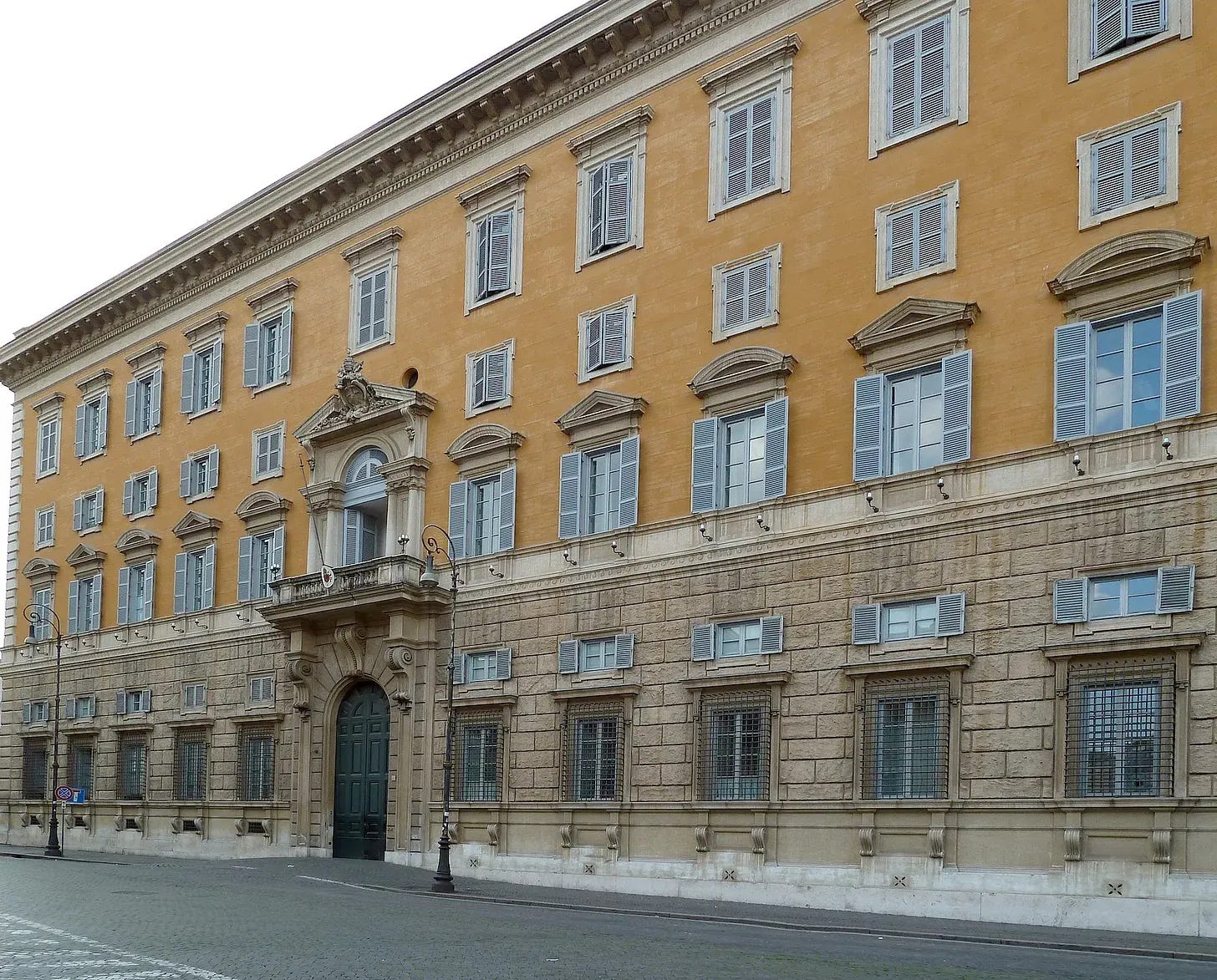
The wording of the decree was simple and to the point, addressing by name the six men who directly participated in the consecrations which were, as they had been previously been warned, a double canonical crime — the consecrations themselves and the schism which they manifested.
While no informed observer ever doubted such would be the consequences for the bishops, there has been considerable discussion about what wider canonical effects the new SSPX schism would have for its associated clergy and faithful.
But, while the interventions of the DDF on Thursday might make sense to canonists, the exact wording of the Vatican’s responses have already been the subject of a barrage of commentary, much of it arguing against its effectiveness and legal coherence.
The challenge facing the hierarchy now, both in Rome and at the local level, will be explaining the Church’s position — and acting in accordance with it — in a way which coherently addresses inevitable SSPX arguments that they exist above and beyond the discipline of the Church.
In aid of that effort, though, the DDF has already gone a long way in minimizing the potential depth of the SSPX schism by legally recognizing the different relationships some of the faithful have with the society and its positions.
Legal advice and warnings issued in recent weeks from the Dicastery for the Doctrine of the Faith made clear that the Vatican would take a broad, some might say expansive, view of the extent of a schism, reissuing legal advice on when and how the priests and lay people affiliated with the SSPX could be considered to legally associate themselves with the canonical rupture, and therefore penalties.
That advice drew distinctions between clergy of the society and laity who associate themselves with its churches, and laid out the need for some determination by a competent Church authority to declare the automatic excommunication as having been incurred.
Thursday’s decree from the DDF concluded with “Clerics and lay faithful are warned not to adhere to the schism of the Priestly Society of Saint Pius X, because they would ipso facto incur the penalty of latae sententiae excommunication.”
The exact definition of such an adherence was then again laid out in an accompanying explanatory note from the dicastery which, again citing the Vatican’s previously given legal rationale, explained who, when, and why, among those associating themselves with the SSPX should be considered in schism and labouring under the automatic penalty of excommunication.
Initial reactions to the explanatory note, which again drew distinctions between clergy and laity, have tried to litigate whether this explanatory note has the legal effect of declaring the penalty of excommunication for schism against all those associated with the SSPX.
As a plain canonical matter, it would seem obviously not to have any such effect, since an explanatory note is not a decree, legally speaking — and because it lays out criteria for assessing against whom the penalty could and should be declared, rather than making the assessment in specific cases.
Across the initial reactions though, is the likely erroneous assumption that the DDF explanatory note intended to effect the excommunication of swathes of clergy and faithful, rather than lay out the circumstances for such excommunications to be declared. The difference is significant.
For a start, a basic canonical principle is that legal acts must be issued for individuals or communities capable — that is legally recognizable — of receiving them. In the case of the society, the Church does not and never has recognized the SSPX as existing as a valid legal association.
While it is possible for the Church to recognize the general existence of the SSPX as a self-identifying group, because it lacks legal reality, the Vatican cannot discipline its “members” qua members because there is no such legal criteria for membership to be established.
Instead, what the DDF has done, both in Thursday’s explanatory note and previously, is describe the circumstances in which clerics and lay people can be considered to have voluntarily adhered to the schism of the SSPX movement, without attempting a legally impossible task of making that discernment for all people and places in a single document.
The apparent intent of the DDF explanatory note is twofold.
First, it makes explicit the schismatic nature of the SSPX and the dire spiritual and canonical consequences for a Catholic, priest or lay, in associating themselves with it. Second, it lays out the necessary canonical argumentation which would allow competent authorities, most obviously local bishops, to take the necessary action to protect and discipline the faithful in their dioceses.
Now, though, the situation seems to be more urgent, and the need for local action in response to the renewed SSPX schism and Vatican response appears much more acute.
Throughout the back and forth between the society and the Vatican in the months since the consecrations were announced, the SSPX leadership have advanced a narrative that they occupy a kind of privileged status in the Church — somehow both in communion with the pope and yet beyond his discipline and above the authoritative pronouncements of the hierarchy on matters of faith.
The SSPX will now be equally invested in convincing as many Catholics as it can that Rome’s judgements are wrong, and the hierarchy’s pronouncements do not bind them. There is already a considerable volume of online argument that the SSPX schism is both justified and no schism at all, and that the Vatican’s canonical statements lack weight and force.
Amid the sometimes comical hyperbole and obvious bad faith of online discourse, though, many Catholics who have found themselves drawn to SPPX chapels and liturgies will have done so for reasons other than the society’s clearly stated dissent from papal discipline and Vatican teaching authority.
Especially in the wake of Traditionis custodes, many too will feel that they have been exercising a justified choice in seeing to their own liturgical needs in doing so, in the face of harsh, even deliberately provocative local circumstances.
There will be, indeed it can already be seen, a raft of questions about and rationalizations against the Vatican’s clear description of the SSPX as a schismatic movement in the face of specific cases, be they real or hypothetical.
The extent to which the danger posed by the schism, and by the SSPX’s continued attempts to convince the faithful to adhere to it, is mitigated will depend in large part on the hierarchy, at every level, adopting, amplifying, clarifying and codifying the DDF’s guidance tailored to the specifics of people and place.
This seems to have been something the Vatican itself is aware of – shortly after the declaration of the excommunication of the SSPX bishops and explanatory note on who else could fall into schism and how, the Vatican issued a protocol for priests and lay people affiliated with the society to return to communion with the Church.
For priests of the society, which standing Vatican legal guidance has made clear for years can, by virtue of putting themselves as the service of the SSPX, be considered to have formally adhered to the schism of its leadership, various steps to adjure the schism and affirm the Church’s teachings and the pope’s authority have to be undertaken — crucially these require the involvement of the local bishop.
Crucially, in providing for laity to re-enter communion with the Church out of schism with the SSPX, the protocol makes clear — again as past Vatican legal opinion has said — that schismatic intent and effect cannot be assumed on the part of any layperson and can only be assessed on a case by case basis.
While there are some indicators which can assist both local authorities and the affected lay people themselves in assessing their level of likely culpability, such as habitually participating in SSPX liturgical celebrations or formally sharing its doctrinal positions, nothing is to be presumed automatically.
Arguably the most important provision of the DDF protocols, though, is the explicit statement that “lay people who have attended the Priestly Fraternity of Saint Pius X only for liturgical or spiritual reasons [and] lay people who, while aware of the tensions with the Holy See, do not reject the Magisterium or the authority of the Roman Pontiff… are not to be considered imputable.”
In stating this clearly, the Vatican has drawn a clear line around those otherwise faithful Catholics who have found themselves in the orbit of the SSPX and its chapels for personal spiritual reasons and separated them from the formal schism of the society itself.
Across its three documents on Thursday, then, the Vatican has drawn clear distinctions within the legally nebulous concept of the Society of St. Pius X, making very different canonical assessments of the imputability and culpability of its bishops, priests, and different strands of lay people.
Communicating the nature and significance of those distinctions, and their different practical and canonical consequences, is now something local bishops will need to do in their dioceses. How effectively and coherently they do so will likely determine how deep and wide the SSPX schism really becomes.

Before I read the article, just had to say that it's good to see your name in the byline, Ed.
For the confused among us would it be fair to say for practical purposes: 1) don’t attend SSPX chapels for sacraments or support them and 2) if you’ve done so with any regularity in the past speak to a (non-SSPX) priest or your someone in your diocese to clarify your situation?