Indian bishops: RCIA leaders risk jail under anti-conversion law
"Under the present law, even...a carefully discerned and freely chosen conversion could be easily challenged.”
Catholics in India’s Maharashtra state who oversee programs that prepare adults to join the Church risk imprisonment under a new law, bishops said Thursday.
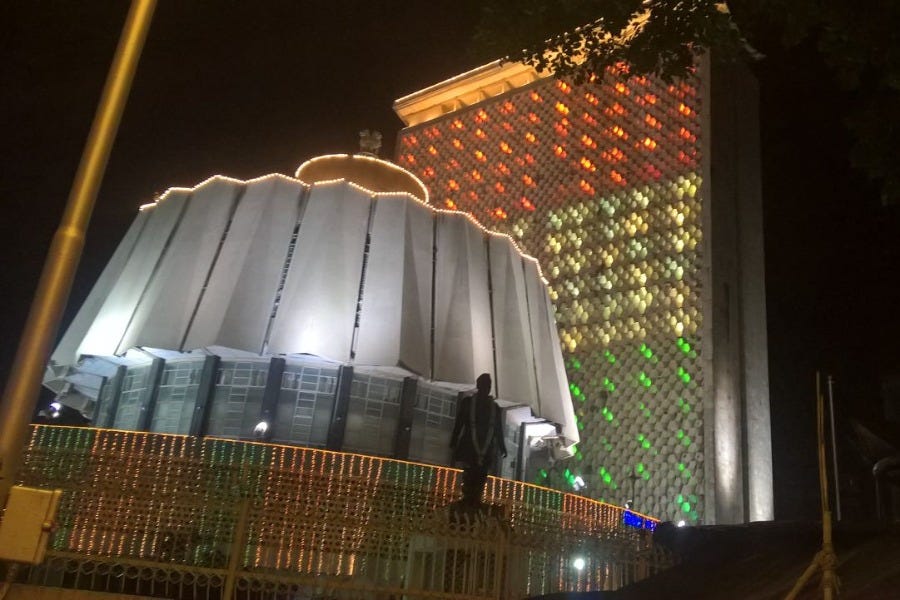
The bishops of India’s second most populous state issued the warning March 19, after the state legislature passed a controversial anti-conversion bill.
The bishops argued that the provisions of the Maharashtra Freedom of Religion Act amounted to “a direct and unjustified interference in the legitimate religious practices of the Catholic Church, particularly its Rite of Christian Initiation of Adults (RCIA) program.”
The bishops said the RCIA — now known as the OCIA in the U.S. — was designed to ensure that adults made a free and informed decision to become Catholics, eliminating any possibility of forced conversion.
“However, under the present law, even such a carefully discerned and freely chosen conversion could be easily challenged,” they said.
“If family members, who may naturally oppose such a decision, raise objections, the clergy and others involved in the process risk being accused of coercion or of ‘brainwashing’ as mentioned in 2(p) of the bill.”
“In such circumstances, they face the threat of severe and disproportionate penalties, including imprisonment of up to seven years and heavy fines, despite the absence of any wrongdoing. This effectively criminalizes legitimate religious activity and places an unreasonable burden on both the individual and the religious institution.”
The bishops added: “The shifting of the burden of proof on the accused, the lack of deterrent punishment on false allegations, and the broad, ambiguous language of the Act raise serious concerns regarding arbitrariness and potential misuse, as has been the case in other states.”
The bill’s supporters insist the legislation targets only “unlawful” conversions.
In the decades after India secured independence, individual states began to pass anti-conversion laws, with the stated aim of preventing coerced conversions.
But the laws’ critics have consistently argued that they are also used to discourage voluntary conversions from Hinduism, India’s main religion, to minority faiths, including Christianity.
Anti-conversion laws have tended to pass in states where Hindu nationalist movements wield strong social and political influence.
Maharashtra state has a population of around 112 million people in an area roughly the size of the U.S. state of New Mexico. Around 80% of the population is Hindu and only 0.96% are Christian. The state capital is Mumbai, the headquarters of the Archdiocese of Bombay, one of India’s most prominent Latin Rite sees.
Although the surrounding states of Madhya Pradesh, Gujarat, and Karnataka passed anti-conversion laws, Maharashtra state did not immediately follow the trend.
But in recent years, Hindu nationalist groups claimed that coerced conversions were taking place in the state through interreligious marriages and the targeting of impoverished tribal communities.
The Maha Yuti political coalition, led by the Hindu nationalist Bharatiya Janata Party, promised to enact an anti-conversion law if it secured power in the 2024 state assembly elections.
The coalition won a landslide victory and introduced the Maharashtra Freedom of Religion Act in the legislative assembly, the state’s lower house, on March 13, 2026.
The bill set out penalties for coerced conversion through inducements such as employment, free education, and marriage.
In section 2(p), cited by the bishops, the bill defined unlawful conversion as conversion from one religion to another, “by use or practice of allurement, coercion, deceit, force, misrepresentation, threat, undue influence, or any fraudulent means, or by brainwashing through [the] medium of education or by any other such means.”
Shortly before the bill’s introduction, Bombay auxiliary Bishop Savio Fernandes urged lawmakers to ensure the text was “carefully drafted,” so that it addressed concerns about coercion without infringing the freedom of minority religious groups.
“The law must apply uniformly across communities and ensure that no faith tradition is either advantaged or disadvantaged,” he wrote.
“While the state has a legitimate role in preventing coercion or fraud, it must exercise that responsibility in a manner that does not intrude on an individual’s autonomy of belief or impose undue burdens on voluntary religious conversion.”
Fernandes expressed particular concern about a section of the bill that entitled a blood relative of a convert to lodge a “first information report” with the police. A first information report is a crucial initial step in a criminal investigation in India.
Fernandes said that the bill’s blood relative provision “risks opening the door to third-party interventions in deeply personal decisions concerning one’s faith.”
The legislative assembly endorsed the bill by voice vote during a late-night session March 16. The Maharashtra Legislative Council, the state’s upper house, passed the bill March 17.
The bill will become law once it is approved by the state’s BJP governor, Jishnu Dev Varma. When it goes into effect, Maharashtra will become India’s 13th state to pass an anti-conversion law.
In the March 19 statement expressing their objections to the new law, the Maharashtra state bishops said: “A close reading of the Act suggests a troubling lack of neutrality. Rather than promoting harmony, it risks fostering suspicion, division, and injustice. The law appears to disproportionately affect minority communities, raising serious concerns about its intent and application.”
“The Catholic Church has always stood in support of the nation’s progress, unity, and integrity. It has worked alongside governments in building a just and inclusive society. However, when legislation departs from constitutional principles and adopts a partisan or coercive character, it becomes necessary to raise a principled voice of dissent.”
“We therefore strongly oppose this Act in its current form and call for its immediate withdrawal or substantial revision. Religious freedom is not a concession granted by the state; it is a fundamental right that the state is bound to respect, protect, and uphold.”
The statement was signed by 11 bishops belonging to the Western Region Bishops’ Council of the Conference of Catholic Bishops of India, a body uniting the country’s three main rites.
The signatories included Latin Rite Archbishop Elias Gonsalves of Nagpur, Latin Rite Archbishop John Rodrigues of Bombay, and Syro-Malabar Archbishop Sebastian Vaniyapurackal of Kalyan.

*taps the sign*
https://www.pillarcatholic.com/p/hindu-nationalist-party-seeks-inroads/comment/230132275