Indian lay group deplores ‘mob’ threats against Salesian Sisters
The sisters were reportedly ‘subjected to abusive language and intimidation’
India’s largest lay Catholic organization condemned Monday an incident in the state of West Bengal in which a mob reportedly threatened violence against religious sisters.
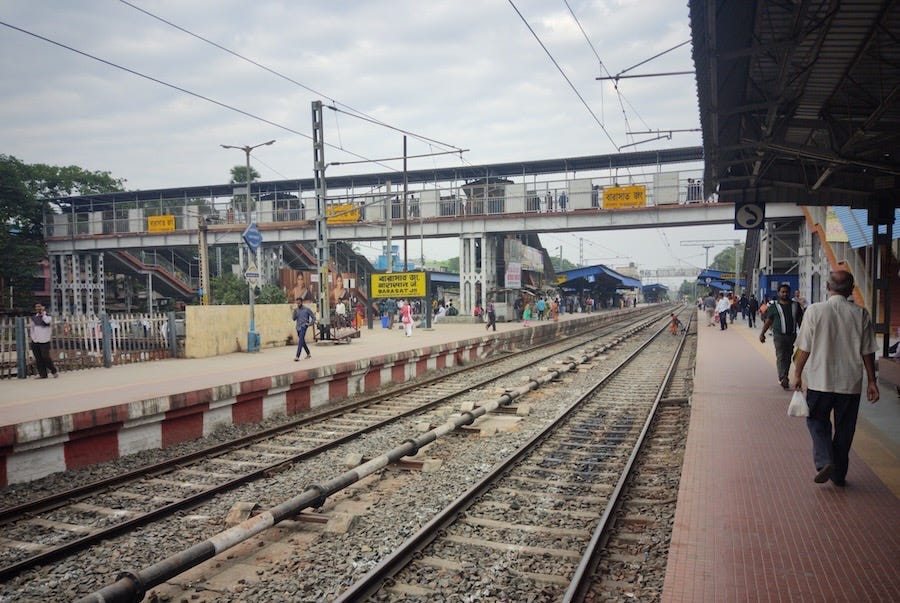
The All India Catholic Union said that on July 12 a group of 60 people entered a house of the Daughters of Mary Help of Christians in Barasat, West Bengal, and demanded that they immediately demolish a memorial chapel and cemetery or face violence.
The AICU alleged that the individuals involved in the incident were linked to the Hindu Jagran Manch (Forum for Hindu Awakening), a Hindu nationalist group affiliated with the Rashtriya Swayamsevak Sangh, an influential umbrella body.
The Hindu Jagran Manch does not appear to have commented on its alleged role in the event. Hindu nationalist groups often frame actions against Christian groups as arising from concerns about illegal conversions, land disputes, or local conflicts, rather than as religious persecution.
The Daughters of Mary Help of Christians, also known as the Salesian Sisters, reportedly obtained permission to build the memorial chapel and cemetery, intended for the burial of its members, under the previous state administration run by the Trinamool Congress party.
But in April’s state election, the Trinamool Congress’ 15-year rule in West Bengal was ended by the Hindu nationalist Bharatiya Janata Party. At the federal level, the BJP is the main partner in India’s ruling coalition, led by Prime Minister Narendra Modi.
Suvendu Adhikari, the first BJP politician to serve as West Bengal’s chief minister, has promised to introduce an anti-conversion law in the state.
Describing the July 12 incident, the AICU said: “The Salesian Sisters, who have been selflessly serving the poorest girls through education and social welfare for decades, were subjected to abusive language and intimidation.”
“The mob reportedly declared, ‘Your government is no more, now it is our government,’ clearly indicating an attempt to bypass the rule of law through threats and fear.”
The AICU said the incident was not an isolated event, but “part of a disturbing and growing pattern of targeted harassment against Christian institutions and communities across several districts of West Bengal.”
It did not say explicitly whether it believed the pattern of harassment was linked to the recent change in the state administration.
West Bengal, which is located in eastern India, is a mid-sized state in geographical terms, but has one of the largest state populations. It encompassed around 100 million people in 2026.
The most recent census, conducted in 2011, concluded there were 658,618 Christians in the state, comprising just 0.72% of the total population, which is about 70% Hindu and 27% Muslim.
The AICU, which has represented lay Catholics in India since 1919, said the July 12 incident was a direct challenge to minorities’ rights to practice their faith and manage their own properties, guaranteed by India’s Constitution.
The lay group called on the West Bengal government to guarantee security for the Salesian Sisters and their institutions, to protect the chapel and cemetery, to take legal action against participants in the act of intimidation against the sisters, and to order the local administration to prevent similar incidents.
“The right to worship and the right to maintain places of worship are fundamental rights guaranteed by the Indian Constitution,” the AICU said.
“No individual or organization has the right to threaten nuns or force the demolition of structures built with due permissions.”
“We call upon the state authorities to act swiftly and firmly. Silence or inaction will only encourage further attacks on minority communities.”
The Catholic Bishops’ Conference of India also criticized the July 12 incident.
Fr. Stephen Alathara, a spokesman for the body uniting the bishops of India’s three Catholic rites, urged citizens “to reject violence and to resolve any disputes exclusively through legal channels and democratic processes.”
CBCI president Cardinal Anthony Poola led a delegation to meet with India’s federal home minister Amit Shah July 10. The delegation reportedly raised concerns about rising anti-Christian incidents in the country. Shah is said to have promised to intervene in cases where local police failed to register cases.
The Open Doors advocacy group ranked India as the 12th-worst country in which to be a Christian in its 2026 World Watch List. It said that the drivers of persecution included religious nationalism and ethno-religious hostility.


Hindu Nationalist violence against Christians has been a persistent problem for decades, now. Those who visibly pursue their faith in such places are often exercising heroic virtue on a daily basis, and need our attention, prayers, and support.