Is the Vatican about to lose millions more on the London property fiasco?
The Secretariat of State appears to be sabotaging its own efforts to claw back losses, potentially leaving itself exposed to millions more in liabilities in the process.
While the fate of the Vatican’s criminal prosecution over the infamous London property deal appears to hang in the balance in the city state’s court, a number of legal developments in Rome and abroad suggest the case could be on the verge of collapse.
While that result would be a near-nightmare scenario for prosecutors in the Vatican, with a six-year legal process ending in humiliation, it could also leave the Holy See open to more financial losses stemming from a deal which has already cost the Vatican hundreds of millions.
Such a result seems like something the Vatican should be straining to avoid at all costs, but recent developments suggest the Secretariat of State is itself sabotaging its own legal efforts to claw back losses, potentially leaving itself exposed to millions more in liabilities in the process.
It is unclear what strategy the Secretariat of State is pursuing in its apparently conscious disengagement from its own case — or to what end. But, for now, the potential risks seem all too clear.
—
Judges at the Vatican City court of appeal ordered in March a review of the investigation and indictment which opened the landmark financial crimes trial in 2022.
The result of that ruling is a kind of trial within a trial which, while leaving intact the 2024 convictions handed down by a lower court, creates the possibility of a mistrial being declared, and blocking any future efforts to prosecute the 10 defendants cited in the initial trial over a series of investments through which the Holy See lost an estimated 200 million euros in the years leading up to 2018.
The collapse of that prosecution would be, in itself, a disaster for the Vatican, meaning that nearly a decade of financial scandal and attendant negative media coverage were ultimately for nothing, despite seemingly clear evidence of corruption and criminal activity coming to light both before and during the trial.
But the potential consequences of the entire Vatican City trial being dismissed could also have far wider implications.
In addition to the criminal prosecutions in Vatican City, the London property deal and connected events have been the subject of numerous legal processes and lawsuits in other countries, none of which have gone the Vatican’s way. Last week, Swiss authorities announced that it had abandoned efforts to prosecute one of the Secretariat of States former investment managers, Enrico Crasso.
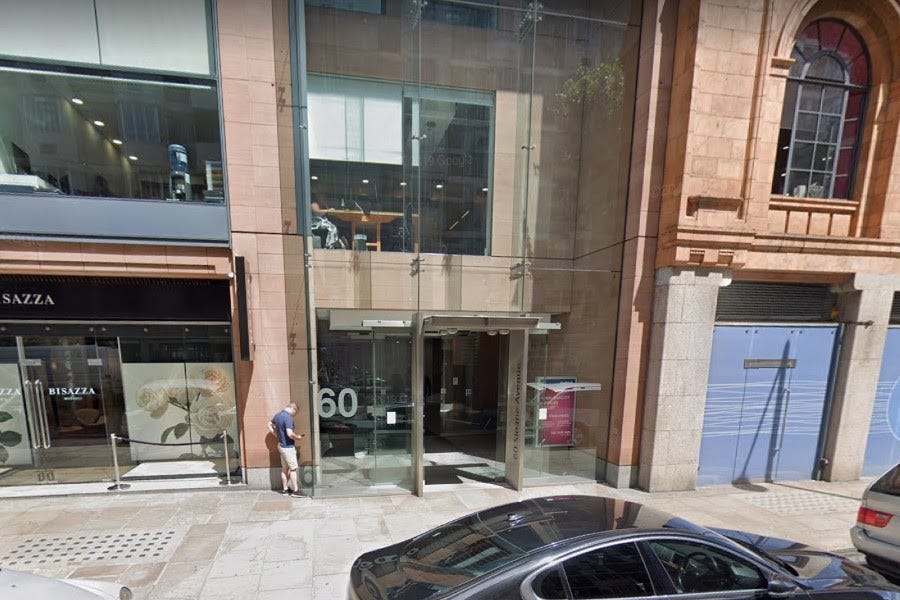
According to the man who ultimately sold the Vatican the London building at 60 Sloane Avenue, Raffaele Mincione, Crasso was a key figure in setting up the Secretariat of State’s investment with Mincione and acted — in Mincione’s telling — in ways which seemed at worst illegal and at best highly irregular.
Despite all of this, the Swiss authorities announced they were closing the case against him, lodged at the Secretariat of State’s request, because the secretariat had refused to make available key witnesses in the case, including Msgr. Alberto Perlasca, the former head of the secretariat’s administrative office who served as a witness in the Vatican trial, and Archbishop Edgar Peña Parra, the former sostituto at the same department.
But the secretariat choosing to, in effect, walk away from its own case in Switzerland not only closes off any likelihood of winning access to funds frozen there as part of their complaint, it could also have significant knock-on effects elsewhere.
In a previous UK lawsuit brought by Mincione shortly before he was charged with financial crimes in Vatican City, the investment manager sought “declaratory relief” from the court against the Secretariat of State, claiming the Vatican had wrongly accused him of mismanagement of Vatican investments and acting in bad faith.
Mincione won a qualified victory in that case, with the Secretariat of State being ordered to pay more than £1 million in legal costs to Mincione in a case in which Peña Parra testified that he signed off on a five million euro invoice he knew to be “completely fictitious” and told the court “You said that I was not honest. I accept that.”
While simply refusing to cooperate with Swiss authorities acting on their behalf might appear like an exercise in avoiding similar embarrassing episodes at the expense of pursuing frozen funds, it could prove even more expensive for the Vatican, though.
If the Secretariat of State similarly refuses to make key witnesses like Perlasca and Peña Parra available to testify, the UK court look at that decision, together with the collapse of the Swiss case and the disarray of the Vatican prosecution and determine that the secretariat has, to all intents and purposes, walked away from its attempts to prosecute Mincione and, in effect, conceded they have no case against him in the process.
If that were to happen, it could open the Secretariat of State up to another legal loss, this time with the prospect of significant damages — potentially running to the millions — depending on Mincione’s ability to argue that he was, essentially, duped into taking illegally appropriated Vatican funds for investment and then blamed for it.
If that happens, the Vatican could again find itself posting sizable losses on perhaps its most publicly calamitous financial deal in decades.
Worse than a possible financial loss, though, would be the potential damage to the Holy See’s reputation, which has suffered on several fronts throughout the financial scandal investigation and trial.
In addition to serious questions about the competence and methods of the city state’s prosecutor’s office, the airing of serious allegations of corruption at the highest levels of the curia have cost the Vatican considerable credibility.
Under Pope Leo, the Vatican has so far posted guardedly positive financial results, with the pope saying that, although serious efforts are still underway, he is broadly satisfied with the direction of travel and the progress being made.
A series of legal results that amount to seemingly proven bad actors within and around the Secretariat of State escaping punishment while the secretariat itself is found liable for what it has maintained are crimes against it would significantly dent any sense of momentum in the process of reform.

