Is Xinxiang appointment a complicated kind of ‘progress’ for Vatican-China?
The appointment comes after years of deadlock and conflict in the apostolic prefecture.
The Holy See announced two developments in Church affairs in China in recent days, both of which point to the still complicated implementation of the Vatican’s accord with Beijing on the appointment of bishops.
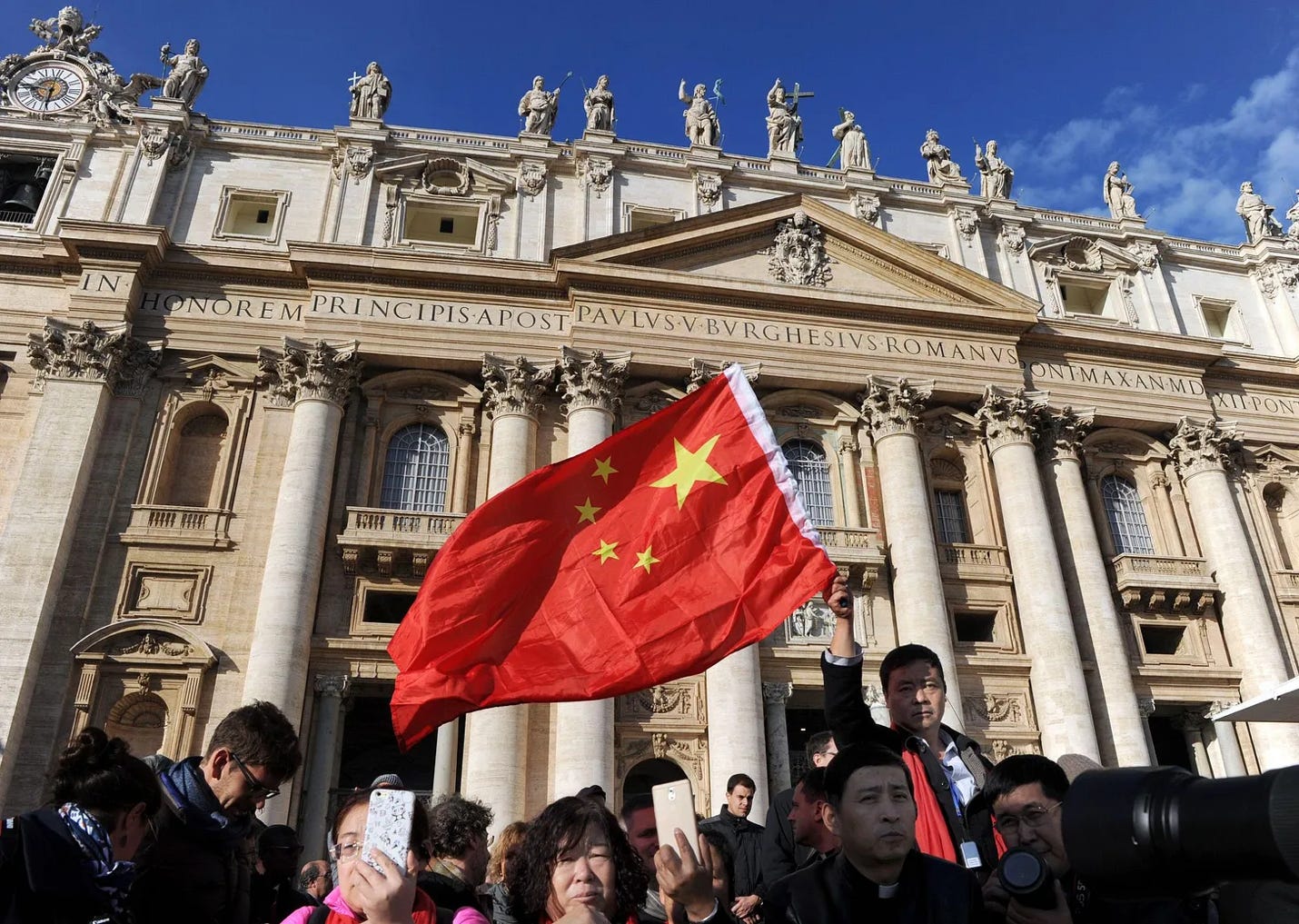
The appointment by the Vatican of a new state-approved candidate to replace an underground bishop in a contentious territory shows both the commitment of Rome to regularizing the diocesan map of the Chinese mainland, and may also point to Beijing walking back its pattern of unilateral action on bishops, without Roman involvement.
—
On Friday, the Vatican announced that Fr. Francis Li Jianlin had been consecrated that day as the Bishop of the Apostolic Prefecture of Xinxiang in Henan Province, with Pope Leo XIV having designated the priest as bishop for the diocese in August.
According to the Holy See, Pope Leo XIV made the appointment “in accordance with the Provisional Agreement between the Holy See and the People’s Republic of China,” and after “having accepted the resignation from the pastoral care of the same Apostolic Prefecture presented by Bishop Joseph Zhang Weizhu,” who is only 67 years old.
The following day, the Holy See announced its “satisfaction” at recognition by the Chinese authorities of the retired Bishop Zhang as the “bishop emeritus” of the territory, while, at the same time, the Chinese Patriotic Catholic Association included a statement under Zhang’s name affirming the bishop’s patriotism and commitment to the government’s project of Sinisization of religion in China.
The succession of events brings to an apparent close years of deadlock and conflict in the apostolic prefecture — a territory functionally like a diocese in canon law but designated as a missionary territory under the authority of the Dicastery for the Evangelization in Rome.
Replacing a well-known underground bishop with a state-approved candidate, the move has re-raised concerns about the implementation of the 2018 Vatican-China deal, criticized by many observers as a one-sided mechanism for the Vatican recognizing state-approve candidates under the threat of unilateral action from Beijing.
However, the particular history of Bishop Zhang and the apostolic prefecture seem to lend further nuance to the development — as does the disclosure that the appointment was only approved by Leo in August.
Li was first announced by Chinese authorities in April as the new bishop of the “Diocese of Xinxiang,” which was created as a diocese by the state-sponsored CPCA and has operated in parallel to the apostolic prefecture of the same name, which the government does not recognize.
Li was “elected” as the sole candidate for the office of diocesan bishop in a move coordinated by the Chinese Patriotic Catholic Association and carried out by an invited assembly of local clerics during the papal interregnum following the death of Pope Francis.
The move was widely seen at the time as a pointed gesture by Chinese authorities, meant to underscore the indifference of the CPCA to Roman authority over the appointment of bishops.
Vatican Secretary of State Cardinal Pietro Parolin later claimed that Li’s appointment as bishop to lead a diocese unrecognized by Rome had been organized and approved by the pope prior to Francis’ death, though this version of events is difficult to square with the Vatican’s announcement that Li had been accepted as a candidate to lead the Vatican-approved prefecture by Leo in August.
However, Zhang’s resignation and Li’s installation last week, followed by the government’s acknowledgment of Zhang as the legitimate “bishop emeritus” of the CPCA Diocese of Xinxiang, would seem to show that the government has now effectively acknowledged the legitimacy of the Vatican jurisdiction over the state-created diocese.
However, the early resignation of Bishop Zhang from his post, along with state officials’ release of an uncharacteristically supportive statement from him, has raised serious concerns about the actual level of his enthusiasm and even freedom in recent events.
Zhang, until Saturday, served as an entirely underground bishop, in the sense that neither his authority to minister nor the apostolic prefecture he led were acknowledged by the government. As such, Zhang has been subject to years of harassment and detention by the government, and has been either under house arrest or close monitoring by the state since 2021.
Some commentators have questioned whether Zhang actually resigned as bishop and wrote or authorized the statement put out in his name, or if such decisions were the result of significant pressure from Rome or even effectively taken for him.
However, while the bishop has not previously shown signs of being willing to cooperate with the authorities, it is worth noting that bishops with similar histories of underground activism and defiance of state regulation have been recognized by the state after making similar declarations of patriotism, but stopping well short of acknowledging state supremacy over the Church or formally joining the CPCA.
Zhang’s resignation from the leadership of the apostolic prefecture could have been sold to him as the path to securing his own acknowledgement as a bishop by the state -- and with it a measure of relative freedom -- as well as the effective suppression of the state-erected pseudo diocese into the legitimate Vatican prefecture.
Either of those outcomes would likely have been seen as qualified “wins” by the Vatican Secretariat of State — both together are almost certainly considered in Rome to add up to a victory.
Whether local Catholics reach that same conclusion will likely depend on the now-Bishop Li’s ministry, and his relationships with Rome, the state, and his predecessor from here on out.

