
Hey everybody.
It’s Election Day, and this is the Tuesday Pillar Post.
But this is not JD Flynn. This is Michelle La Rosa, managing editor here at The Pillar.
Don’t worry. JD’s fine. I just decided to take a stab at a Tuesday newsletter while JD is pursuing some other reporting.
This Sunday, of course, was the Solemnity of All Saints, and I hope you celebrated robustly, with litanies and maybe a party or parade of costumed children.
But, however you celebrated, it was probably not as elaborate or as colorful as the celebrations in parts of Guatemala, where All Saints Day has long been celebrated with massive – I mean really massive – kite parades.
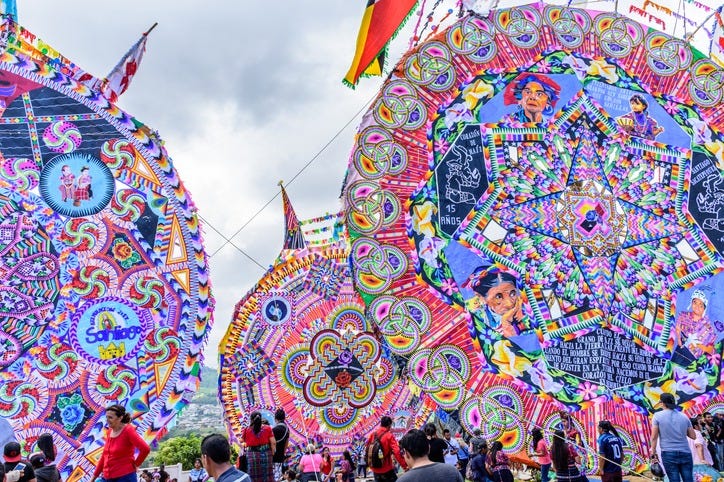
It’s an ancient tradition, with roots stretching back more than 3,000 years. The indigenous belief was that kites were a means of communicating with dead loved ones. Over time, the idea got combined with the Catholic celebration of All Saints Day, and in some places All Souls Day too. Today, it is celebrated in certain Guatemalan towns by people of all religions as a major cultural observance.
The building of the kites is itself an elaborate ritual that traditionally takes 40 days and begins with the community’s bachelors embarking on a quest to acquire the bamboo that will serve as the frame. From there, paper or cloth are used to fill in the kite, which is secured with yucca-based glue and string.
Traditionally, the kites are octagonal, but modern kites take on all kinds of other shapes as well. Some of them are more than 60 feet in diameter – larger than many of the balloons in the Macy’s Thanksgiving Day Parade! – and require a whole team of people to fly them.
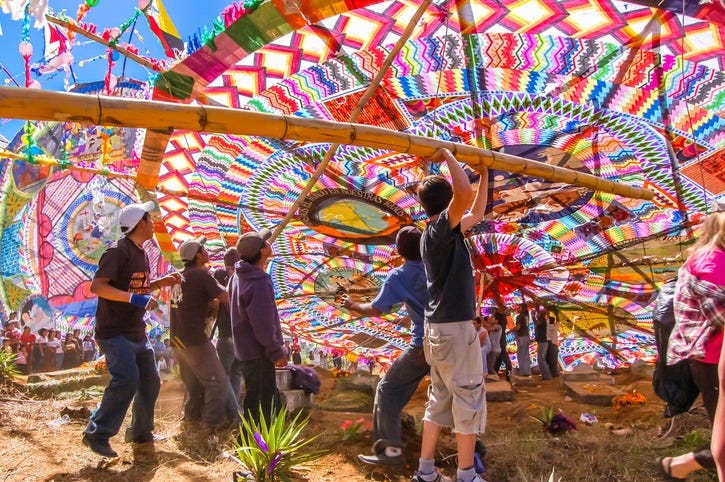
Decorations are bright and festive. Traditionally, kites honor deceased loved ones, although some people today put a more modern spin on their kites, labeling them with slogans for their preferred political or social causes.
People dress us festively for the occasion as well. The kite parade can draw more than 100,000 people, including both those participating and those coming to watch – sometimes from other countries.
If you ever happen to find yourself in Guatemala in early November, it’s a tradition worth checking out.
Hey everybody, JD here.
Some of you know that I’m on the board of FIRE Denver, a non-profit which gives grants to Catholic schools so that kids with profound disabilities — kids like mine — can be enrolled in Catholic school.
Well, there’s a wholesale baker we’re friends with, and he donates a LOT of Thanksgiving pies to us, which we can sell, and use every single dollar to fund the inclusion of kids with disabilities.
If you live in Colorado, you could buy a pie and put it on your Thanksgiving table. If you don’t, you could buy one or more, and we’ll donate the pie to families in need through Catholic Charities and other apostolates. And you’ll support kids like mine. This is important. Do us a solid. Buy some pies, and if you want, choose “donate” from the pick-up options.
And Michelle says they’re delicious.
And now, here’s the news.
The news
Pope Leo XIV has approved changes to disciplinary procedures for employees of the Roman curia.
What exactly changed? Luke Coppen explains.
The ceasefire allowed for much needed food and medical supplies to reach the people of Oleshky.
Brendan Hodge breaks down the numbers.
The news has prompted a wave of objections, from the practical to the conceptual.
Do those objections hold water? Ed takes a look at the situation from all angles.

If you love reading The Pillar, you should be listening to Sunday School, our weekly readings podcast. Each week, Scripture scholar Scott Powell breaks down the Sunday readings. Whether you’re a priest preparing your homily, or a Catholic wanting to go deeper with Scripture, Sunday School is worth a listen. Available wherever you get your podcasts.
Born again, again
I had the opportunity last week to attend a unique event at the intersection of faith and politics, just a few days before the mid-term elections.
I wasn’t sure what to expect going in, but I was fascinated by what I found. So here’s a little firsthand reporting, so you can share in the experience too:
I arrived at Brave Church just a few minutes late.
I was sent back to my car twice – first for trying to bring a water bottle inside, then because I had a small purse. Neither are allowed, the security officials told me when I approached the metal detectors.
The heightened security was understandable. This event, in the tiny suburb of Cherry Hills Village, Colorado, was being held by TPUSA Faith, an offshoot of Turning Point USA, the conservative non-profit group founded by Charlie Kirk.
This event, “Make Heaven Crowded,” was part of a nationwide tour, with almost 30 stops around the country this year. It was inspired, organizers say, by the number of people who were moved by watching Charlie Kirk’s memorial and reported a conversion or deepening of their own faith.
The head of TPUSA Faith said he believes Kirk’s assassinaiton sparked a spiritual awakening in this country, and the goal of “Make Heaven Crowded” is to fan that spark into flame.
I was curious about this burgeoning religious movement, which seems to be gaining real traction. That’s why I was there.
As I entered the building, the first thing I saw was a basketball court to one side. I’d never been in a Protestant megachurch before. Maybe that’s normal.
Following the signs down a hallway to the main part of the church, I stepped into the main room.
I was met with blinding flashes of light from five giant TV screens. Stadium-style seating surrounded a large stage, with a full sound system blaring. It was unlike any church I had ever seen before, but a little bit like a few concerts I’ve attended.
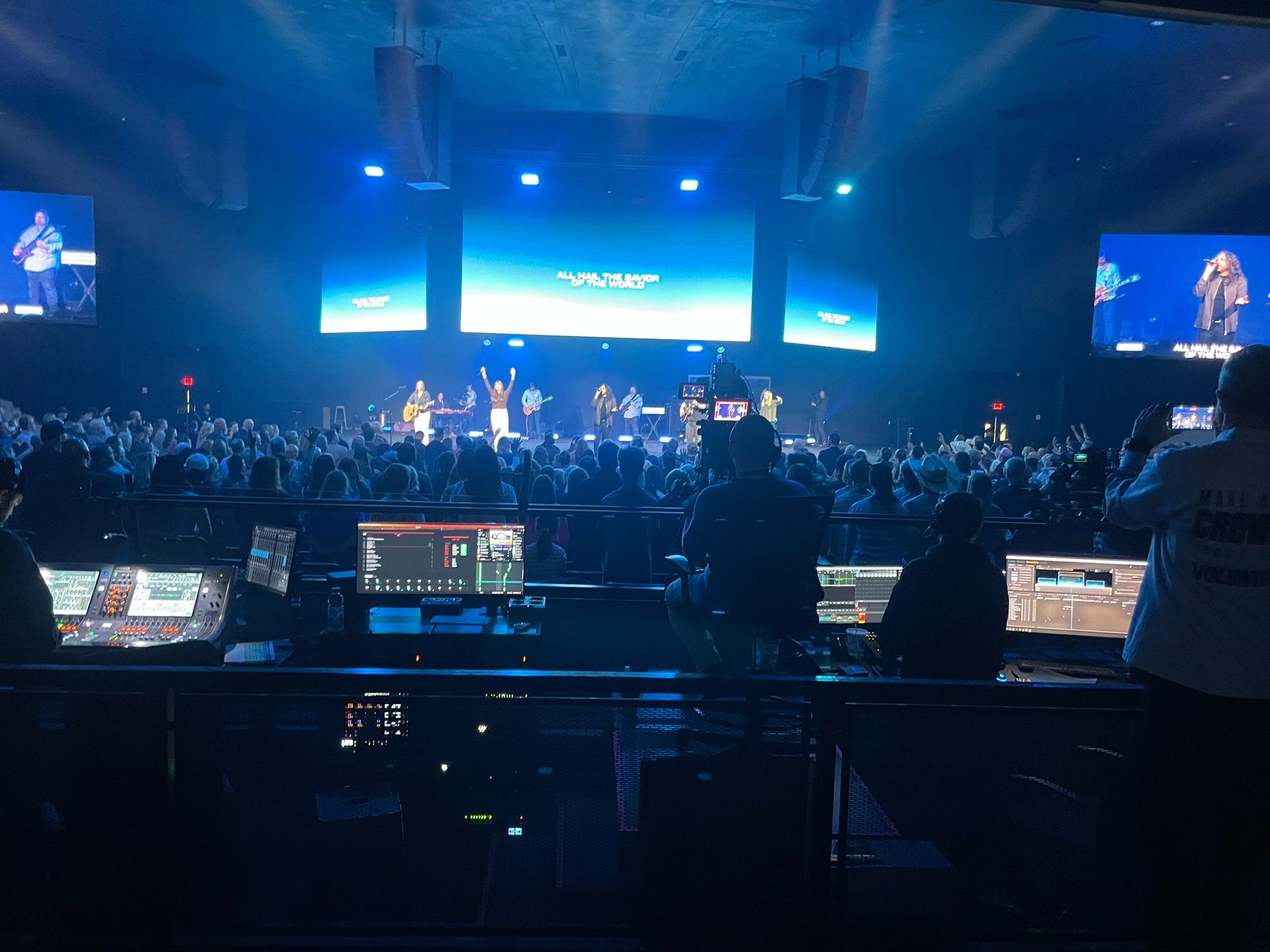
My bewilderment must have been evident, because a kindly usher approached to tell me that I looked lost, and could he help me find my group?
I didn’t have a group. Were these people my group? I really didn’t know.