The Diocese of Salford in England announced this month the opening of the canonization cause for Pedro Ballester Arenas, who died of cancer in 2018 at 21 years of age.
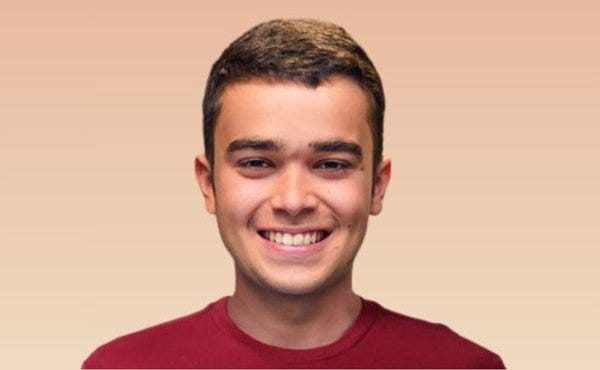
Ballester was born in Manchester to a Spanish family and asked for admission as an Opus Dei numerary in 2013, receiving a devastating cancer diagnosis just months later.
“He accepted his illness with remarkable faith, offering his suffering for the pope, the Church and all souls, and bearing his condition with deep serenity and trust in God,” said the diocesan statement, released May 13.
“Over the years since his death, his reputation for holiness has grown significantly. In response, the postulator, Fr Paul Hayward, has formally requested the opening of the cause.”
Fr. Paul Hayward, a priest of Opus Dei in Glasgow, told The Pillar that the cause was opened by the Diocese of Salford at the request of the prelature of Opus Dei.
“The prelature approached the diocese about the cause, and once the diocese accepted, the prelature then takes responsibility for the funding and all expenses, while the diocese is in charge of calling the witnesses, meeting with them, arranging the interviews. So, [the diocese] does the heavy lifting, and my role as a postulator is just to see if there’s anything I can do to assist them and contact witnesses on their behalf,” Hayward told The Pillar.
During his illness, Ballester became known for his cheerfulness and apostolic zeal, helping dozens return to the faith, receive baptism, or embrace their vocations — while still remaining a regular young man who enjoyed fishing, whisky, and tennis, according to those who knew him.
What is it about Pedro Ballester that stood out? How did he gain his reputation for holiness? The Pillar spoke with his family, friends, and priests who knew him, to find out.
The early years
Pedrito, as he was known by those closest to him, was born in Manchester on May 22, 1996. He was the eldest of three sons of Pedro Ballester Nebot and Esperanza Arenas, a Spanish couple who had met in Manchester after being introduced by a mutual friend.
The Ballesters decided to settle their family in Manchester because they were both supernumeraries – non-celibate members of Opus Dei – and the city had one of the few houses of Opus Dei in Great Britain, called Greygarth Hall, which included a youth club.
Pedro started attending the youth club around age 7, his father said.
“The club was very rudimentary at the beginning, there weren’t many children, but we wanted them to have a good influence, to see that the faith existed beyond our home, that there were other children their age and families that also wanted to receive the same formation,” he added.
Pedro became interested in apologetics at an early age because he studied with Muslims and Protestants, with whom he spoke about his faith, Pedro’s father explained.
“He was very apostolic from a young age. He started reading apologetic books to be able to explain the faith better to his friends, and he often spoke to a priest at the club… to answer the questions his friends presented to him,” he continued.
“We had Muslim friends who perhaps asked him things about Jesus or Our Lady, or Anglican friends who asked him things about the Church, or others who asked about what the Church taught about sexuality, so he started reading a lot to know what to say,” his brother Carlos told The Pillar.
Pedro was also known at school for his intelligence and for helping others in their studies.
“Pedro was very smart,” Carlos said. “But he never boasted about being smarter.”
“The school had a math classroom for kids who needed some extra help, and he often went to help the other children.”
“In England we have this thing called ‘A levels’ which you do when you finish secondary school. He got the best A levels that I’ve ever heard anyone get, he got four A*s and an A,” Anthony Stratford, a family friend told The Pillar.
“I did three and I didn’t get as good grades as Pedro, and he never stressed about his exams. I remember that sometimes he would have an A level exam in a few days and he wasn’t stressed at all, while my sister had the same A level and she was frantic,” he added.
Pedro’s family describe him as a normal boy who enjoyed good food and fishing – a hobby he developed after his father gave him a harpoon as a gift when he was 7 years old – but from an early age showed a remarkable capacity for friendship.
“He was friends with the popular kids and with the kids who had no friends. There was a boy who was the son of an Anglican vicar who was a bit odd, he had a bit of a hard time socializing, but Pedro became his friend, and he came to eat at home sometimes and Pedro invited him to the club and and spent a lot of time talking with him,” Carlos said.
“Pedro really helped people feel comfortable in their own skin,” Stratford added.
The calling
Around age 13, the Ballester family moved to Mallorca – the hometown of Pedro’s father – for work reasons. There, Pedrito started living his faith more intensely.
“By sheer coincidence, we lived side-by-side with the Opus Dei youth club in Mallorca, so he went there very often. Also, Opus Dei in Spain is more developed, so there were more people attending, more means of formation, so he started attending a circle, which is a weekly formation talk and receiving spiritual guidance,” his father said.
“I think perhaps this was the first time he started considering his vocation.”
The Ballester family ended up returning to England just a few months later, which was a difficult transition for Pedro, but also led him to intensify his faith, his father said.
Then, at just 16 years old, Pedro told his parents he wanted to become a numerary of Opus Dei, which would imply a lifelong commitment to celibacy and moving to a center of Opus Dei.
“He spoke with us, and we also had several conversations with the director of Greygarth, because he wanted to know how we saw him with his friends, at home, and whether we thought [Pedro] could make this decision,” Ballester added.
Pedro asked for admission as a numerary of Opus Dei on May 1st, 2013.
His brother Carlos didn’t know about the decision at first. “I saw he was happier around this time, so I thought he had a girlfriend,” Carlos said, laughing. “But then he told me he became a numerary.”
The diagnosis
Around April 2013 — the same time he was preparing to begin life as a numerary — Pedro started feeling some discomfort on his hip.
At first, he didn’t think much of it.
“He played tennis often and was studying a lot because of his final high school exams, so we just thought it was a muscle or posture issue,” his father said.
After the summer, Pedro started studying chemical engineering at the Imperial College in London.
But the pain worsened.
“He was very happy, he was making a lot of friends, he was living in a residence of Opus Dei in London called Netherhall House,” Carlos told The Pillar.
“He mentioned his pain sometimes, as if it was nothing, [and] he sometimes asked me to crack his back and that alleviated him, but no one thought much of it,” he added.
The family spent the Christmas holidays together in Mallorca in December, when Pedro’s mother noticed a lump on his hip. Pedro’s father said that then they finally decided to get an x-ray.
“So in December we went to the hospital. The doctor first called me because I’m a surgeon, and with tears in his eyes showed me the pelvic x-ray which showed a very big tumor. Then we went back to Manchester, where they confirmed it was an osteosarcoma, a large tumor in a very difficult area,” he said.
The doctors decided that because of his young age, the treatment had to be aggressive — maximum doses of chemotherapy, surgery, more chemotherapy, and then radiotherapy.
“That night, we couldn’t stop crying, and Esperanza hugged Pedro, and Pedro said something I will never forget,” Pedro’s father said.
“‘Mom, Jesus gives the Cross to his friends, and I gave him my life with my vocation.’ Pedro really had a deep sense of the Cross.”
The hospital
Pedro’s health meant he had to stop his studies in London, and move back to Manchester for treatment. He alternated time between the hospital and Greygarth Hall, the house of Opus Dei in Manchester.
According to those closest to him, Pedro then developed an intense apostolic activity with his friends, other patients, and with his nurses and doctors.
“He was in a lot of pain all the time,” Carlos said. “But many times he delayed morphine because it made him drowsy, and he wanted to be wide awake to be able to be with people and talk with them. And if you didn’t know he was delaying morphine, you probably wouldn’t notice, because he never spoke about himself, he was always cheerful.”
“A lot of people went to the hospital thinking they were going to take care of Pedro, but it was backwards, Pedro took care of them,” he added.
Fr. Joseph Evans, an Opus Dei priest who served as chaplain of Greygarth Hall during the final months of Pedro’s life, described his hospital room as something “out of a Marx Brothers film.”
“There could technically only be 2 visitors at a time, but there were always 8, 9, 10 people there, and they were always laughing and enjoying themselves with Pedro,” he said.
“He always took an interest in people, he asked his friends about his studies, his nurses about their lives, he didn’t talk about himself or about his pain.”
At the same time, Fr. Evans said Pedro had a very normal reaction to his cancer. “He suffered, he wept. He would say that he found it too hard, he told his mom sometimes that he couldn’t bear it anymore, but he always did. He never gave up.”
According to his family, Pedro had to learn to fight against frustration and impatience.
“He got frustrated when his friends accepted the things he said, but didn’t apply them. So he started learning that everyone has their own speed. With his sickness, he grew in patience, in charity, and in accepting people,” his father said.
“He wasn’t very emotional, so empathy was something he had to learn. He could be a bit too direct, but he grew in charity with time,” Carlos added. “In the hospital at the beginning he sometimes was very direct asking other patients about their faith, which scared people off, so I told him ‘Pedro, don’t be like that or people will think you’re the Spanish inquisition,’ and he accepted my advice and tried to be more patient.”
And as a normal young man, Pedro was also famous for his jokes — and for the stash of whisky in his hospital bedroom.
“My son didn’t like beer or fizzy drinks, but one day a Scottish priest gave him some whisky and he liked it, somehow word got around, so his friends brought him whisky and he kept it in his room so he could offer it to the people who came,” his father said.
“The nurses weren’t very happy about him drinking some whisky, but he only had a drink every now and then,” Carlos added, laughing.
“He was a jokester,” his brother said. “When he started chemotherapy, he lost a lot of weight, so they had to weigh him to see if they had to start feeding him with a tube. So a nurse got him on the scale and was very happy because he had gained some weight, which meant the tube wasn’t necessary. So, Pedro gets off the scale and tells her ‘perfect, so I don’t need these rocks I had in my pocket anymore, right?’”
Pedro’s faith and cheerfulness made him popular among patients, with many spending a lot of time in his room.
According to his family and friends, one of Pedro’s most painful experiences was seeing other patients die.
“He became friends with the other patients, and many of them died before him and he attended their funerals, which was difficult, but he lived everything with supernatural vision. I remember one other patient that after meeting Pedro and becoming friends with him decided to be baptized, but died the day before his baptism, so it was a baptism of desire.”
“There was also a nurse who was on the night shift who wasn’t the first person you would expect to become interested in the faith: she was full of tattoos, had a lot of piercings, and she told Pedro she wanted to become Catholic after meeting him,” Pedro’s father said.
Pedro also influenced the vocation of a number of people, according to his family.
“There was someone from Germany with whom Pedro did some volunteering during his time in London. This guy asks Pedro about his vocation because he had never heard what a numerary was. So, Pedro explains it to him and then tells him ‘Hey, why don’t we pray a mystery of the Rosary for your vocation? Because God has a plan for everyone and we will be happy if we say yes to that plan’,” Carlos said.
“But this guy didn’t know how to pray the Rosary, so Pedro taught him too. Later, after Pedro’s death, this man sent us a letter saying he had prayed the Rosary daily ever since and that he was writing from a seminary in Germany because he had decided to become a priest years after meeting Pedro.”
Stratford, the friend of the Ballester family, said Pedro was also pivotal in his own decision to join Opus Dei.
“I never spoke with him about my vocation, but I was seeing someone giving their life completely to God at such a young age, so it made me ask myself ‘What am I doing? What am I living for?’ Because I was getting good grades, I was a sportsman, I was getting into medical school, but why was I doing all these things? I was doing them for myself.”
“Pedro was the complete opposite of what I was doing. So, a few months after he died, I decided to become a numerary, which was something God was calling me to do, but I didn’t want to commit to, but with Pedro I saw that actually living for others is a very beautiful and fulfilling thing,” he added.
Pedro spent from May to July 2015 in Heidelberg, Germany, receiving experimental treatment, which seemed at first to have been successful. In November 2015, Pedro was able to meet Pope Francis in Rome.
“Around this time, Make-a-Wish came to the hospital and asked Pedro what he wanted and he said he wanted to meet with the pope, so they told him they couldn’t arrange that, but that they could pay for the trip. So, my parents were able to arrange the meeting, and they went to Mass with the pope and gave him a letter signed by the patients, doctors, and nurses of the hospital.”
“Pedro gave this letter to the pope and told him ‘I’m a numerary of Opus Dei, I have cancer, and I offer it all up for you and for the Church’ and Pope Francis gave him a hug. My mom somehow found out the pope liked dulce de leche, and brought him some, and the pope told Pedro ‘moms always know everything.’”
Then, a few months later, the cancer returned – this time, with even more strength than before. As the pain was more intense, his mother asked him if he would want to return to his family home, but he decided to stay in Greygarth.
“He had a very, very clear sense of vocation. When Pedro joined Opus Dei as a celibate member, a numerary, he knew what that meant,” Fr. Evans added.
“When his mom asked him if he wanted to go live with them, Pedro said that he was a numerary, so part of his vocation was living in a center of Opus Dei, so he insisted on that,” he said.
The last months
After the cancer worsened, Pedro started preparing his friends and family for his death.
“He received a lot of people, from London, from Manchester, from Spain, Rome, Germany, he had made good friends in every place he had lived, and you noticed a change. He spoke more about heaven, he spoke more about loving their friends, about perseverance, he wanted to have more one-on-one conversations with people,” he added.
Pedro was the first person to become a numerary in England in a number of years, but after him came a few other young men who became numeraries, so he wanted to meet with all of them before he died.
“About a month before he died he had this meeting with the young numeraries and he was typical Pedro with them, he behaved like an older brother, he was bossy but in a good way. So he started talking one by one with them, encouraging them to be faithful to their vocation,” Fr. Evans said.
“And then he asked one of them, called Tom, ‘Are you happy with your vocation, Tom?’ and this question caught Tom a bit by surprise, but he said ‘Yes, are you?’ And Pedro replied, after three years of suffering, knowing he’s close to death, ‘I’ve never been happier’.”
Pedro in the hospital. Courtesy photo.
During the last month of Pedro’s life, his parents moved to Greygarth to be closer to him.
“Many nights he stayed in Greygarth or in the hospital under the care of under numeraries, many nights they were the ones to console him when he cried because he didn’t want to die, when he needed help cleaning up after using the bathroom, or when he had to be fed. His spiritual family in Opus Dei was also there for him,” Carlos said.
During the last week of his life, Pedro fell into a coma.
“His room was like a sacred space, a place where people came and were silent, in prayer. It almost felt like a chapel,” Fr. Evans added.
Pedro died on January 13, 2018.
His family and friends prayed the Salve Regina by his side — and people started to ask for his intercession almost immediately.
“There was a Spanish guy in Manchester who had been studying English during those months, and he was in the room with us. About 15 or 20 minutes after Pedro died, he said, ‘Pedro, please help me with my English lessons,’ and people just started asking him for things. It felt completely natural. In life, Pedro had received hundreds of letters and WhatsApp messages asking him to pray for different intentions, and once you die, you are closer to God. So it seemed the most normal thing in the world to keep asking,” Carlos said.
“He had a small notebook in which he would write down intentions and people to pray for, it was full with all kinds of intentions and people from all over the world,” his father added.
Pedro’s funeral was celebrated shortly after in the Holy Name Church in Manchester, which was at full capacity, including 40 concelebrating priests.
“Pedro had a particular love for priests. In England we don’t have that many priests, and they’re often lonely or tired,” Carlos said. “I remember once when Pedro was already very sick, I was studying in Greygarth and Pedro came and told me we’d go to have tea with a priest who was very lonely.”
“I didn’t want to go at first because it was a 40-minute drive, but Pedro and my mother insisted. And we had a really good time. The priest was very thankful that we spent some time together. He did this often, or if we stopped by a church he tried to see if the priest was there to say hi to him; priests loved it and loved him,” Carlos added.
The cause
Devotion to Pedro spread quickly, first within Opus Dei and his home diocese, and then in pockets around the world, mostly through the networks of Opus Dei. Fr. Paul Hayward, postulator of his beatification cause, told The Pillar that they receive letters and emails about favors attributed to Pedro on a weekly basis.
“There’s a website that was set up by a friend of Pedro during his time in London, where you can see all the favors attributed to his intercession. Obviously the internet and social media played a part there, but it’s in some way the Holy Spirit acting through the media,” Fr. Hayward said.
“Just in the last three months we’ve gotten emails from Calgary, Amsterdam, Lisbon, Puebla, Ireland, Guatemala, Ivory Coast, Madrid, San Sebastián, and many, many other places,” he added.
A documentary on Pedro’s life premiered in 2023. Hayward said it had also made a significant impact.
“There’s a supernumerary in Oxford who saw it and thought of his uncle who had cancer. His uncle was a non-practicing Catholic, so he thought that the documentary might help him. His uncle was deeply moved by it, went back to the sacraments and died shortly afterwards, so he died reconciled with the Church,” Fr. Hayward said.
“These are not miracles obviously, but it’s a sign that people have this idea that Pedro is a friend of God. And in some way, people think Pedro is their friend and they’re able to identify that Pedro is someone I can talk to and Pedro is someone who can talk to God and, therefore, I can go to God through Pedro,” the priest added.
“It’s his love for ordinary life. He was a very, very normal boy who loved animals. He loved the world. He studied hard. He loved his friends. He was very kind. He took responsibility for his younger brothers to make sure they grew up, but he just enjoyed life to the fullest. Then, he was convinced he’d be happy if he did the will of God, even in suffering,” Hayward said.
“Some saints might be off-putting to some because they’re remote figures wearing funny clothes and doing funny things, but here’s someone normal who brought peace and joy to the lives of hundreds, thousands, maybe even millions of people,” he added.
“I wouldn’t change those [last] three years for anything,” his brother Carlos said. “He said that if he had to go through the same thing again to help more people, he’d do it all over again. He said that it was the happiest time of his life. I’m now married, I have a son named Pedro, and I’m obviously very happy, but those years were very special.”
Fr. Evans recalled Pedro’s courage.
“God gave him a tailor-made way to become a saint, which was offering his suffering, which Pedro did with incredible heroism. So he was always giving himself as a gift to others. Sometimes people see a young man dying and say ‘how tragic, what a waste.” If there’s a word I wouldn’t use it’s ‘tragic.’ These were beautiful years, full of love. We all think back of those years with happiness. Pedro’s friendship brought us all closer to God, it brought him closer to God.”
His father recalled Pedro “showing that the Cross is not a way of suffering, but of love. Pedro was a good friend of his friends, he lived that love with his friends, not for himself.”
“You’re really with Jesus once you feel the thorns of his crown on your forehead, and the nails in your hands, and his cold body against yours. Only then are you close to Jesus, and you can only be close to him on the Cross. God’s love can only be understood in that offering of life on the Cross. Then, everything becomes clear. My father used to say ‘Don’t ask why, because only God knows the why, but the ‘for what’ is very clear: it is to learn to love’.”


