Mozambique diocese issues ‘vehement repudiation’ of bishop’s murder allegations
The apostolic administrator of the Diocese of Quelimane, Mozambique, has condemned media speculation over last month’s murder of Bishop Osório Citora Afonso.
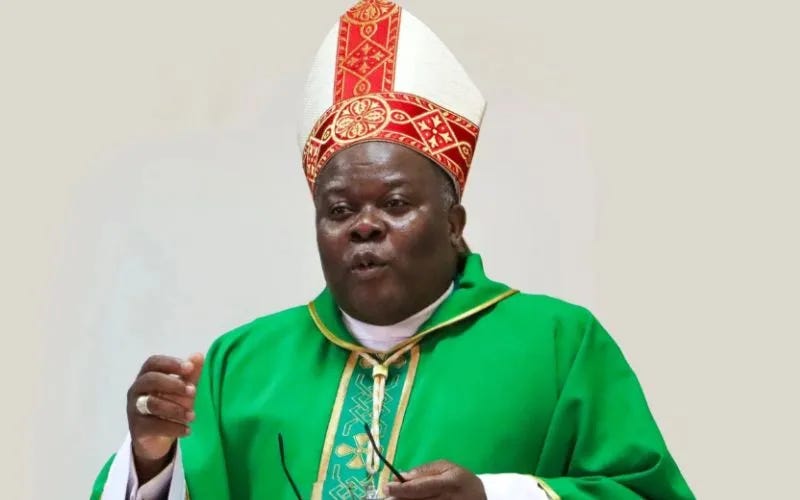
In a July 4 statement released, Bishop Estêvão Ângelo Fernando of Alto Molócuè — who has been given temporary charge the Quelimane diocese following Afonso’s murder — called for an end to media speculation on the case which, he said, is fueling outrage and hampering the police investigation.
The bishop noted that amid an atmosphere of wild conjecture even he had been implicated in some news reports.
“I, Dom Estevão Ângelo Fernando, apostolic administrator of the Diocese of Quelimane, and the College of Consultors, publicly express our vehement repudiation of the material published by certain media outlets and circulated on social media, which blames individuals for actions, attitudes, and management decisions that at times have absolutely nothing to do with the case regarding the assassination of the Bishop of Quelimane, Dom Osório Citora Afonso,” said the bishop’s statement. “I myself am a target of this.”
The statement, released over the weekend, also condemned the ongoing leak of details from the open police investigation, which the bishop said violates the constitutional principle of judicial secrecy and can harm due process.
“The published material includes serious insinuations, suggests connections to criminal activity and forms premature and extrajudicial judgments”, said Fernando, adding that “such narratives lead to public outrage, expose people and institutions to discredit and generate an atmosphere of suspicion that does nothing to contribute to clarifying the facts.”
While “the Catholic Church stands for the freedom of the press”, the bishop said, “freedom without ethics or respect for the law degenerates into speculation.”
—
Bishop Afonso was killed by a gunshot to the chest on June 6.
A spokesman for investigators initially said he seemed to have been shot with a modernized Kalashnikov (AK-M) by criminals who had scaled the walls of the bishop’s residence and disabled the security system.
This initial information led to immediate speculation in the diocese that the bishop’s murder was a targeted assassination, especially since the AK-M is standard issue for the armed forces in Mozambique, and the government has a history of threatening Church figures who criticise the authorities.
But within a few days, authorities arrested three suspects: the former chancellor of the diocese, Fr. Adelino Novais Amado, alongside a guard and gardener who both work in the residence.
The arrests led to speculation among local Catholics that the suspects were being framed by the authorities to cover up the crime.
But recent articles published by investigative newspapers Savana and Canal de Moçambique have instead suggested that the killing might have been an inside job, by a former diocesan official recently removed from his post.
Deep-rooted corruption?
On June 26, Savana published an exposé style article on Amado, the former chancellor, whose replacement was announced just days before the bishop’s killing.
Savana accused the priest of having at least two mistresses – the article used the term “polygamy” – and of fathering a child with at least one of them. It also alleged that during his tenure in diocesan leadership, Amado had accumulated an inexplicable level of wealth, and that he had exhibited a “luxurious lifestyle.”
The newspaper alleged that the Diocese of Quelimane had become a hotbed for mismanagement and corruption in recent years, pointing to cases in which a man accused of child abuse continued to serve in priestly ministry, and in which two religious sisters reportedly conspired to take possession of diocesan assets, including a school, a radio station, a building, and several vehicles.
The issues date back to the previous Bishop of Quelimane, Hilário Massinga, who clashed with the religious sisters and opened canonical and civil proceedings against them. The bishop tasked Amado with trying to recover the assets. But eventually, Savana reported, Bishop Massinga resigned from the diocese as he grew tired of the strife.
Massinga was made Bishop of Quelimane in 2008 but resigned for health reasons, in 2023, at age 65, and was made auxiliary bishop in the Diocese of Inhambane, where he is currently serving.
Between Massinga’s resignation in 2023 and Bishop Afonso’s appointment to Quelimane in 2025, Italian Capuchin Fr. Pietro Tosato was named apostolic administrator — but according to Savana, the day-to-day administration of the diocese fell to the chancellor, Fr. Amado.
It was during that period, the newspaper claimed, that Fr. Amado colluded with the religious sisters and other officials to appropriate a growing number of assets and goods from the Church, placing them in their own names.
Savana’s allegations could not be independently verified or confirmed by The Pillar, but archived articles from the same newspaper do refer to clashes and legal cases between the diocese and the religious sisters dating as far back as January 2016, and the latest article says that a court convicted Sister Justina Camilo of the appropriations, even listing the license plates of the supposedly stolen vehicles.
Finally, Savana has reported that when Bishop Afonso arrived in Quelimane, Sister Justina approached him to try and explain her side of the story, but the bishop responded that he was going to pursue investigations into her conduct, and to initiate full audits of those who had been administering the diocese since Bishop Massinga’s resignation, include Fr. Amado.
According to a July 1 report from Canal de Moçambique, investigators are now working from the theory that Fr. Amado conspired to kill Bishop Afonso because the two had fallen out over the bishop’s criticism of the priest’s misconduct, which allegedly involved sexual relations with more than one woman, including a religious novice, and mismanagement of diocesan funds and assets.
Both Savana and Canal de Moçambique are independent newspapers with a history of publishing stories critical of the political authorities in the country, making it unlikely that the articles were commissioned by the government to advance a false narrative — a theory floated among some Catholics in the region.
Both articles were carried in local print editions, and The Pillar reviewed the full texts.
The Canal de Moçambique article also noted that initial suspicions pointed in the direction of a politically motivated assassination, but claimed that investigators are now working from the theory that Fr. Amado coordinated the crime, clearing the path for the actual murderer to enter the building by plying the gardener and the guard with alcohol to distract them. That reported theory implies the existence of an actual shooter, presumably contracted for the killing, who is still at large.
Canal de Moçambique’s most incendiary allegation is that the authorities have uncovered unexplained money transfers from Amado to Bishop Fernando, amounting to over $15,500, as well as messages pleading with Fernando to allow him to be transferred to his Diocese of Alto Molócuè.
According to the newspaper, the apostolic administrator is himself now being investigated, triggering the bishop’s “vehement” criticism of the coverage on July 4. The Savana report, published five days earlier, also included alleged details from the investigation, but without any reference to the apostolic administrator.
The requests for a transfer are alleged to have been made after Bishop Afonso uncovered serious financial and moral misconduct by Fr. Amado, including alleged affairs with multiple women — among them was a religious novice who became pregnant. The Canal de Moçambique report claims the case of the novice led to a canonical investigation against Amago which had been sent to Rome for instructions, and that the Vatican’s response had already arrived by the time of the bishop’s assassination.
On May 31, only six days before the assassination, Bishop Afonso issued a decree shuffling the entire diocesan curia, naming a replacement for Amado in the process. The new appointees were to take up office on June 6, the day the bishop was found dead.
Savana’s report states that Amado travelled to the capital, Maputo, on May 31, the same day the diocesan decree was published, and returned on the eve of the murder — and it claimed that investigators suspect that the priest traveled to hire a hitman to carry out the murder of the bishop.
Tribal politics
Bishop Estêvão Ângelo Fernando’s see of Alto Molócué is the neighboring diocese to Quelimane, and was only erected in 2025, taking territory from Quelimane and other neighbouring dioceses. Before being appointed bishop of the new diocese, Fernando was part of the clergy of Quelimane and carried out several roles within the curia and would certainly have been familiar with Fr. Amado. Both are ethnic Zambesians, while Bishop Afonso, originally from Nampula, was from the Makhua ethnic group.
Bishop Fernando’s first-hand experience with the day-to-day reality of Quelimane may explain why he was chosen to take over the administration when Bishop Afonso was killed. The appointment does seem to indicate that if there is any solid evidence of collusion between the bishop and individuals within Quelimane who were opposed to Bishop Afonso, the Vatican was unaware of it.
The Savana article, and other publications, have also pointed to a possible tribal element to the rivalry within Quelimane and the crime committed against Bishop Afonso, claiming that the local Zambesians were defrauding the diocese and took against the arrival of a Makhua outsider trying to restore order.
This allegation is supported by statements made by the representative of the murdered bishop’s family, who travelled to Quelimane to participate in a funeral mass and take possession of his body, which was taken back to his native Nampula. “We apologize to all believers of good will, but today we have come to reclaim what is ours. The Makhua are leaving now, you can keep your diocese,” they said in a statement.
Canal de Moçambique drew a parallel at the end of its article between the slain bishop and the emeritus archbishop of Mozambique’s Archdiocese of Beira, Cláudio Dalla Zuana, from Argentina. The newspaper described the archbishop as having the reputation of being strict in matters of “ecclesiastical discipline and pastoral accountability”. Although his resignation in April 2026, at the age of 67, was “officially attributed to health issues that demanded medical attention outside of Mozambique,” in Church circles speculation persists regarding internal resistance to his attempts at reform, according to the newspaper. Following Archbishop Zuanna’s resignation, Bishop Osório Afonso was appointed Apostolic Administrator of Beira.
On Friday, Pope Leo XIV received in audience the president and vice-president of the Mozambican Bishops’ Conference, Archbishops Inácio Saure and João Carlos Hatoa Nunes, as well as Archbishop Zuanna, who currently plays no executive role in the bishops’ conference, but for several years was part of its Economic Council.
The subject of the audience is not known, and Archbishop Inácio Saure did not respond to The Pillar’s request for comment.

