
Hey everybody,
I’m down in Chiclayo, Peru, the city where Pope Leo XIV spent eight years as diocesan bishop.
Down here, they still call him Monsignor Robert. And here in Chiclayo, everybody’s got a story about the pope.
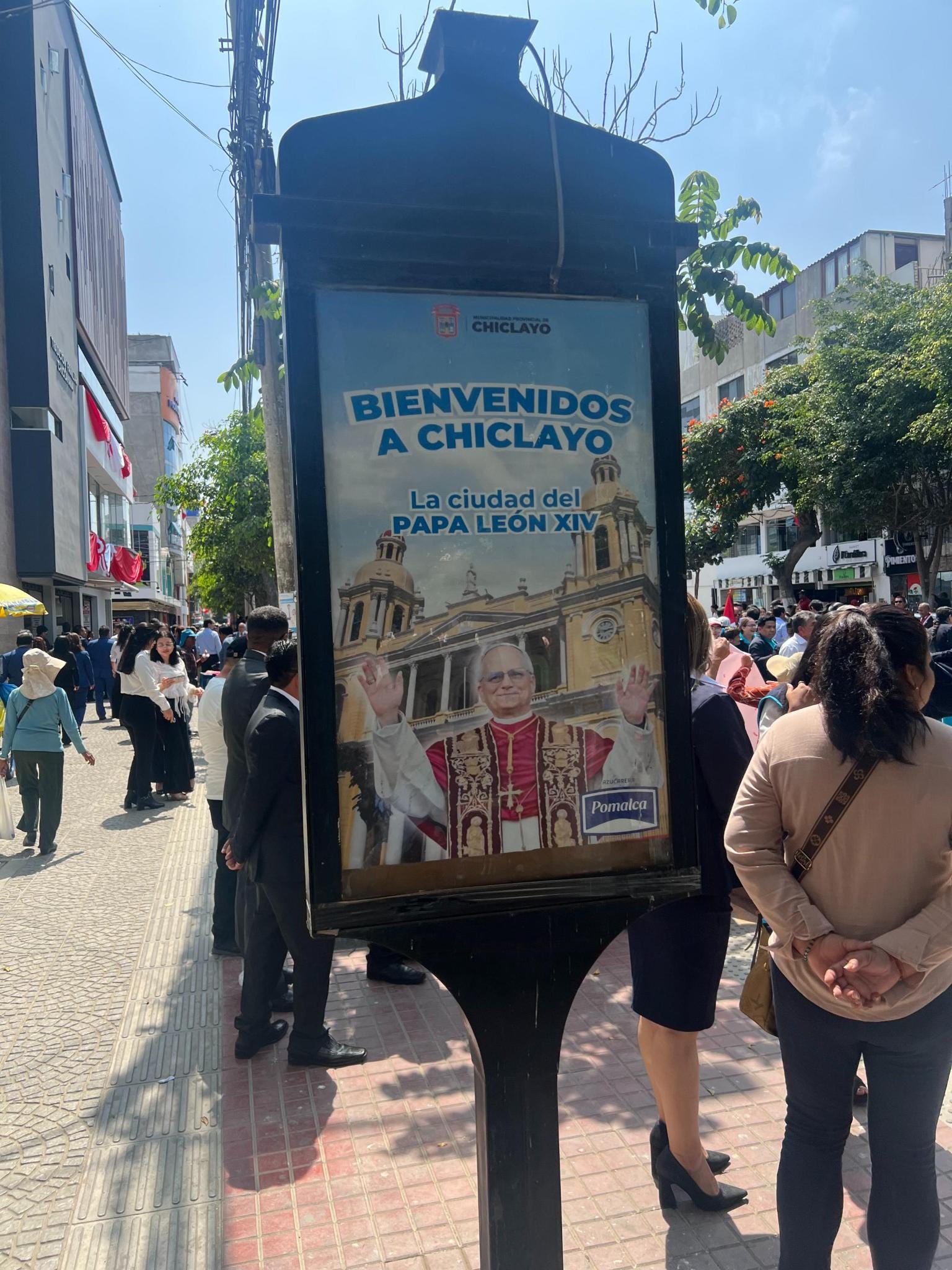
In fact, I came down here to learn those stories — because I’m convinced that if we want to understand the pope, we have to understand these cities and villages, and we have to know the people of Peru’s slums and pueblos.
Those people are clearly close to Leo’s heart; their churches are clearly his churches; their stories are clearly his story.
For the next week, I’ll be listening and watching, learning those stories, and writing about them for you.
But I want to you already about one guy I’ve met, he’s named Cesár.
He’s 22, he’s a college student, he’s acting as something of a guide for me. I’ll have a full profile of him in a couple of days. But when I told him this morning that I was ready to write a story about him, he asked me to wait — “I have more to tell you about Msgr. Robert,” he said.
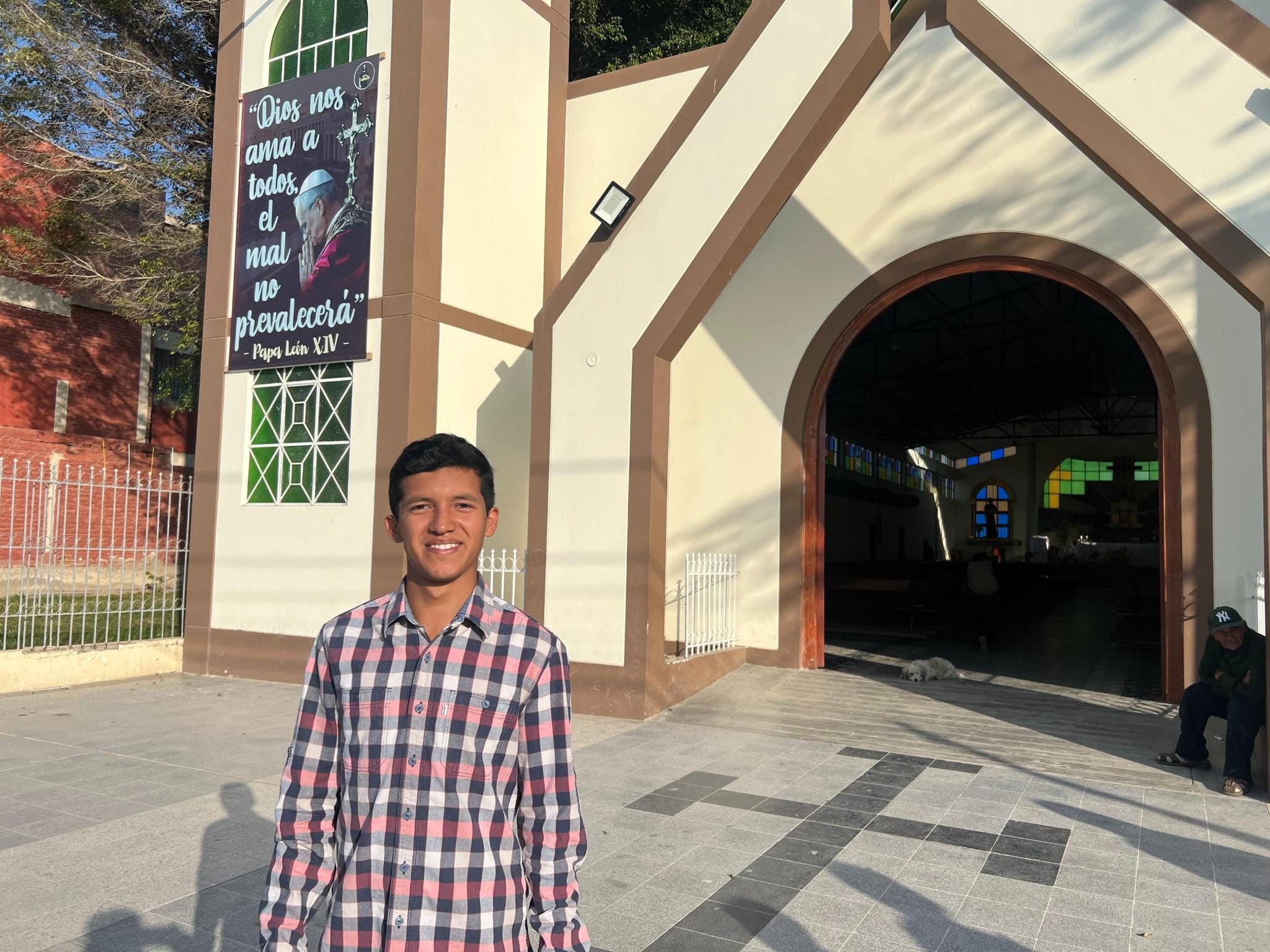
What he’s told me thus far is powerful.
Cesár spent eight years serving Mass for Pope Leo XIV. He told me about how the pope would try to learn the local idioms, the Chiclayo way of speaking, by quizzing the altar boys in the cathedral sacristy. They’d laugh when he’d make a mistake. Msgr. Robert would laugh too.
Cesár told me that he was raised, in part, by his grandfather — his parents split when he was young, and his grandfather became an important father figure for everybody. When his grandfather died, Msgr. Robert was there, visiting the apartment, praying with the family, mostly, though, just listening.
“We leaned on him a lot” Cesár told me, “and he loved us.”
Cesár also told me about the day in May when Msgr. Robert stepped out on the loggia at St. Peter’s Basilica, dressed in white. Everybody in his house was watching on their phones, because the tv was broken. They were silent when they saw him. Cesár had been insisting that a “Robert” would win the papacy — but he thought it would be Cardinal Robert Sarah, whom he’d long admired.
Instead it was Cesár’s friend, Msgr. Robert, who stepped out as pope. Who wished the world peace. Who prayed with the world, and blessed them.
“It was my friend Robert,” he said, in disbelief. “My friend Robert is the pope.”
I came here to tell stories like that, because I want us all to know Cesár’s friend Robert — I want us to know the pope as he is, from the people who’ve lived alongside him, apart from the noise, and speculation, and armchair quarterbacking of the commentariat, or the instant biography industry.
I want us to have the real story of Pope Leo XIV. That story runs through Chiclayo. That’s why I’m here.
—
But it isn’t cheap to get to Chiclayo, or to stay here, or to do the reporting from here.
We need subscribers for trips like this. And if we want to see more of that from the The Pillar, we need you to subscribe. There’s no way around it — we cant do this well if we do it without you.
Please subscribe today. We need you.
—
If that’s not enough to move the needle, let me tell you about North Carolina.
On Thursday, we reported the story of a woman who claims she’d been abused by her spiritual director, a priest in North Carolina.
We know that sort of thing happens: Cardinal Victor Fernandez at the DDF said last year that spiritual abuse in the context of spiritual direction is a growing and serious problem.
The woman wasn’t looking to tell her story for catharsis, for a moment in the spotlight, or for fame. She’d gone to the priest’s diocese quietly, she’d told them her story, she said she believed there were other women — because the priest, she said, had told her about other women.
And she was concerned that the priest had a pattern in his life, and that it would repeat with parishioners, with other vulnerable women who trusted him.
But little changed. The priest became a parish administrator. The diocese seemed not to share her concern.
So we reported it. We read documents from psychologists. We listened to recorded phone calls. We reviewed correspondence. We urged the priest and the diocese to tell their side of the story — because everyone should have the right to tell their side of the story.
We published our report Thursday. The priest resigned Friday, apologizing for his actions, and for the people he’d hurt.
That’s not the same as procedural justice — certainly not as justice is “supposed” to work. It’s not systemic reform of canonical systems and processes.
But it’s another start for public accountability in the Church’s life. Just a start.
We think public accountability is the only mechanism for real and faithful reform of governance in our Church, and we’re going to keep at it.
To do that, we need you.
—
If that’s not enough to move the needle, we’ve got one more thing.
If you becoming a paying subscriber while I’m in Chiclayo — you’ve got the rest of July — we’re going to enter you into a drawing.
When I get back, we’ll pull two names from a hat. We’ll send those names awesome Pillar jackets. They’re jackets you can’t get in any store.
And if you ever wear those jackets to a Pillar Podcast live show recording, you’ll drink for free all night, courtesy of Ed. That’s well worth the cost of a subscription.
Today’s the day. Please subscribe. We can’t do it without you.
I’m praying for you in Chiclayo — and feel free to email me your intentions. Please pray for us.
Yours in Christ,
JD Flynn
editor-in-chief
The Pillar
test
I'm so excited.