Relief as nuns released after new Indian railway incident
Ten members of a religious congregation were briefly detained.
An Indian bishop has expressed relief after 10 members of a religious congregation were released after being briefly detained at a railway station in response to an allegation of human trafficking.
Bishop Thomas Mathew said he was grateful that the incident was quickly defused.
“It could have turned out to be much worse, but we are grateful to God that it was resolved,” the Bishop of Indore told the Indian Catholic website Catholic Connect, which first reported the group’s release.
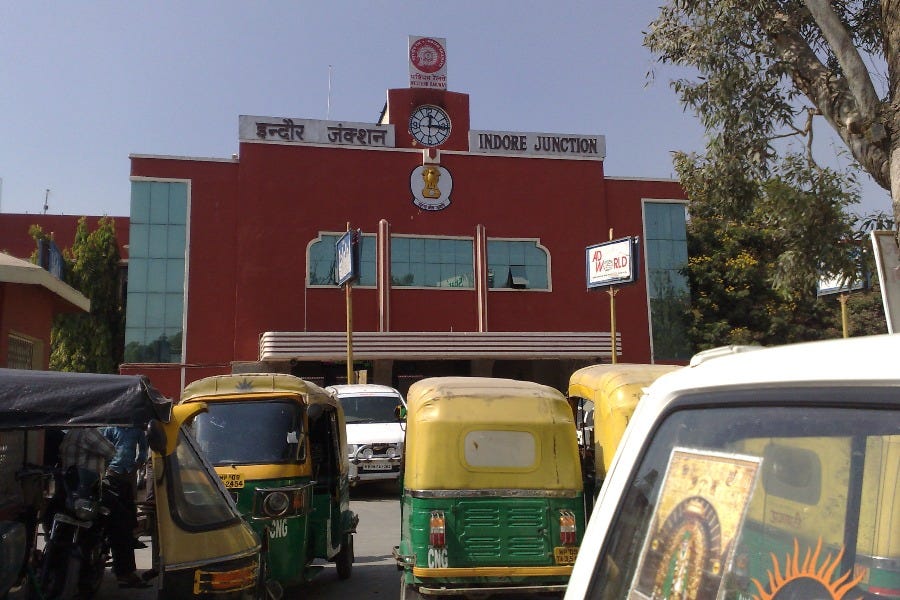
The detentions occurred April 7, when a group from the Sisters of the Visitation of the Blessed Virgin Mary entered Indore Junction railway station in the central Indian state of Madhya Pradesh.
The party consisted of two sisters and eight candidates, who are discerning their vocation within the Syro-Malabar religious congregation. The candidates were scheduled to take a train from Indore to the eastern Indian state of Odisha, to spend a vacation with their families.
Mathew said the police detained the party as soon as it arrived at the station, having received an allegation of human trafficking — a non-bailable offense in India that can lead to up to 10 years imprisonment.
The group was able to alert the Church authorities and their families during the incident.
“Some of the Fathers in the diocese, including the procurator, were contacted and they, in turn, reached out to higher railway police officials,” the bishop explained.
Although the candidates missed their scheduled train to Odisha, Mathew said the prompt intervention meant that “a potential ‘DURG’ was averted.”
The bishop was referring to a July 2025 incident in which two nuns were arrested at Durg railway station in Chhattisgarh state, which borders Madhya Pradesh. The nuns, who belonged to the Assisi Sisters of Mary Immaculate, another Syro-Malabar religious congregation, had traveled to the station to meet with three young women, who were reportedly due to be employed by the sisters in Agra. The young women were believed to be members of the Protestant Church of South India and had parental consent letters.
But a mob that included Hindu nationalist activists confronted the nuns at the station, accusing them of seeking to take the young women away for the purpose of religious conversion.
The nuns were charged with human trafficking and forced religious conversion. But their arrests prompted a national outcry and they were released on bail in August 2025.
In the wake of the Durg incident, nuns were reportedly given informal advice to wear everyday clothing, rather than their habits, when using the railway system in states led by the Hindu nationalist Bharatiya Janata Party, where they are considered most vulnerable to false allegations.
The detention of nuns is potentially sensitive for the BJP given its efforts to make electoral inroads in areas of the southern Indian state of Kerala that are heavily populated by Syro-Malabar Catholics.
Opposition parties seized on the Durg arrests to present the BJP as a threat to India’s religious minorities, because the party is in power in Chhattisgarh state. The BJP in Chhattisgarh state defended the arrests, while the BJP’s Kerala branch sought to distance itself from the incident.
Bishop Mathew told Catholic Connect that even when cases are ultimately resolved, the incidents take a toll on those involved.
“We may be proved innocent later, but the loss of time, money, and peace of mind remains,” he commented.
In a message to members of the diocese, seen by The Pillar, the bishop advised Catholics to be prudent when traveling and aware that their movements may be monitored.
The Syro-Malabar Church, which has around five million members worldwide is the largest of the 23 Eastern Catholic Churches in full communion with Rome after the Ukrainian Greek Catholic Church.
Its members are concentrated in the state of Kerala, but its religious congregations operate throughout India. In Madhya Pradesh, the state where the latest incident took place, more than 90% of the population is Hindu and only around 0.3% Christian.
