
Tears trickled down a deli owner’s cheeks the day Eddie Cotter Jr. left town.
Scratch that — just about the entire town of Black Earth, Wisconsin, cried when the Cotter family left their small town to move back home to central Ohio four years ago.
From the dart games in Cotter’s Pub — Eddie’s garage — to the random encounters with Eddie at the grocery store, at church or in passing, everybody knew Eddie, and Eddie knew everybody.
In Black Earth, there was a lot to love — and thus a lot to miss — about Eddie.
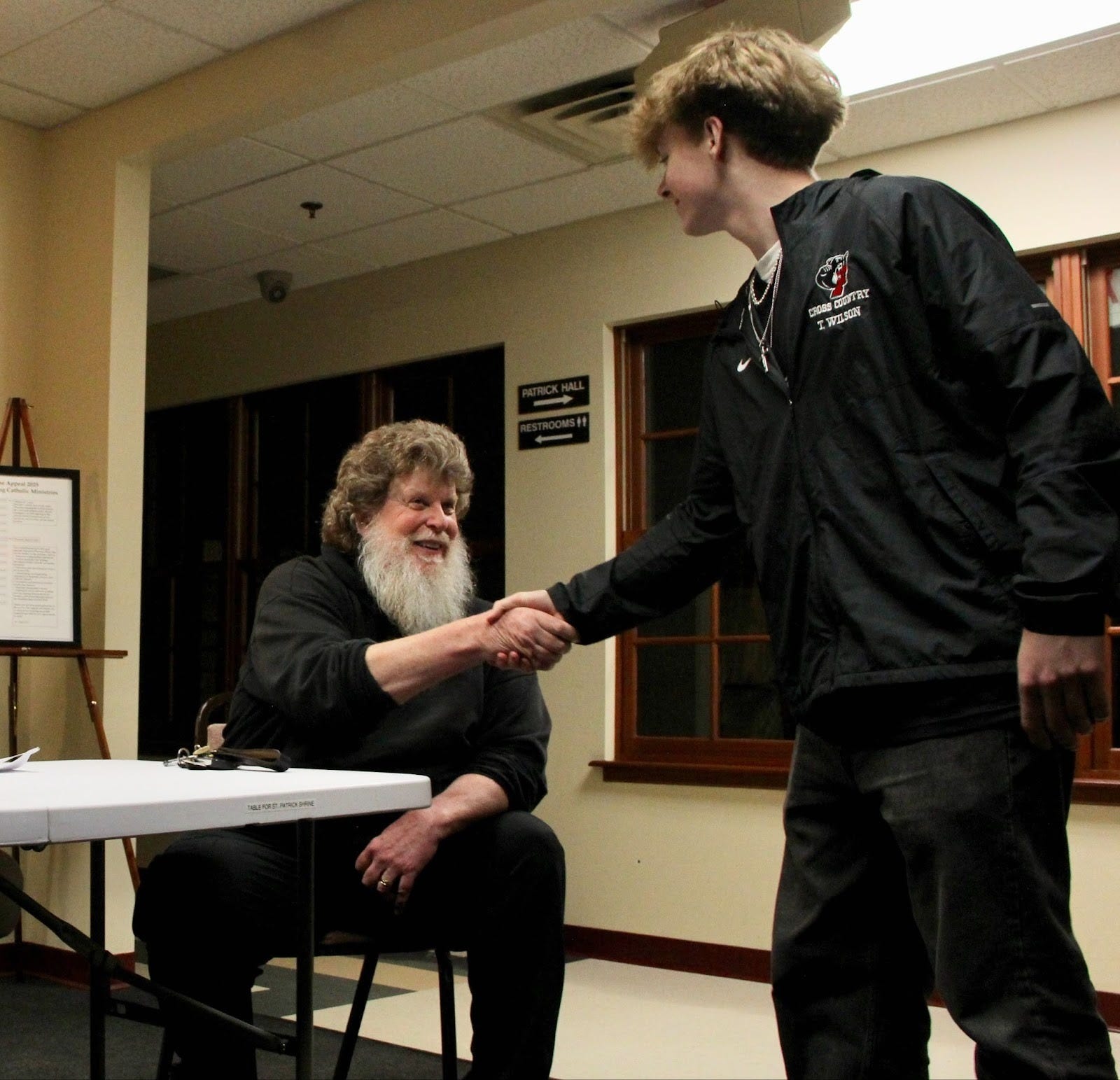
Eddie, 64, had arrived in Black Earth 14 years prior, to run the Dead Theologians Society, a small Catholic youth ministry apostolate focused on introducing students to the lives of the saints and tradition of the Church.
Chris Stefanick — yep, the wildly popular Catholic speaker and podcast host — who then was the director of youth ministry for the Diocese of La Crosse, convinced Eddie to move out there and run the apostolate.
But that’s barely scratching the surface of a resume which almost seems fictional.
Eddie was a rock band drummer on MTV, inner city social worker, youth minister, juvenile court director, founder and leader of an international apostolate, drummer of a world renowned traditional Irish band, high school basketball coach, founder and commissioner of the National Dart League, and probably a few other things he’s neglected to mention.
“I have lived the richest life,” Eddie told The Pillar, with a twinkle in his eye.
And four hours of on-the-record interview transcripts and 48 hours of casual conversations and adventures attest to it.
Oh, and one other thing.
Eddie has been a Rockefeller Center Santa Claus for two years and counting — yep, he’s a Santa at Santa Central, in New York City.
“Now, that’s a crazy story how I got that gig,” Eddie chuckled, his belly jiggling like a bowl full of jelly.
To his friends, Eddie stands as a stalwart of an old way of Catholic life — a true Irish Catholic, proud of his heritage and his faith — a throwback to another time in an American Catholic life. He’s active at his home parish, St. Patrick’s, a celebrity in the local community, and seemingly everybody’s best friend.
“He is the definition of an old school Irish Catholic gentleman,” his son Rory told The Pillar.
He’s not a podcast host, an Instagram influencer, or a professional speaker. You won’t find him giving keynotes at major Catholic conferences or headlining national pilgrimages.
If you spend time with Eddie, you might wonder why not. His deep spiritual life, gregarious nature, fascinating stories, and wealth of knowledge seem to make him an ideal candidate for that kind of Catholic celebrity.
Eddie’s worked in the Church for decades, and he’s never pursued a space in the Catholic media or social media realms.
It’s kind of refreshing: Eddie never thinks about views, likes, Catholic Twitter, or “content.”
Instead, he’s been in the trenches, working in youth ministry for 35 years and running an apostolate for 28 of those. He’s lived a kind of hidden life, something he believes parish life misses today.
And he plans to continue till the day his casket is rolled into Ol’ St. Pat’s.
“I’m not leaving the trenches anytime soon, I love it too much,” Eddie said.
—
His wife of 37 years, Katie, knows the chaos and love of Eddie Cotter better than anybody.
“It’s a lot being Eddie Cotter’s wife. It’s a lot,” Katie shared, accompanied by a sarcastic eyeroll.
“It’s always been a lot. Eddie’s a very good man, he just truly cares about everyone,” she said, glancing over with a smile toward Eddie.
Their house, in the farmland of Central Ohio, which Eddie has affectionately nicknamed “Cottersburg,” is the home to Cotter’s Pub, and also to — forthcoming — Santa’s workshop.
“I’ve got big plans for this place,” Eddie said, gesturing to a shed in his backyard. “I’m going to turn it into a Santa hut, with decorations, lights and a big chair. A train will run around the ceiling. Local kids will be able to come and visit Santa. It will be awesome!”
“Oh, it’s free of charge, of course!” he added.
Though Eddie insists he’s an introvert at his core — a shocking claim, really — he looms in conversation as a larger-than-life figure, full of life and love.
In every interaction, he seems to be his authentic self, never putting on a show. And his friends, like Fr. Bill Evans, say he’s the real deal.
“He doesn’t try to be someone that he’s not. He certainly doesn’t try to be some superstar uber-Catholic,” Evans told The Pillar. “He’s just a grounded, faithful man with a huge heart.”
In a world that places a premium on personal brands and maintaining a perfect self image, Eddie’s an anomaly. But his friends say that authenticity helps him live the divine assignment he understands so well — to save souls.
‘Now that’s a story’
Born into a large Irish family on the west side of Columbus, Ohio, Eddie’s never been far from the Church, or his Irish heritage.
The Columbus Irish Catholic community saw the Cotter family as celebrities. Eddie’s uncle Buddy Cotter was a local music star, his dad – also named Eddie Cotter – a giant at St. Patrick parish. When Eddie was growing up, everybody knew the Cotter boys.
In every St. Patrick’s Day parade — basically the most important day of the year for the Cotter boys — the Cotter brothers rode in a limo at the front of the parade.
As a young boy, Eddie remembers waving and beaming to the crowds, surrounded by his dad and uncles.
While he attended Catholic school his entire life, he was never an academic. At one point, a Dominican priest encouraged Eddie to discern priesthood, but Eddie remembers his quick response: “No thanks, it’s too much reading.”
But from a young age, the Church and the Catholic faith enthralled young Eddie Cotter.
“I am a devout Catholic sinner,” Eddie said. “I can’t remember a second ever wondering if I should leave the Church, or considering another option. If I had a question, I could always get answers.”
In first grade, he met a friend named Scott Ryan, who to this day calls three times a week, with the men often talking about their spiritual lives. They say they’ve had immense impacts on each other.
“We became friends, you know, early on in grade school,” Ryan told The Pillar. “I know that I have been very influential on Eddie in terms of pushing him further toward the edge than he would normally go, as he is not a risk taker, and I’ve always been that kind of rambunctious [friend] that has pushed him into other ventures whether it be [ministry] or grade school basketball. For me, he’s been like a brother, that has pushed me in the faith life.”
In his youth, the saints captivated Eddie. He would frequently read about saints, and quote them, a practice he continues to this day. Practically any conversation with Eddie will include at least one, likely more, saint quotes.
While academics never captured his attention, basketball and music became the love of his life. A tall, fiery, red-headed Irish kid, he became a basketball star his junior and senior year at Bishop Ready High School, helping his team win the Central Catholic League Championship.
Irish music filled the Cotter household. In high school, Eddie played the bagpipes — and was pretty good, until he sold the pipes to buy a girl a gift.
It didn’t work out with the girl, and the bagpipes were gone.
Rock-and-roll, though, provided more success, both professionally and romantically.
After college, Eddie joined a friend’s rock band, The Bellows, as the drummer.
They became a local sensation, earning fandom across central Ohio.
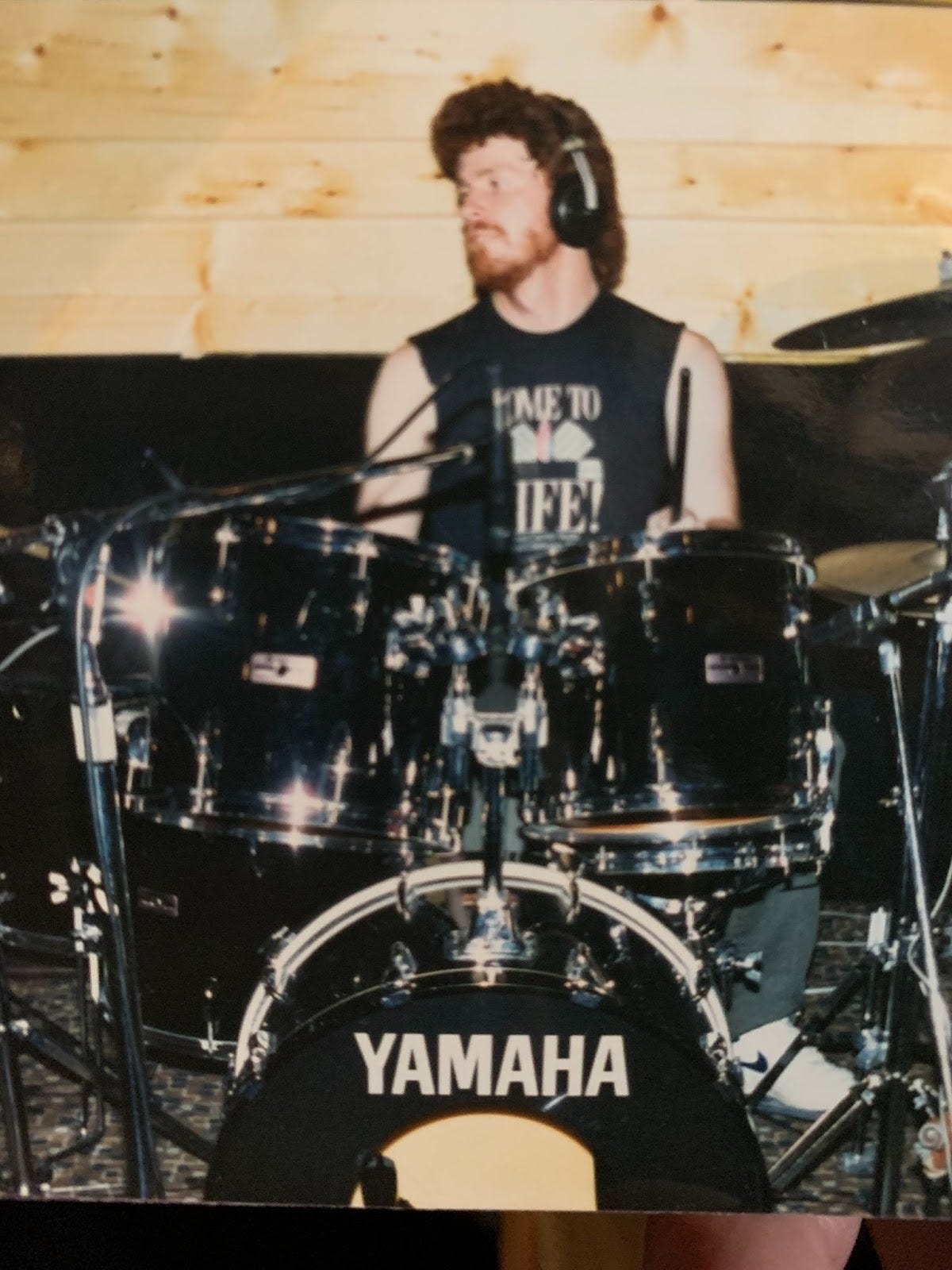
The local radio stations played their music, lines would snake around downtown streets with fans vying to enter the bar where they were playing.
MTV even produced a music video for their hit, “There was a Time” — a song about Eddie’s relationship with his mother Helen.
“My rock-and-roll days were a whole lot of attention,” Eddie said.
“It was wonderful, but the feeling was always wonderful because of the love and the goodness and the smiles,” he added. “I’ve been blessed with more celebrity than I ever would have gone after.”
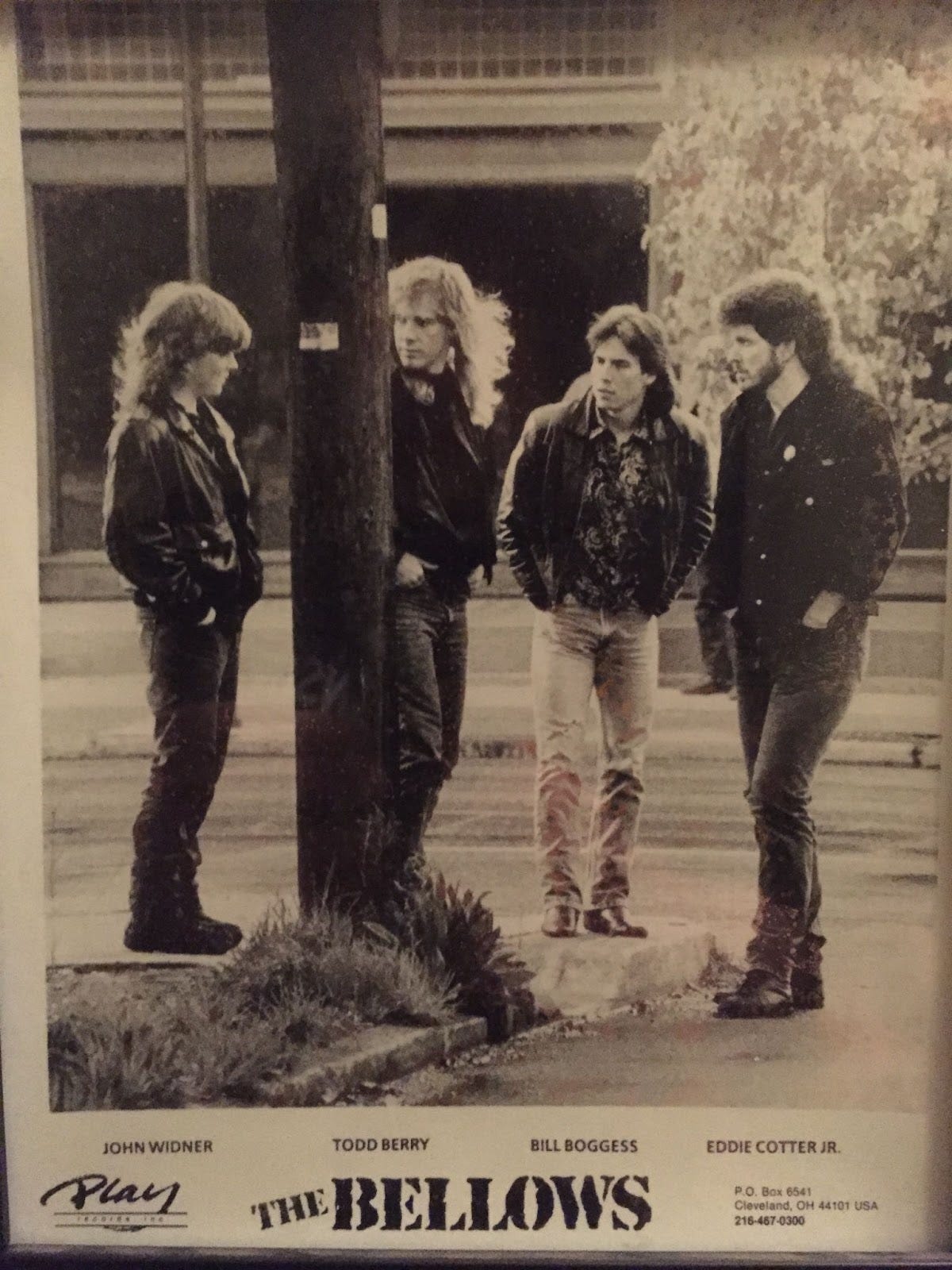
Eddie’s rock days are well in the review mirror, with the only surviving relics being Eddie’s flowing mullet, and the record labels dotting his basement walls.
Oh, and his relationship with Katie, of course.
And that’s a story which would have rom-com producers vying for the rights.
The two grew up with knowledge of the other — Eddie the youngest of the famed Cotter gang, four years older than Katie, the beauty queen of Columbus’ other Irish royal family — the Byrnes.
Think Irish Montague and Capulet families, but they don’t hate each other.
They conversed occasionally. Eddie gave Katie a tour of Ohio State when he, four years older, was a senior and she was looking at colleges.
Fast forward five years, and Eddie woke up on St. Patrick’s Day morning, 1988, with a very clear thought: “I am going to marry Katie Byrne.”
He doesn’t know where that thought came from. “It was the first time I thought of her in five years,” Eddie recalled.
“It was weird.”
He concocted a plan. He’d give her a green carnation during the St. Patrick’s Day parade and tell her about the dream. She’d swoon. Then’d come marriage.
It was pretty ambitious, but that’s Eddie.
So, while riding on a parade float with The Bellows, Eddie saw Katie along the parade route, told the driver to stop, ran over, gave her a flower, and told her his plans.
Now that’s romance.
Except six months went by. They didn’t see each other.
And then, as she prepared to attend vet school in New Mexico, Katie went to a Bellows concert.
She approached Eddie, and said hello. Eddie thought she was just being friendly, until the next night when she returned, and struck up a conversation.
Taking the hint, Eddie asked her on a date for the following Sunday: Mass, then lunch afterwards.
They hit it off. Within a year, they married at St. Pat’s Church, a few weeks before St. Patrick’s Day, of course.

“It was huge, I mean two of the great Irish families coming together,” Eddie said. “When I met her dad, he was ecstatic. He grabbed my face and said, ‘I’ve always wanted to be in the Cotter family’.”
A love story made for a movie. But the romance didn’t stop on the wedding day.
After 37 years of marriage, the two say they are still madly in love. They poke fun at each other a lot, but they also pray the rosary daily together. And they support each other’s dreams and goals.
“I think the secret to our marriage is you roll with the punches, [and] you can make do with what you have,” Katie said. “He’s always been very supportive of me as well. At 38 years old, I decided I wanted to go to vet school and he’s like, ‘Do it.’”
“So it’s just been a lot of support that we give to each other.”
Eddie and Katie have two grown kids — Maeve and Rory.
But while their kids are grown, their house is full.
First, they have a plethora of animals, including Mr. Kevin, a 10-year-old pit bull.
And they host guests regularly.
His kids say welcoming strangers into their house was normal as they were growing up. Every day it seemed like people stopped by Cotter’s Pub, to chat with Eddie and Katie, or they were welcoming people inside.
Though the family was by no means wealthy, Eddie or Katie would always offer to make visitors a sandwich or offer something to drink. Hospitality is the norm at the Cotter residence.
When they lived in Wisconsin, those guests included football players from the University of Wisconsin, who would come and play darts with “Uncle Eddie.”
Some of those guys are now professional athletes, whose most prized trophies are the NDL (National Dart League) tournament trophies won at the pub, Eddie told The Pillar.
Through that hospitality, Eddie lived out his Catholic faith in an attractive way, his family members say.
“Our garage door was always open. We always had people over,” Rory told The Pillar. “Though we never had an excess of funds, Dad or Mom would always say, ‘Hey, let me make you a sandwich. Hey, can I get you a glass of water? Can I get you anything?’”
“His mentality is, ‘I’m going to make you feel like you were almost meant to be in this garage tonight because we’re going to find you a dart nickname. We’re going to laugh. And in that, you’re really going to see what being Catholic is all about,’” Rory added.
Cotter’s Pub eventually relocated to Central Ohio, where Eddie and his wife Katie now live. They have dubbed the small town ‘Cottersburg’, as Eddie already seems to know everybody.
And everybody knows Eddie. From Stacey and Deb at the post office to Dave at Kroger, Eddie greets them by name, stopping to hear about their lives.
When Eddie stops by Byrne’s Pub — Katie’s family’s Irish pub in Columbus — owner Pat Byrne tends to greet Eddie with enthusiasm: “Oh my goodness, Santa walked into my bar!”
“It’s not financial contributions that Eddie brings,” Pat Byrne chuckles at the bar. “But when you talk with him, your entire demeanor changes. When talking with Eddie, all that anger you had goes to peace, you just want to be there with him and chat.”
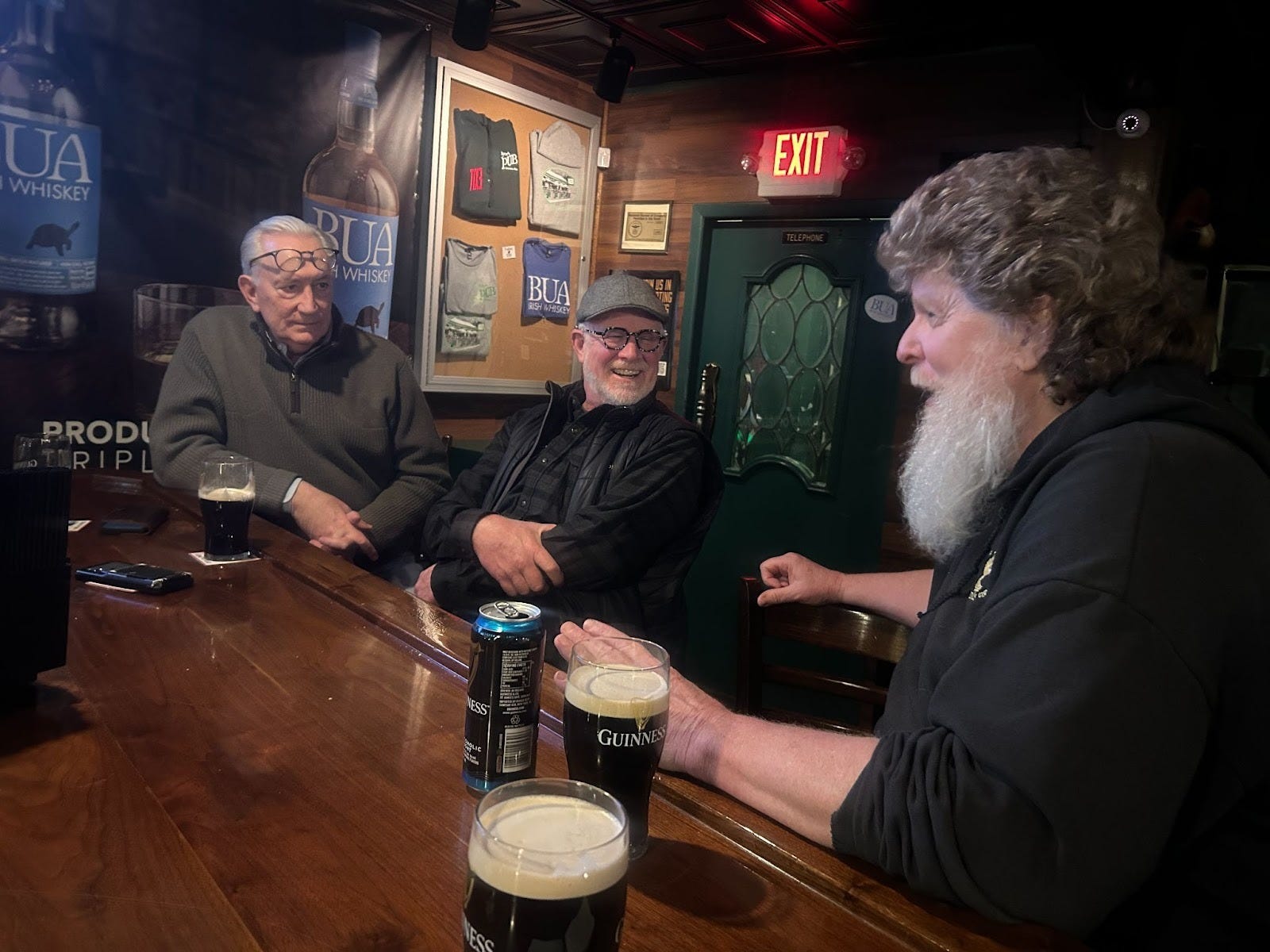
That hospitality left an impression on the Eddie’s kids, who are equally as gregarious and hospitable as their old man. Yet the most impactful moment of their childhood came every time they talked to, and still do, with their dad.
“I cannot remember a single day where my dad hasn’t said he loves me,” Rory said.
“When you’re little, you think everybody’s dad says they love their kids. Then you grow up and realize dads and sons don’t have that same loving relationship. But I always had a dad, no matter what, that just said he loved me. When you experience the challenging parts of life, falling back on love has so much power and meaning.”
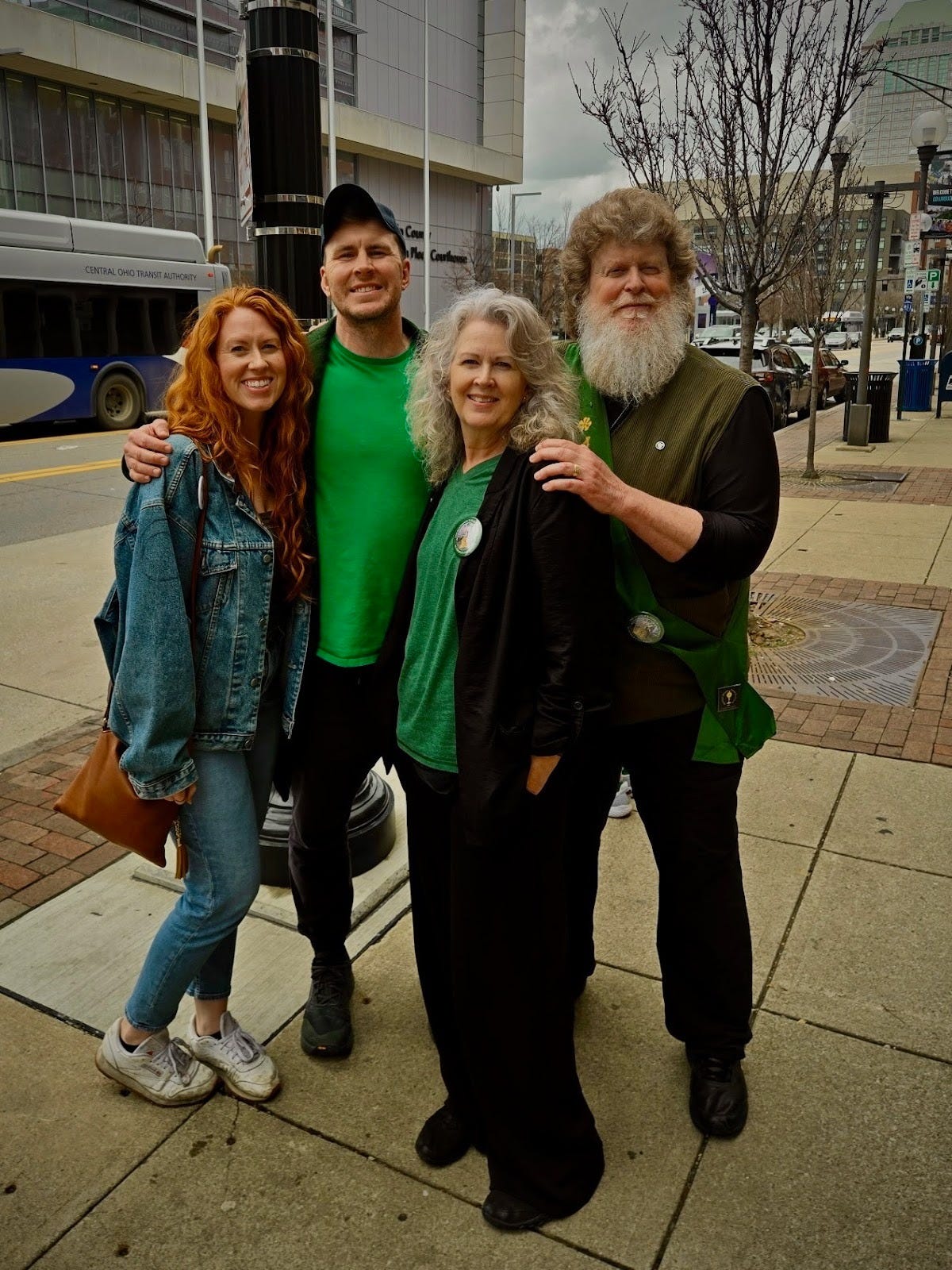
In addition to the Catholic faith, their Irish heritage has been immensely important to the Cotter family. Eddie plays the bodhrán drum in a renowned traditional Irish band, The Kells, and is a third generation member of the Ancient Order of Hibernians, a centuries old, Irish Catholic organization.
He also belongs to the Pioneer Total Abstinence Association of the Sacred Heart, an Irish organization founded in the 1800s, whose members abstain from consuming alcohol to promote temperance and sobriety in Ireland.
Eddie pledged as a teenager to never consume alcohol, offering it up as a prayer to the Sacred Heart for those that struggle with alcohol. If you see him with a Guinness, it’s the non-alcoholic version.
That Irish heritage influenced many life lessons he instilled in his kids.
“One day, I didn’t want to play a soccer game because it was raining,” Rory recalled. “He goes, ‘You are an Irish Catholic gentleman and you’ve come from a long line of Irish Catholic gentlemen who love playing soccer in the rain, this is good Irish weather.’ And so I played the game and it taught me a valuable life lesson.”
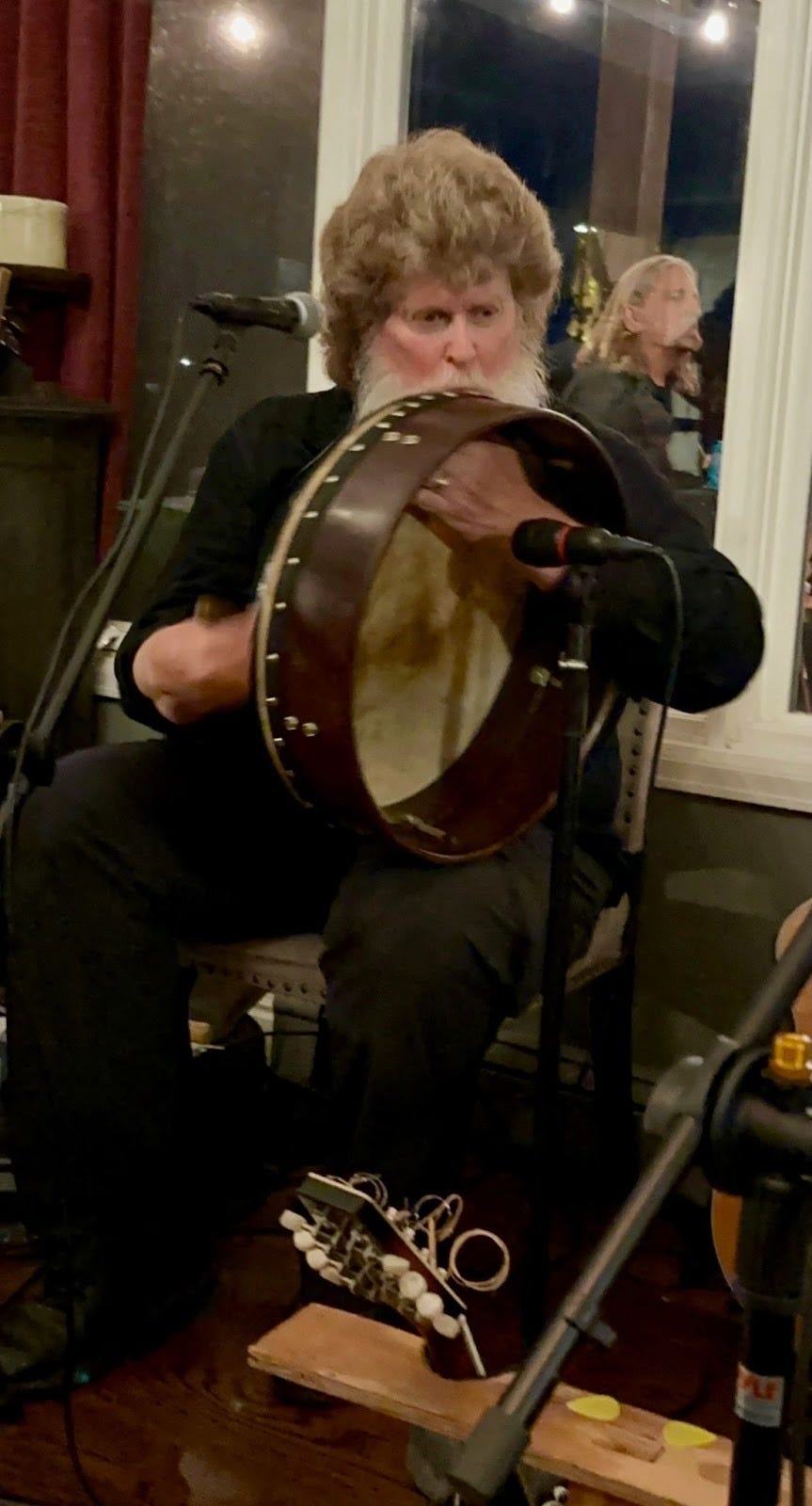
The Cotter marriage and family life has become a model for the teens Eddie works with.
Philipe Nguimbous met Eddie in 2018 after his family immigrated to the United States. He joined St. Pat’s youth group, and found a role model in Eddie and his wife Katie.
“When Eddie shared the story of how he met his wife, that definitely inspired me in how I met my girlfriend. He was very direct, very bold, and that is something that I do respect a lot. So I kind of took a very similar approach with my current girlfriend,” Philipe said. “When I see him and how he interacts with his wife, Katie, it kind of helped me see what kind of woman I want in my life.”
After marrying and wrapping up the rock career, Eddie began his professional career as an inner city social worker, then a juvenile court director, before moving to Orlando, Florida to begin working as a youth minister… after a priest offered him the job on a sidewalk.
“I was looking for something new when I visited a friend in Florida,” Eddie recalled. “A priest from Ireland stopped me after Mass on the sidewalk and said, ‘Hey, you’re a big fellow. You look like you could handle the youth. Would you want to be a youth minister for the parish?’”
“And I took it.”
One sidewalk conversation launched a career in youth ministry 30-years-and-counting.
Like all hip, young youth ministers, Eddie dove all in at his first parish. He was there five nights a week, meeting and talking with teens. He invited teens to attend Mass, showed up to youth groups, and just hung around to chat.
But unlike most youth ministers — whose average ministry span is 18 months, according to a report published by the Diocese of Arlington — ministry has never burnt Eddie out.
Now, at almost 65 years old, he forgoes most of the long bus pilgrimages and sits out silly youth ministry games, but believes his work as the assistant youth minister at St. Pat’s is more fruitful than ever — he figures he’s not so much an older brother, but an uncle figure for the parish teens.
“I am far more peaceful inside just because I am older, I have more wisdom to share now. I think having that kind of almost old uncle/grandfatherly figure is helpful for teens,” Eddie said.
“I don’t plan to retire unless I have to. These have been some of the best years ever in youth ministry.”
A 64-year-old youth minister is a rare experience for high school students. But the teenagers at St. Patrick’s respond to Eddie’s work.
“There’s so much to admire about Eddie,” high school senior Leah Williams told The Pillar.
“He always brings out the best in people, he has so much faith in people, he just loves to hype everybody up. He makes you feel great about yourself.”
Every Tuesday night, Eddie helps run a youth group at St. Pat’s. Sometimes he gives a talk, helps lead small groups or sets up a game.
At the beginning of the evening, he also takes the time to greet every kid as they walk in.
But often, he heads behind the kitchen counter, cooking dinner for more than 50 teenagers.
Cooking has become a passion of his, and almost every week, Eddie concocts, or finds online, a new recipe: one week jambalaya, the next, a delectable white bean Tuscan soup.
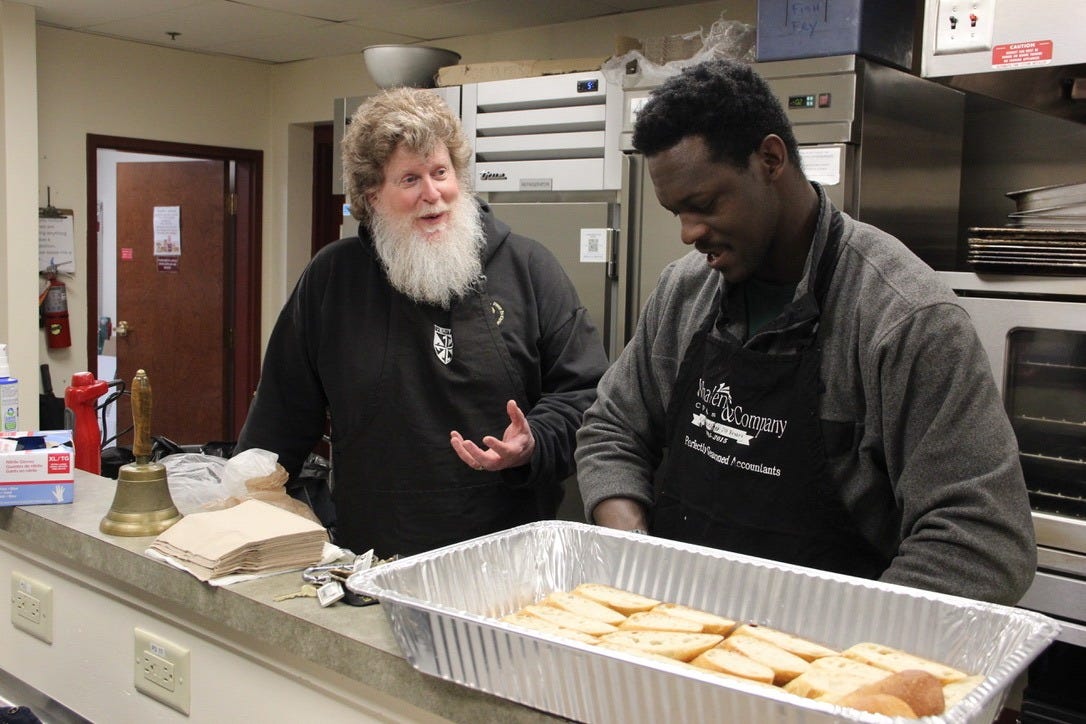
Oh, and he’s become famous for his drink concoctions — combining the likes of whatever the parish pantry holds. Though in Lent, Eddie serves “crystal punch” — i.e. water.
“I love going to Mass at St. Pat’s. I love doing service work, greeting people; I like cooking for maybe 50 teens on a Tuesday night. I would say I’m kind of fully immersed in the parish,” Eddie told The Pillar.
As for relating to a 64-year-old youth minister, sophomore Audrey Frey said she thinks nothing of it.
“Just because he is around so many high schoolers, he remains youthful. He has this amazing sense of humor and can just make anybody laugh,” Frey said.
Lessons from the trenches
The year Eddie started youth ministry, 1994, Ace of Base’s “The Sign” topped the charts, “The Lion King” and “Forrest Gump” crushed the box office, and major league baseball players went on strike, leaving 1994 as the year without a World Series.
Oh, and… get this… the Dallas Cowboys won the Superbowl in ‘94.
Yep, Eddie’s been in ministry for so long that the Dallas Cowboys actually fielded a good team once upon a time. And like the Cowboys’ playoff success, a lot has changed over his 35 years in ministry and parish life.
“As a whole, parish life has changed dramatically, in my lifetime. People really don’t know each other any more. The parish events that used to draw huge crowds no longer attract people,” Eddie said.
“In my lifetime, it’s become a bigger struggle for parishes to maintain a good community, and that worries me.”
As for ministry, the primary challenge has remained the same, which Eddie identifies as: “keeping the Church relevant while teens are growing up and in the secular world.”
What’s changed are the struggles that young people face.
“There’s more of a pressure now on young people to be famous, to be well-known,” Eddie said. “On social media, people are basically watching a highlight reel of someone else’s life. That’s a shame. People’s identity is at risk unless they feel like they’re famous for something.”
“Teens are struggling to realize that we have infinite worth and identity because we are children of God, and that should be enough,” he added.
Those problems are timeless crises faced by young people, he said, but social media amplifies them.
“People still want to be loved. They still want to feel relevant. They still want to be liked. They still don’t want to be embarrassed. They still want to find someone that loves them. People still want to find something to live for. People still want to have a mission,” Eddie said. “Ideally, most of our affirmation comes from the fact that we know we’re children of God. I think technology can make it more brutal.”
Over the years, Eddie has observed and implemented many youth ministry strategies, both the good and the bad. One that he finds particularly dangerous, and common — when “vibes” and “experience” are placed before encounter and prayer.
“I was involved in different youth ministry attempts in Ireland, which is like a decade behind the United States in terms of ministry. There was a premium being placed on the big arena events, big lights, big numbers, big wow factor in regards to ministry over there.”
“One woman we were with, a psychologist, said something that made us all stop: she asked, ‘What are we doing? Are we just trying to become a Protestant tent revival, are we trying to replicate the megachurches, with our flashy lights, loud music etc? Is that going to become the standard?’” he recalled.
“I have been in situations where people think, if you’re not speaking in tongues, or feeling ‘on fire,’ you’re blocking the Holy Spirit. I think that mentality is dangerous and reckless to youth ministry.”
Sometimes the most successful youth ministry programs, Eddie added, are the simplest, the ones with no light shows or trendy games.
“I know of a youth ministry program up in Wisconsin where the only thing they did was Eucharistic adoration and some social time. It was extremely successful even though there was no light show, there was no amplification,” he said.
“It was teens adoring our Lord, and they grew and grew and grew.”
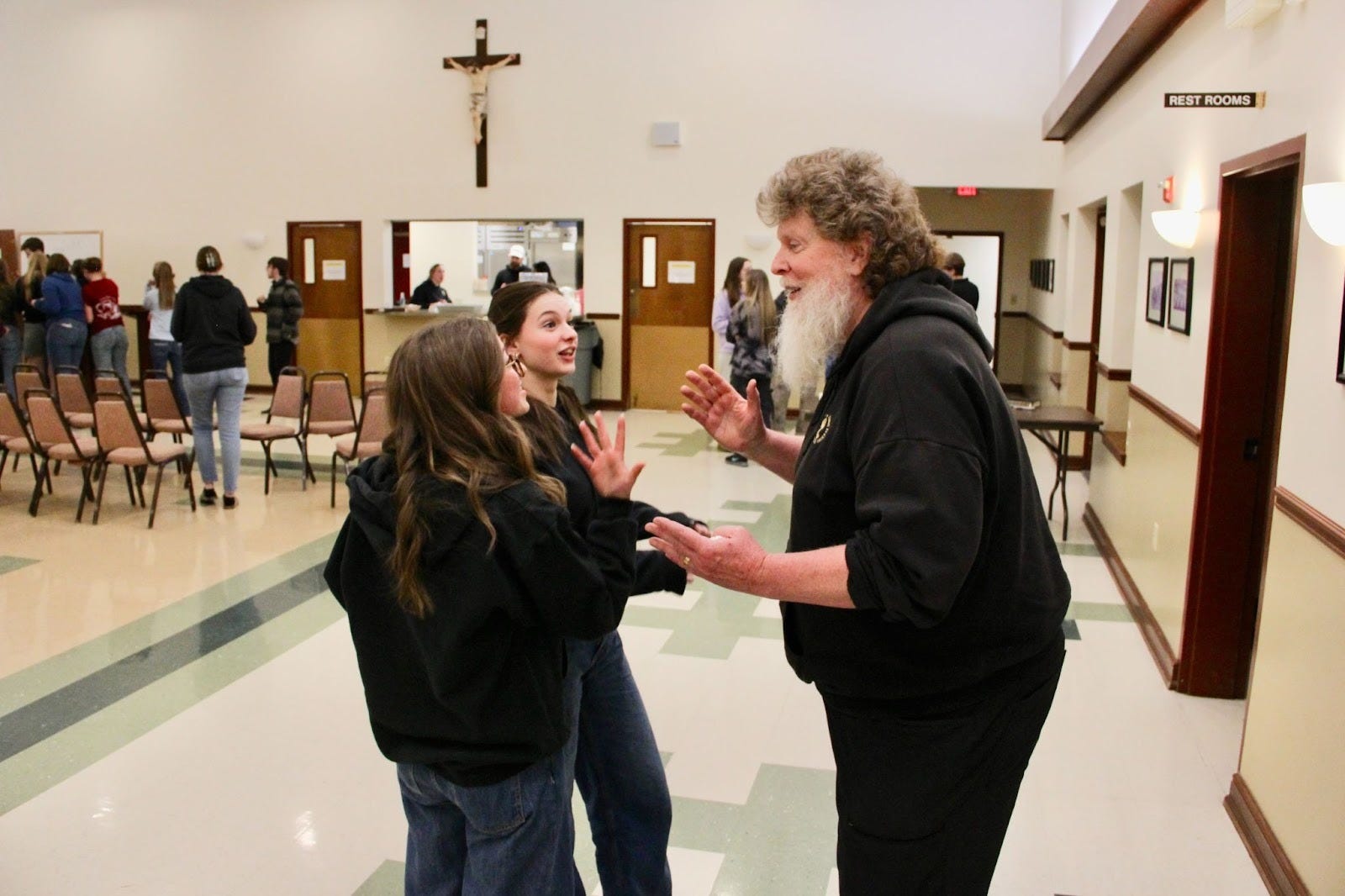
Christ should be the basis for any youth ministry program, Eddie said. A successful program, he’s found, is often one that has a balance between prayer, formation, and social activities. ‘
He pointed to the work of 19th century priest St. John Bosco as an example of blending religious and social aspects in working with youth, as well as genuinely caring about the young people involved.
Oh, and a youth minister can’t be desperate for teens — neither their attendance nor their approval, Eddie said.
“You have to have a youth minister who is not needy. One who loves the teens, but you don’t need the teens. Neediness is not good in youth ministry at all. I mean, I know for myself, I love teenagers, but I don’t need them.”
“If an adult needs to have teenagers think they’re cool, if it fulfills a social requirement that the youth minister has for friends or social recognition, I do not think that is good.”
Few people spend their lives dedicated to the Church, even fewer serve the entirety in youth ministry.
Eddie does it because he wants to “stay active in the trenches as an assistant youth minister at a parish because I love serving the youth.”
“I love the Church, I love the faith,” Eddie said. “I can say I’ve met and I’ve worked for the best and the worst in the Church. In my early days. It almost scandalized me at times because I had a little bit of naivete thinking that, well, if I worked for the Church, everyone’s going to be nice and everyone’s going to be holy and everyone’s going to be fair. That was a rude awakening.”
“I had a great priest from Ireland once tell me, because I was going to quit early on, the devil knows when and where to strike, and usually if you’re on the verge of doing something good, he will strike the hardest,” Eddie added. “That was great advice.”
Dead Theologians Society
Shortly after Eddie started working as a youth minister in Florida, he began developing a youth ministry program to counteract the poor catechesis, guitar-worship, and other issues prevalent within the Church in the 1980s.
He wanted something simple, that would focus on the saints, and build relationships with the Lord.
“It was brought up that many young people view religion class as just another subject that they have to get through and they don’t have a love or a passion for it, especially because it’s often not presented well,” he said. “I asked: ‘How about we learn about the lives of the saints, and present those stories in a very real and appealing way?’”
He had an idea. Then he needed a name. Earlier that year the popular movie “Dead Poet’s Society” was released. The movie plot focuses on an English teacher aiming to use unorthodox methods to help students appreciate literature — similar to what Eddie hoped to accomplish through his new youth ministry strategy.
“This teacher helped students take what they thought was a boring subject and bring it to life, like what we wanted to do with theology,” Eddie said. “Then, in the book of Romans, St. Paul says, ‘be dead to sin, but alive in Christ.’ And all of a sudden this conversation got pretty enthusiastic.”
Thus, the Dead Theologians Society was born.
Shortly after developing the Dead Theologian Society concept, Eddie returned to central Ohio, taking a youth ministry job back home.
He brought with him the idea, converting a parish basement into a meeting space.
“We wanted to have a space that wasn’t a typical classroom, which teens would reject and have rejected. We wanted it to not be a game room. We wanted it not to have carpet squares for preschool kids, so we turned this church basement into a magnificent undercroft chapel. We had votive racks and icons with hanging byzantine lamps in front of ‘em and statuary, and it was beautiful,” he said.
For the first meeting, Eddie invited 11 teenagers into the new underground chapel. Immediately, “the teens were ‘sold,’ for lack of a better word,” Eddie said.
That was just the beginning.
“The language was so clear, so straight and so relevant to today that we said, come back next Wednesday and the crowd doubled. There were over 20 then 30 then 50. It was standing room only to where we had to move the space.”
After the first two years, 16 teenagers who had not been confirmed with their class decided to receive the sacrament.
Eddie realized that he had found a winning formula for youth ministry, a formula that he could not keep secret. After prodding from family and friends, he took the Dead Theologians Society national, establishing in 1997 a board and a non-profit to begin sharing the model with other parishes.
“Word started to spread among other parishes that, ‘wow, you’ve got Catholic kids coming, teenagers enjoying this model,’” Eddie said. “Then we would have seminarians or other youth ministers coming to visit and it was like this thing that other people wanted to implement because it was unheard of.”
EWTN’s “Life on The Rock” interviewed Eddie about his success. After the program aired, the Dead Theologians Society received more than 4,000 inquiries, including one from the Director of Youth Ministry for the Diocese of La Crosse — Chris Stefanick.
Stefanick loved the concept and urged his bishop— now-Cardinal Raymond Burke — to support the budding apostolate.
Burke loved the concept, helped secure the first donors and convinced Eddie to move to Wisconsin to work on DTS full-time.
“Dead Theologians Society is a phenomenal apostolate. It’s just very simple. If there’s 100 kids, it’s successful. If there’s two kids, it’s successful — because it never feels like a planned big event; it always feels like an intimate and intense and awesome gathering where you just sit around and talk about the lives and teachings of the saints,” Stefanick told The Pillar.
“Eddie has been Johnny Appleseed with that, very quietly and under the radar, for many years, nationally and internationally.”
“It was Cardinal Burke who thought this was a great idea and it should spread all around the country because everything we were doing was based on solid truth,” Eddie said. “It was just us on our home field advantage, delivering up treasures of the faith to young people. It just kept growing, it just never stopped.”
When students join DTS, they receive a hoodie, rosary and are invited to pray for souls in purgatory — the apostolate’s unique mission. The structure of meetings are simple — social time for 30 minutes, a 15-minute talk about the life of a saint followed by a brief Q-and-A, a decade of the rosary, and ideally a half hour of adoration.
Eddie attributes the program’s early growth to the then-novel approach DTS took to youth ministry. DTS was one of the first formal high school youth ministry programs, along with the likes of LifeTeen, founded in 1985, and the National Federation of Catholic Youth Ministry, in 1981.
“Dead Theologians Society was almost before what I would call the renaissance of youth ministry,” he reflected.
“There’s been a real renaissance of lives of the saints and kind of a discovery of traditions in the last decade or so, but we were well ahead of the curve,” Eddie said.
When DTS started, he told The Pillar, “we were still in the Kumbaya era of youth ministry.”
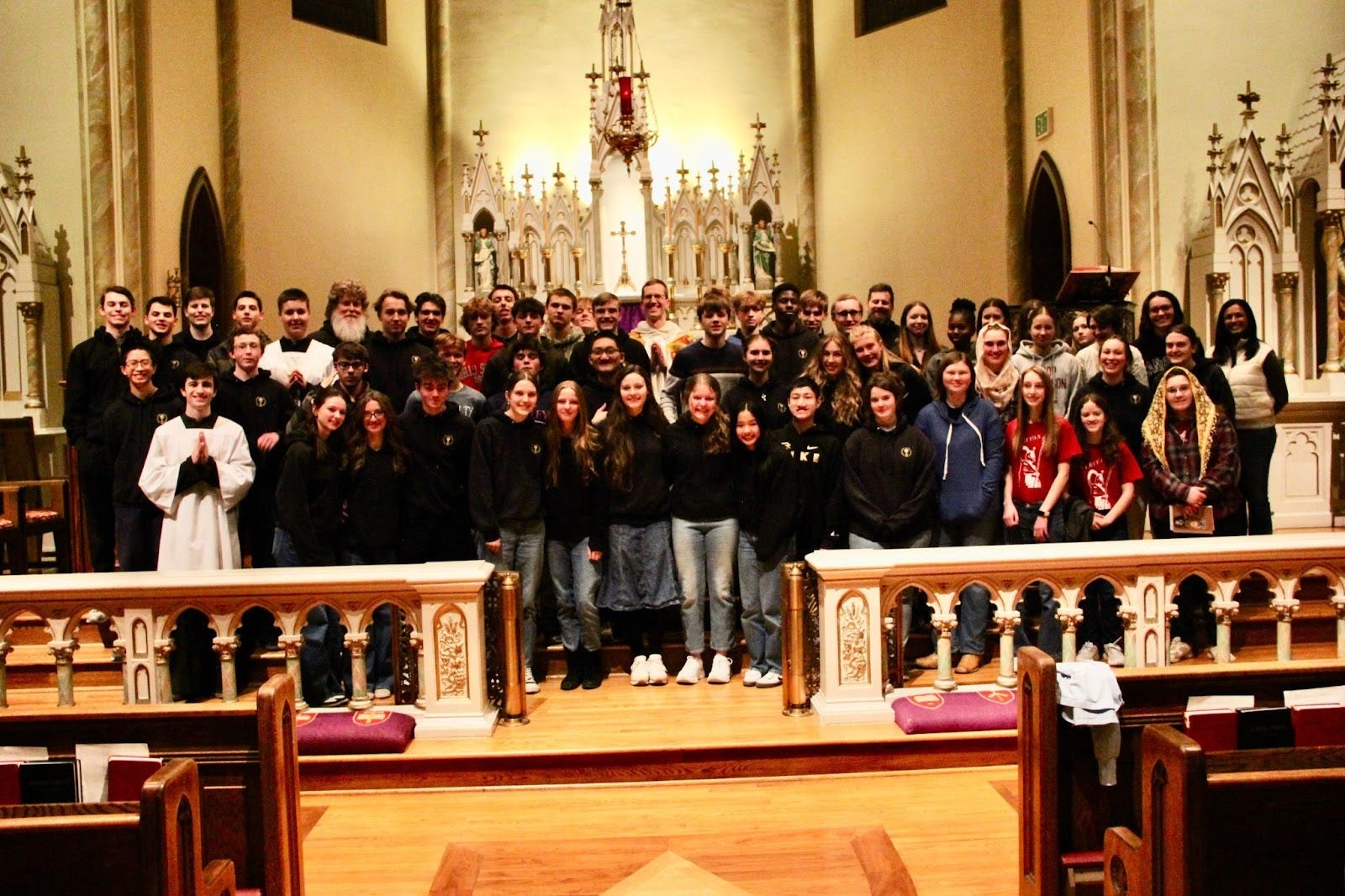
Over the Dead Theologians Society’s 28 years of existence, it has established chapters at 550 parishes, with more than 20,000 participants.
Scores of teens attribute their conversion to the Dead Theologians Society, as do many priests, sisters, and married couples their vocations.
“It was so countercultural to what was happening at that time, because so much of youth ministry was kinetic — a lot of activity, and a lot of being able to express your faith that was patterned after a more evangelical type of experience,” said Father Bill Evans, who was one of the first adult chaperones Eddie recruited in Wisconsin.
“It was almost as if we had made the assumption that teens had to have motion and noise to even want to participate in their faith,” he added.
“What we found was that teens were craving silence, craving peace, craving for something that was deep and established and meaningful, and not just some new program that would just be there and then disappear.”
Compared to other youth ministry apostolates, like LifeTeen, which promotes on its website that it has engaged more than 1,000,000 teenagers, Dead Theologian Society’s numbers are miniscule.
To Eddie, that’s ok.
“As far as the growth, based on business paradigms or whatever, DTS would be seen as a failure I think,” Eddie said.
“But Father Solanus Casey said, ‘the God who loves small beginnings knows — as only He knows — how and when to provide developments.’ I’ll take that mindset to the bank.”
For most of its existence, Dead Theologians Society has been a one-man operation — it has never had the money to grow the staff. The non-profit charges parishes $250 to license the program, and even that fee is negotiable.
Hoodies today cost $29, $2 more than when Eddie first started selling them in 1997.
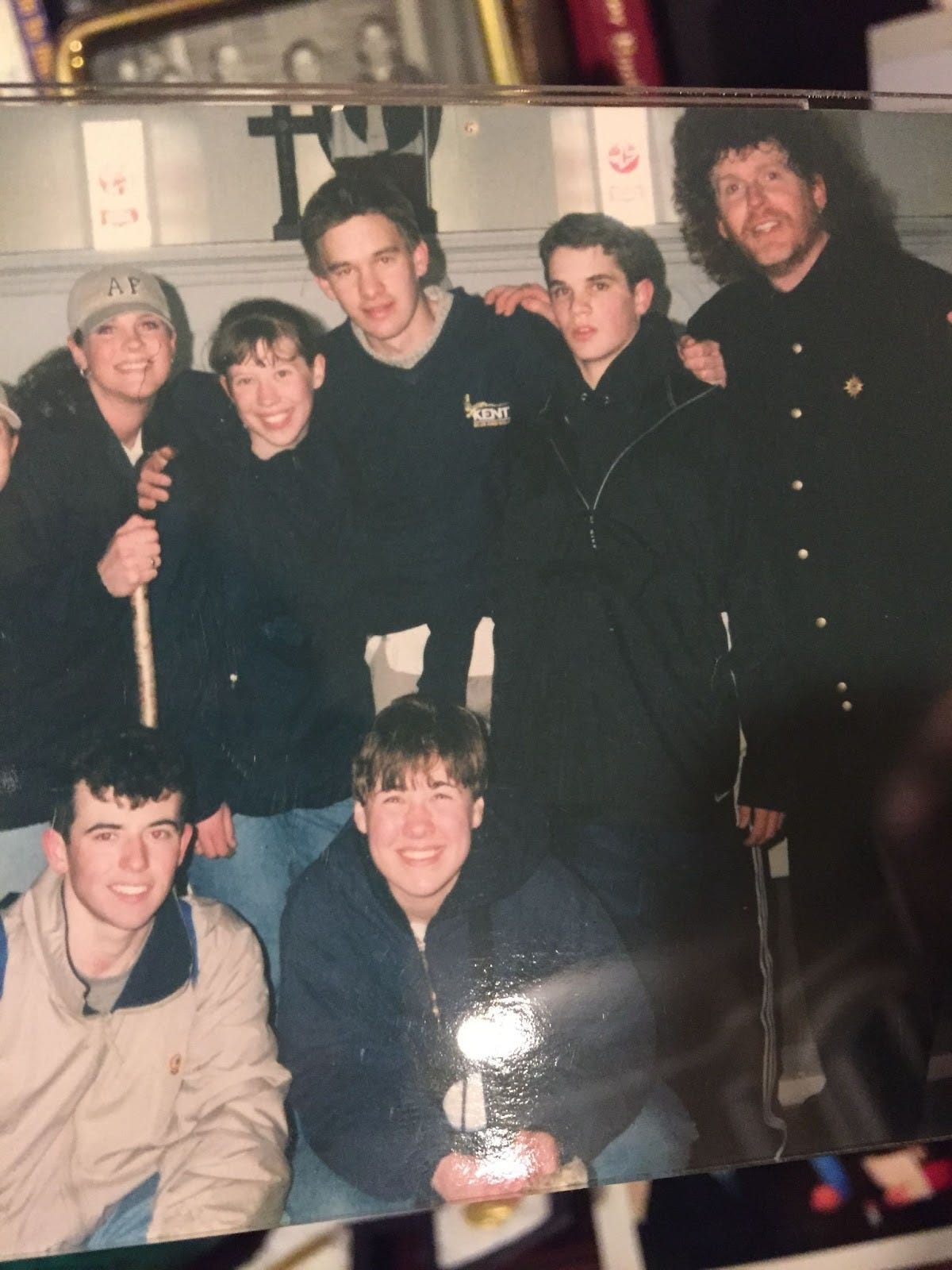
Most donations come from small-gift donors, the $10-$20 a month folks, Eddie said, not the large family trusts or rich Catholics that many large apostolates are dependent on.
“I know for a fact that Dead Theologians Society couldn’t have kept going without my $10 and $20 a month donors,” Eddie said. “That’s who has kept us afloat, those are the donations that have kept us a nostril above the waterline, [along with] a couple people who have given some significant gifts. I don’t take that lightly at all — I’m so eternally grateful to those folks and their donations.”
Dead Theologians Society could have been a large apostolate, Eddie believes, if the “business” end of ministry had come more naturally to him.
“I know that I lack certain skills that probably would have helped Dead Theologian Society grow. There would probably be 10,000 people who might be a better director for Dead Theologians Society,” Eddie said.
“As far as growth, I know I’ve been faithful to it. I know that I’m happy that I’ve answered my own phone. I’ve been there to answer all questions for people. I’ve traveled by myself. I’ve taken trips to Ireland and been on the buses and the trains as a missionary to promote this.”
“I feel good about using my gifts to the best that I could or pretty darn close to it.”
This is not a false humility schtick. His friends agree that while a great evangelist, Eddie is not gifted with the business knowledge to run a major apostolate. But maybe that’s by God’s design, they say.
“Eddie’s a horrible fundraiser,” Stefanick said, chuckling. “He has a great mission and he’s bad at asking for support for it. But in some ways, honestly, it’s kept him and his apostolate small — and maybe God’s used that to preserve the beauty that is Eddie Cotter, which is a strange blessing.”
Though the world might not herald Dead Theologians Society as a non-profit success, and apostolates are not asking Eddie to speak about his growth strategy, Eddie sees the past 28 years as a booming success.
“Every time there’s a new parish that signs up, that’s a success. I probably don’t measure success in the traditional way: I do not have good numbers,” Eddie said. “Staying faithful to the mission is a success and I, the members of our board and so many others, have stayed very faithful to our mission.”
On ‘Catholic, Inc’
While Eddie has done some speaking engagements and a few podcast appearances, he has never had a massive platform or following, though he probably has the personality to become a big-name Catholic speaker or podcast host, if he wanted that.
“I don’t find myself pursuing that celebrity status in the Catholic world, I have plenty to keep me busy. I choose to stay active in the trenches as an assistant youth minister at a parish because I love that. Running DTS, answering the phone, filling the orders, sending the people stuff, doing the Zoom calls, the training, all that stuff. That takes time,” Eddie said.
The pursuit of fame, Eddie says, — even “Catholic fame” —can be dangerous, and he has seen people fall victim to the lures of popularity.
“It was never an ambition of mine,” Eddie said. “I’m grateful for the opportunities I have had to appear on EWTN or a podcast, because it’s helped further the mission of Dead Theologians Society. I don’t desire fame or need it for myself. I always try to remember that all that I am is what I am in the eyes of God, no more, no less.”
Not to mention, the pursuit of influencer status sounds exhausting to Eddie.
“Some people, I think, pursue celebrity and they’re always angry and angst-ridden because they didn’t achieve the level they wanted, then they do whatever to keep it there,” Eddie said. “I haven’t sought celebrity. I’ve gone into things that I love for its own sake and then getting way more than I ever would’ve dreamed of.”
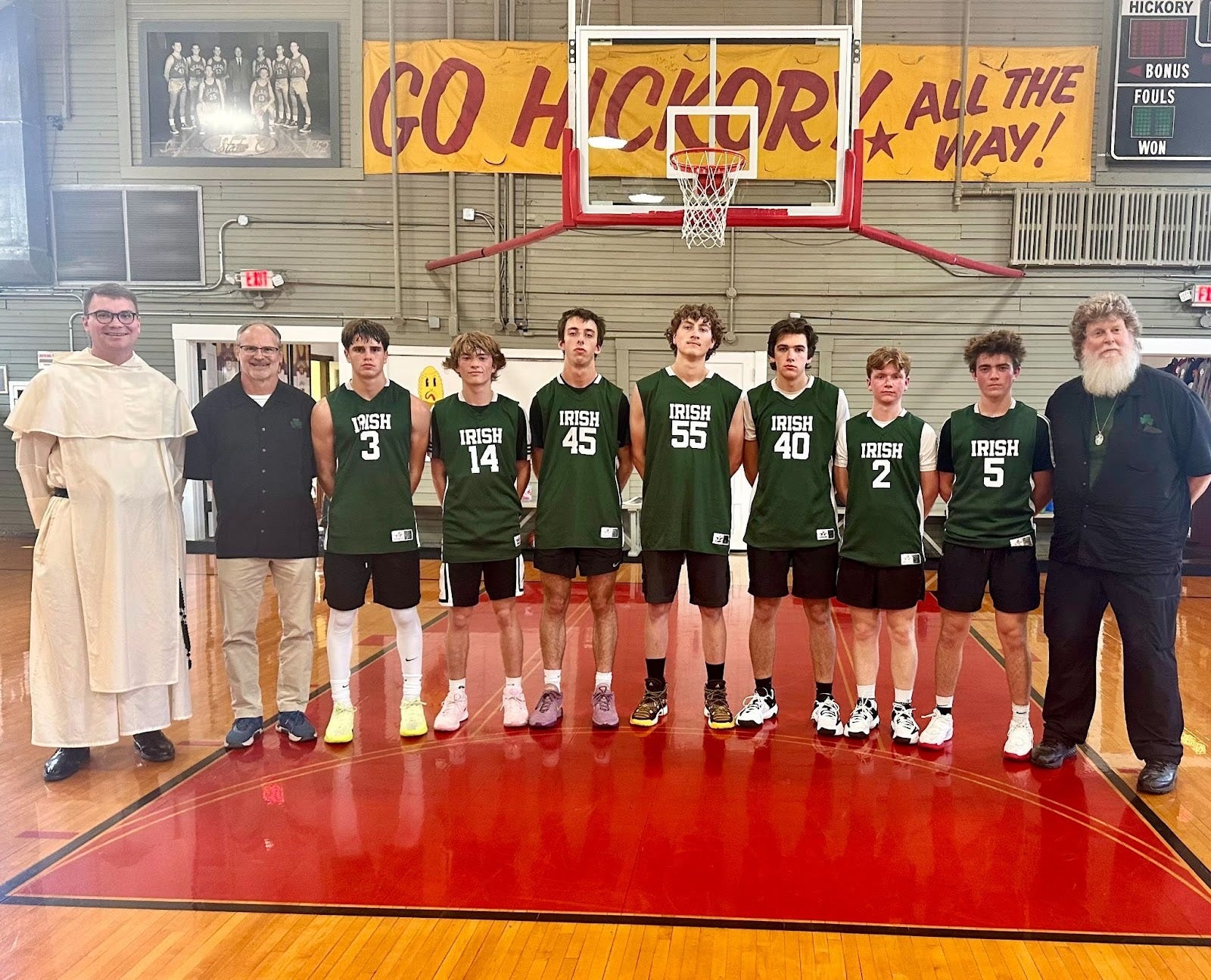
Pointing to the growth of social media and large Catholic apostolates, Eddie worries that celebrity-status is causing chaos within the Church.
He cites the growth of “Catholic, Inc.” — which Eddie defines as, “a level of Catholic personalities — whether they’re evangelists or priests, or entities like some of the big networks and podcasts that have really become known beyond just the parish scope — that become regional or national or global, globally recognized with big followings and making big impact.”
“Catholic, Inc.” has expanded rapidly since the 1990s when Eddie began as a youth minister, he said.
“It has literally exploded. There was none of it growing up, and we didn’t have the technology to make it spread anyway. The first thing that I knew that would’ve been a big deal beyond just parish life would’ve been EWTN and Mother Angelica,” Eddie said. “It seems like the big explosion has come in the last 20 years. With podcasts, social media and YouTube, people who were on EWTN that all of a sudden got their name out there, and grew. Social media launched a lot of people into popularity.”
While “Catholic, Inc.” has made engaging, well-produced content easily accessible, there have been adverse consequences, Eddie said.
“Now that it’s so easy to access [online] the top evangelizers, you can do formation by yourself privately. That’s great in one sense, but is it having a negative impact on the human connection of the Church? Is it harming parish life?” Eddie asked.
“Does it skew a person who works for the Church, [or] their version of whether they’re successful or effective — if they are meeting the standard of ‘Catholic, Inc’?” Eddie added.
“Will a person who is not well known, if they do faithful work in their mission field, feel like they are a failure because they didn’t have a global reach, or they weren’t financially successful, or they didn’t gain the level of notoriety that others have?”
Ultimately, social media can only do so much in terms of evangelization, Eddie believes.
A social media influencer can’t run a parish fish fry, greet people after every Mass, pick up trash after the parish festival, or organize the youth group’s March for Life bus ride.
“We have to value the youth minister who works in the trenches and will never be part of ‘Catholic, Inc.’ We have to value the priest who is not a celebrity in ‘Catholic, Inc.’ We have to value and affirm them,” Eddie said. “We have to definitely invest in our Mass attendance and making sure we’re part of our parish community.”
“We need human connection and community in our parishes.”
“‘Catholic, Inc.’ can also be part of that,” Eddie said, “but it can’t replace the connection to parish life. It can’t replace it. It has to be a supplement to it.”
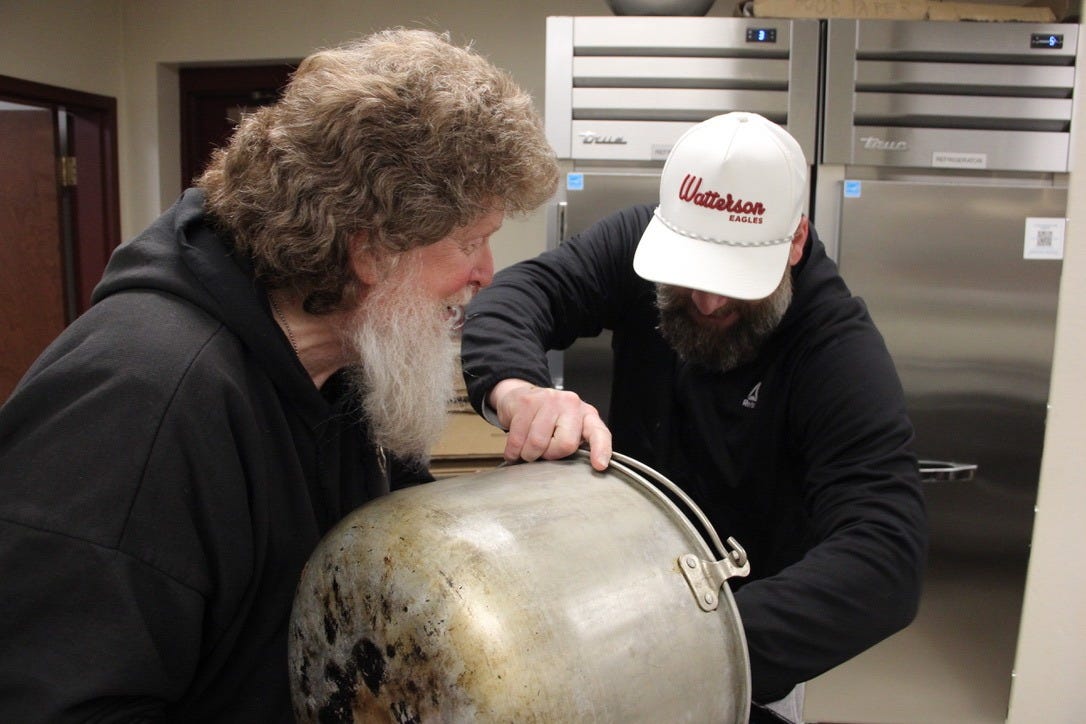
Instead of emphasizing the growth of digital influencers, Catholics should encourage people to work in the ordinary ins and outs of parish life, Eddie said, and be active in their home parishes.
“If ‘Catholic, Inc.’ is the standard, that’s a shame and I worry about it, and to a degree it is negatively impacting parish life,” Eddie said. “We always need good people in the trenches who are happy to be in the trenches, even though they won’t be part of that stardom and celebrity.”
That comes only when Catholics prioritize living what Eddie dubs the “hidden life.”
Such Catholics, he said, “bring their kids to church, they work hard, but they’ll never become Catholic celebrities, They’ll never become part of ‘Catholic, Inc.’ They are kind, they’re charitable, they’ll never be known, they’ll never win awards, they’ll never be knighted, but they keep the world sane and they live the hidden life,” Eddie said.
“Those are the ones who make the parish dynamic.”
Mission, Eddie says, must take priority, when discerning how best to evangelize.
“I hope that the sense of mission isn’t sacrificed for the pursuit of ambition,” Eddie said. “With a lot of attention comes a lot of temptation, there’s also a lot of scrutiny. I think the target on the back becomes bigger. The more impactful a person is, I think the more the devil wants to bring them down.”
Christmas year-round
While Eddie’s never chased fame and celebrity, there is one area of his life where he’s no stranger to throngs of fans and their cameras.
But the people mobbing him for selfies don’t want photos with Eddie Cotter.
They want pictures with Santa Claus.
“I get swarmed, when I put on the red coat,” Eddie chuckled. “But that’s not about me, people want a photo with ol’ St. Nick.”
That’s the life of a professional Santa Claus, especially a Rockefeller Center Santa Claus.

Everything started when one of Rory Cotter’s college basketball teammates, Eli, went to work at a New York production company.
The firm needed a Santa Claus for Rockefeller Center, so Eli called his friend’s dad, a guy Eli had played darts with in college, to see if he would be interested.
Eddie said yes. He couldn’t wait.
So for the past two years, Eddie has visited New York City for a week around Christmas, to greet people, take photos, and listen to kids’ Christmas wishes.
Eddie travels with an ensemble to New York City, including his unofficial “St. Nicholas’ security detail” — his son Rory, who is a former Navy corpsman paratrooper and current Army sniper, and his nephew Connor Cummins, a former D-1 football player.
The three have invested in the schtick, developing code names for Rory (Agent Hot Cocoa) and for Connor (Agent Candy Cane). Connor went so far as to purchase in Vietnam green, custom-tailored three-piece suits for the pair.
While on “duty,” the men are tasked with escorting Eddie through the New York City crowds.
“My dad and Connor have really taken this to the next level — My dad has like different badges for us, almost like detective badges,” Rory said.
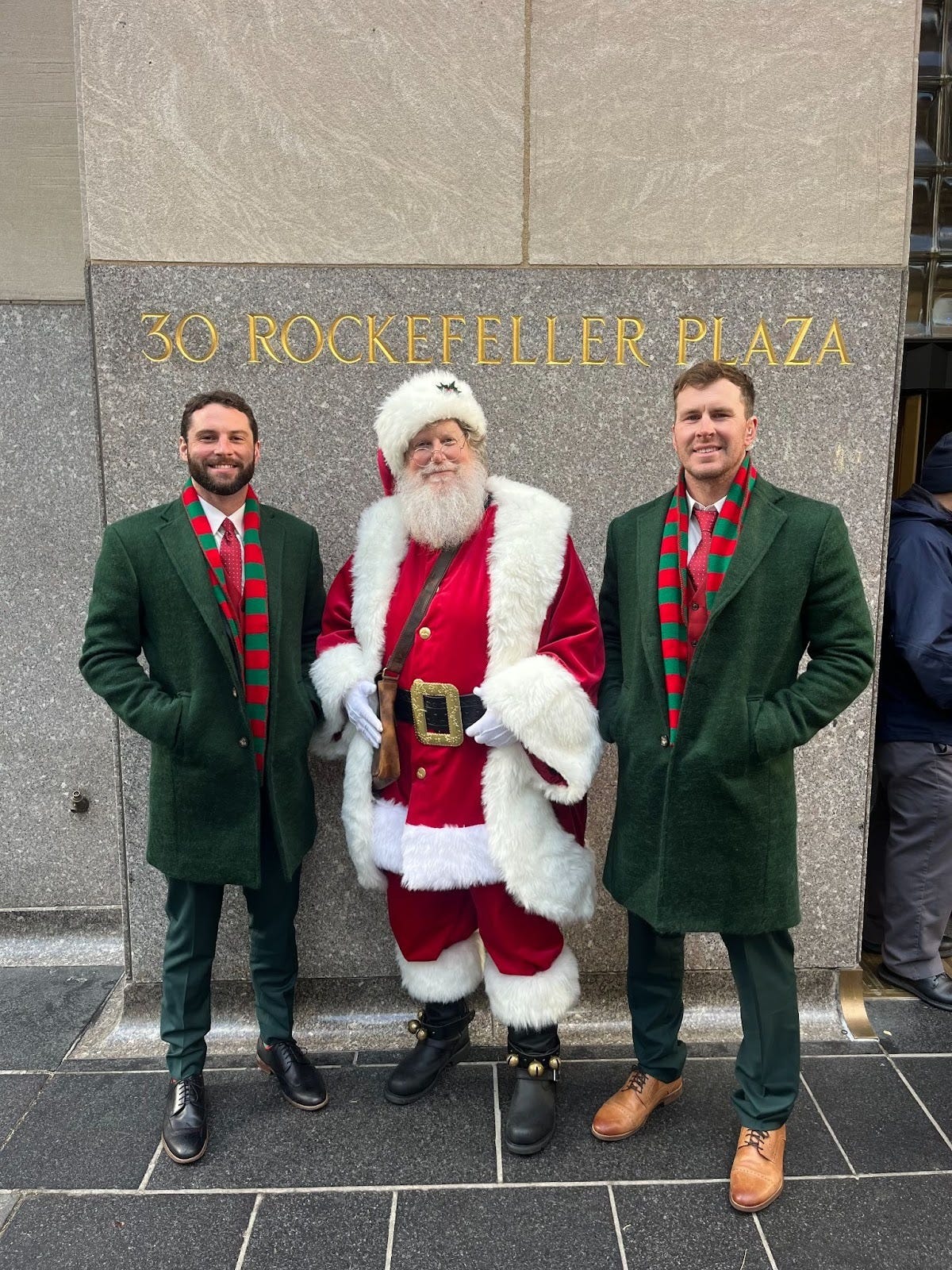
The entourage adds to Santa’s mystique, Eddie said.
“As soon as I got out of the car with my security detail, instantly there were hundreds upon, hundreds upon hundreds upon hundreds of people, all shapes, sizes and colors, yelling, ‘Santa Santa’,” Eddie said, beaming.
“They were waving, asking Santa: ‘Can I get a picture?’ ‘Can you give me a hug?’”
Eddie, or rather Santa, always responds with an eager “yes.”
“The amount of love is so amazing, almost overwhelming. I always tell my wife that I’ll never live long enough to give back how much love I have received at Santa Claus and how unifying it was and how good it was to be there,” Eddie said.
But Eddie did not get into the Santa game for the New York stardom.
Heck, he did not even intend to be a mall Santa. He did it for his grandson Theo, who has autism and found the atmosphere around mall Santas to be too overwhelming.
In December 2023, Eddie’s daughter Maeve explained Theo’s fear to her dad. So Eddie purchased a suit and asked a local souvenir shop owner if she knew a place where Theo could meet Santa.
The shop owner, Jenny, knew the perfect spot, showing Eddie the barn on her property and offered to make it festive for the big day.
“Jenny set up a beautiful corner in her shop decorated beautifully, had Christmas music, and Maeve, Katie, and Rory brought Theo, and I sat there, greeting him,” Eddie recalled. “It was such a beautiful breakthrough experience. He was socially quite shy, and it was such a moving experience for all of us because he warmed up to Santa Claus.”
“He put his hand in mine with a smile on his face. When it was time to leave, he said ‘bye.’ He hadn’t really been that verbal to other people aside from his mom and dad. It was just a moving breakthrough.”

That day, Eddie too experienced a breakthrough. He realized where the Lord was calling him in the next phase of his life.
But it came as a surprise.
“As I was leaving that day, I too was pretty emotional. I sat in the parking lot there at the shop and I said, ‘Lord, what I just experienced, I believe other people could experience’.”
Thus, Eddie began a Tim Allen-esque, “The Santa Clause” transformation.
Literally.
Eddie’s hair began to change from dark grey to silver, his beard grew out, his cheeks became a bit rosier. His eyes twinkled, he wore gold spectacles. Everybody saw him as Santa.
“When I saw the beard, I asked, ‘Where the hell did that come from?’” his friend Ryan said. “Eddie said he prayed about it, and next thing you know, he’s got this monster St. Nicholas’ beard that just came out of nowhere.”
“I’d never known him to have a mustache or beard in my entire life, and I’ve known him for 60 years,” Ryan added.
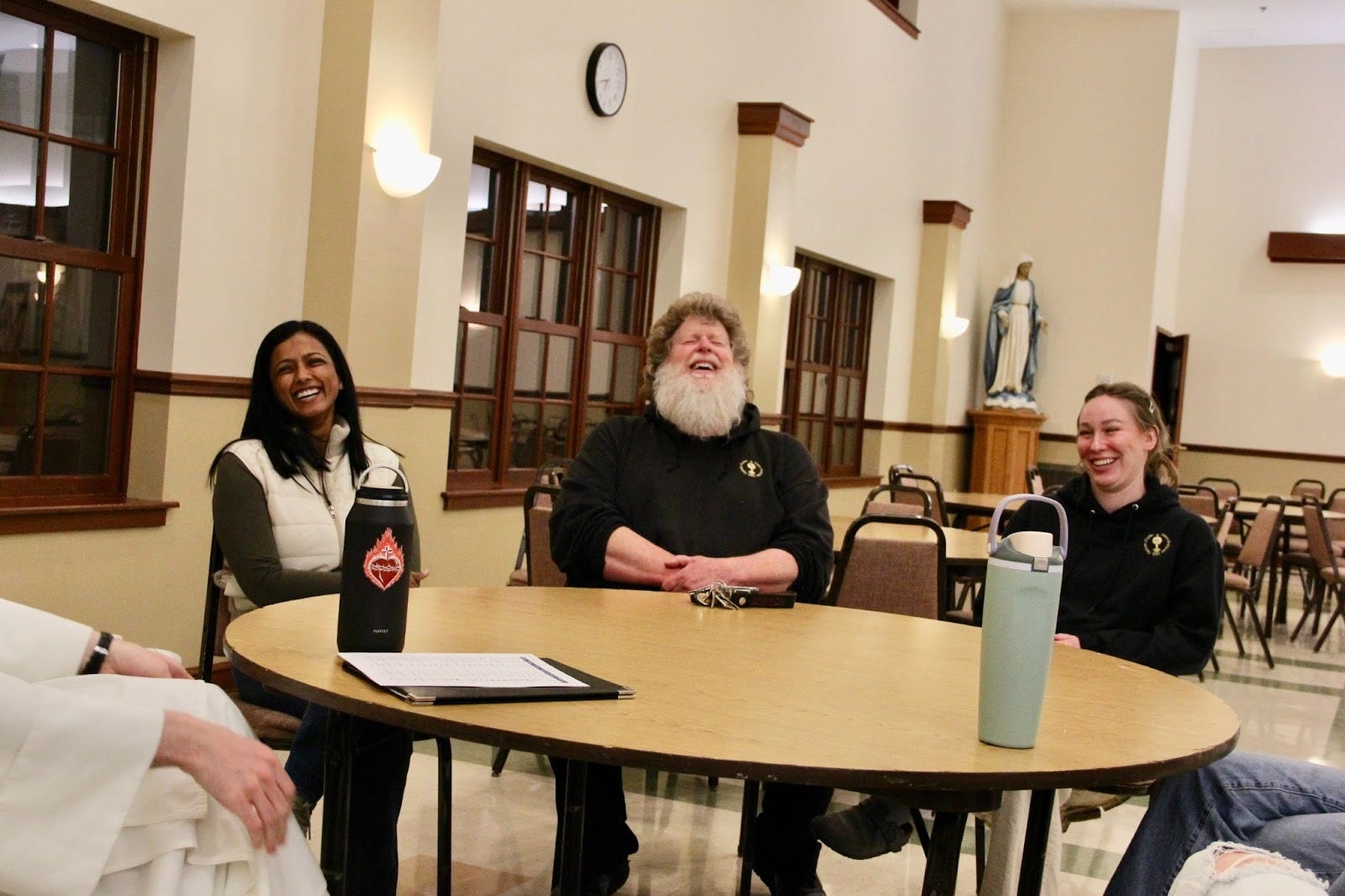
Katie gave him a “scholarship” to Santa school, Eddie purchased a formal suit, and the following Christmas, he started working gigs as St. Nick.
“Christmas season, from November through December, is really busy now. I’m putting on that suit, getting ready for work, almost everyday and it feels… awesome,” Eddie said. “Putting on the leather boots, the bells, the red suit and the vest and the coat, and all of a sudden, it’s time to go.”
“It’s hard to be a grump when you put the red suit on.”
He’s constantly preparing and perfecting his craft. After stints at two different Santa schools and hours on the job, he still watches “film” year-round, trying to become the most accurate Santa he can be.
“I have probably seen almost every Santa movie,” Eddie said. “If I were an athlete, they’d call it watching film. I’ve watched probably a couple hundred hours of film, whether it’s ‘Miracle on 34th Street,’ all three versions, or ‘The Santa Clause’ with Tim Allen.”
His favorite Christmas movie —the 1947 ”Miracle on 34th Street” — is the best portrayal of Santa, Eddie said.
He doesn’t have a favorite pop culture Santa or Santa actor, though he bears an uncanny resemblance to Tim Allen’s Santa Claus.
But Eddie’s main inspiration is St. Nicholas, the heretic-slapping, early bishop of the Church.
“I have been reading about what we know about St. Nicholas, because I want to resemble him since Santa is St. Nicholas. I like to know a lot about his life and tradition. I want to portray a traditional Santa, not this zany or creepy Santa.”
While the world might be enchanted by Santa from November to December, Eddie is keenly aware about what the Church is spiritually preparing for — and it’s not sleigh ride and lugging a bag of gifts down chimneys.
As Eddie listens to the kid’s wishes, takes selfies, and attends holiday parties, he keeps Advent in mind.
“I’m a Catholic, Christian St. Nick, even though I go places where that’s not everyone, it’s almost like the goodness of being able to share with people that Christmas is around the corner, that it all came from that night in Bethlehem,” Eddie said. “I like to think through my joy and kindness, I am almost helping to prepare families as well as myself for that night.”

Over the past two years, Eddie’s embraced the role of Santa — he has a Santa key chain, carries around a North Pole passport for “Santa,” and even has gold rimmed spectacles that scream St. Nick.
“My favorite thing Eddie does is the Santa Claus gig, because I truly wasn’t sure that he would like it,” Katie said. “I thought it was a little bit out of his comfort zone going into people’s houses and interacting with little kids. But he has jumped in with both feet.”
In the Cotter household these days, Santa knicknacks and memorabilia dot every room. Christmas trees stay up year round, and the formal Christmas decorations stay up until at least the end of February, if not later — it’s as if the North Pole had been dropped in central Ohio.
“Everything, everywhere is Santa themed, and he becomes THE guy at Christmas time,” Katie added. “It is funny because we can go to church now and I’ll be standing there with him and the little girl in front of us keeps turning around with a gaping mouth and I’m like, ‘oh, I know what you’re thinking…’”
Katie has constructed some boundaries with the Santa gig.
First, she will not join Eddie as Mrs. Claus: Katie would rather have a ‘hidden life’ as Mrs. Claus — at home watching Hallmark movies and baking cookies.
“He really wants me to be Mrs. Claus. I really don’t want to be. Who knows, maybe someday,” Katie said, a twinkle in her eye.
And she has had to reign in Eddie’s makeup routine.
“When I would walk into the bathroom after he’d been in there for an hour getting ready for a Santa gig, I would think ‘this is worse than five teenage girls getting dressed for prom,’ Katie said. “You had all the products. There’d be little white hairsprings and things all over my floor. It was a disaster in there.”
“Hey, I’ve gotten better,” Eddie interjects.
“Yeah, a little bit,” Katie says as she pats his arm.
But being Santa Claus is not so much about having the right suit, the makeup, or the most realistic beard. It comes down to demeanor and attitude about the job.
“It’s a chance to be an ambassador of everything that St. Nicholas embodies — generosity, goodness and kindness,” Eddie said.
St. Nick before Santa
Today, Santa is a controversial figure in some corners of the Church.
Most Catholics don’t mind the evolution of St. Nicholas into the Coca-Cola chuggin’, sleigh ridin’, gift givin’ fat guy in a red suit. But there are some who argue that Santa amounts to lying to kids, fails to shape children’s imagination properly, and distorts children’s understanding of saints.
Eddie disagrees. Vehemently.
“It’s a shame when some very devout Christians write off St. Nicholas and Santa Claus as too secular because in our tradition as Catholics, we love to honor the saints,” Eddie said. “Santa Claus has been a figure that is very unifying and that is a much needed thing today.”
Thus, he has no problem donning the red suit, in fact he sees it as an apostolate, a way to serve the Lord.
“It is a natural extension of my work, especially if you take into account my life’s work in being the founder of DTS as we promote and talk about the lives of the saints,” Eddie said. “St. Nicholas is a legendary Catholic saint, and the fact that I no longer have my stellar athletic basketball body that I had a lifetime ago, it seems like a natural extension of my ministry.”
“Being Santa Claus is an apostolate that promotes goodness and love and being generous and others-centered and kindness and unity.”
Witnessing Santa’s unifying ability has led to many profound moments for Eddie. No matter where he walks, people swarm around him, asking for photos and to converse, no matter their faith background, political affiliation, or age.
Consider Rockefeller Center, where people from all walks of life are following him, asking him for photos.
“So many people gravitated to Santa, the people that were with us that live in New York, they said they’d never seen anything like it,” Eddie said. “They told me that if I was a famous political person, ‘you’d have half the people loving you and half people hating you.’ You could be a certain musical celebrity, some people would love your music, people would hate your music.”
“But when Santa Claus came out, everyone loved Santa.”

When crowds swarm him, Eddie recalls a personal hero — St. John Paul II — remembering how the great pope used to move about a crowd, making every person he encountered feel seen and known.
“I try to walk through a crowd remembering how Pope St. John Paul II worked a crowd. He was engaged, he didn’t feel rushed, he wasn’t snapping at anybody,” Eddie said. “In my 45-minute walk to my chair there at Rockefeller Center, every single person who said, ‘Santa, can I get a picture?’ was greeted with a smile and: ‘Absolutely I will take a photo’.”
“I didn’t turn a single person away, so I wasn’t going to act like, ‘Hey, Santa’s busy, Santa’s too much of a celebrity for you.’ None of that.”
Eddie says he became Santa “because I believe in the mission, that in a very fragmented world and polarized world, I think in this country we’re very polarized, Santa kind of transcends politics.”
Now, Eddie’s out there greeting kids, taking photos, and providing a glimmer of hope, and sometimes prayers.
“Some people will ask for something that Santa cannot provide but that’s where I have a little prayer book and say that Santa can always say a prayer for you and will do that,” Eddie said. “Being Santa gives the opportunity where strangers can come face-to-face with a human being who tries to, for even that brief moment, make them know that they matter.”
Kate Foley has known Eddie for six years, first as her youth minister, now a friend. After she graduated, Eddie convinced her to join the youth ministry core team at St. Patrick’s.
Last year, Eddie needed a Santa’s helper, and asked Katie if she could don a green elf hat and become “Spritzle” — an elf.
“I didn’t want to,” Foley said. “But you just can’t say no to Eddie Cotter.”
Every time she watches Eddie minister as Santa, she is in awe.
“In every aspect of his life, he has this reverence for people and it is very evident when he is Santa,” Foley said. “I joked with him recently that like how priests are in persona Christi, he goes in persona St. Nicholas.”

While Rory follows and protects Santa, he looks on with admiration at his dad, inspired by the way he evangelizes and makes every person feel seen.
“For dad, it all funnels back to the birth of Christ and this idea that everything that encompasses Christmas is because God became man,” Rory said. “He finds the most fulfillment when he’s an instrument in bringing somebody in a very small way, closer to Christ. He’s able to just bring that message of the nativity to people in a more delicate way, whether it’s a conversation starter, or it’s a little kid believing in the full power of the magic.”
The Santa instincts have transposed the Christmas season or the on-the-clock hours. Eddie seemingly radiates the Santa-persona everywhere he goes. And it’s more than just that Eddie knows how to take photos with others, though he’s a pro at that.
Perhaps it’s the whimsical, illustrious beard, the full-belly laugh, or the gold-rimmed spectacles, but talking to Eddie makes people feel like they’re talking to Santa Claus.
“Now, he doesn’t even have to flip a switch, he just always acts like St. Nicholas,” Foley added. It is so beautiful, inspiring to see how reverent he is with it, and, like, he really points you to Jesus.”
Eddie put it like this: “The world is in need of innocent joy, innocent goodness. It’s in short supply. Seeing the parents as they get emotional and nostalgic is a beautiful thing. Santa brings parents back to their innocent childhood. It is a chance to be an ambassador of everything that St. Nicholas embodies: generosity and goodness and kindness,” Eddie said.
To Eddie, being Santa is just another apostolate, offering the opportunity to evangelize in a new medium.
“On the way back to the car in New York, there was a delegation of Hispanics on the steps of St. Patrick’s and they were doing Christmas presentations, including a nativity scene. I walked in front of this delegation, dressed as Santa, and I have a huge crowd following me,” Eddie recalled. “Naturally, I stopped out of habit and I bowed down to the Holy Family on the steps. The crowd erupted into applause.”
One of the men on the steps had a microphone and began to yell, “Saint Nicholas is with us.”
“And it was just this beautiful moment to witness the true meaning of Christmas,” Eddie said.
But while he has given so much to being Santa, he says that he has received even more.
“When I came home from New York, I was in tears. I was not prepared for the overwhelming amount of love and smiles and cheers and hugs,” Eddie said.

The Last Chapter
Whew.
Eddie has lived quite the life, and he’s not done yet. In fact, he’s not even 65.
When asked about the future, he plans to keep all the gigs, maybe even adding to the list of endeavors. Youth ministry and DTS will always be at the core, along with Santa Claus. He’lll keep playing Irish music and coaching high school basketball.
Next, though, he has his eyes set on opening a food truck with Philipe — an Irish Fish and Chips food truck, of course.
“I am not going to leave the trenches, I love it there,” Eddie said. “Fish and chips though — I am very excited about that possibility.”
More than 35 years of ministry have equipped Eddie with a lot of knowledge and insight about the life of the Church. At this moment, he sees one of the greatest threats coming from Catholic Inc, social media, and their contribution to the destabilization of parish life.
That, he says, poses unique problems. But he hasn’t lost hope yet.
“Consider stores, how many stores have closed because people don’t need to go out and shop anymore. They have everything delivered to them, so brick and mortar stores are empty,” Eddie said. “That’s dangerous. That’s sad. Wouldn’t it be a shame if by and large Catholic churches are empty, because everyone is just doing stuff online.”
“There’s a lot of people who may not feel like they need parishes. What I’m encouraged about is that things go to a certain degree and then there’s a bit of a reset. I think that is what we will see in terms of ministry as so much of it is online and it will move back to parishes eventually.”
Evangelization is an in-person, human encounter, Eddie emphasized.
“Evangelization is imparting our faith in a way that’s real, that goes deep and that changes a person’s life and actually orients them to want to grow in holiness and make it to heaven,” Eddie said.
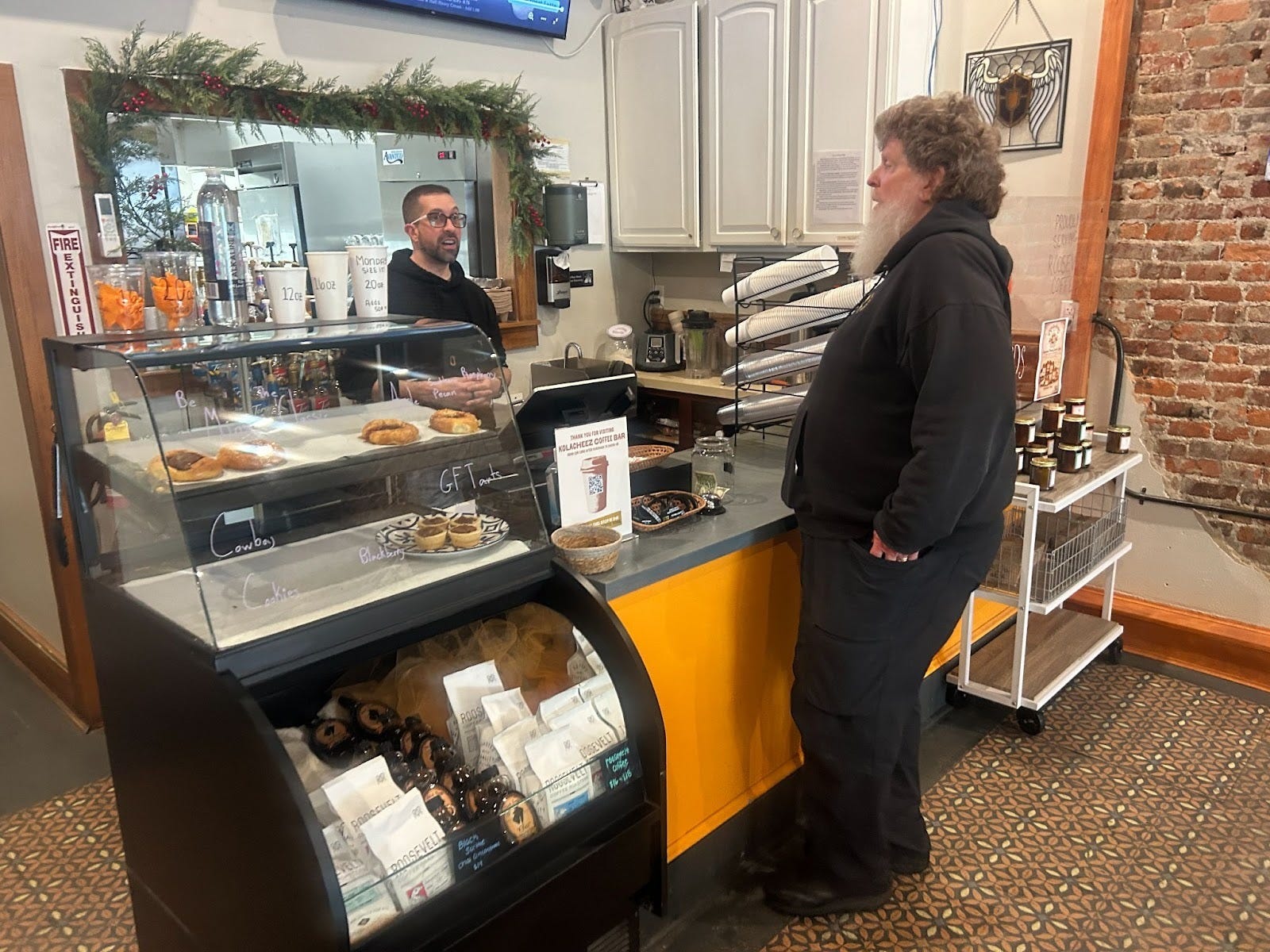
That encounter though cannot be reduced to an emotional experience, Eddie warned.
“If it’s too much of just an emotional experience, then I don’t think that’s the best thing. Sometimes that can break open people to be receptive to stuff, but then make sure they have solid things too. I think we always need solid catechesis. I think good catechesis is great evangelization.”
Thirty-five years has taught Eddie the human reality of the Church all too well. He has seen it at its worst, and at its best. Nothing surprises him any more.
“I’m less prone to be scandalized by bad behavior because I think more realistic now, the rose colored glasses are off when it comes to institutional elements and people elements,” Eddie said.
The mess does not hold him back. He keeps giving the Church his all, he holds nothing back.
“I love it more than ever, because I love the fact that in our very polarized world the Church is actually above it all. It is the one that has the guarantee that the gates of hell won’t prevail against it. It’s the one that was founded by Jesus,” Eddie said.
“It’s been a super lottery win of a lifetime, that by the grace of God, I got to be born into this faith. Man, I just love the Church.”
And in turn, his life is a living witness to the faith, a walking proclamation of goodness, the joy of the Catholic faith, an authentic witness that invites others into that joy.
Those who know him well testify to that authenticity. Ask anybody who knows Eddie, and many will say that he is a “close friend” if not one of their “best friends.”
“I never really knew what it was like to have a real brother until I met Eddie,” Evans said. “Eddie is just as grounded and authentic and real. There’s nothing pretentious about that guy.”
“I have a bond with Eddie that I don’t have with most people because most people aren’t like him,” Stefanick said. “He was over at my house watching The Little Drummer Boy and we’re both just sitting next to each other on the couch crying. ‘What other grown man would I share this experience with?’ I thought.”
“Probably nobody.”
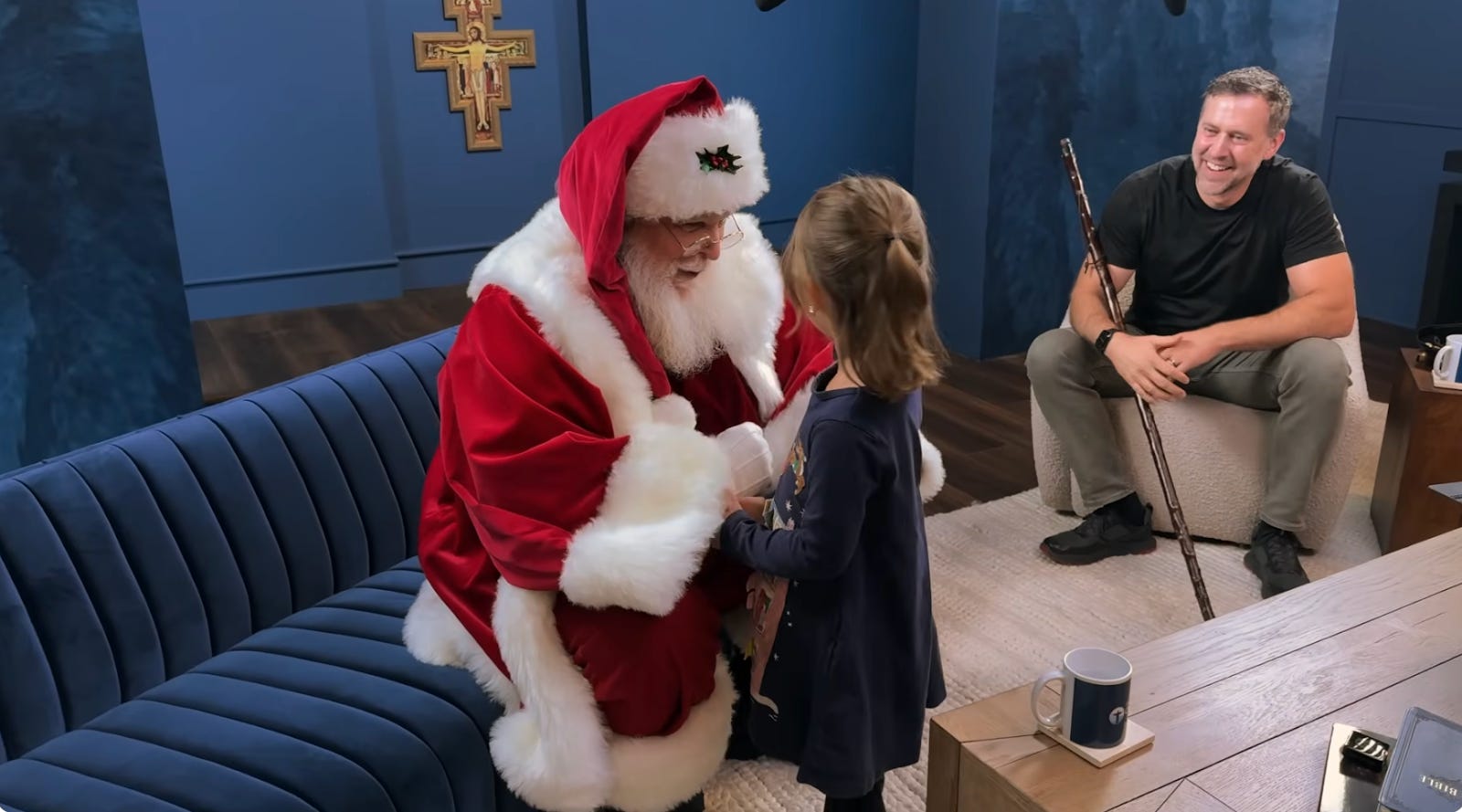
“He’s honestly just been a joy, a father figure, for sure,” Philipe added. “He was my sponsor for confirmation, youth minister, basketball coach, and now he’s just a very good best friend.”
To Eddie, these friendships have equally blessed him, leading to a rich and full life.
While everybody in Central Ohio seems to know him, Eddie knows that this life isn’t about him.
“This isn’t the Eddie Cotter show, I am just a character in God’s show,” Eddie said, smiling.
No wonder the deli owner cried the day Eddie Cotter left town. Who wouldn’t?
Another Jack Figge grand slam right out of the park! God bless Eddie Cotter. And thank God the "Kumbaya" era of youth ministry has given way to the Dead Theologians' Society.
There are not enough ❤️'s I can give this article! Give Jack a raise or he'll end up at The Atlantic!