
A new suspect has been arrested in connection with the June murder of Mozambican Bishop Osório Citora Afonso, adding to a priest and two staffers of the bishop’s household who have already been arrested in connection to the crime.
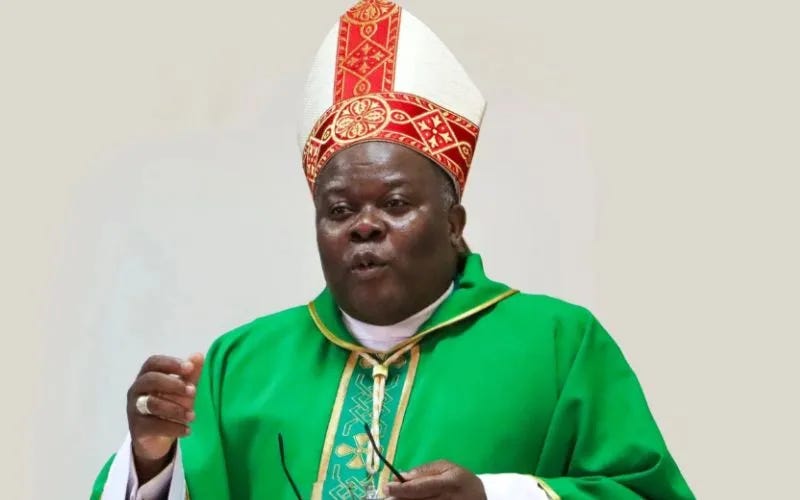
Police arrested last month a former member of the nation’s border guard, who is believed to have shot the bishop in the chest in the early hours of June 6.
The arrest was made October 29, but was only made public November 11.
Soon after he was killed in June, Afonso was found dead in his home, with police initially announcing that criminals had disabled a security system and scaled the walls of the residence before shooting the prelate in the chest with an assault rifle.
In their public announcement of the suspect, who has not been named, officials claimed to have recovered a murder weapon – a modernized AK-47 – along with 23 rounds of ammunition. They alleged that the suspect buried the weapon after committing the crime, and fled the country to neighboring Zambia for two months, before he returned and was apprehended.
According to Domingos Álvaro, head of the forensic sciences service of the National Criminal Investigation Service, police “had been monitoring the suspect since the day of the murder, having found evidence of his participation in the crime on several devices apprehended” from other suspects who are currently detained.
Initially arrested in the case was Fr. Adelino Novais Amado, known locally as Fr. Novais, who was diocesan chancellor but was suspected of mishandling and appropriating Church funds. He was removed from office by the bishop in a decree published days before the bishop was killed, which was to take effect on the day of the killing.
Novais was arrested almost immediately after the murder, along with a guard and a gardener at the episcopal residence, and remains in custody.
Novais is suspected of having ordered the bishop’s killing, but until recently police had not found the suspected hitman.
Investigators say that Novais and the newly arrested suspect were in frequent contact, and have reportedly uncovered evidence of financial transactions between them “especially during the month of May 2026, up to a day before the murder.”
The alleged hitman, who also has a military background, has admitted to knowing Fr. Novais, but has said that money exchanged between them pertained to the sale of vehicles. The unidentified suspect reportedly denies murdering Bishop Afonso, and says that he was tortured by the police.
Bishop was warned about suspect priest
A source close to the Church in Quelimane, who asked not to be identified due to the sensitive nature of the topic, spoke with The Pillar about the ongoing investigation.
The source said that Fr. Novais was well-known in the diocese, with a reputation of allegedly unethical and immoral behavior. Besides financial mismanagement, he is accused locally of having had multiple relationships with women, and to have fathered at least one child.
After Afonso was appointed diocesan bishop in August 2025, the source and other senior Church figures warned the bishop about Fr. Novais, saying that he represented a danger to the diocese, especially since he lived in the bishop’s residence.
“We told him to be careful with Fr. Novais, that he couldn’t be trusted, and that he was stealing money from the Church. He said he was aware and that he wanted to handle it cautiously,” the source told The Pillar.
The source said the murder of Bishop Osório Afonso came as a great shock, but that “as soon as I heard the news, I immediately thought that Fr Novais might be involved.”
During the federal investigation, a second priest from Quelimane – Fr Celso Bissane – was also arrested, though he has since been released.
According to the source who spoke with The Pillar, “Fr Celso was arrested because he also lived in the residence, and had a lot of information about what went on. But he was released soon after, because it became clear that he was not a suspect.”
The source said that Fr. Celso was warned by the authorities to be cautious, since the people responsible for the killing might target him as well, and that he had been forced to take safety precautions after his release, including not sleeping in the same house more than one night in a row.
Administrator questioned
For some time, suspicion also surrounded the apostolic administrator of Quelimane, Bishop Estêvão Ângelo Fernando, of the neighboring diocese of Alto Molócuè.
Only six days after Osório’s death, the Holy See appointed Bishop Estêvão Fernando to oversee the Quelimane diocese.
The bishop is originally from Quelimane, where he served as a priest until 2025, and is very familiar with the territory, the people and the clergy.
But rumors soon began to circulate that the police were also investigating him, and had apprehended his mobile phone. The rumors alleged that he had been in close contact with Fr. Novais before the murder, and that the priest had previously asked the bishop to accept his transfer to Alto Molócuè, when he realized that Bishop Afonso planned on removing him as diocesan chancellor.
But in July 2026, Bishop Estêvão issued a “vehement repudiation” of those allegations, saying that media speculation was fueling outrage and risked hampering the investigation.
“The published material includes serious insinuations, suggests connections to criminal activity and forms premature and extrajudicial judgments,” he wrote.
“Such narratives lead to public outrage, expose people and institutions to discredit and generate an atmosphere of suspicion that does nothing to contribute to clarifying the facts.”
While “the Catholic Church stands for the freedom of the press,” the bishop said, “freedom without ethics or respect for the law degenerates into speculation.”
As The Pillar reported in July 2026, a delegation of Mozambican bishops traveled to Rome to personally debrief Pope Leo XIV about the crime.
The delegation included Archbishops Inácio Saure and João Carlos Hatoa Nunes, respectively president and vice-president of the bishops’ conference, and also Argentine Archbishop Cláudio Dalla Zuanna, the emeritus Archbishop of Beira, Mozambique. The apostolic administrator of Quelimane, who would have seemed an obvious choice to be part of the entourage, was not included.
Earlier this month, local media published reports stating that Bishop Estêvão had been designated as a suspect in the case. The reports used the term “arguido,” a legal category inherited from Portuguese law which refers to someone who is being investigated but has not been formally charged. An “arguido” has certain legal rights and can be subjected to certain measures, such as having to notify the authorities if leaving the country.
But on November 6, the public prosecutor’s office of Zambezia, the region of Mozambique where Quelimane is located, issued a statement denying that Bishop Estêvão was being treated as a suspect, although it confirmed that he had been questioned in connection to the investigation.
“It is important to clarify that Bishop Estêvão Ângelo Fernando was questioned as part of the ongoing investigative proceedings, in his capacity as a person in possession of information that could contribute to establishing the facts pertaining to the events under investigation. However, his interview, in itself, does not imply any criminal liability, nor does it allow any conclusion to be drawn, at this stage of the proceedings, as to whether or not he was involved in the acts under investigation,” says the statement.
On November 13, the Mozambican bishops issued a statement expressing their concern over the pace of the investigation and calling for justice.
“We demand that not only the perpetrators, but also those who commissioned the crime and all those who, in one way or another, participated in or benefited from it, be identified and held accountable.”
“We respect the ongoing legal proceedings, but we cannot help once again expressing our concern at the delay in the investigation and the lack of concrete answers about a crime that shocked the country and reverberated beyond its borders,” the statement read.
The bishops added that they hoped officials would avoid scapegoating, and “ensure a serious, impartial, transparent and swift investigation. Justice will only truly be served when the full truth has been established and the law is applied without fear, without privilege and without influence of any kind.”