Synodality, but not a synod: Inside the new timetable for the 2028 'ecclesial assembly'
What’s the new document’s context? And what does it say?
The Vatican’s synod department issued a new document Wednesday defining the steps to be taken ahead of the 2028 ecclesial assembly in Rome.
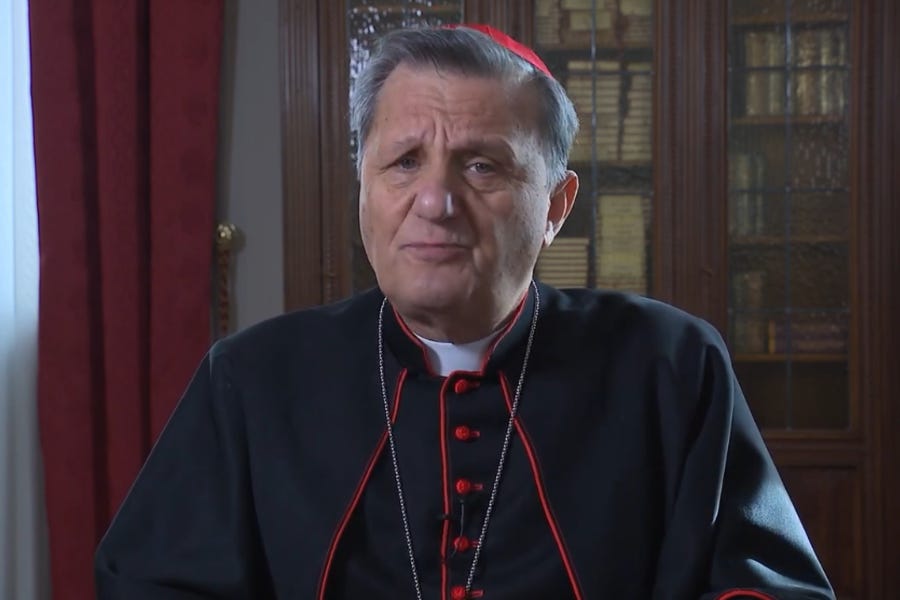
The 6,000-word text, published May 20, details how local Churches should prepare for the event, which is a continuation of the global synodal process launched by Pope Francis in 2021.
The document, called “Towards the Assemblies 2027-2028,” was issued following a May 18 meeting between Cardinal Mario Grech, the secretary general of the General Secretariat of the Synod, and Pope Leo XIV.
What’s the new document’s context? And what does it say?
What’s the context?
In 2015, Pope Francis gave a landmark address marking the 50th anniversary of the establishment of the Synod of Bishops as a permanent institution at the Vatican.
The Argentine pope announced that the advisory body — which brings together the world’s bishops periodically to discuss pressing issues — would be evolving. The next stage of its evolution, he said, would be marked by “synodality,” a word he popularized to describe the dynamic collaboration between the Church hierarchy and the whole People of God, as they “journey together” through history.
“It is precisely this path of synodality which God expects of the Church of the third millennium,” he said.
Pope Francis’ changes to the Synod of Bishops were codified in the 2018 apostolic constitution Episcopalis communio. Cardinal Grech has said that the document’s greatest innovation was to transform the synod “from an event into a process.” In the future, synod gatherings would be preceded by a consultation phase. The assembly itself would be known as the discussion phase and would be followed by an implementation phase.
In 2020, Pope Francis announced that the world’s bishops would gather at the Vatican to discuss the theme “For a synodal Church: communion, participation and mission.”
This event, quickly dubbed the “synod on synodality,” took place over two sessions, in 2023 and 2024, preceded by an unprecedented worldwide consultation, at the diocesan, national, and continental levels.
The synod on synodality had several original features: a large number of “non-bishop” participants, including many women, round tables, and a discussion method known as “conversation in the Spirit.”
The gathering resulted in a 28,000-word final document, which Pope Francis formally adopted as “part of the ordinary Magisterium of the Successor of Peter” in October 2024.
The global synodal process did not end when the last round table was packed away. Instead, it entered its implementation phase.
In March 2025, Cardinal Grech announced that Pope Francis had approved the launch of a three-year review process, ending with a 2028 ecclesial assembly at the Vatican. The timing was notable because Pope Francis was in poor health and died only a month later. This raised the question of whether his successor would feel compelled to continue the worldwide process.
Pope Leo XIV, who participated in the synod on synodality in his prior role as prefect of the Dicastery for Bishops, made clear soon after his election that the ecclesial assembly would go ahead.
In June 2025, he visited the Vatican’s synod department, where he said that Pope Francis’ legacy could be summed up as the notion “that synodality is a way of being, an attitude that helps us to be the Church, fostering authentic experiences of participation and communion.”
In July 2025, the General Secretariat of the Synod issued the almost 10,000-word document “Pathways for the Implementation Phase of the Synod, 2025-2028,” with Leo XIV’s approval. The text set out, in broad terms, what was required of dioceses in the run-up to the 2028 assembly.
Since then, Pope Leo has continued to make periodic references to synodality, describing it as “a style of cooperation” and an exercise of “listening par excellence.”
What does the text say?
The new document provides more precise guidance to local Churches on what they need to do ahead of 2028. It covers, as its subtitle puts it, the “stages, criteria, and tools for preparation.”
The text’s purpose is “to give more concrete form to the process already underway” locally. But it stresses that “the implementation phase does not introduce additional tasks alongside the ordinary life of communities; rather, it orients and renews that life from within.”
The document outlines a four-stage process concluding with the 2028 ecclesial assembly. It labels each stage with a word that sums up its purpose. Each of the four stages includes some form of assembly.
The first half of 2027, known as the “Recollecting” period, will feature “evaluation assemblies” in dioceses and Eastern Catholic eparchies, focused on the synod on synodality’s final document.
This period is expected to generate two documents. The first is a “narrative report,” describing “what concrete form of a missionary synodal Church and what new paths of synodality” are emerging in the local community. It will be prepared ahead of the evaluation assembly by the local synodal team and signed off by the bishop.
The second text is a brief “letter to the other Churches,” directed to other dioceses and eparchies, which highlights “the principal fruits that have emerged in the process of implementing the synod.” This will be prepared during the evaluation assembly.
The second half of 2027, called the “Interpreting” period, will be marked by national or regional assemblies of bishops’ conferences. These will also produce two documents: a “theological-pastoral report” and a letter to the other local Churches. Both texts should be sent to the continental synodal team and the General Secretariat of the Synod by Dec. 31, 2027.
The first four months of 2028, the “Orienting” period, will see continental assemblies, which will draft “perspective reports” that offer “an overall rereading” of the synodal journey. These must be handed to Vatican synod officials by April 30, 2028.
Finally, in October 2028, the Church will enter the “Celebrating” period, as participants in the ecclesial assembly gather in Rome with Pope Leo XIV.
The Vatican has consistently emphasized that the ecclesial assembly is not a synod. But the new document notes that, like a synod, it will have its own instrumentum laboris, or working document.
The text is notably light on detail at this point, promising that “the ecclesial assembly will be defined more precisely at a later stage.” For now, there are no precise dates or indication of how participants will be selected.
The document, which has a distinctly Leonine stress on the unity of the process, says that the assembly’s conclusions will be “offered to the Holy Father as the fruit of the process of discernment.”
The text as a whole has a notably strong emphasis on the pope’s determinative role. Indeed, its final words note that the whole process will take place “under the guidance of the Holy Father.”

Do we really need to put this much more time and energy into synodality? Each diocese needs to create a "'narrative report,' describing 'what concrete form of a missionary synodal Church and what new paths of synodality' are emerging in the local community," really? What about living out the Gospel and the spiritual and corporal works of mercy? Why do we need to keep reinventing the wheel?
My mouth is agape. I cannot believe that there are going to be so many more rounds of “assemblies” and “reports” and “letters,” along with yet another final document.
This is literally just the synod on synodality II. Will the “process” never end? Have I died and ended up in purgatory??