'To practice attentiveness, to nurture silence': How to read Pope Leo’s favorite book
'He worked in the kitchen, and made of it a place of prayer.'
In an interview earlier this month, Pope Leo XIV said he was recently asked which book, besides those written by St. Augustine, he would describe as most greatly shaping his spirituality.
In response, the pope named the spiritual classic, “The Practice of the Presence of God,” by 17th-century Carmelite friar Brother Lawrence.
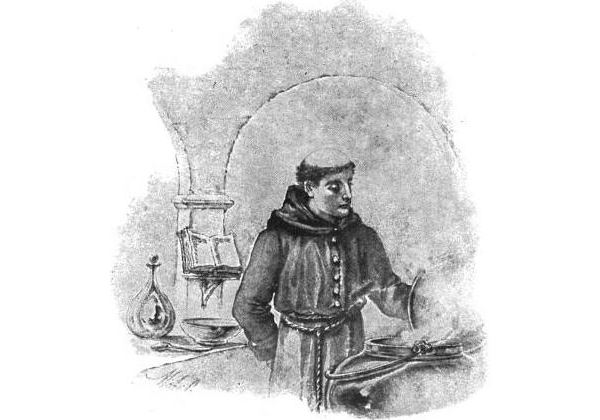
“It’s a very simple book by someone who doesn’t even give his last name,” the pope said. “I read it many years ago, but it describes a type of prayer and spirituality where one simply gives his life to the Lord and allows the Lord to lead.”
“And if you want to know something about me, that’s been my spirituality for many years, in the midst of great challenges, living in Peru, during years of terrorism, being called to service in places where I never thought I would be called to serve. I trust in God, and that message is something that I share with all people,” he added.
The pope’s comments seem to have sparked interest in the brief spiritual work. Since then, Google searches of the title of the book have spiked, and three different versions of the book now lead Amazon’s ‘mysticism’ section.
Though it is just 40 pages long, the book is a spiritual classic. Its author, Brother Lawrence, was the cook of a discalced Carmelite friary in Paris in the 1600s.
The Pillar spoke with renowned spiritual writer Bishop Erik Varden, OCSO, bishop of the prelature Trondheim and apostolic administrator of Tromso in Norway, to unpack the wisdom in “The Practice of the Presence of God.”
The interview has been edited for length and clarity.
What is meant by the phrase “the presence of God”?
The quintessential epiphany of God to Moses at the burning bush revealed a name which signifies “I Am Present.” The ineffable Divine Name is more than a metaphysical statement; it assures Israel in exile that the Lord is with them. In Isaiah, which provides many of our Advent texts and refrains, the fulfilment of God’s redemptive promise is indicated in the image of Emmanuel, which means “God-with-us.”
After his holy resurrection, Jesus who, during his public ministry had taught his disciples to abide with him, in him, assured them: “Behold I am with you always.” The presence of God, then, is a motif that runs through Scripture. It makes sense. If God is truly the Origin of all there is and Master of the universe, he will be omnipresent to it, the founding Reality in which “we live and move and have our being.”
God’s presence is something we can take for granted. We are the absent ones! Brother Lawrence teaches us to return from our own estrangement, to seek communion with God, to learn to be reverently alert to him who is in us and about us.
What concrete advice does Brother Lawrence offer to “practice” the presence of God? What advice would you give?
We do well to practice attentiveness; to nurture silence when we can; to avoid getting stuck in self-centered mental patterns, constantly rehearsing our plans, wounds, and cravings, projecting our lives into some hypothetical, virtual future instead of living in the present.
To learn to pray is to learn to opt for what is real. At the human, natural level I think it’s good advice to spend some time each day doing nothing, simply being still and alert: this is more difficult than it sounds, given the distractions that surround us on all sides, claiming us. Wouldn’t it be good to affirm our personal freedom in their regard?
At the spiritual level I’d advise reading Scripture daily. Not too much — if we make too ambitious plans the chances are we shall not realize them; but a chunk substantial enough to nurture us and to assist an encounter with God who is present, not least, in his Word. Of course it is important to frequent the sacraments, Confession and the Eucharist above all; and to pray before the Blessed Sacrament, a Sacrament of Presence.
What do you think this book says about Pope Leo’s own way of leading the Church?
It is heartening to have a pope who puts the search for God first, and exhorts us to do the same.
How should people approach this book? Is it better to read it in one sitting or use it as a book to inspire us in prayer?
Given its variegated origin, proposing a reflection matured over a lifetime, it makes sense to give it time. Brother Lawrence writes simply and briefly, but let’s beware of mistaking his texts for casual blog posts to be raced through.
In a way, Brother Lawrence seems to be a precursor of an increasingly common idea in contemporary Catholic spirituality, which is that of ordinary holiness, namely, that we can sanctify every circumstance in life. What does Brother Lawrence say about this?
It is really an ancient idea, and a true one. Brother Lawrence is a credible mouthpiece. Much is often made about the fact that he worked in the kitchen, and made of it a place of prayer. This is admirable, but not new. The great Saint Teresa, a Doctor of the Church, told her sisters in her “Book of the Foundations”: “God walks among pots and pans.”
The book mentions many times the fact that we can do “little things for the love of God.” Is Brother Lawrence a precursor to St. Thérèse’s “little way”?
Again, I’d say that both are part of a continuous tradition they were graced to express in characteristic ways. Most of our lives are made up of “little things.” The challenge is to make them great by infusing them with love, even making them into acts of worship.
A Romanian Orthodox monk of the last century, cited in Nicholas Stebbing’s precious book “Bearers of The Spirit,” said something I think of often. The remark occurs in a reflection on obedience. In a monastic setting, “obedience” refers to things decreed by the rule or my superiors, but it basically means stuff I have to do, which I haven’t spontaneously chosen, so can equally well refer to making the kids’ breakfast or turning up to work on time.
Now, on this subject the monk said: “Obedience without prayer is servitude; obedience with prayer becomes liturgy.” That’s what it is all about. It is what both Brother Lawrence and Saint Thérèse teach: the art of making every aspect of existence an act of worship by consciously, trustfully living it before the face of God, in his presence, for love of him.
Back in the day, the book was accused of encouraging Quietism, seeking to achieve sanctity through an inactive mind and will. Do you think this is a fair assessment?
No. A key aspect of Brother Lawrence’s teaching is his emphasis on praxis, on translating ideals into concrete living. In general, Quietism (rather like Jansenism) is a term bandied about too easily. It refers to a subtly disordered trend in theology. To understand it, we must have clear notions and a deep knowledge of an intellectual context marked by rhetoric and — it has to be said — rather acrimonious Church politics.
The key to understanding Brother Lawrence is given in something he declared at the end of his life, when subject to great pain: “Come what may, I will, for the entire rest of my life, do everything for love of God.”
How can Brother Lawrence’s writings advise those with wandering minds during prayer?
If our mind wanders in prayer, the first thing to do is to ask: what paths have I opened? It is an illusion to think I can spend 95% of my waking hours in a state of frenzy — running after people, doing chores, scrolling on the phone — then dive into contemplative ecstasy the moment I set aside seven minutes to pray. We prepare our time of prayer by the way we live the rest of the time. That’s where to start the inner work of sorting, tidying, stilling.
The book consistently calls readers to place themselves in the hands of God, but it is not always clear how to achieve this. How specifically would you advise readers of the book to practice abandonment in God as suggested by Br. Lawrence?
By determinedly trusting in God’s providence; by doing what we have to do peacefully; by not allowing into our hearts thoughts of murmuring and anger; by being conscious that we are called to bring Christ into the world by credible testimony. That testimony needs to find expression in what we happen to be doing right now.

