What’s the point of Jimmy Lai’s conviction?
Prosecuting the Catholic publisher sent a message, what message will now be sent by his further jailing or release?
The High Court of Hong Kong handed down on Monday a conviction to Jimmy Lai in his long-running trial on national security charges.
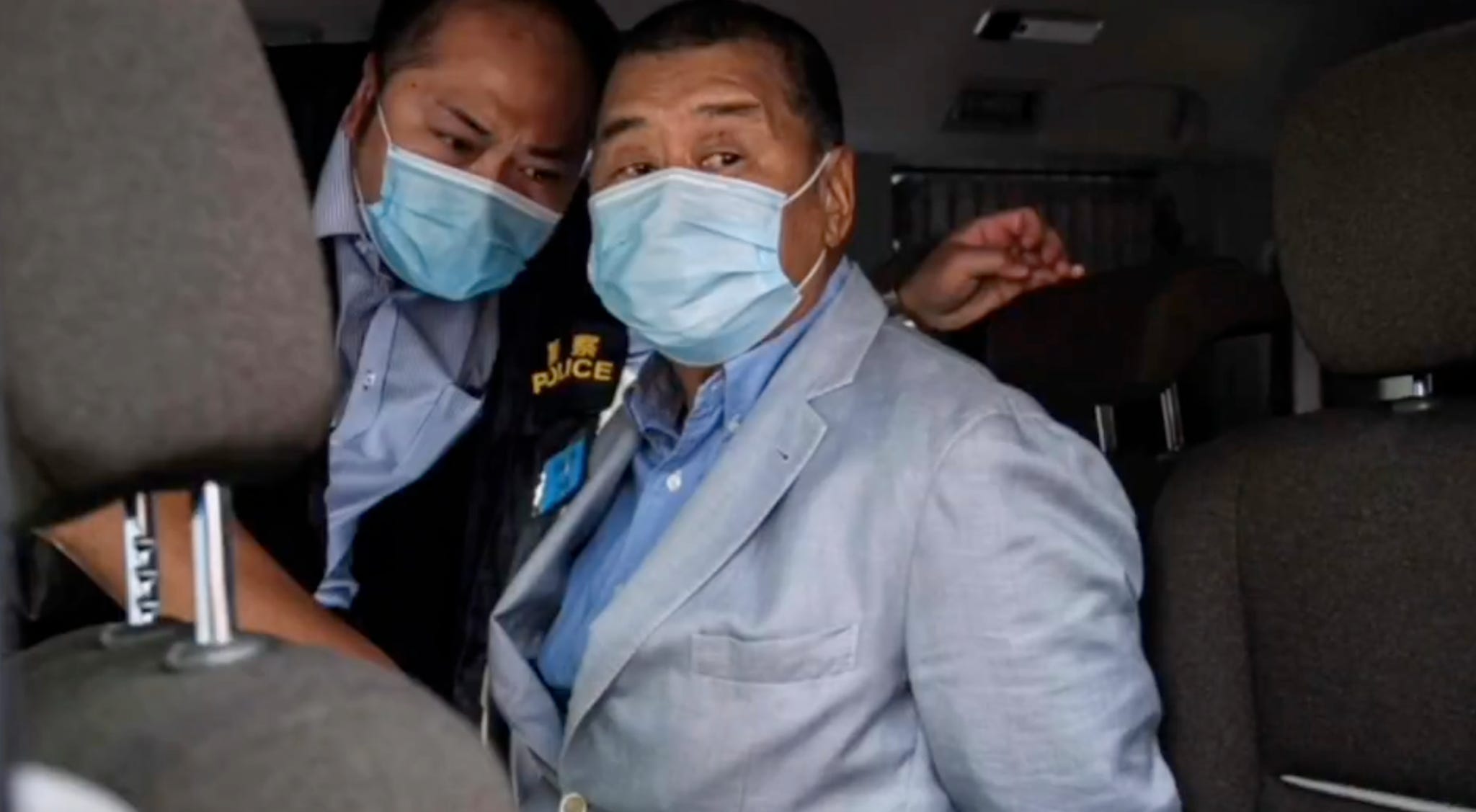
Lai, a prominent Catholic and newspaper publisher in Hong Kong, was convicted on Dec. 15 of multiple counts of seditious activity under the provisions of the National Security Law. The measure was imposed on the Special Administrative Region in the wake of widespread public protests against government plans to extradite Hong Kongers to the mainland for political crimes in 2019.
Lai has always said he is innocent of the charges of sedition and collusion with foreign powers on which he was tried and convicted, and insisted that he supported Hong Kong’s Basic Law and institutions while working as a newspaper publisher and journalist to cover the deteriorating state of civil liberties in the territory.
The case has been the subject of widespread international interest, and seen as a show of strength by the Hong Kong authorities, who for the last six years have taken increasingly punitive action against opposition voices, disbarring candidates from election, disbanding pro-democracy parties, and prosecuting prominent individuals like Lai and Cardinal Joseph Zen.
Despite diplomatic pressure and pleas from Lai’s family, his conviction was widely regarded as a near-certainty. But, ahead of sentencing hearings in the New Year, the real question now is what the authorities’ ultimate aim is with Lai, who is 78 and has a serious heart condition.
Lai faces a potential life sentence for his “crimes,” but the international attention his case commands will mean the government will have to balance reinforcing its message of intimidation in Hong Kong against making Lai a martyr for free speech and an icon for resistance at home and abroad.
—
The charges against Lai included sedition, fomenting opposition to the local government in Hong Kong and on the mainland, and of soliciting foreign powers to act against the government.
Prosecutors argued that he used his media company to undermine the government internationally and locally, though the 855-page verdict contained little evidence of criminal behavior beyond his having operated a pro-democracy newspaper in support of Hong Kong’s supposedly guaranteed civil liberties.
While Lai insisted that he had not sought to bring international action against state officials, judges concluded that Lai’s writings were “objectively seditious and written with a view to bringing the HKSAR Government into hatred and contempt and to exciting disaffection against it.”
Lai founded Apple Daily in 1995, a news publication which became particularly critical of Hong Kong’s government in the wake of a controversial 2019 bill to extradite locals to the mainland for trial in political cases. The bill caused widespread protests and demonstrations and Lai was arrested in 2020.
Apple Daily was one of the last pro-democracy newspapers in Hong Kong publicly critical of the erosion of civil liberties protected in Hong Kong’s Basic Law and expected to be guaranteed after the handover of the Hong Kong territory from the UK in 1997.
Lai has repeatedly cited his Catholic faith as a motivating and sustaining force in his ongoing trials. Since his initial arrest, Lai has received numerous awards and accolades from both Catholic and secular institutions, including the 2020 Freedom of the Press Award from Reporters Without Borders.
He has been in prison, largely in solitary confinement, since 2020, with The Pillar previously reporting that he had been denied regular access to the sacraments while in prison.
Since its imposition on Hong Kong by the mainland government, the National Security Law has been used to arrest and prosecute several prominent Catholic pro-democracy advocates, including Lai, as well as the emeritus bishop of Hong Kong, Cardinal Joseph Zen.
In 2023, Bobo Yip, former chairwoman of the Diocese of Hong Kong’s Justice and Peace Commission, was also arrested on national security grounds. And in December of that year, Agnes Chow, the Catholic pro-democracy activist released from jail in 2021, announced she had fled into exile in Canada.
At the time of Lai’s initial arrest in December of 2020, Cardinal Zen called the move “obviously a case of political intimidation.”
“This is evidently all about political persecution,” Zen said in an interview at the time. “Jimmy Lai is obviously the one who runs the only newspaper which is still completely free.”
“So, there is a clear policy direction: suppress the freedom of expression,” said the cardinal.
With Lai’s conviction on Monday, many observers have concluded that the government’s suppression of free speech in Hong Kong has been absolutely established. With figures like Zen retired from public life, and Agnes Chow and Simon Lee in exile, Lai’s was the last open case in the territory proving the effectiveness of the National Security Law and the government’s will to see it enforced.
But, this being the case, Lai’s supporters are now, perhaps counter-intuitively, hoping for progress. Even before the verdict was announced, those close to the publisher, friends, colleagues, and family, all acknowledged that his eventual conviction was essentially a foregone conclusion. Now, the hope is that the government — either locally or in Beijing — will consider its point made in Jimmy’s case and perhaps move to release him.
Even in contentious political trials on the mainland, factors like advanced age and ill health — both of which are very much applicable to Lai’s case — are regularly considered as grounds for leniency or early release.
Lai’s release would also be a potentially high-value diplomatic gesture, if the government were minded to make one. A slew of Western governments have called for his release over the course of his trial, and allowing him to return home, or go into exile following his conviction could be played by Beijing as a gesture of good will.
Of course, there remains the risk that the government could take exactly the opposite view and, much as Lai’s trial appeared to be giving an example of how dissent in Hong Kong would be punished, treat his continued incarceration as a chance to show Beijing’s indifference to Western diplomatic censure.
But intransigence over Lai’s future wouldn’t be a cost-free act, either. Hong Kong’s economy and reputation as an international business center has suffered as a result of the draconian policing of speech in the territory since the 2019 pro-democracy protests. And the international corporate world is not unaware that the first case filed against Lai — which led to the shuttering of his business — concerned specious allegations regarding the terms of the company’s building lease.
Confidence in Hong Kong as a safe place to do business has been eroded alongside civil liberties, bringing with it real economic costs. It is reasonable to assume that, somewhere within the government, there is a pragmatic assessment being made of the cost/benefit of Lai’s continued imprisonment, now that the judicial “fact” of his guilt has been proclaimed.
Ironically, though, while Lai’s case has been held up as a proof of the mainland government’s near-total erosion of the Special Administrative Region’s civil liberties, it is local government officials, led by Hong Kong Chief Executive John Lee, who have been most committed to his prosecution.
In that security role, Lee was the prime mover of the failed 2019 bill to allow the extradition of political detainees from Hong Kong to stand trial on the mainland, despite the territory’s separate legal and judicial systems. The bill triggered widespread protests, leading to a draconian police crackdown under Lee, and which were used by him to convince the mainland government to impose the 2020 National Security Law on the territory.
Since his election, Lee has argued vigorously for enhanced security powers and defended sweeping crackdowns on “seditious speech” in Hong Kong, including the arrest and prosecution for treason of t-shirt vendors and graffitists over slogans like “free Hong Kong.”
While supporters of Lai have warned allowing him to remain and possibly die in prison would result in his becoming a kind of martyr for civil liberties in Hong Kong, Lee’s administration have shown little sign in fearing such an outcome.
Conversely, the mainland government might see local governmental zeal against Lai and other pro-democracy figures as giving them room to maneuver in his case, pushing through his release on health or other compassionate grounds and citing wider diplomatic priorities while leaving the local authorities reputation for zero-tolerance and zero-clemency intact.
The prosecution of Jimmy Lai was, by nearly all assessments, about securing a conviction and sending a message about the absolute policing of domestic dissent in Hong Kong.
Now that he has been convicted, the question is what message the government will use Lai to send next.


Ave Maria 🙏