
Which nations have been consecrated to the Sacred Heart?
The number is growing fast in the 21st century.
On March 25, 1874, Ecuador became the world’s first nation to be consecrated officially to the Sacred Heart with full state backing.
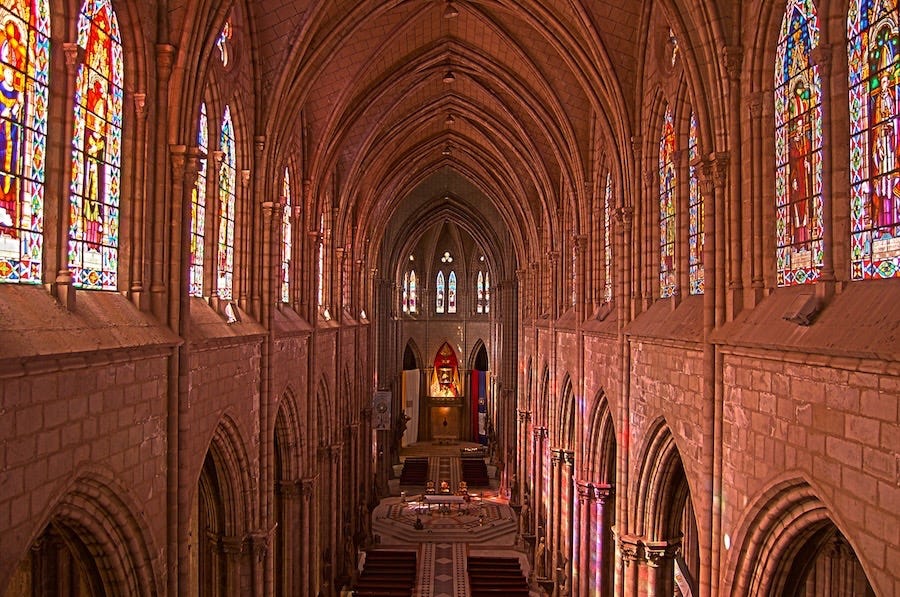
The consecration was proclaimed jointly by Ecuador’s President Gabriel García Moreno and Archbishop José Ignacio Checa y Barba at Quito Metropolitan Cathedral.
The act inspired a global wave of national consecrations that continues to this day, most recently with the June 11 consecration of the U.S. to the Sacred Heart by the country’s bishops.
The movement is likely to continue in the coming years, with England and Wales reportedly among the countries preparing for national consecrations.
What’s the background to this phenomenon? And which countries have been consecrated so far?
How did the practice begin?
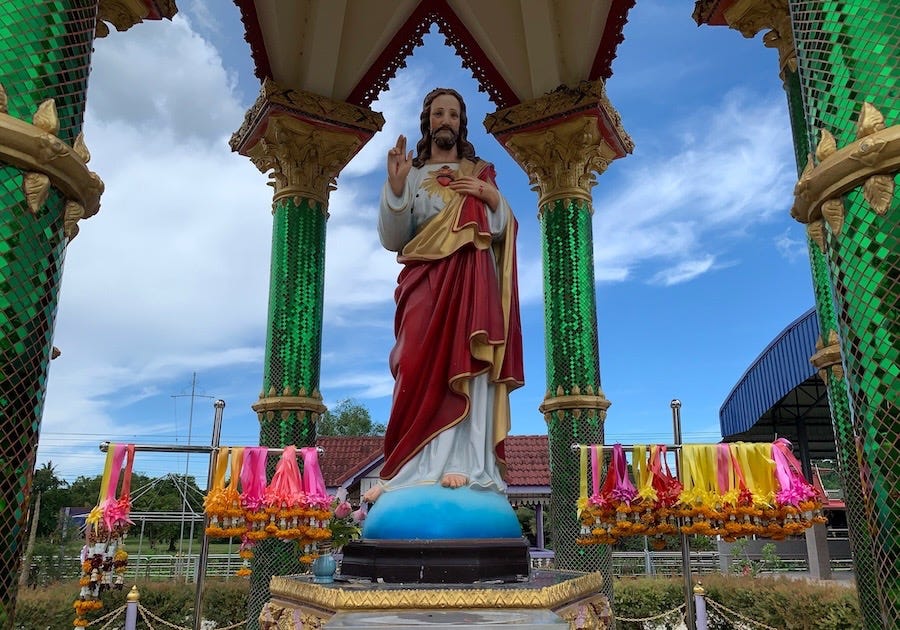
Devotion to the Sacred Heart of Jesus has deep historical roots. But the devotion took on its modern form following the visions of Jesus reported by St. Margaret Mary Alacoque between 1673 and 1675 in Paray-le-Monial, France.
Amid these intense spiritual experiences, the Visitation nun wrote prayers of personal consecration to the Sacred Heart. She shared these with her Jesuit confessor, St. Claude La Colombière, who consecrated himself to the Sacred Heart and dedicated his life to spreading the devotion.
Thanks in part to the global network of the Jesuit order, the devotion spread far beyond Europe. Among the most receptive regions was Latin America. Historians point out that the Sacred Heart devotion — with its stress on personal prayer, home enthronement, and family consecration — helped to nurture the faith in areas that suffered an acute shortage of priests.
That was not the case, however, in Ecuador, which had relatively robust priestly numbers. In the early 19th century, Ecuadorians engaged in a decades-long struggle to gain independence from the Spanish Empire. Local clergy played a prominent role in the battle. The country’s first provisional constitution, for example, was written by a priest.
Despite gaining full independence in 1830, Ecuador suffered from internal division and instability in the decades that followed. When Gabriel García Moreno secured power in 1860, he believed that the country’s ills stemmed from its lack of a strong national identity. He saw the Catholic Church as the one institution that united Ecuadorians of all political persuasions, so he sought to form an alliance with it.
When García Moreno received a proposal to consecrate the young republic to the Sacred Heart, he embraced the idea, after initial hesitation about whether the country was spiritually worthy of the honor.
By consecrating Ecuador to the Sacred Heart together with the country’s leading churchman, García Moreno made a powerful statement about Ecuador’s identity, affirmed strong Church-state ties, and also sent a message of solidarity to Pope Pius IX, who had lost the Papal States four years earlier.
Although Ecuador was the first state to be consecrated to the Sacred Heart with full state backing, it wasn’t absolutely the first national consecration. That took place in Ireland on March 30, 1873, when the Irish bishops consecrated their nation to the Sacred Heart. There was no question of state support at the time because the country was then under British Protestant rule.
Which nations have been consecrated?
Ecuador’s consecration to the Sacred Heart gained international attention. Catholics around the world saw it as an inspiring act of national devotion and support for Pius IX.
In 1875, two countries followed Ecuador’s example: El Salvador and Uruguay. The consecration in Uruguay was performed by Bishop Jacinto Vera, then serving as apostolic vicar of Montevideo. Vera was beatified in 2023.
In his 1899 encyclical Annum sacrum, Pope Leo XIII consecrated the entire human race to the Sacred Heart. The encyclical helped to inspire the national consecration of Venezuela in 1900 and Colombia in 1902.
Moments of national peril were another driver of consecrations. In 1915, as World War I tore Europe apart, both France and Germany underwent national consecrations by their respective episcopates, even as their soldiers clashed along the Western Front.
Subsequent events showed there is no simple link between national consecrations and peace and prosperity. After years of bloodshed, there was a brief pause, before war engulfed France and Germany once again, at the cost of millions of lives.
This bitter reality was also evident in Spain, where King Alfonso XIII consecrated the country to the Sacred Heart in 1919. This remains the only occasion on which a monarch has presided at a national consecration.
The ceremony took place at Cerro de los Ángeles (Hill of the Angels), located in what is traditionally considered to be the center of the Iberian Peninsula. Photographs taken at the time show Alfonso XIII reading the act of consecration at an outdoor altar. Other images show throngs of people beneath the soaring Monument to the Sacred Heart of Jesus that was inaugurated on the same day as the consecration.


The monument, which was topped by a statue of the Sacred Heart, only stood for 17 years. In 1936, Republican militia seized the shrine and used the statue for target practice, before destroying it with dynamite. Images of the monument’s destruction were widely circulated in the Catholic world and came to symbolize the persecution of the Spanish Church.


A new monument was inaugurated in 1965, with the ruins of the original preserved nearby.
As the horrors of the 20th century piled up, more nations underwent consecrations, including Brazil and Portugal in 1931, Argentina in 1945, and Chile in 1946.
The Philippines became the first Asian nation to be consecrated to the Sacred Heart in 1956, in an act led by President Ramon Magsaysay.
The national consecration movement has picked up pace again in the 21st century — another turbulent period in world affairs.
On March 25, 2020, as the COVID-19 pandemic swept the world, Cardinal Antonio Marto consecrated 24 countries to the Sacred Heart of Jesus and the Immaculate Heart of Mary at the Shrine of Our Lady of Fátima, at the request of their bishops’ conferences.
In a single act, Africa gained its first three consecrated nations: Kenya, Tanzania, and Zimbabwe. Also, consecrated that day was India, the world’s most populous nation.
As it stands, nearly 40 nations — roughly one in five of the world’s countries — have been consecrated to the Sacred Heart. It’s impossible to say how many definitively because there is no central database and sources are rife with contradictory information. This overview only includes national consecrations that are well attested in published sources, including Church documents.
Other countries have received different kinds of consecration. For example, Venezuela was consecrated to the Blessed Sacrament in 1899 and Rwanda was consecrated to Christ the King in 1946.
If you live in a country that is not yet consecrated to the Sacred Heart, there is no cause for despair. Pope Leo XIII’s consecration of the whole human race to the Sacred Heart means that no one is excluded on the basis of nationality.