As the Society of St. Pius X continues preparations to consecrate several bishops without a papal mandate, leaders within the group have begun preparing the ground for the seemingly inevitable canonical consequences.
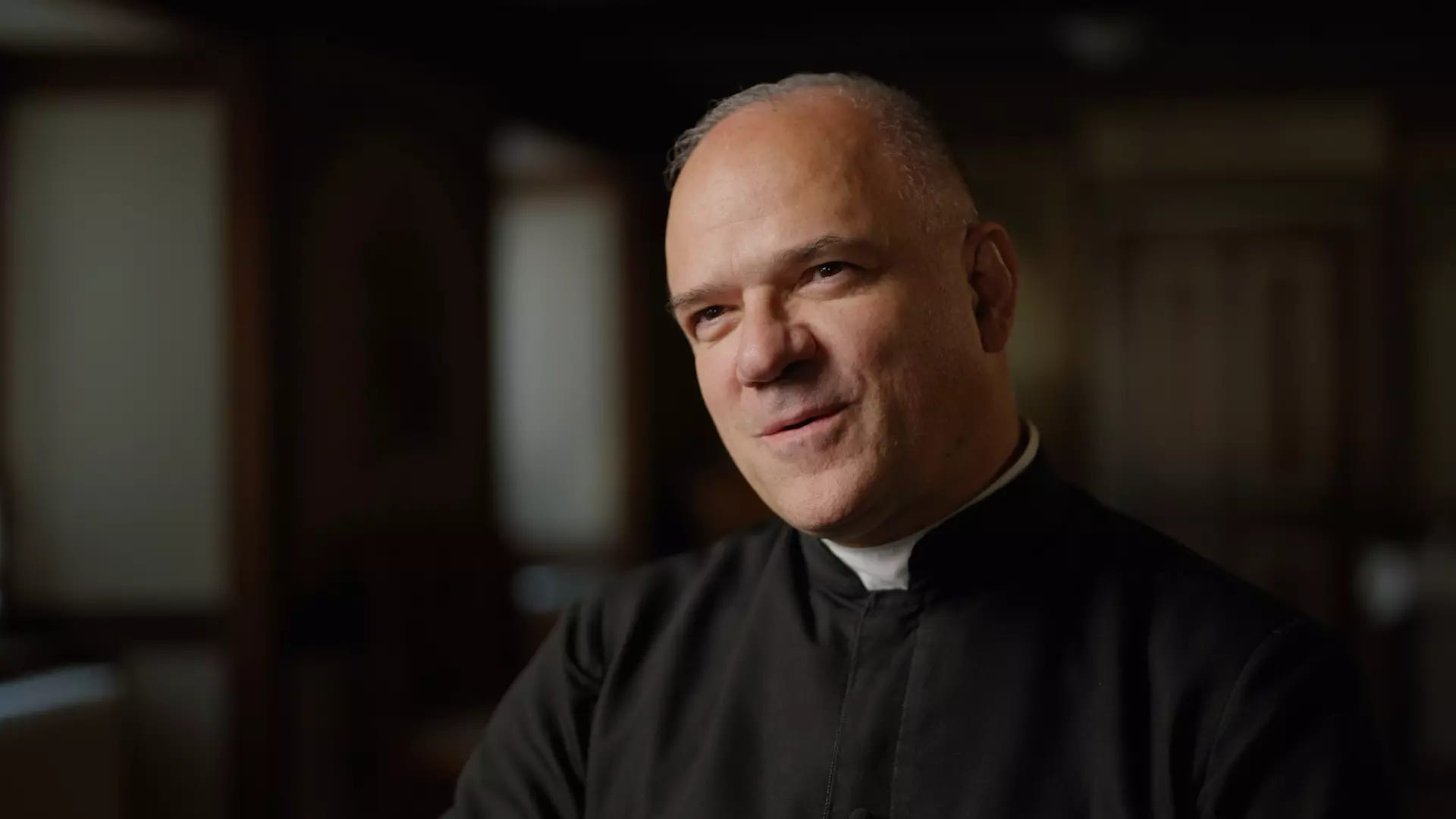
For months, the society’s leadership have insisted they will go ahead with the consecrations, currently scheduled for July. In February, Rev. Davide Pagliarani, the superior general of the SSPX, said the decision to consecrate new bishops was made after he requested an audience with Pope Leo XIV in August 2025 which remains ungranted, and after he recently received a letter from the Vatican “which does not in any way respond to our requests.”
Pagliarani has stated that consecrating new bishops is essential to securing the society’s future, ensuring that it has the sacramental means to ordain priests. He has also stated that the work of the society is itself essential because, according to him, “in an ordinary parish, the faithful no longer find the means necessary to ensure their eternal salvation.”
At the same time, the SSPX have insisted that any dialogue with the Vatican must include matters of doctrine and ecclesiology over which the society “disagrees” with the Church, “particularly regarding the fundamental orientations adopted since the Second Vatican Council” — something the Holy See has said it will simply not accept.
Through all of this, the society’s leadership has appeared to strike a tone of aggrieved seekers of compromise, while insisting their illicit consecrations will go ahead without papal mandate.
Last Sunday, the society’s Bishop Bernard Fellay appeared to warn supporters of the group that “there is an enormous probability that all of you, we included, may be excommunicated, declared schismatic” by the Vatican if the consecrations proceed as expected.
Although Fellay claimed “there is a very high probability” that everyone — bishops, priests, and laity — affiliated with the SSPX would be canonically excommunicated “because they [the Vatican] already said it in public,” the Vatican has made no such statement, and the assertion is not supported by the relevant canon law on the subject.
However, the bishop’s statement appears in line with an SSPX communications strategy, to portray itself as a the victim of a vindictive and unreasonable Vatican, unwilling to meet its supposedly modest requests.
Key among these “requests” has long been an audience for its superior with Pope Leo XIV. And, as the scheduled consecrations draw closer, those around the SSPX and sympathetic to it have increasingly highlighted Leo’s refusal to meet with Pagliarani as evidence that Rome isn’t interested in reconciliation — and is even goading the SSPX into a fuller and more formal breach.
But while that portrayal might serve a convenient narrative, the reality is Leo’s refusal to meet with the SSPX leadership is more likely to be an act of charity towards the society’s leaders, and a desire to keep a moment of ultimate crisis at bay for as long as possible.
—
Throughout the months since the SSPX announced their intentions to consecrate several bishops without a papal mandate, the society has pushed the public message that it will do so as a kind of reluctant last resort, a regrettable necessity forced upon it by the Vatican.
According to the SSPX narrative, Leo has declined all good-faith requests to sit down, hear them out, and understand their concerns. If only he would, the suggestion is, the society could be properly recognized by the Vatican and integrated back into the Catholic Church.
The problem with this framing — indeed with the SSPX’s conception of dialogue — is that it tries to pitch the society as both a true expression and member of the Catholic communion under the authority of the pope and, at the same time, when necessary, autonomous, and a kind of legitimate interpreter of doctrine apart from the Holy See.
Following meetings with Cardinal Fernandez at the Dicastery for the Doctrine of the Faith in February — talks the Holy See said it hoped might persuade the SSPX to pause their plans for illicit consecrations — the society’s leadership essentially closed off any future for the negotiations.
According to a statement from Pagliarani, serious disputes of doctrine related to the Second Vatican Council remain between the society and the Church, but no real substantive progress is possible because, essentially, only the Church can pronounce on these matters authoritatively, but also the Church is wrong.
In other words, the SSPX will not ascribe to the Church’s authoritative teaching on the council, and instead proposes that the Vatican simply allow it to get on with its own self-ascribed pastoral ministry free from further sanction.
Pagliarani has attempted to strike a similar “agree to disagree” posture with the pope personally over the matter of SSPX episcopal consecrations, claiming that “this was not a decision that we could take without concretely manifesting our recognition of the authority of the Holy Father.” Of course, Pagliarani has “manifested this recognition of the pope’s authority” by publicly setting out to defy it.
Through all of this, the Vatican has refused to be drawn into a war of words with SSPX leaders, limiting itself to expressions of acute concern and hope that that leaders will reconsider their plans before it is too late.
In that situation, Leo’s refusal to meet with Pagliarani has come under repeated fire. Surely — the argument has been made by supporters of the society — if the pope had a real concern for avoiding a canonical act of schism by the SSPX leadership, he would want to press his plea for restraint in person?
But a different assessment of the situation might conclude that, in fact, Leo’s refusal to meet with Pagliarani is an act of mercy — and an ultimate expression of the pope’s hope that reconciliation might still be possible.
If that sounds counterintuitive, consider what exactly constitutes the canonical act of schism, and how any meeting between Leo and Pagliarani would inevitably play out.
—
At the same time, on the previous occasion when the society has proceeded to consecrate bishops on its own authority, Pope St. John Paul II issued a declaration of schism, with the penalty of excommunication.
Schism is defined in canon law as “the refusal of submission to the Supreme Pontiff or refusal of communion with members of the Church subject to him.” Communion, in turn, is constituted in three parts: sacraments, hierarchy of governance, and doctrine.
As regards the previous SSPX consecrations, “the root of this schismatic act can be discerned in an incomplete and contradictory notion of Tradition,” wrote John Paul.
“Especially contradictory is a notion of Tradition which opposes the universal Magisterium of the Church possessed by the Bishop of Rome and the Body of Bishops. It is impossible to remain faithful to the Tradition while breaking the ecclesial bond with him to whom, in the person of the Apostle Peter, Christ himself entrusted the ministry of unity in his Church.”
According to John Paul, “this act was one of disobedience to the Roman Pontiff in a very grave matter and of supreme importance for the unity of the Church, such as is the ordination of bishops whereby the apostolic succession is sacramentally perpetuated. Hence such disobedience - which implies in practice the rejection of the Roman primacy - constitutes a schismatic act.”
As to the idea of a meeting between Pope Leo and Pagliarani, the priest has already made it clear, in writing to Cardinal Fernandez, the SSPX cannot and will not accept that the Vatican’s position that “the texts of the Council cannot be corrected, nor can the legitimacy of the liturgical reform be challenged,” and thus “we cannot find agreement on doctrine.”
In fact, the division is so acute that Pagliarani has affirmed in a recent interview that he believes it is a “fact that, in an ordinary parish, the faithful no longer find the means necessary to ensure their eternal salvation.”
These are not abstruse quibbles of theology. Given that they are instead explicit renunciations of the Church’s authority, and ministry, the pope would be obliged to challenge Pagliarani on them, and correct him.
Similarly, Pagliarani has made much of the society’s recognition of the authority of the pope in the matter of episcopal consecrations, even while setting out to defy it.
Since the proximate substance of any meeting with Leo would be the cancellation of the scheduled consecrations in July, Leo would have to repeat his withholding of a mandate for the consecrations to go ahead, with Pagliarani either accepting or rejecting this.
Simply put, it is not possible for the pope to meet with the superior of the SSPX and ignore his numerous public statements on Church teaching and papal authority. Crucially, being warned personally by the pope would mean Pagliarani would have no choice but to respond — either accepting or rejecting the correction.
If he did not accept the correction, instead reaffirming the SSPX’s doctrinal disagreements with the Church over Vatican II or holding out the possibility of continuing ahead with the illicit consecrations, the superior would have placed what most canonists would consider an act of schism — refusing the authority of the pope to his face.
If this were how any meeting between Leo and Pagliarani were to play out, far from being a moment of conciliation, it would instead accelerate the very scenario Rome is hoping to forestall: an explicitly schismatic act from the SSPX leaders.
Given the tone and content of Pagliarani’s public statements in recent months, it is unlikely he would reconsider his most assertive statements. In fact, they are the very basis on which the SSPX justifies the supposed necessity of its continued existence and extreme actions.
It is because, according to Pagliarani, the means of salvation are not available in normal parishes that the SSPX must continue. And the SSPX cannot continue its self-ascribed ministry unless it has priests, which it cannot continue to ordain unless it has bishops to ordain them.
QED, because the Church’s ordinary ministry is salvifically ineffective, the society is justified in whatever means it chooses to continue its work. To concede ground on any of the points would be to undermine the entire rationale of the SSPX’s current self-articulation.
This being the case, it is hard to conceive of a meeting between Pagliarani and Pope Leo which didn’t end in an explicit formal statement of rupture by the SSPX superior with the pope.
In which case, Leo’s continued refusal to arrange a meeting is perhaps better seen as an act of pastoral concern for Pagliarani’s best interests, rather than high-handedness.
Leo likely hopes — or at least prays — that between now and July, the SSPX leaders might reconsider their planned actions, and appreciate the consequences. Meeting with them would seem most likely only to cut that time short.


Am not sure mercy is the way I'd say it, but yeah, the question of "What would they talk about?" has to be raised. Just as much as "and what happens when Leo inevitably says no?" Because on the question of if he could tolerate a second generation of episcopal lineage done in defiance of the Roman Pontiff... how could the answer be anything but no? That's one way, at least, on paper, the China deal (scandalous as it is) gives more: they at least try to have some type of legal recognition from Rome as being important.
Now if I'm Leo I'd honestly still do it, but for entirely different reasons: going on offense to shore up defense. Just as the SSPX should dialog with the likes of Fernandez (even if they don't trust him), Leo should seize the opportunity to meet, if only to throw hot coals on them if/when the consecrations happen.
But that's an "accelerate to decelerate" approach that is inherently risky and dangerous, and you wouldn't want someone only halfway committed to it.
Probably the best explination I have seen on this subject. Once again, Ed knocks it out of the ball park with this!!