
Pillar paid subscribers can listen to JD read this Pillar Post here: The Pillar TL;DR
Hey everybody,
It’s the Feast of St. Peter Claver, and you’re reading The Tuesday Pillar Post.
Peter Claver was a Jesuit missionary who spent some 40 years in South America, where he reportedly baptized hundreds of thousands of people, almost all of whom were enslaved Africans, who had been captured, trafficked on slave ships, and forced to work in deplorable conditions in the Americas.
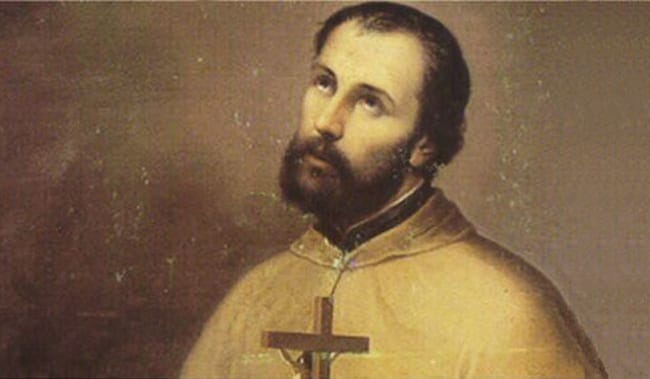
Claver catechized them, ministered to them, and he insisted, publicly, on the Church’s prohibition of the era’s chattel slave trade.
Most remarkable is this: Claver would often visit plantations, most of them owned by Catholics and his Spanish countrymen, to celebrate Mass and to preach the Gospel. He would hear the confessions of both slaves and the plantation owners’ families, administer the Eucharist to both, and offer catechesis to both.
He was often poorly received by the plantation families, who thought it was a waste of time for him to care spiritually for slaves. But sometimes his countrymen would have a different outlook — some were glad for a priest to visit, and thought even that it was good for their slaves to receive the Gospel and the sacraments.
But whatever welcome he was given, Claver didn’t stay in the large plantation haciendas with his countrymen and his families.
He stayed, ate, and used the toilet in the quarters of the slaves, in the lowliest places — actually filthy, actually squalid, actually unhealthy — where he found the Lord, and gave witness to him.
That is, for me at least, a point of departure from which to scrutinize my conscience, and my choices.
The news
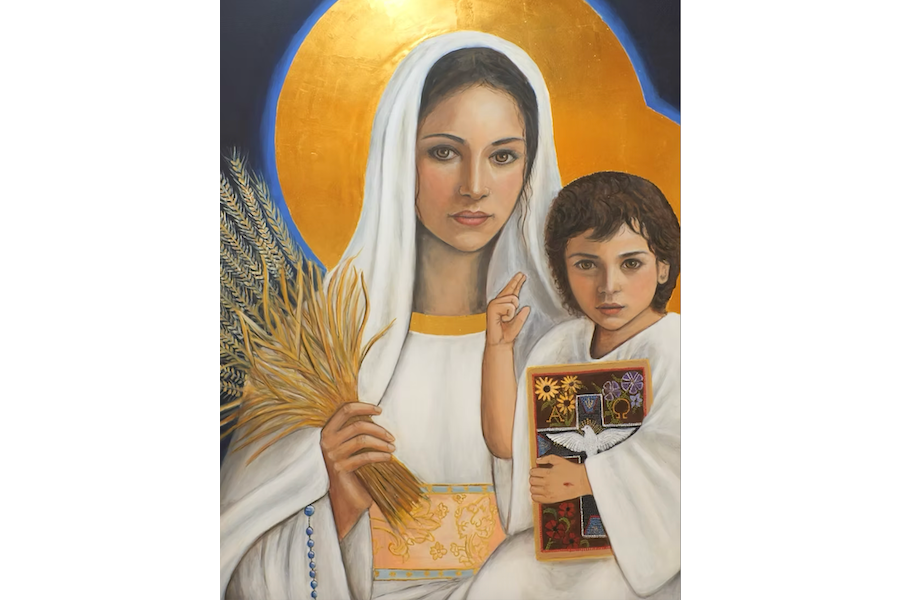
The image of Our Lady of the Prairie itself has had quite a story.
You can — and should — read it here.
—
Fr. Andrew Showers of Madison, Wisconsin was arrested last month on charges that he attempted to meet a 14-year-old girl he’d met online for sex.
There actually was no girl, Showers had been talking with a police detective in a sting operation.
But his case has gotten complicated, after a man said last week that he had tried to report to the Madison diocese last year that Showers allegedly groped his daughter at a January 2024 social event in Chicago.
The diocese said this weekend that’s not exactly true — that the man had contacted the diocese, but refused to give details about his allegation — including the priest’s name — without speaking to the bishop personally. And, the diocese said, because the man said a police investigation was already underway, Bishop Donald Hying was not permitted by protocol to speak directly with him.
The case is complicated — and much of the news coverage on this story is pretty convoluted. But the case matters, because it raises clearly the importance of clear communication from all parties in order for justice to be done.
So what are the real facts? The Pillar explains.

Source & Summit is the next generation of liturgy and music publishing, providing beautiful printed worship resources and user-friendly digital tools to help you equip your musicians and deepen liturgical participation. Get started with our premium software for free, or request a sample missal to explore how Source & Summit can benefit your parish.
Priests in the Archdiocese of Strasbourg, France, have called for a new apostolic visitation of their archdiocese, arguing that a network of cronyism remains after a succession of scandals and leadership changes.
There has already been an apostolic visitation in Strasbourg in recent years — and it seems to have led to the early retirement of both an archbishop and an auxiliary, and several other serious personnel changes.
But priests say there remain real and serious problems in their archdiocese.
Can they be resolved? Will Leo appoint an apostolic visitor?
—
The Duchess of Kent, the first senior British royal to convert to Catholicism in more than 300 years, died last week at the age of 92.
While she was the most famous Catholic in the British royal family, she is not the only one.
I’m not sure how popular St. Carlo actually is with young people. My kids, and my nieces and nephews, celebrated St. Pier Giorgio Frassati on Sunday, with hardly a mention of the Internet Saint. We had a Pier Giorgio trivia contest, and Pia (inexplicably) donned a Pier Giorgio cowboy hat (again, I don’t know why she thinks Pier Giorgio likes cowboy hats) but none of them said boo to me about Carlo.
But there is one group with which it seems Carlo’s popularity is off the charts: Moms love Carlo Acutis. Worldwide, the kid is just absolute king of the minivan set.
Don’t believe me? Well, Edgar Beltran went to the canonization, and he talked to moms about St. Carlo.
—
Finally in the news, tomorrow is the feast of Augustinian Saint Nicholas of Tolentine, who in the 13th century became known as a mystic, a preacher, an excellent confrere, and eventually a miracle worker.
Sunday is Pope Leo’s birthday — which means between the two events, this is a big week for the Augustinian order.
And that’s probably a good thing. In fact, if you think of it, ask St. Nicholas of Tolentine to pray for his Augustinian brothers this week.
The Augustinian order is meeting in its general chapter this week, with the aim of electing a new superior general, in addition to some other issues for discussion on the table.
The order’s official account of the chapter says that “significant deliberations” are underway.
But according to that account, the pope’s confreres, the Augustinian friars, are having difficulty electing a superior.
Participants in the chapter have said they don’t know each other well, or know the leadership candidates’s visions for the order’s future. After some discussion about the agenda of the meeting, the chapter’s members tried in several ballots Monday to elect a superior, but “no candidate emerged with the required majority.”
At the conclusion of three rounds of voting, “the process of voting was suspended” for 24 hours.
Pope Leo himself is likely not eager to place his thumb on the scale of his order’s internal leadership deliberations. But St. Nicholas of Tolentine feels likely far less bound — so perhaps before the resumption of voting, the saint has jumped into the fray.
The Leonine coaster
Since Fr. James Martin popped up at the Vatican last week, I’ve been getting requests from friends and fellow parishioners to interpret the meeting between Pope Leo and the controversial Jesuit priest.
In short, I’ve been asked frequently what the meeting says about Pope Leo XIV.
And when I probe a little bit, I realize what people are really asking is something more fundamental: Is Pope Leo a good pope, or a bad pope?
Now, that’s a lot to hang on one meeting, or even on the 124 days of Leo’s papacy.
But it’s clear that after the controversial papacy of Pope Francis, which for many Catholics was emotionally exhausting, there’s a desire to just get clarity about what’s coming: Can we expect to hold our collective breath every time the pontiff rides an airplane? Will we have a sense that the pope likes us? Will Pope Leo’s curial appointees have written any odd books on spirituality? Will Pope Leo have a Rupnik moment of his own?
It’s clear that Leo has had an extraordinary start as pontiff, at least in terms of his reception by practicing American Catholics. The pope preaches beautifully and richly, he seems to manifest deep faith when he offers Holy Mass, and he seems committed to honoring the customs and traditions of the Church’s life — while pointing constantly to Jesus Christ, as the source of peace, hope, and eternal life.
But many Catholics tell me they’re still waiting to understand exactly who Pope Leo is — they’re looking for glimpses of something concrete, some sign or wonder which will tell us exactly how Leo will lead the Church.
I admit, I share that sense. This morning when I awoke, I had an email from the USCCB in my inbox, this visible subject of which read on my screen: “Pope Leo Accepts Resignation of …”
I clicked that email before I got out of bed, before I prayed, before I had my glasses on, even. And why? Because I thought it might be THE papal move on American bishops that would help me understand who Pope Leo really is. It might be the sign I’ve been waiting for.
Instead, it was simply that the pope had accepted the resignation of a 75-year-old auxiliary bishop in Texas. Not earth-shattering news. No sign of anything.
But that’s the feeling for a lot of Catholics right now — we’re waiting with a kind of pregnant expectation that soon enough, Pope Leo will show more of his cards, and then we’ll know what we really want to know: Will he be a good pope?
And that’s the context in which Pope Leo met with Fr. James Martin.
So of course, everyone wants to know whether that meeting is the sign. Does the Martin meeting tell us who Pope Leo really is?
Whatever you think of Fr. Martin — and opinions vary among Pillar readers — there are a dozen reasons why the pope might have met with him. Martin himself has claimed a kind of papal endorsement from the meeting, and will no doubt use that to advance his particular approach to issues related to sexuality in the Church.
But there’s just not enough information about why the pope had the meeting — or how he understood it, or what he intended by it. You might say that if he didn’t intend to endorse Martin’s work wholesale, that he should have expected that’s how Fr. Martin would frame the meeting. And I think that’s true. But it still doesn’t tell us anything about what the pope intended, expected, or wanted to convey.
And that brings me to the broader point.
In my business, the surest way to making money is to tell you two things:
That there will soon be some definitive signal which can tell us everything about Pope Leo. And that only the journalists of The Pillar can identify and interpret that signal for you.
But I’d rather tell you the truth: