
Pope Leo XIV on Monday repealed one of Pope Francis’ signature financial policies, rolling back a series of 2021 pay cuts and freezes for senior Vatican officials, including cardinals resident in Rome.
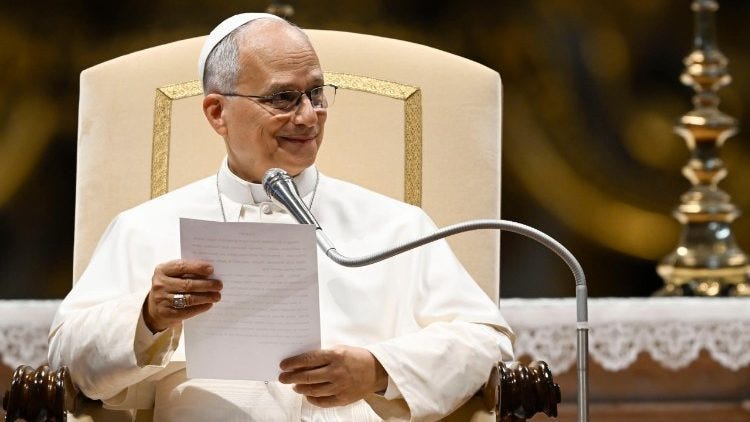
In a motu proprio dated Sept. 1 but published by the Vatican press office on Sept. 14, Leo wrote that “Those wage containment measures adopted by my Predecessor [...] which were also necessary to face the exceptional challenge of the pandemic [...] can now be overcome, in the certainty that the institutions of the Holy See and the Vatican City State will continue, with various instruments, in their commitment to guarantee economic sustainability.”
The pope’s decision, which also referenced a previous move to reverse another Francis-era cost-cutting measure of raising residential rents in Vatican City, is the latest signal from the Apostolic Palace that Leo is increasingly comfortable with the Holy See’s financial situation, and confident in its sustainability.
It is a remarkable change in both policy and outlook between popes.
The final years of the Francis pontificate were characterized by increasingly dire warnings from the pope about the state of Vatican finances, and continued policy shake-ups. By contrast, the first year-and-a-half of the Leonine pontificate have represented an effective liberalization of curial financial policy and a notably upbeat way of discussing the Holy See’s financial health.
But with only partial information on the current state of Vatican finances, it remains an open question whether this change is the result of new information, improving results, or merely a change of attitude.
—
The Holy See’s Monday announcement that Pope Leo has reversed Pope Francis’ 2021 pay cut and freeze for curial cardinals and senior officials makes two important contextualizations.
The first linked the original 2021 pay cuts to fallout from the coronavirus pandemic and the global economic shock triggered. But it is worth noting that Leo’s motu proprio this month introduced a dangling qualifier — and with it, something of an ambiguity. The pope wrote that the 2021 pay cuts were “also necessary” because of COVID-19. But he did not explain the conditions to which that “also” referred.
While it is reasonable and understandable for the Vatican, as much as anywhere else, to move past extraordinary measures adopted in the wake of the pandemic five years ago, it is worth recalling that Francis himself said at the time that the move was first and foremost driven by “the deficit that has characterised the economic management of the Holy See for several years,” and “to ensure the sustainability and balance between income and expenditure in current economic and financial management.”
Operational costs rose, too, but the report from the Vatican’s Secretariat for the Economy was eager to stress that, in the wider financial climate, this was something of a controlled rise, rather than runaway inflation. Taken narrowly in this context, Leo’s rollback of the 2021 cost-cutting measures might make sense.
However, last year’s report was actually very guarded on that exact subject, stating that, despite years of cost-cutting measures, operational costs still grew by nearly €40 million from 2023 to 2024. According to the report, the 2024 financial year “could be a turning point if [emphasis original], after years of stable or growing operating deficit, the Holy See [sees] the reduction of its operating deficit in the coming years.”
With that in mind, reversing cost-controlling measures — like Leo’s decision to rescind the cardinals’ pay cuts — will not strike many observers as an obvious way of reducing an ongoing operational deficit running in the tens of millions of euros.
On the other hand, close reading of the Vatican’s most recent financial statements suggest that the bulk of operational increases are located in asset and property maintenance and management, not staffing costs. And wherever the Vatican’s increased costs come from, its recently positive financial returns have depended upon one-off asset sales and investment realizations, not on the cultivation of stable and stably increasing returns from fixed income streams.
Similarly, results posted this year by APSA, the Holy See’s sovereign wealth and asset manager, hailed strong and stabilizing results for 2025 and what it called a “return to ordinary operating conditions” after a change in investment strategy yielded extraordinary returns the previous year.
At the same time, a net increase of €89 million in value for APSA’s assets and investments — and it is a sizable figure, in and of itself — came largely from a passive revaluation of existing holdings.
Specifically, the two largest drivers of that increase in value came from revaluation of physical gold holdings, which APSA priced as having risen by €40.8 million since they were last priced, and their real estate book valuations, which they marked up by €39.2 million.
Of course, all of that information and analysis can only lead to partial predictions of what might be in the next Holy See budget statement, due out in the next two months. It is possible that extraordinary increases have materialized from other sources, including perhaps major donations made outside of the framework of Peter’s Pence.
It is equally possible, though, that no such new revenue has materialized and the 2025 budget report will record a similar or modestly improved reality to the 2024 edition put out last year. Indeed, those close to the Vatican’s various economic departments and bodies offer no reason to expect a sudden sea-change in the economic circumstances of the Vatican, or the sudden resolution of the structural budget deficit.
That being the case, the second piece of context included in Leo’s motu proprio on Monday becomes even more interesting: Leo cited “the certainty that the institutions of the Holy See and the Vatican City State will continue, with various instruments, in their commitment to guarantee economic sustainability.” It is worth recalling that no such certainty existed in the final years of the Francis pontificate.
It is not exactly clear where Leo’s optimistic certainty comes from. His top team at the various Vatican financial bodies remains largely unchanged — the same team whose information and council informed Francis’ bleak outlook. And, while some financial results have trended upward, as noted previously these are of highly questionable impact on the Vatican’s actual budget issues.
For the moment, there is no obvious place to point to for either information or results which would justify Pope Leo’s bullish attitude about Vatican finances.
But, as the pope has himself previously said, he is not in favor of economic doom-mongering for its own sake; nor does he consider talking down the Vatican’s financial situation as a credible fundraising strategy. It is entirely possible that Monday’s announcement is a simple product of a particular papal cost/benefit analysis.
Like the Vatican City rent hikes announced, though largely unimplemented, by Francis and repealed by Leo earlier this year, it’s highly questionable how much the payroll measures actually contributed to the budget bottom line.
Cutting the monthly stipend for Roman cardinals by 10% made international headlines, but how much, really, did it manage to achieve by saving some €8,000 per Rome-based cardinal per year? Certainly no more than a few hundred thousand, at most. Similar criticisms were raised about the balance of the pay cuts and freezes instituted by Francis for senior curial officials — many of those affected noted that Vatican wages were already modest by any measure, and the impact of the cuts was felt far more by staffers than the benefit realized to overall staffing costs.
To a degree, this was known and intended, even, under Francis, who spoke often about the need to cultivate a mindset of personal sacrifice around Vatican expenditures.
By contrast, the best explanation — or at least the explanation that can be argued from known data — for Leo’s move on Monday may be as simple as the reverse intention. Even if the financial climate at the Vatican isn’t improving by much, Leo may have decided that reversing some of Francis’ most eye-catching but least effective reforms (in terms of euros saved or generated) can purchase him a lot of good will around Rome for not much money — especially compared to the size of his budget hole.
If that is the case, it may be a rare Vatican example of getting value for money.
It is to be hoped that having had a taste of reversing Francis’ judgements, his Holiness finds it very moreish.
"a rare Vatican example of getting value for money"
*howls of laughter in the upper galleries*