
The new apostolic nuncio to Germany told members of an influential lay group Friday that “synodality means not only speaking together, but above all listening together to the Lord.”
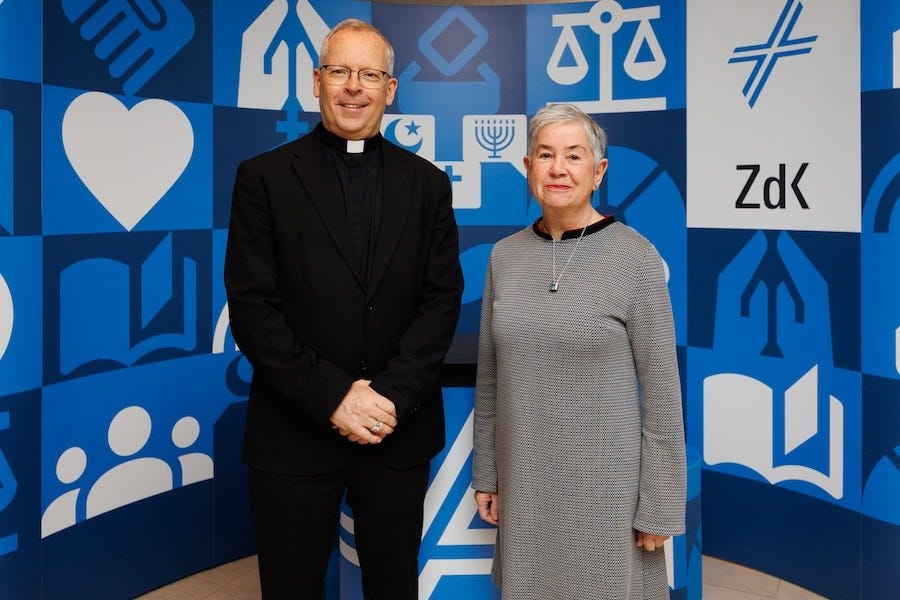
Archbishop Hubertus van Megen was speaking Nov. 27 at a plenary meeting in Berlin of the Central Committee of German Catholics, known by its German acronym ZdK.
The ZdK co-sponsored the 2019-2023 “synodal way,” which produced 150 pages of resolutions calling, among other things, for women deacons, a re-examination of priestly celibacy, lay preaching at Masses, greater lay involvement in selecting bishops, and a revision of the Catechism of the Catholic Church on homosexuality.
The initiative also endorsed the creation of a new permanent decision-making body for the Church in Germany, comprising equal numbers of bishops, ZdK members, and representatives elected by synodal way participants. The statutes of the body, known as the synodal conference, are awaiting approval in Rome.
Van Megen, who was appointed nuncio to Germany in April, thanked ZdK members for their commitment to the Church, acknowledging the group’s history of lay engagement dating back to 1848.
He said that the “synodal efforts of recent years” arose from a positive desire to “take responsibility for the life of the Church and to participate in its mission.”
“At the same time, Pope Francis repeatedly reminds us that synodality, at its very core, is a spiritual process. It draws its life from listening to the Word of God, from prayer, and from a willingness to be guided by the Holy Spirit,” he said.
He added: “Such a journey never takes place in isolation. Those who listen to the Spirit of Christ are at the same time led deeper into the communion of the entire Church. Precisely for this reason, the connection between the local Church and the universal Church is an essential hallmark of Catholic life.”
“The Church is realized in many places and in diverse cultural contexts. At the same time, she draws her life from the one faith professed by Christians throughout the world. The diversity of experiences and charisms thus becomes a source of richness for the entire Church.”
Van Megen said that Catholics could look to the Church’s future with confidence.
“Certainly, many questions remain unanswered, and some challenges will continue to accompany us. The source of our hope, however, does not lie primarily in human plans or possibilities. It lies in the faithfulness of God, who guides his Church through history,” he said.
Irme Stetter-Karp, the ZdK’s president since 2021, also addressed the plenary assembly, which ends Nov. 28. She focused on the plight of Germany’s young people and the rise of the Alternative for Germany party. Plenary delegates passed resolutions Nov. 27 calling for youth empowerment and strengthening democracy.
Turning to Church affairs, Stetter-Karp said: “At the moment, we are all eagerly awaiting word from Rome regarding the requested recognitio [approval] for the synodal conference’s statutes — and what that response will look like.”
“We need a synodal Church as much as we need water to live! Here, through the synodal assemblies and their resolutions, we have uncovered springs that we could never bring ourselves to fill in again!”
She added: “Yes, we need a synodal Church! Yes, we need these synodal sources so that the Church has a future. That is why standing still is not an option for us. Ecclesia semper reformanda! [The Church must always be reformed.]”
Van Megen said in a Sept. 23 interview that he planned to visit Rome in late October to inquire about the status of the synodal conference, but it is unclear whether he made the trip as planned.
The synodal conference’s first meeting was scheduled to begin Nov. 6 in Stuttgart. But it was postponed when it became clear that the Vatican would not approve the statutes in time.
German bishops’ conference chairman Bishop Heiner Wilmer and Stetter-Karp marked Nov. 6 with statements of ongoing support for the proposed body.
Wilmer noted in an interview published Nov. 19 that the outcome of the Vatican’s review of the synodal conference statutes remained “open.”
He said: “I am confident that there will be no stop sign. Which is not to say that there might not be adjustments here and there. There will be no special provisions for Germany. But the Church is already synodal today and will become even more so.”
“Even today, we have many opportunities to involve baptized women and men in decision-making, in consultations, and in the search for bishops. What affects everyone must also be supported by everyone.”
These folks are going down a dead end road, just like the dying religious orders did.