
Hey everybody,
It’s the feast of Blessed Karl of Austria, and you’re reading The Tuesday Pillar Post.
Karl was an emperor, until he wasn’t.
He was the last Austro-Hungarian emperor, taking the throne in 1916, in the throes of World War I, and only because his uncle Franz Ferdinand was killed in Sarajevo two years earlier.
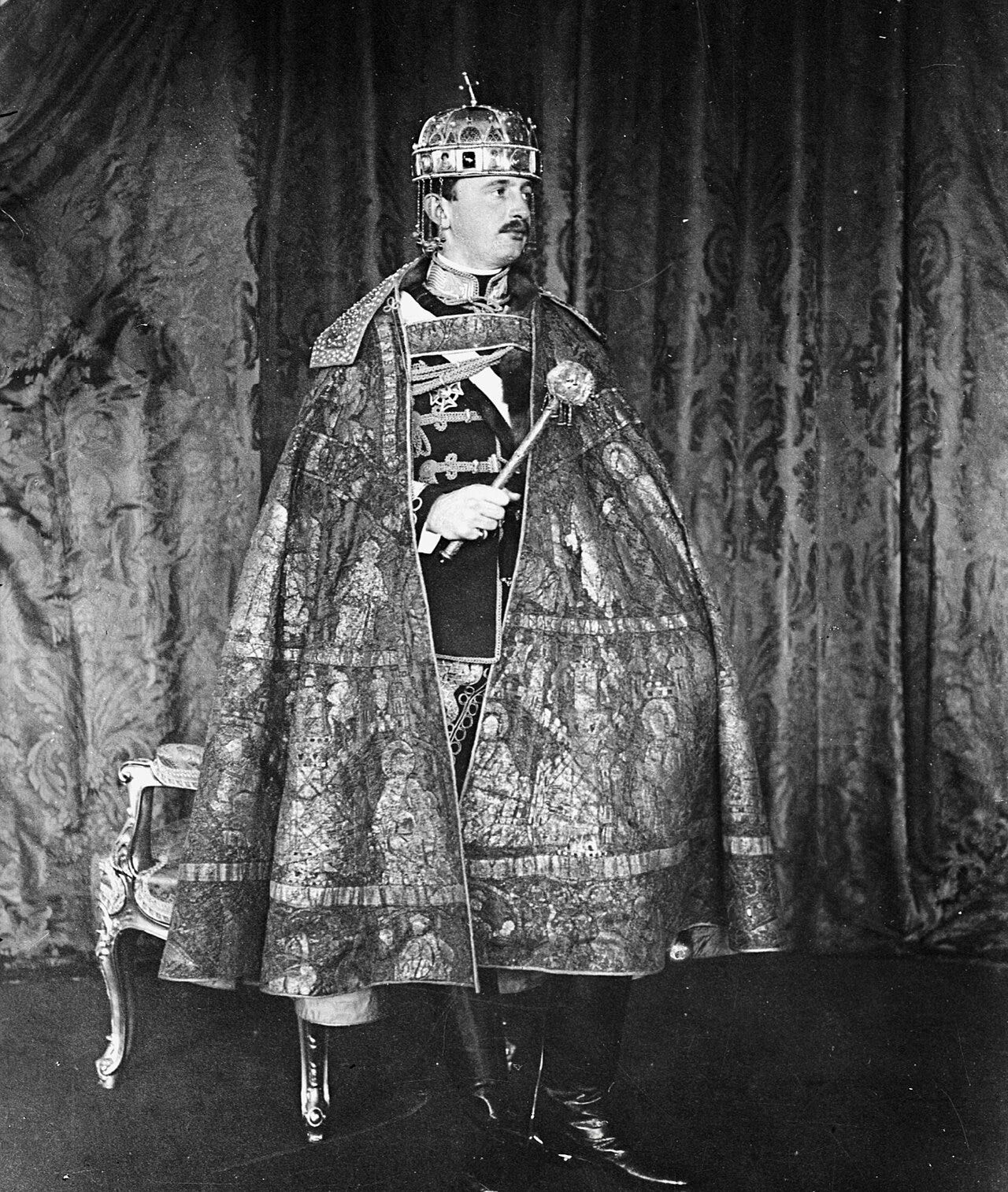
At the end of the war — as Karl fought to bring peace to Europe — he lost the throne, in part because of the influence Woodrow Wilson had on the peace process.
As he and his wife, along with their children, were forced to leave Austria, their properties were seized, their assets frozen — they were banished, poor, and in exile. Karl attempted to retake his throne, but he was prevented.
Just a few years later, living in Madeira in a borrowed house, he caught a cold. That became pneumonia. He died at 35, in April 1922.
His last words were “thy will be done…. As you will it, Jesus.”
Karl was a king. He was a good one, because he saw his office as a kind of stewardship, a Christian vocation to care more for his own people than he did for himself.
That’s why he died the same way he lived — giving over his will to the Lord’s, and giving over himself to the people in his care, whether an empire, or his family.
There’s something to that. Leadership, whatever the form, is exercised well through virtue, especially through humility, because we want to see other people flourish. Leadership is squandered in vice, selfishness, and ego.
King or pauper, exiled or safe at home — “as you will it, Jesus.”
Thy will be done.
The news
But amid the celebration for that canonization has been concern that the regime of Venezuelan President Nicolas Maduro has been trying to legitimize itself — despite its human rights record and widely contested elections — by presenting itself as close to the canonizations, close to the Church, and thus close to the Venezuelan people.
The Pillar’s own Edgar Beltran reported on that Friday, with Vatican sostituto Archbishop Edgar Peña Parra weighing in on the issue.
Of course, you’ve probably read already what happened when Edgar conducted that interview. If you haven’t, here’s what it was: Edgar was assaulted Friday, as he interviewed Peña Parra, by a man later identified by Venezuelan media as Ricardo Cisneros, a powerful and wealthy businessman in the country, who had seemingly traveled to Rome with the official Venezuelan delegation to the canonizations.
The man took Edgar’s recorder, shoved him repeatedly, and told him he wasn’t allowed to ask questions about the government. Edgar stood his ground, kept his cool, and stayed on the job — eventually, after the man was restrained, finishing the interview.
But here’s something.
Yes, you read that correctly. The guy who accosted Edgar and attempted to bully him from reporting the truth was, just three days later, a lector at a Mass offered by the Vatican’s Secretariat of State.
But Parolin-the-diplomat didn’t show up at that Mass. Parolin-the-prophet did.
That’s a big break from the typically reserved diplomatic language offered by the Holy See, or its silence on Venezuela in recent years.

The MA in Catholic Studies at the University of St. Thomas (MN) is a transformative opportunity to study the impact of the Incarnation on human thought and culture at a large Catholic D-1 university. Our interdisciplinary, discussion-based courses are taught by expert teacher scholars - in person, online, or both.
Engage the Catholic intellectual tradition from anywhere in the world and enrich your life, work, and sense of purpose.
So what happens when a bishop attempts marriage?
That’s probably two questions — What does canon law expect, and what happens in reality?
There are still unanswered questions about the motives of those protestors. But Cardinal Fridolin Ambongo has had enough — and at a Mass last week, he urged local clerics to move on.
What will happen? We do not know. But here’s the latest.
—
And finally, it’s time to talk about screen addiction.
It’s real. It’s pervasive. It’s the worst.
So meet some people who are doing something about it — and in the process, rediscovering human connection.
We should all spend less time in front of screens.
But first (ironically) read this.
“We are not designed to be sedentary, screen-staring, meaning-devoid creatures.”
Deus vult sacramental prep?
When Archbishop Timothy Broglio takes the dais at the USCCB meeting next month, he might mention the biggest problem he’s facing in his own Archdiocese of Military Services.
Seven months ago, the federal government made the decision to cancel contracts for scores of laity who organize sacramental prep and pastoral care on Army installations, where ordained chaplains are in short supply, and usually ride a multi-base circuit. The cancellations took effect this month.
That’s right: While our government extolls its solidarity with our warfighters, we’re cutting the people who help their priests, and who help Catholic military families practice the faith.
“The elimination of these contracts reduces ministry outreach and community life to a programmatic task rather than a spiritual life to accompany and nourish,” Broglio wrote in a recent letter.
The contract cuts also eliminate most people serving as musicians for Army liturgies, rendering them, I suspect, uglier.
In his letter on the subject, Broglio highlighted that while 20% of U.S. soldiers identify as Catholic, there are only 137 Catholic Army chaplains in both active duty and reserve slots.
Many of the Catholic chaplains who are in the Army, Broglio pointed out, have such significant administrative Army jobs that they can do very little actual pastoral care themselves. That’s why they need these catechist trainers and religious ed coordinators.
Twenty percent of the Army’s total population is about 90,000 soldiers. And you might think that 137 priests for 90,000 people isn’t bad — and is, in fact, a better ratio than many American dioceses. You’d be right.
But Army chaplains actually serve a soldier’s entire family, especially when they’re overseas, along with civilian contractors and American diplomats. That bring the number quite higher.
And while it’s one thing to serve a few hundred thousand Catholics in southwest Iowa or what have you, the Army’s “parishes” are spread around the globe, and many of them in conflict zones.
So if priests are going to have a chance at sacramental ministry for soldiers and their families — people whom we should want in a constant state of grace, by the way — those priests are going to need catechists and organizers and help, and they’re going to need those helpers to be well-formed, and well-supported.
Further, if soldiers are going to be on the front line, in various ways, they’re going to need some help catechizing their children.
That’s why Broglio’s words are so stark: “The Army’s action intolerably infringes upon the free exercise of religion for Catholics in the U.S. Army, as well as my responsibility as Archbishop, to provide pastoral care to those within my canonical jurisdiction. I assure the faithful of this Archdiocese that I will pursue all legal options to address this grave misstep.”
It sounds, in other words, like the archbishop is getting ready to litigate against the army.
Unless Defense Secretary Pete Hegseth changes the policy.
Hegseth is not a Catholic, though he did marry one, and at the cathedral in St. Paul, Minnesota.
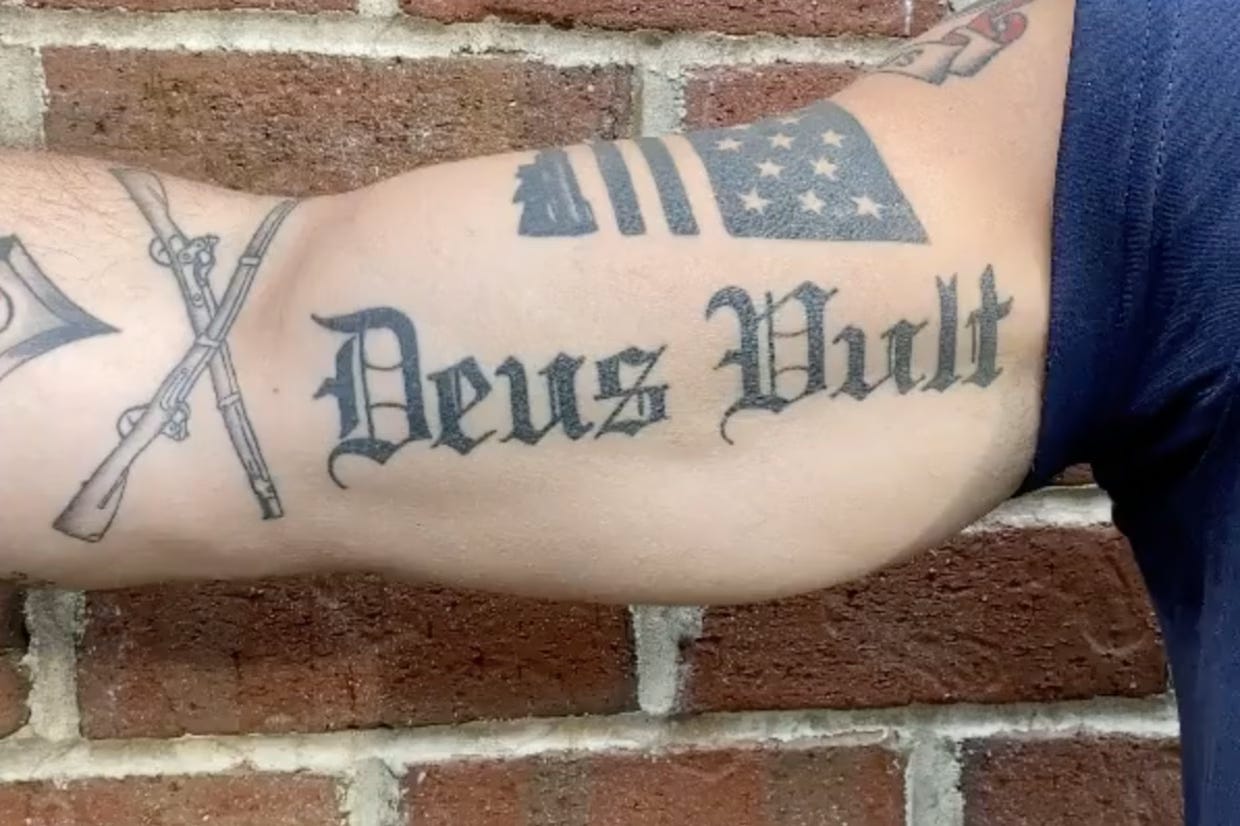
And Hegseth has come under a lot of fire defending the Catholic-ish tattoo on his bicep: “Deus vult,” it says, or “God wills it.”
Does God will faithful catechesis and sacramental prep for the United States Army and its dependents? That’s for Hegseth to discern, I guess.
More Habsburgs
Finally, while conflict and strife rages around the world, we got on Sunday the kind of headline the world needs once in a while. We got an old-fashioned museum jewel heist.
In broad daylight, a group of burglars posing as construction workers pulled up to the Louvre on Sunday, attached ladders to windows, snuck in with power grinders, snatched eight pieces of priceless jewelry, and were out in less than seven minutes, setting fire to their truck as they sped off on mopeds.
Sure, it’s a priceless loss, I guess, but it’s also the stuff adventure movies are made of.
They only stole old stuff, I read, because modern jewels have serial numbers, making them harder to unload. They knew exactly what they wanted, and they got it — most of it.