
An Eastern Catholic patriarch said Monday that a meeting called for bishops of the Syriac Catholic Church to vote on his potential removal is unlawful.
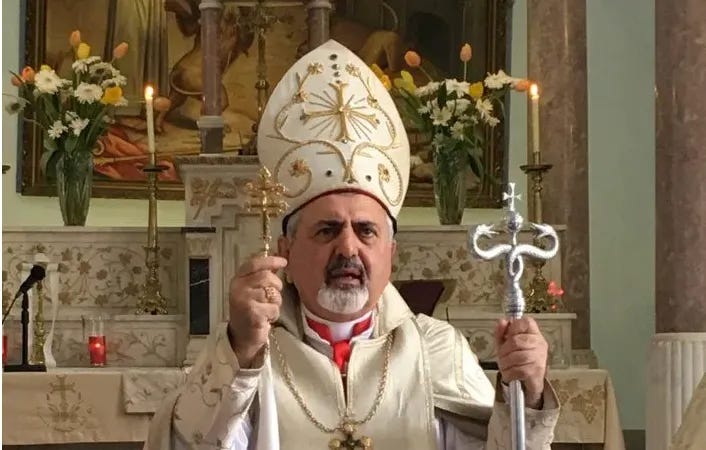
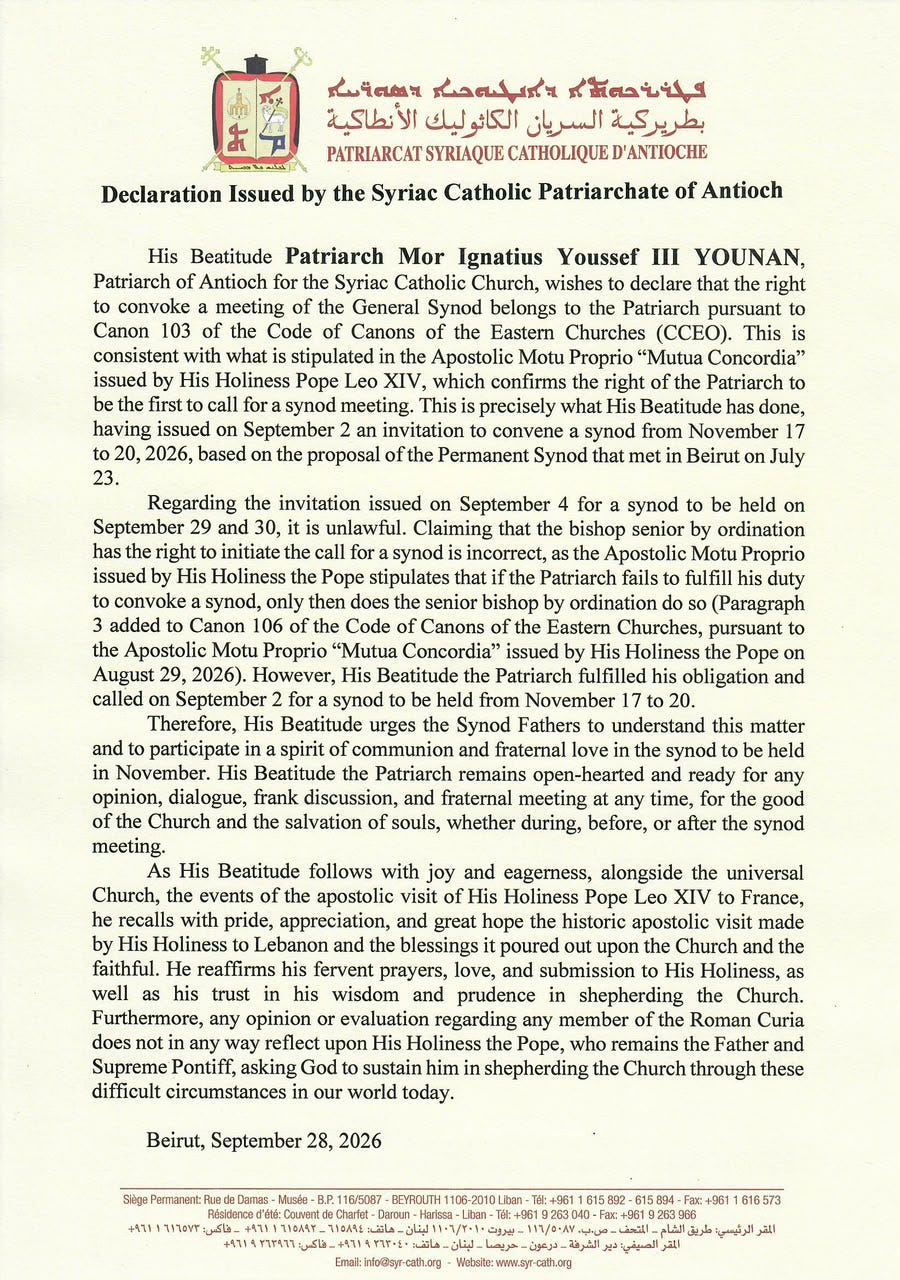
In a statement released Sept. 28, Ignatius Youssef III Younan said that since he had already issued a convocation of the sui iuris Church’s synod, an attempt by Syriac bishops to meet in Lebanon this week lacks legal authority, as will any meeting they hold.
A special meeting of the Syriac bishops is scheduled to begin on Tuesday, September 29, having been called for by the senior bishop of the Church after the patriarch. It is the first attempted use of a new law, issued by Pope Leo XIV last month, giving the governing synods of bishops in Eastern Catholic Churches the authority to convene themselves and vote for the removal of patriarchal leaders.
Noting that both the Code of Canons for the Eastern Churches and Pope Leo’s recent motu proprio recognize the patriarch’s right to be the first to call any meeting of the synod, Youssef said he had done so before an attempt by Syriac bishops to summon a peremptory meeting.
On September 2, the patriarch issued an invitation to convene a full meeting of the Church’s synod of bishops from November 17 to 20, based on a proposal of the permanent synod — a kind of standing executive council — which met in Beirut on July 23.
Two days later, bishops of the Syriac Catholic Church called for their own meeting, which would hold a vote to remove Youssef from office. But the patriarch said the sequence of events makes that scheduled meeting illicit. The patriarch urged Syriac bishops to skip the meeting this week, in favor of the one he’s scheduled for November.
“Regarding the invitation issued on September 4 for a synod to be held on September 29 and 30, it is unlawful,” the patriarch wrote on Monday.
“Claiming that the bishop senior by ordination has the right to initiate the call for a synod is incorrect, as the apostolic motu proprio issued by His Holiness the Pope stipulates that if the Patriarch fails to fulfill his duty to convoke a synod, only then does the senior bishop by ordination do so.”
“Therefore, His Beatitude urges the Synod Fathers to understand this matter and to participate in a spirit of communion and fraternal love in the synod to be held in November,” said the statement issued by the patriarchate, stressing that the patriarch remained “open-hearted and ready for any opinion, dialogue, frank discussion, and fraternal meeting at any time, for the good of the Church and the salvation of souls, whether during, before, or after the synod meeting.”
The statement comes after an interview in which the patriarch told The Pillar last week that a Vatican prefect and a Rome-based bishop of his own Church had been working together to orchestrate his removal.
Youssef said the call among Syriac bishops to remove him stems from a dispute with Bishop Flaviano Rami Al-Kabalan, who had served as the Syriac Catholic Church’s procurator in Rome and remains resident in the city, even after Pope Francis supported his removal from that office with a November 2024 decree, the patriarch said.
According to the patriarch, Al-Kabalan refused to return to Beirut and receive a new assignment despite his removal from office, and instead set about organizing support to remove the patriarch by “making promises to his brothers the bishops, or even threatening them.”
Youssef also told The Pillar that Cardinal Claudio Gugerotti, prefect of the Dicastery for Eastern Churches, was the driving force behind the August papal motu proprio which allowed for Eastern Churches’ synods of bishops to convene themselves and vote to remove their own patriarchs.
The patriarch also said that Gugerotti had been instrumental in pushing for his ouster, and has pushed for changes the patriarch regards as theologically problematic.
Youssef told The Pillar that the heads of several Eastern Catholic Churches have written a formal letter to Pope Leo raising complaints about Cardinal Gugerotti’s leadership. “Most of the patriarchs are not so happy with the prefect’s behavior,” Youssef told The Pillar last week. “He has spread the news for the past two years that he is trying to get several patriarchs dismissed, and he says that openly.”
In the statement released on Sept. 28, the patriarch did not step back from his previous allegations regarding the cardinal. However, he emphasized “fervent prayers, love, and submission to His Holiness [Pope Leo], as well as his trust in his wisdom and prudence in shepherding the Church.”
“Furthermore,” the patriarchal statement said, “any opinion or evaluation regarding any member of the Roman Curia does not in any way reflect upon His Holiness the Pope, who remains the Father and Supreme Pontiff, [with the patriarch] asking God to sustain him in shepherding the Church through these difficult circumstances in our world today.”
Mutua concordia, the papal motu proprio formally issued on Aug. 28, amended the Code of Canons of the Eastern Churches, the body of canon law which applies to all the 23 Eastern Churches in communion with Rome, in addition to their individual governing laws.
The reform created a mechanism by which the bishops of an Eastern Church’s synod can convene a meeting to vote for the removal of the patriarch or major archbishop of an Eastern Church if they were found to have caused “irreparable damage” to the communion of Church.
According to Leo’s new law on the subject, a synodal meeting to remove an Eastern Catholic patriarch should be called by the senior bishop of the synod who is in favor of removal.
A two-thirds majority of the voting members of the synod, usually the diocesan bishops of the Eastern Catholic Church, is required to effect the removal, and the pope must confirm a removal decision.
While the law does not define legal criteria for defining or establishing the alleged irreparable damage to internal communion, it does require that the patriarch be allowed to defend himself before the synod.
August 29: Mutua concordia publicly promulgated. September 2: Patriarch calls Synod. I suppose it comes down to whether:
(1) the conditions of MC were properly met at the time of its promulgation, allowing for some grace period within which a group of bishops could decide to take action; or
(2) the conditions met at the time of MC's promulgation could be reversed within a certain grace period before which it would be inappropriate to take action; or,
(3) it is irrelevant for the patriarch to call the Synod together since what the next most senior bishop is calling is an extraordinary session to judge the question of the patriarch's fitness to continue in his position.
My money is on #3, non-exclusive of the other possibilities.