Two more Irish dioceses united ‘in persona episcopi’
The latest union is the first outside of the West of Ireland
Pope Leo XIV approved the union of two more Irish dioceses under a single bishop Wednesday.
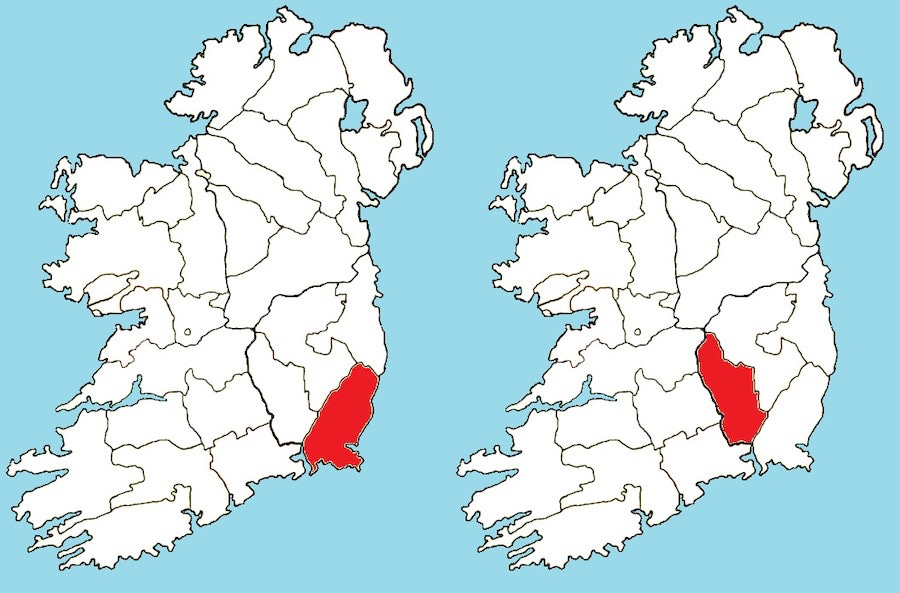
The Vatican announced July 29 that Bishop Gerard Nash, who has led the Diocese of Ferns since 2021, would also serve as the Bishop of Ossory, uniting the neighboring dioceses in persona episcopi (in the person of the bishop).
Nash, who is 67, will oversee both dioceses, though they remain juridically separate. He has served as the apostolic administrator of the Ossory diocese since Jan. 25, 2026.
Ferns and Ossory are the fourth set of Irish dioceses to be united in persona episcopi, but the previous three sets were in the Ecclesiastical Province of Tuam in the West of Ireland.
The July 29 announcement marks the first in persona episcopi union in the Ecclesiastical Province of Dublin, indicating that the consolidation process is not limited to a single geographical area of Ireland.
Commenting on his appointment, Nash said: “This amalgamation of dioceses has begun in the West of Ireland and will continue in the rest of our country as opportunity allows.”
The Catholic Church in Ireland has 26 dioceses divided into four ecclesiastical provinces, serving roughly 4.3 million Catholics. Until now, diocesan restructuring has been limited to the Ecclesiastical Province of Tuam, which covers a largely rural area with a relatively small population.
The wave of in persona episcopi appointments in the ecclesiastical province began in February 2022, when Bishop Michael Duignan of Clonfert was also appointed Bishop of Galway, Kilmacduagh, and Kilfenora, a neighboring diocese.
In February 2025, Bishop Kevin Doran of Elphin was also named Bishop of Achonry, where he had served as apostolic administrator since April 2024.
In February 2026, Archbishop Francis Duffy of Tuam was also appointed Bishop of Killala, uniting the neighboring dioceses in persona episcopi.
The Diocese of Ferns, which dates back to the seventh century, served 110,593 Catholics in 2023, according to the catholic-hierarchy.org website. The Diocese of Ossory, which traces its origins to the sixth century, encompassed 81,832 Catholics in 2023. Bishop Nash is therefore responsible for more than 192,000 Catholics in total, following the latest in persona episcopi union.

Welcoming the change July 29, Archbishop Dermot Farrell of Dublin said: “In consultation with the apostolic nuncio, who had met members of faithful and of the clergy and the Vatican’s Dicastery for Bishops, the Holy Father has determined that appointing Bishop Nash as Bishop of Ossory, and uniting the dioceses of Ossory and Ferns in the person and ministry of the new bishop, is a good way for both dioceses to embrace the challenge of bringing the Good News of Christ to new generations of Irish people.”
“This development allows both dioceses to preserve their individual identities while having the same bishop. It also allows for consultative bodies, such as the Ossory council of priests, to be established and vacant offices — such as that of vicar general — to be filled.”
The Leinster Express, a newspaper serving Ireland’s County Laois, reported July 29 that there was discontent in the Ossory diocese at its recent rapid succession of bishops.
The diocese was led by Bishop Séamus Freeman, S.A.C., from 2007 to 2016. He was succeeded in 2018 by Bishop Dermot Farrell, who left two years later when he was named Archbishop of Dublin.
Farrell’s successor was Bishop Niall Coll, who moved on in 2025, after less than three years in the post, to lead the Diocese of Raphoe.
Bishop Nash is therefore the Ossory diocese’s fourth bishop in the past decade.
Nash suggested that structural changes in the Irish Church allowed “real roles of responsibility and authority to be offered to lay people to build up the local Christian community.”
Referring to the union in persona episcopi of the Ferns and Ossory dioceses, he said: “One of the possible collaborations between both dioceses will be in the area of vocations to priesthood and religious life. Both dioceses are working hard at this very important task and already some very good prospects for the diocesan priesthood are emerging. There are certainly green shoots visible.”
“Our dioceses will not survive without the Sacraments and to be sustainable we will need to provide our own priests who will work collaboratively with a wide range of trained lay ministers to bring the Gospel to young and old, the sick and the well, and to welcome those who are searching for answers.”
Pope Leo XIV accepted July 11 the resignation for age reasons of Archbishop Luis Mariano Montemayor, the apostolic nuncio to Ireland. It is not known when the Argentine archbishop’s successor will be appointed.
Montemayor, who served as nuncio to Ireland for just over three years, suggested in April 2024 that the union of dioceses in persona episcopi in the Ecclesiastical Province of Tuam could be a step on the way to full mergers.
“If this process evolves still further, the associated dioceses may then merge fully under their bishop, and, in this way, the six dioceses in the Province of Tuam will eventually become three,” he said.
Similar diocesan consolidation processes are underway in England, Wales, and Scotland.
The Vatican has raised the possibility of a merger of England’s Leeds, Middlesbrough, and Hallam dioceses.
The Holy See has also asked Scotland’s bishops to consider whether the current division into eight dioceses is still suitable.
In 2024, the Archdiocese of Cardiff and the Diocese of Menevia — two of the three dioceses in Wales — officially merged two years after they were united in persona episcopi.
