
Pillar paid subscribers can listen to Ed read this Pillar Post here: The Pillar TL;DR
Happy Friday friends,
And a happy feast of St. Dominic to everyone. But a special festive greeting to all our friends and readers — in this case the overlap here is about 100% — down in Australia on this feast of St. Mary of the Cross, better known as Mary MacKillop, the first person from the country to be canonized.
St. Mary, for those unfamiliar, was born in 1842, the eldest of eight children, and founded the first free Catholic school in the country in 1866 — quickly becoming the director of Catholic education for the whole of South Australia.
The child of a devout family, Mary was accompanied in her educational projects by two of her sisters. She started wearing black as a sign of her desire to dedicate herself to God and adopted her name in religion of Sister Mary of the Cross.
Quickly, a group of young women, including one of her sisters, joined Mary in her dedication and were eventually erected as an order of diocesan right by Bishop Laurence Sheil of Adelaide in 1867, becoming the Sisters of St. Joseph of the Sacred Heart.
The sisters adopted a plain brown habit and as a result are often called (and I am not making this up) the Brown Joeys.
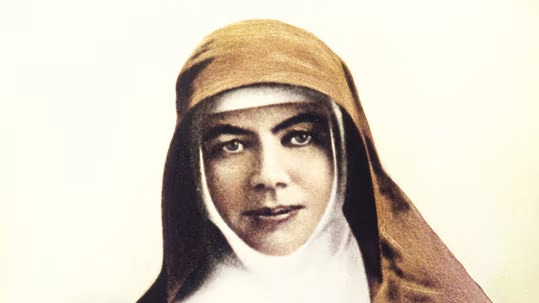
They quickly established a network of schools and ministries dedicated to the poor and marginalized in the country, with MacKillop having more than the odd bust-up with Brisbane’s Archbishop Quinn over control of them — eventually leading to the Joeys being kicked out of the archdiocese.
Meanwhile, back in the order’s home diocese of Adelaide, an ailing Bishop Sheil had left the diocese effectively leaderless and riven by clerical personality politics. MacKillop was no more popular there, and no less committed to seeing her schools run by the order and by her.
That, along with her distinctly unpopular habit of reporting instances of clerical sexual abuse, saw a coordinated campaign to smear and discredit her and the sisters, leading to Sheil agreeing to a wholesale reform of the order’s constitution. When MacKillop opposed it, she was excommunicated by the bishop for disobedience.
This was in 1871. She went from founding her first school, through creating a religious order, to becoming a national force in the Church, to being excommunicated in just five years.
The bishop lifted his excommunication on his deathbed a year later, probably a wise move as he prepared to give a final account of his life, and MacKillop was later wholly exonerated by an episcopal committee.
Final Roman approval of the order’s status and statutes notwithstanding, the Joeys under MacKillop’s leadership continued to butt heads with local bishops over the running of their schools, with St. Mary very much insisting on doing things her own way: refusing to take government funding or to educate children from wealthy families.
She died in 1909 with few who knew her doubting that she was a saint. While her cause was opened just over a decade later, she was eventually canonized in 2010.
I don’t think I need to editorialize too much on what there is to admire about St. Mary. Suffice to say there’s a lot.
Here’s the news.
—
The News
The bishops’ conferences of Africa concluded this week their plenary assembly, held in the Rwandan capital of Kigali. A key point of discussion was how the Church should approach the issue of polygamy.
The bishops discussed a draft document, titled “The Pastoral Challenges of Polygamy,” which was that rare thing — a text refreshingly low on jargon, honest about the issues, frank about the problems with current practice, intelligently critical about the shortcomings of current canonical praxis, and prophetic in its announcement of the Gospel.
I will be honest, I thought this story was going to be a short, sharp report on what the African bishops were saying.
—
The Church in Spain has seen a cycle of coverage now on the reports and denials that the government moved to block the appointment of a new apostolic nuncio.
But sources close to the Spanish nunciature have told The Pillar that while the government has not yet approved or rejected the appointment of Archbishop Piero Pioppo as the new Vatican ambassador, the government is dragging its feet as a protest over recent tensions with the Spanish bishops.
So what are the tensions, and what is going on? Read all about it here.
—
The Catholic Church in Germany’s contribution to aid projects worldwide fell for a second successive year in 2024.
An annual report published Aug. 6 said the Church in Germany gave around 595 million euros (approximately $692 million) to overseas projects last year, down roughly 3% from 2023 after adjusting for inflation.
But, as we reported this week, while the German bishops are looking to slash expenditures across a range of fronts, amid plummeting church attendance numbers, revenues are actually up via the famous (or infamous) Church tax system.
—
A group of religious sisters say they will remain in their mission in north Benin despite a series of kidnappings of Christians in the area and the nuncio’s recommendation to leave the region.
The superior of the Company of the Savior, Sr. Mercedes Díez C.S., said in an Aug. 5 statement that a group of sisters serving the area has “expressly manifested their desire to remain with the Christians of Kalalé,” a small town in one of the few majority-Muslim regions in the country, in which the sisters run an all-girls boarding school.
While religious coexistence is generally peaceful, the presence of Islamic terrorist groups has grown in the past few years, especially in towns close to the border with Nigeria, including Kalalé.
And violence began to accelerate in the area last month, and the situation is moving fast — to the point that since publication we have heard unconfirmed reports the sisters may have now been ordered home.
—
Four months after his reported death, federal authorities say they are close to closing their case against a priest who died a fugitive in Mexico, fleeing an indictment of federal wire fraud in an alleged theft from his parishioners.
The case is unique because the Diocese of Jackson, Mississippi, had itself faced criminal charges over the alleged fraud of laicized priest Lenin Vargas, but in 2020 entered into a deferred prosecution agreement to avoid criminal penalty.
However, the Assistant U.S. Attorney assigned to Vargas’ case, told The Pillar this week that while he had heard of Vargas' death, he was waiting to confirm the facts of it with the U.S. Marshal Service before closing the case.
—
Did you know there is a shrine to Our Lady of the Snows in Antarctica, known affectionately to locals as “Roll Cage Mary”? Because I did not.
I do now, though. In his Pillar column this week, Vice Chair of the National Science Board and provost of Catholic U. in Washington D.C., Aaron Dominguez reflects on his own trip to the South Pole and on Earnest Shackleton’s triumphant failure in the 1907 Imperial Trans-Antarctic Expedition.
Read the whole thing right here.
—
Not so simple
While polygamy is, we know, a pressing pastoral concern in Africa, I don’t know how much thought you have really given to the subject. If you’re like me, I am guessing not much.
It tends to get a passing mention whenever there is a Church news story of a certain kind — think of the ruckus around Amoris laetitia (remember that?), or the Synod on the Family, or more recently the publication of Fiducia Supplicans — but even then isn’t much discussed.
Usually, at least in my experience, it is something the African bishops bring up while they are being quizzed by reporters about something the German bishops have done in relation to same-sex unions, or a fight in the U.S. over Communion for the divorced and remarried.
Africa is often looked to as the home of “common sense orthodoxy” versus the slowly boiling frog of the Church in a secularizing West. The image often painted is that the Church there is young, growing, alive, uncompromising — a land of modern martyrs for the faith and bishops who tell things like they are.
In short, I think people often get the impression that things in Africa are — in the best way possible — “simple.” Hard, sure. Full of problems and suffering, no doubt. But fundamentally and refreshingly uncomplicated.
But it’s just not true. Polygamy is a perfect example.
A lot of people, I’m willing to bet — because I’ve assumed this, too, at times — consider the issue fairly straightforward.
Marriage is between one man and one woman, a Christian can’t go around having multiple wives. So, where polygamy is practiced, or even normative, the Church has a simple and clear message to deliver.
After all, how hard can it be to deal with something so cut and dried? It’s nothing like as complicated as navigating the pastoral mess of families conditioned by generations of divorce culture, right? Wrong.