
Hey everybody,
Today’s the first Tuesday of Lent, and you’re reading The Tuesday Pillar Post.
I know I usually open these newsletters with a saint, and I like doing that.
But I’ve been thinking this morning about ole Rattlesnake Kate, somewhat of a heroine in my adopted home state.
Kate is the kind of Colorado character who makes the Old West wild. She was born in a log cabin in the hot summer of 1893, became a nurse, and married and divorced a bunch of times — some accounts say she attempted marriage five or six times, and none of them took.
Mostly alone, she farmed 640 dry acres on the eastern Colorado plains, with no irrigation and little help. She was sometimes a bootlegger during Prohibition, she was a taxidermist when it brought in money, she hunted her food, and when she could, she scratched a wheat or corn crop out from the dusty ground.
She was a Catholic — people remember that she was often praying in the field — but she didn’t make it to Mass too often.
Her neighbors had a child in the early 1920s, but his mother died, and his father couldn’t afford to raise him.
Kate, whose own mother died when she was a girl, longed for a child, so she adopted young Ernie. She had him baptized, and she taught him to be tough.
He was three years old in October 1925, when he and Kate were out riding near their farm. They’d gone because they heard duck hunters shooting over a nearby pond, and Kate had the idea that if they missed any ducks, she might scavenge them, clean them, and cook ‘em up.
Ernie was on the horse and Kate was walking when she spotted a rattlesnake. She shot it with her rifle. Then she saw a few more, and she shot them too.
Kate had wandered into a migration group — a large cadre of rattlesnakes were moving together from the plains where they hunted all summer, to the dens where they’d brumate through the cold winter months.
The horse had startled them, and then the gun shots had surprised them, and before Kate knew it, as the story goes, she was surrounded by rattlesnakes. She’d stumbled basically right over the den, as Kate told it, and there were maybe 100 snakes surrounding her, rattling and hissing, and threatening to bite.
Kate was afraid they’d lame the horse — she couldn’t afford another — or they’d bite her beautiful little son.
Well, Kate shot snakes with her .22 rifle until the ammo was gone. Then she grabbed a post out of the ground — apparently it was a “no hunting” sign, and she started hitting snakes.
She later remembered it like this: “I fought them with a club not more than three feet long, whirling constantly for over two hours before I could kill my way out of them and get back to my faithful horse and Ernie, who were staring at me during my terrible battle not more than 60 feet away.”
By Kate’s account, she had killed 140 snakes by the end. She took the bodies home and hung them outside.
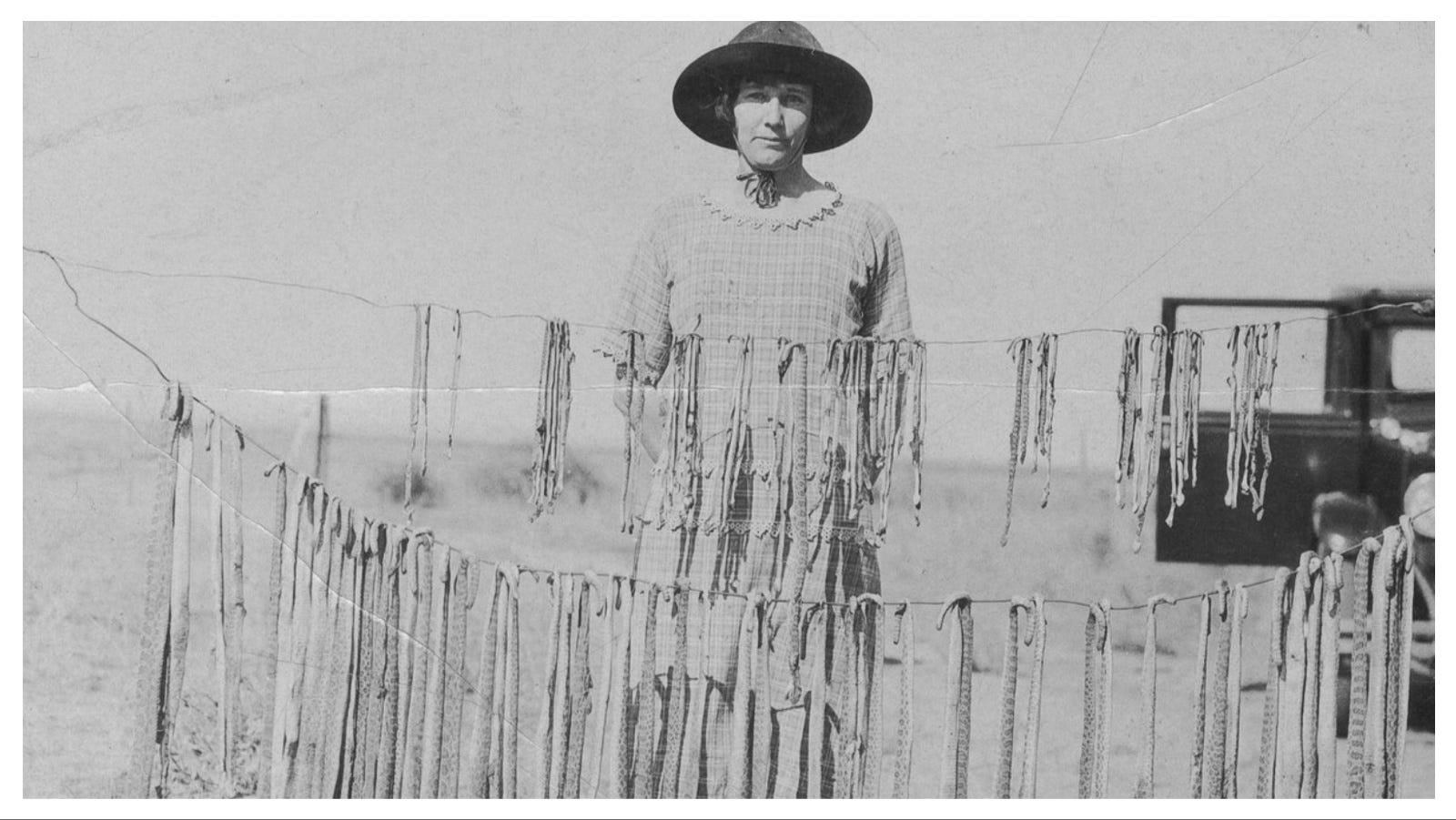
A reporter took a photo, and before you knew it, she was Rattlesnake Kate.
She embraced the weird kind of celebrity it gave her.
She sewed a dress of some 50 skins and quite a few rattles.
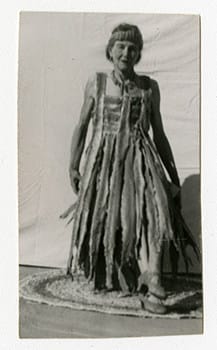
She wore it into town. She charged audiences a few bucks to hear her story. As her fame grew, she started selling rattlesnake skins and rattles by mail, and she milked snakes of their venom for a California company making antivenom.
Ernie moved to California, eventually, looking for work, and then he married. But Kate stayed put. She got fan mail every day, much of it addressed just to “Rattlesnake Kate, Colorado.” The mail found her.
Death found her too, in 1969, when Kate was 76 years old. She was buried on her homestead.
May Rattlesnake Kate rest in peace. May she abide in venomless paradise forever.
Here’s the news.
The news
The prelate — Bishop Emanuel Shaleta — claimed he was the victim of a “vicious” and well-funded “media campaign.”
Meanwhile, Cardinal Louis Sako, patriarch of the Chaldean Catholic Church, told The Pillar this weekend that while he had suggested the possibility of transferring the bishop to another assignment, it was because “the situation was not clear at the time.”
But with the situation roiling the tightknit Chaldean Catholic Church in the U.S., some Chaldeans have told The Pillar that with a Vatican-ordered investigation over, the Church should make a decision on the allegations against Shaleta.
This story is a doozy. We broke it last week, and we’ll continue reporting it through the end.
That’s unusual — diocesan bishops don’t often become auxiliaries; it usually goes the other way around.
But this is a strange situation — Gnéba issued in 2024 a letter urging lay Catholics to denounce priestly misconduct, and urging priests with secret families to come forward.
The letter did not win him any friends. In fact, his clergy reacted so strongly that an apostolic visitation took place, and Gnéba went on something of a sabbatical, having apparently lost the ability to govern his presbyterate.
This appointment would seem to resolve the strange situation — but it would also seem to leave open a lot of interesting questions about the diocese Gnéba left.
If it does get started, it will mean an extraordinary new residence for one of the world’s smallest militaries.
But first, the foundation planning the build has to raise some dough.
The prominent British churchman sat down with The Pillar this week to talk about his decision to become a Catholic:
“To run a seminary is, at its most simple, to propose three questions to those who come: Who is Jesus Christ? What is a priest? What is the Church? As time passed I found that the answer I was able to give to the last question was less and less satisfactory, and that this was becoming more apparent not only to me but to my students, past and present.”
and
“I do feel a palpable sense of communion — substantive ecclesial communion — with the chief pastor of the Church and with him over a billion fellow Catholic Christians.”
The women say their aim is to present the whole of Catholic doctrine:
“That’s something we say at the start of all of our meetings and in our community. We say, ‘We’re here not because we’re conservative or liberal, not because we’re Republican or Democrat, we’re here because we’re Catholic and we want to be Catholic out loud’.”
“We’re just here because we’re Catholic and we want to fully live out what it means to be Catholic. And that means diving deeper into our faith, into its richness of how people live out the Gospel, and how they always have, and how we can do it more today.”
‘A visceral lament’
Bishop Erik Varden — you know him from The Pillar — is this week giving a kind of Lenten retreat for Pope Leo, dicastery heads, and cardinals living in Rome.
The bishop is publishing excerpts from his talks online. Yesterday, he spoke to the pope about Bernard of Clairvaux, a great abbot in Varden’s Cistercian tradition.
I was struck by this:
The notion that God can and will help us in our predicaments is axiomatic to Biblical faith. It sets the God of Abraham, Isaac, and Jacob, the God made compassionate flesh in Christ Jesus, apart from the Unmoved Mover of philosophy.
Psalm 90 begins with the verse: ‘He who dwells within the help of the Most High’. God’s help, says Bernard, may indeed be called a habitat in as much as it forms a sustaining reality within which we can live, move, and have our being. God’s help is not occasional to us; it is not an emergency service we call out now and then, when a house is burning or someone has been hit by a car, the way we might dial 999.
But what about occasions when God-fearing people cry out to heaven but get no perceptible response, hearing only the desolate echo of their own voice?
The Scriptural type of such plight is Job, whose majestic book can be approached as a symphony in three movements, going from a visceral Lament through an exposition of Menace to a wholly surprising experience of Grace.
Job refuses to accept his friends’ rationalisations. He refuses to posit that God is just working out sums in his life as if it were a balance sheet. Unhelped, he is determined to find God present in his affliction, calling out heroically: ‘If it is not he, who then is it?’
As believers we may at some level regard our religion as an insurance policy. Certain of subsisting within God’s help, we may think we are out of harm’s way. A world can seem to collapse if — when — harm strikes. How do I face trials which cause my carefully assembled, customised protective fencing to fall? Is my relationship with God one of barter, disposing me to follow, when things are hard, the counsel of Job’s hard-headed wife to ‘curse God and die’? Or do I live at greater depth?
God can enable a new world to emerge after he has pulled down walls we thought were the world, walls within which we actually suffocated.
Readers, really, read these talks. Pray with them for Lent, and you’ll be praying Lent alongside Pope Leo — and alongside Bishop Varden, whom I regard as possibly the most interesting man in the world.
We are the champions
I have been a hockey fan since I was 10 or 11 years old. I’ve seen my team win Stanley Cups, and I’ve seen the greatest goalie of all time do things no human should be able to do.
In 2022, I got to see the game through completely different eyes, as I watched my kids follow their hometown team, the Colorado Avalanche, to Lord Stanley’s cup. It’s a smart bet to say the Avs’ll win another, and soon.
I’ve also spent a number of seasons on the ice, playing hockey, though my own highlight reel would basically be a couple of teenaged moments, and the time about 15 years ago when my beer league team won some kind of something and got to play a game at the Pepsi Center, on the very same ice the Avs play on.

I didn’t score on that ice or anything like that, but maybe I blocked a shot or two, by falling over them.
Anyway, my point is that I’ve seen a lot of hockey in my lifetime.
And I’ve never seen an individual game of goaltending like the performance turned in Sunday by Connor Hellebuyck, to win the USA a gold medal.
Forty one saves in any game is unreal. Forty one saves against a team of Canadian all-stars is enough to put you on the frozen Olympus of hockey, the Mt Rushmore of tendies, forever.
And while 3-on-3 sudden death overtime is a bit of a dice roll, and depends on some pretty good bounces, no one can deny that with this golden goal, the NJ Devils’ Jack Hughes become a national hero forever:


It was a good day to be a hockey fan.
And it was a great day to be an American; Jack Hughes reminded us all of that after the game.
It was also a good day for everyone who is part of the small Czech family company which makes Olympic hockey pucks:
In all, international hockey has had an incredible year, with the success of the awesome Four Nations Face Off last February, and then an extraordinary — possibly best in modern memory — Olympic tournament this year.
But if you’re like most hockey fans, you’re waiting for the other shoe to drop. Specifically, you’re waiting for the NHL to ruin it all.