
Pillar paid subscribers can listen to JD read this Pillar Post here: The Pillar TL;DR
Hey everybody,
Before we get started, a quick FYI.
Ven. Fulton Sheen will be beatified Sept. 24 in St. Louis, Missouri. It will be a singular moment in American Catholic history. It will also be a lot of logistics: hotels booked up fast, the process for getting individual tickets has not yet been announced, and there are a lot of unknowns.
Ed and I are leading a pilgrimage for the occasion. We’ll go to the beatification, we’ll spend some time together, we’ll venerate Sheen’s tomb in Peoria, Illinois. And the best part is this: We (and our pilgrimage partners, actually) will handle all the logistics, the hotel reservations, the tickets, the bus trip. All you have to do is show up. Trust me, for an event like this, that makes a world of difference.
So come with us. You’ll be glad you did.
Ok, with that announcement done, let’s get started:
Hey everybody,
Today’s the Feast of St. John Francis Regis, and you’re reading the Tuesday Pillar Post.
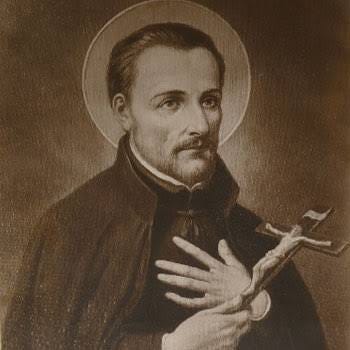
Regis was a Jesuit missionary, who lived as a priest for only 10 years before he died in 1640 at the age of 44, one year older than me, as it happens.
His story is this: Regis was born in southern France to wealthy parents, and entered the Jesuits when he was 19. Jesuit formation is long, especially if you’re a teenager when you enter, and he was ordained more than a decade later, in 1630.
His ordination was supposed to be in 1631, but Regis petitioned for early admission to orders, because there was a plague on, and he wanted to provide the sacraments to people dying near the city of Toulouse.
While he was in hospital ministry, he began to realize a broader web of spiritual needs. First, he started getting to know prostitutes, and he saw how they’d become trapped into lives of sex work. So he convinced wealthy people to give him money, and he set up homes where women could escape that life, find a supportive community, and learn a trade: Lacework, in their case.
As he ministered to the dying, he saw also the spiritual damage being wrought in France by the Protestant Reformation. So, he started developing sermons meant to call people back to the faith — the New Evangelization, as it were, a couple centuries before JPII started using the term.
He preached those sermons where they were effective — village squares, often — and they actually did make a difference. He moved people to return to the practice of the faith, and he heard their confessions as they returned.
People talked about the sermons. Having heard them once, people would travel to other villages or neighborhoods to hear them again. He was young, dynamic, increasingly well-known, and effective — in that sense, this guy was, perhaps, the Fr. Mike Schmitz of seventeenth century southern France.
He was invited by one bishop to preach missions across his diocese, where Protestantism was in mountain villages taking a particular hold. The only way to get to those villages was on steep roads. So Fr. Regis walked to them, one after another — and then from that diocese to the next, and then to another.
He didn’t have a big city stage; he had a series of tiny platforms in tiny places, where people needed what he had to say. And it worked. With the Holy Spirit, the guy was somewhat singularly responsible for helping Catholics remain in the Church in village after village. He reportedly helped save vocations of discouraged and isolated local priests. And everywhere he went, he heard confessions for hours.
Here’s how he died. In December 1640, he was giving a mission in a place called Montregard. He was struck one morning by a strange thought — an overwhelming sense that his death was near. He wasn’t sick, he didn’t have any reason to think this, but he did. So he went to a Jesuit house and made a retreat for three days. I presume he did the Ignatian exercises on the Cross itself.
Then he got back on the road. He had to walk about 40 miles to the town where he was going. On the way, he got caught in a winter storm, and spent a night sheltered in a shack, mostly open to the elements. He got to the Lalouvesc the next day, Dec. 23. People were already gathered to hear him, so he didn’t even have a coffee (although in fairness, it wasn’t very popular in Europe yet). He just started preaching his first sermon, and then sat in the confessional until about midnight.
He was in the confessional for the next two days. There was a broken window letting in a draft, which he endured for those two days.
Then on Dec. 26, in the late afternoon, feeling weak, he collapsed. He was carried to the rectory bedroom. He had a fever.
And then — guys, this part is crazy — people heard he was there, and lined up outside the rectory for Fr. Regis to hear their confessions, from his deathbed. And he did. He hung on for a few more days, suffering pneumonia, and hearing confessions when he was conscious.
He died on Dec. 31, 1640.
Two things stand out to me:
One: He gave himself whole-heartedly to the mission to which he was called. For his whole priesthood, he wanted to go to Canada. He was absolutely on fire for a mission there. But French bishops kept asking for him, and his superiors kept confirming that, so he did that thing. He did it well. He embraced it with his whole personality, and did so unto death — in obedience, well-lived, and offering up his own desires.
Two: Apparently a lot of people didn’t like him. Some of his superiors. Some priests. Some local bishops. Regis was … confident. Some people say he was arrogant and obnoxious. Others say he wasn’t liked because he convicted consciences. By one account, one Jesuit rector was so suspicious of Regis that he kept him basically confined to the Jesuit house for 10 weeks. Regis said it was the greatest trial of his life.
Maybe he was misunderstood. Maybe he was a jerk, and God used him anyway. We don’t know. But we see the fruits of his ministry. I guess I don’t have a conclusion to that, but I’m going to be thinking about it for a while.
Here’s the news.
The news
The new statutes recognize an expanded mandate given to the commission by Pope Francis’ 2022 Praedicate evangelium, an apostolic constitution that reorganized the Roman curia.
The new statutes came after extensive consultation with “victims/survivors, to safeguarding experts, and to the experience of local Churches,” according to the commission’s president.
What do they say? Read it here.
“We will be giving the space for Jesus to work, and he will be drawing [young people] to himself, in a sacramental way,” said Bishop Kyung-Sang Lee, auxiliary of Seoul.
“There is never a moment that God doesn’t love his children, so I invite the pilgrims to give him the chance, to let them experience how he is, how he’s loving and how he is inviting all of them to take courage and have hope,” said the bishop.

You are called to grow in your Faith and to evangelize. Deepen your understanding of the biblical roots of Catholicism and confidently share your Faith with others by becoming a St. Paul Center Member. Encounter Christ. Share Christ. Visit https://stpaulcenter.com/memberships to get started for free.
But the Italian press have some phone transcripts which suggest that Reina might well have known about an organized patronage scheme involving his brother, and might have given some advice about it.
Or maybe it was just fraternal advice. To be clear — nothing yet is clear.
But the investigation is sure to raise more questions in the months to come.
—
Speaking of Italian arrests — Italian police have arrested a woman on suspicion of playing a major role in laundering around 61 million euros (approximately $70 million) embezzled from Caritas Luxembourg.
Fraudsters are believed to have extracted an estimated 61 million euros from the charity in more than 100 transactions of less than 500,000 euros ($579,000) between February and July 2024.
The suspect, identified as Clarissa La Porta, was wanted under a European Arrest Warrant issued by judicial authorities in Luxembourg on suspicion of forging documents, fraud, criminal association, and money laundering.

One of the arrested suspects is a priest of the diocese. But many local Catholics are crying foul, claiming that the priest’s arrest doesn’t match up with the facts of the case, and that he’s being framed.
But the archdiocese has also warned that it expects to see an increase in historical abuse claims following a “change in the legal environment.”
This is a bizarre situation, and one worth reading about.
Soldiers, and the one-armed bandits
Mrs. Flynn has taken our youngest son Daniel on a bit of a pilgrimage this week, to the friendly confines at Clark and Addison, Wrigley Field. This trip was a Christmas present for him, and part of something we’ve taken up as a custom — we try to give each kid at least a day or two away with just one parent, by themselves, each year.
While they’re having the time of their lives, that means I’m flying solo on the parenting front — so I regret that I can’t give you quite as much newsletter as I prefer to. But I’ll offer a couple of thoughts to round us out, if you don’t mind.
—
First, in my ongoing series of summertime parenting suggestions, let’s talk about tv.
I’m not the sort of parent who thinks kids should spend the entire summer without the magic of television. This is probably because I work at home, and I don’t want to have to send my kids back outside every five minutes when they come to complain they’re bored, again. Sometimes a bit of the tube is exactly the break everybody needs.
But I do think summer tv should have at least the thinnest veneer of educational value, so that you can tell yourself that you’re not like other parents letting their kids just veg out on Bluey all day.
So let me recommend two things that will make you feel better about turning on the tv.

For little kids, the Sesame Street version of “Peter and the Wolf” is so entertaining, you’ll find yourself sitting to watch most of it. And Oscar is delightful as a cat:
For older kids, the Crunchlabs series is surprisingly informative, even if it’s really a protracted commercial for the company’s subscription boxes.
But if, like me, you have only a tenuous grasp yourself on certain scientific and engineering realities, Crunchlabs is a decent place to start:
—
Next:
Like a lot of Americans, I get into soccer for approximately six weeks every four years, when the World Cup rolls around.
I was, like most of you, on the edge of my seat when the United States drubbed Paraguay on Friday, and I’ve decided the victory is sweetest if I embrace a certain level of ignorance — rather than getting a sense for whether Paraguay is any good, I’ve chosen to the believe they’re one of the most formidable soccer nations on Earth, and that our victory was a near miraculous improbability.
Of course, I couldn’t live in that imaginative construct if I were a sports gambler, and had to follow the odds religiously.
But I don’t gamble on sports, because it’s a vice with very little upside, and because — while many people are undeterred by this stubborn reality — I can’t actually afford to throw money out the window.
Still, this World Cup is expected to be the biggest sports gambling event in history, and some users on the betting site Polymarket are doing their part to guarantee it.
Postings on the site indicate that one user has lost already $4.2 million on this World Cup — he bet the Dutch would beat Japan, and the Belgians would defeat Egypt. Losing both bets, he flushed away an amount that would set up most families for life, with plenty of cash left over.
Not to be outdone, another user laid down $8.6 million on a Belgian victory against history’s most successful African soccer club — having learned nothing from the abysmal failures of Belgium’s actual forays onto that continent.
In all, experts say that betting on the World Cup could total some $50 billion in wagers, which is so much money it usually takes Elon Musk a couple of days to generate it.
But I don’t feel bad for people who have millions to bet and lose them.
I feel instead for people with much less, who get sucked in by gamified apps designed by neurologists and psychologists to create addiction, who place small bets they can’t afford, and chase their losses with ever worsening propositions.
I know some such people, and the results aren’t pretty.
Gambling is a vice among the very wealthy, but not only them. And its marketing to people further down the food chain is often downright predatory — but we’ve nonetheless jumped headlong into gamified betting on everything here in the U.S.
Marriages and credit scores and families and lives can be ruined quicker than you think, through the gambling apps promoted everywhere as good clean fun.
Which is why I was surprised to learn recently that a small-but-significant-player among America’s gambling moguls is the U.S. Department of Defense.