
Pillar paid subscribers can listen to JD read this Pillar Post here: The Pillar TL;DR
Hey everybody,
Last week, I wrote about bagels, and then a very kind New York City bagel maker promptly sent me a case of bagels, cream cheese, salmon, and a t-shirt. It was awesome.
That’s why this week I’ve decided to mention how much I love visiting beautiful beach and lake houses with my family. Really, there’s nothing better. And if you need our summer availability, just reach out.
—
Anyway, today’s the feast of St. Pancras, who was martyred in the year 304 (or so) when he refused first the bribes of the emperor Diocletian to apostasize, and then the emperor’s threats.
Pancras was only 14 when he was beheaded outside of Rome; he had been a Christian for only about five years, and he was beloved in the local Church of Rome.
A few hundred years later, when St. Augustine of Canterbury was sent to evangelize Britain, he brought with him some relics of St. Pancras. Because of that, early churches in England were often dedicated to him, with his relics placed in their altars.
It might be that St. Pancras Old Church in London is one of those ancient sites of Christian worship. No one is sure how old it is. But it is the namesake of the St. Pancras neighborhood, and, therefore, the St. Pancras Railway Station, one of the busiest rail stations in the UK.
The original St. Pancras station was a beautiful Gothic revival building done in red brick and wrought iron — when it opened in the late 1860s, it was boasted to be the largest enclosed space in the world.
At one end of the train shed, set high above the terminal floor, was once a massive and beautiful clock — the biggest in any English railway station.

It spanned almost 18 feet in diameter. Its face was slate. The minute hand of that clock was more than seven feet long. It was accurate, too, which is an important attribute for a clock anywhere, I suppose, but especially at a railway hub.
One hundred years after the clock went up, it was time to take it down, for cleaning and repairs. It being the late 1960s or early 1970s, it’s possible the workmen were under some herbal influence, or possibly just caught up in the spirit of the age.
In either case, the massive clock was dropped. It fell to the floor of the station, and shattered.
(There’s an alternate history which says the clock was being sold to an American collector when it fell. So far as I can tell, that’s a midnight myth.)
The broken clock was a tragedy, but not one which left much time for mourning. With the shattered clock clogging up the platforms, British Rail was keen to get rid of it. And in a stroke of good luck, a retiring railwayman named Roland Hoggard offered to buy the whole thing, for the fair price of £25. The railway accepted.
It took him weeks to get all the pieces home, using a borrowed van after work. And it took him 18 months to rebuild the thing, on his barn wall of the ramshackle farm property where he lived. The barn was a fitting place for a railway clock, because Roland had already been storing a steam engine there, which he’d also bought from the railroad to “tinker” with.
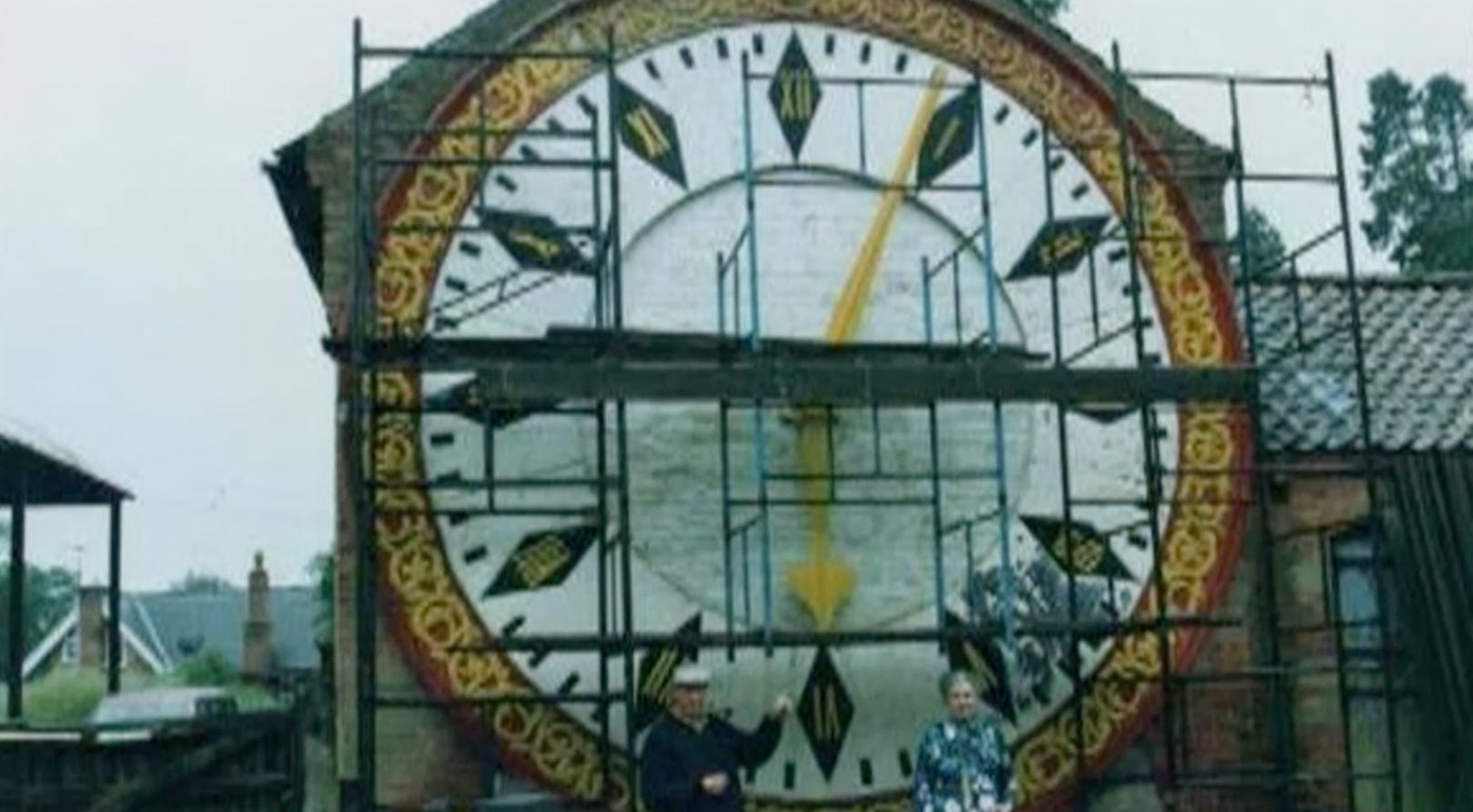
To get the clock ticking again, he built new parts, and powered the whole thing with a car battery — a regrettable modernization, but a necessary one, given that Roland was too old to be winding the clock, a job that once took two men.
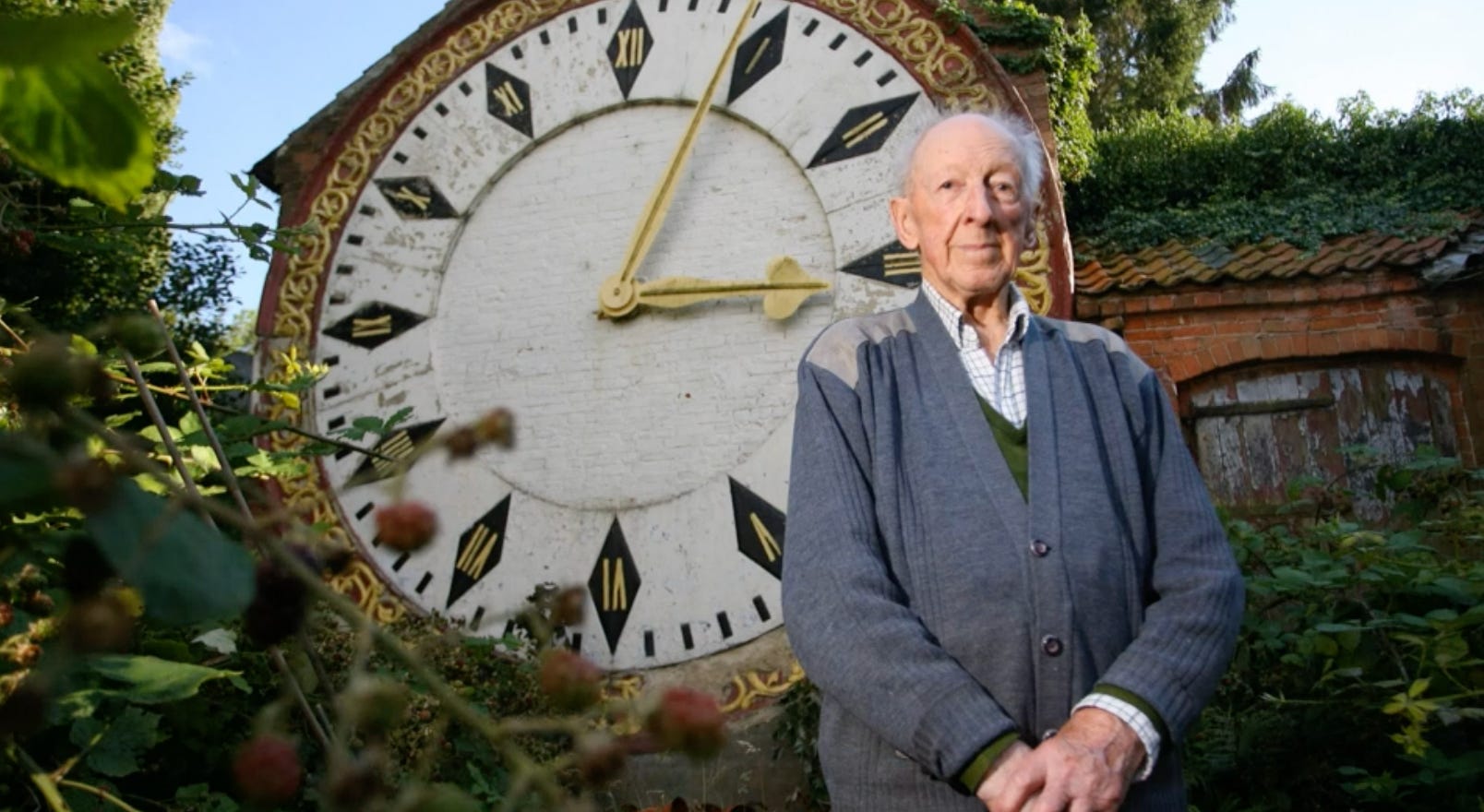
As it happened — and as is fitting for St. Pancras’ clock — Roland’s farm sits on what was once the property of an Augustinian priory.
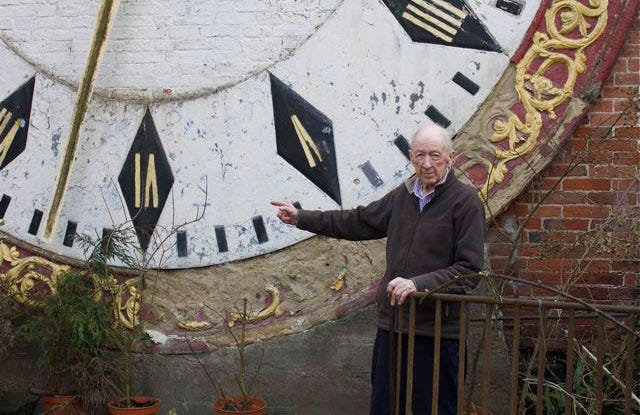
Roland Hoggard died in 2013. I suspect St. Pancras is interceding for him, just like clockwork.
The news
England’s Bishop Marcus Stock has a lot to juggle right now.
Stock is the diocesan bishop of Leeds, a northern English diocese of 170,000 Catholics.
He’s also the apostolic administrator of Middlesbrough, home to another 100,000 Catholics.
Oh, and in March, the pope appointed him administrator of Hallam, and its 66,000 Catholics.
Three hats means three presbyterates, three finance councils, three chanceries, three cultures, and three histories.
It’s a lot for one man.
And while he does the day-to-day work, Bishop Stock is also overseeing a consultation on whether the three dioceses should be merged to one — and that consultation may well become a global template for merging dioceses around the world.
Stock talked with The Pillar about all of that — and about his goal of moving the process expeditiously, filing a report with the Vatican “by the end of the summer.”
You can read all about it, right here.
The warrant confirms reporting on the case from The Pillar, which in February broke the news that Shaleta had been accused of embezzlement and personal misconduct, amid a Vatican investigation that ended when both Shaleta and former Chaldean Patriarch Cardinal Rafael Sako saw their resignations from office accepted March 10.
The bishop, who could face more than 10 years in prison, is next due in court for a hearing in June, with an eventual trial likely to begin in August.
Shaleta has said he is the victim of a media campaign against him — by that he seems to mean The Pillar — and of Chaldeans in his diocese who opposed his leadership.

You are called to grow in your Faith and to evangelize. Deepen your understanding of the biblical roots of Catholicism and confidently share your Faith with others by becoming a St. Paul Center Member. Encounter Christ. Share Christ. Visit https://stpaulcenter.com/memberships to get started for free.
The Institute for Works of Religion — a Vatican bank sometimes called “The Vatican Bank” — posted its best financial results in a decade, according to its annual report released Monday.
The IOR is a commercial bank used by Vatican curial institutions, religious orders, and Catholic dioceses and institutions internationally, usually based in countries without a reliable financial sector, as well as Vatican employees and city state residents.
Its financial health is important for its customers, but also for the curial ministry of the pope — the bank pays a dividend to the pope, which can be important for shoring up Vatican finance.
And the IOR’s very good year comes as a high note for its departing leadership team after more than a decade of reforming work.
—
While the government claims that Victor Hugo Quero Navas died of respiratory failure after suffering a gastrointestinal hemorrhage, human rights activists and several Venezuelan bishops have cast doubt on the official account, calling for an independent investigation into his death while in custody in July 2025.
Archbishop Víctor Hugo Basabe warned that those responsible for Quero’s death will “have a lot to answer for before God.”
—
An important enough Renaissance artist to be a Ninja Turtle’s namesake, there has not previously been a major American exhibit on the man — which might come as a surprise.
But art critic William Newton took to The Pillar this weekend to point out that the exhibit fails to do the great man justice.
Love you madly
I have a friend who is an extremely attentive husband.
He never misses a held door for his wife. He is constantly bringing her a fresh cocktail, or a glass of wine, or just a glass of water. Before she knows she’s cold, he’s brought her a blanket.
He is attentive to the little things — and it sometimes drives me nuts.
The problem is that he’s not doing any of that stuff to show off. He doesn’t even notice he’s doing it. He just loves his wife, and what began as paying attention has become in two decades of marriage just a reflexive habit of love. If I said he was a better husband than me, he’d just laugh and say, “yeah right.”
Then he’d bring his wife, and probably mine, a cupcake or something.
He reminds me of all the ways I might love my wife better. She’d never say anything, of course, because Mrs. Flynn is a kind woman — but this man’s love for his wife is obvious, and palpable, and practiced, and consistent, and you can’t help but see it.
And, sure, it drives me nuts because it makes me question my own levels of attention to my beloved spouse.
But still, you’ve gotta admire him for it.
From someone else, the same behavior might seem contrived. If I tried to reach his level of attentiveness all at once, Mrs. Flynn would decide I was laying things on just a bit thick, and wonder what the hell kind of angle I was working, and what I was after — or what I was making up for.