
Hey everybody,
Ed Condon’s on vacation, so I’m afraid you’ve got me for the Friday Pillar Post.
And so that you know, next week will be a tricky one for us. Ed continues some time away with his family, Michelle will be away with hers, and I’ll be at Cub Scout camp for just a couple days with my youngest son. The rest of the Pillar team will be holding down the fort — and I have utmost confidence in them — but there will not be a Pillar Post next Tuesday.
Ed’s absence gives me the chance to tell you an unusual story, a pious Christian legend about seven men who were for centuries venerated as saints.
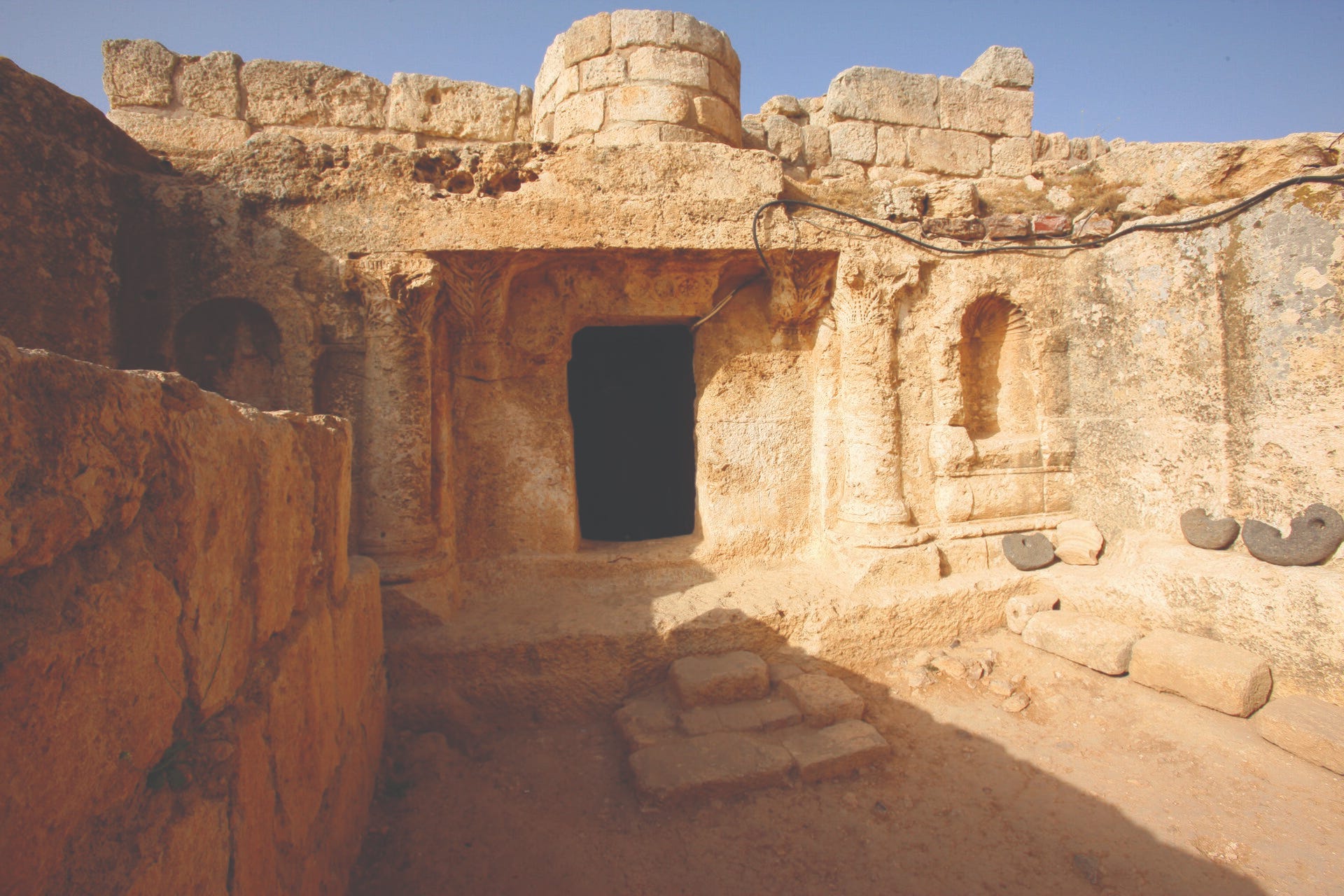
This is the story:
In the year 250, the Roman Emperor Decius decided to crack down on Christianity across his empire, and decreed that all Roman citizens had to offer a sacrifice of incense to the pantheon of Roman gods.
In Ephesus, or maybe Jordan, or maybe a third unspecified location, there were seven rich young men who had grown up together, joined the military together, and who practiced the faith together. The young men tried to avoid the mandated sacrifice, but when they were eventually required to offer it by the military superiors, they refused.
The young men were stripped of their military ranks, but permitted to go free ahead of an ordeal, which would have given them a second chance to offer the incense. They fled together to a cave in the mountains outside the city. The story says they prayed together in that cave, expecting eventually to be martyred.
But it didn’t go like that. Because one of them would slip periodically into the city to buy bread, their location was found out — but they weren’t arrested. Instead, local officials went up to the cave, and sealed the entrance. The men were trapped inside to die.
Until, as the story goes, God intervened. According to the story, the men were put into a deep sleep. They slept, it’s said, for almost 200 years. While they slept, local Christians put a plaque outside the cave, with their names, and the story of how they were sealed inside, and presumably dead. As Christianity became the state religion, and the faith of the city’s inhabitants, the seven men were remembered as martyrs.
The story goes that after almost 200 years, a local farmer opened up the cave’s entrance — maybe to keep cattle inside, some versions of the story say. The men woke up, but believed they’d been asleep for only one night.
Except when they sent one companion into the city to buy food, he was shocked. There were crosses atop the buildings and on the city’s arches. People were worshiping in public. The Church was no longer underground.
So the men went into the city together. They attracted attention when they tried to buy food with old-timey money — the coins from their era. Because of that, they were brought to the city’s officials, and to the bishop.
To them, they gave witness to God’s faithfulness.
And then, the story goes, the men died.
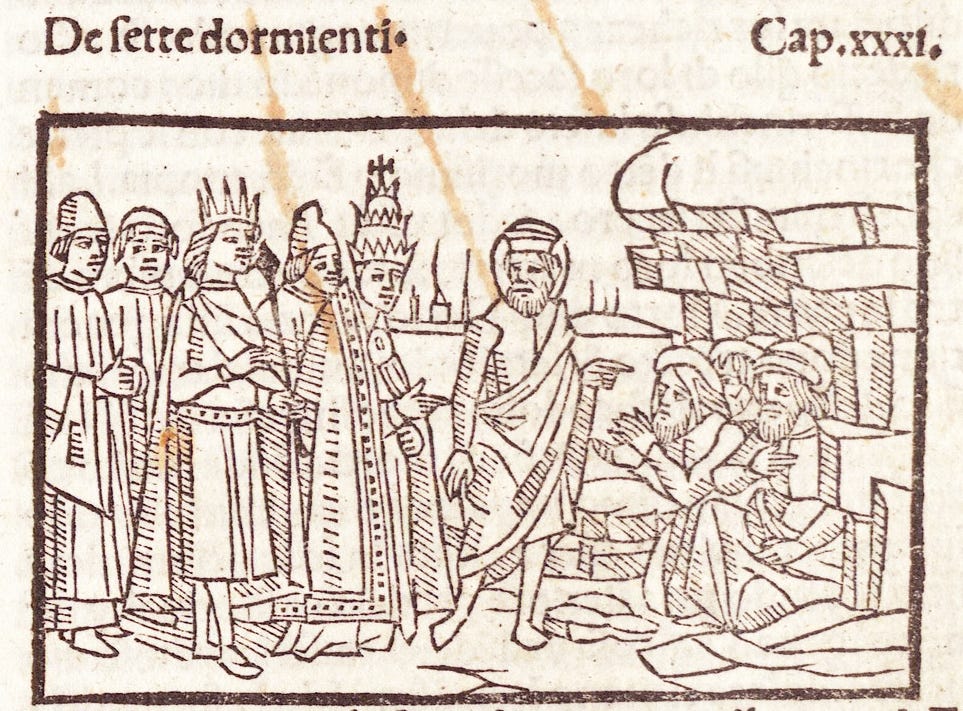
It’s one hell of a story.
And of course, I think it could happen, but I’m not really convinced it did. Though actually its historicity is not of much interest to me.
What’s more interesting is that a version of the story — a bit more embellished — seems to have made its way into the 18th chapter of the Quran.
Because of that, the ancient late July feast of the Seven Sleepers is in northwest France an occasion of a joint Islamic-Christian pilgrimage, where Muslims and Christians pray together, ask forgiveness of each other and share a meal, with a bonfire and singing late into the night.
I have to imagine at least some people fall asleep at that fire.
—
In any case, in the Quranic version of the story there was a dog in the cave monitoring the situation. Islamic tradition names that dog Qitmir. And Qitmir, it’s said in some accounts, stayed awake over the centuries to keep those seven sleepers safe from anything – or anyone – who might have entered the cave.
He was a very loyal dog. A good pup. So, Ed, if you’re reading this, and you’re still thinking about getting a dog, you could always call him Qitmir.
The news
The priests say that when Marx asks them to follow a German-established rubric for “blessing ceremonies for couples who love each other” — including same-sex couples and people in canonically illicit unions — he asks them to choose between obedience to the German rubric and obedience to the universal Church.
The priests have asked Marx for a meeting to discuss his request. To date, it is not clear whether the cardinal has invited them in for a synodal conversation on the topic.
Saunders, who served as Bishop of Broome, Western Australia, from 1996 until his resignation in 2021, is facing 26 charges of sexual offenses against three young Aboriginal men. He denies the charges.
What’s the Cockroach movement? Why do India’s bishops care about it? What’s going on here?

You are called to grow in your Faith and to evangelize. Deepen your understanding of the biblical roots of Catholicism and confidently share your Faith with others by becoming a St. Paul Center Member. Encounter Christ. Share Christ. Visit https://stpaulcenter.com/memberships to get started for free.
It should be a cool trip. I’m hoping we’ll have Edgar Beltrán on the papal plane.
But when the pope touches down in Lima, he’ll walk into a sticky ecclesiastical situation, where questions about who should be the next archbishop are roiling local ecclesiastical leaders, especially amid numerous scandals in the region.
If the federal government’s case against 53-year-old Fr. Urbano Vazquez Ortega succeeds, he will likely be deported. He is currently serving a 15-year sentence for sexual abuse of minors.
The situation raises the question of whether other foreign-born priests convicted of crimes could lose their U.S. citizenship and face deportation in the months to come.
Michelle La Rosa does some reporting on that situation.
—
On the topic of immigration, I’d like to draw your attention to the [unrelated] case of a foreign-born religious sister who has also faced immigration troubles in recent weeks.
Sister Leticia Ugboaja — who has not been accused or convicted of any crime — was nevertheless detained by ICE agents while she was walking to Mass June 28. She was detained for several hours before being released.
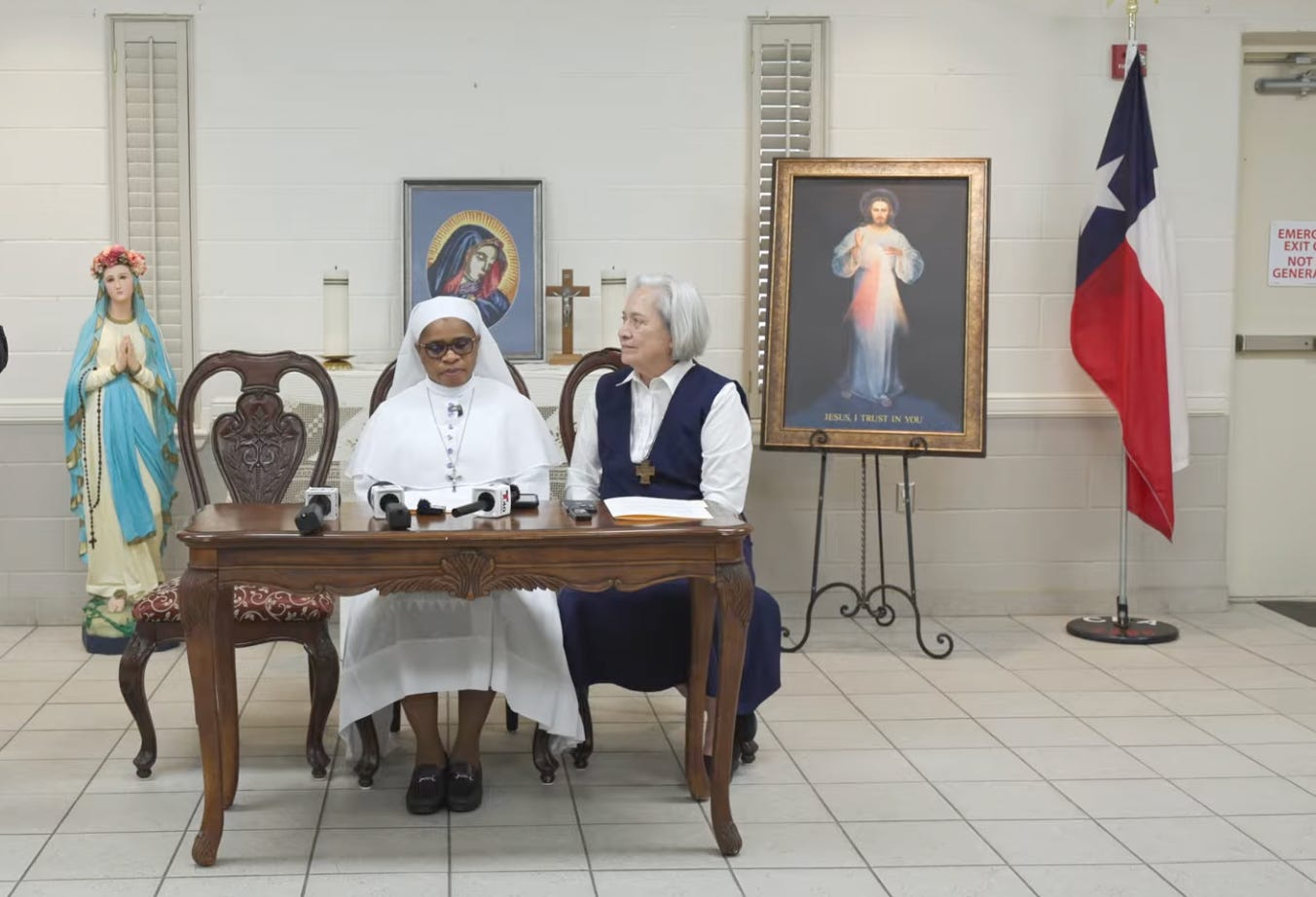
Ugboaja is in an unusual situation. In 2019, her application for asylum in the U.S. was denied, but she was granted an order protecting her from deportation to her native Nigeria, where she faces the prospect of torture.
The sister, a nurse, is legally permitted to live and work in the U.S. It is not clear whether she has petitioned for a religious worker visa or some other status in the time since then. And it’s also not clear what will happen next — her lawyer says ICE would like to see her deported to a third country, rather than allow her to remain in the U.S.
“I have been in this community more than a decade. I have cared for the sick in various hospitals. I did not expect [this] on an ordinary Sunday morning when people should be ready to go to Mass, to worship the Lord,” she said this week.
“As we all know, Sunday Mass is obligatory — we have to go to Mass every day if we can and Sunday is mandatory. For me, a nun, not to go to Mass on Sunday and not to receive communion — it was very heartbreaking for me.”
Ugboaja said she asked the agents who detained her if she could go to Mass before being taken into custody, but was denied.
“In the days since, I have prayed a great deal, not only for myself, but about the fear I felt that morning and up to this moment. It means I carry a lot of burden in me … there are so many people in that same situation like me, [with] no cameras and no attention.”
The Vatican doesn’t usually comment on erroneous press reports, but it did comment on this one — signifying, to my mind, two things.
First, that Leo is committed to engaging with media differently than his predecessors. This is borne out in the hires he’s made for the Vatican communications office, in the way he’s personally related to media on his “day-off” rope lines and on airplanes, and on reports we’re getting from Vatican offices about the pontiff’s desire to have communications experts in the room when strategic and policy decisions are discussed. I suspect we’ll see more of the “Leo effect” on Vatican media strategy over the next year or so.
Second, that the Vatican appreciates the global weight of the Rupnik case, and the degree to which it has become a litmus test of its credibility on abuse reform in the Church.
Now if you ask me, the failures in the case have already occurred, and a trial needs to be judged on its merits.
But there are a number of reasons why Rupnik might not be convicted, and the trial should not be taken as a final arbiter of whether the Vatican has acted justly at each stage of its dealings with Rupnik.
In other words, it’s Rupnik who is on trial at the Dicastery for the Doctrine of the Faith right now, not the Apostolic See itself.
It’s hard to judge a trial on its own merits without much information, and if there’s one thing this trial is making clear, it’s the growing Catholic impatience with canonical insistence on maintaining near-absolute secrecy about even the existence of penal trials. Whatever the good reason for that once was, I’d argue that at this point, it’s probably outlived its usefulness, and one of the next major canonical reform projects will be to assess how measures of transparency can be introduced into the Church’s judiciary.
Even with the little that’s known, however, the actual procedures of this trial have faced significant scrutiny, especially when a lawyer representing five alleged victims of Rupnik said this week that her clients have not been contacted by the DDF, or even officially been given an acknowledgement that the trial has begun.
That’s been widely taken as a sign of judicial dysfunction, or as evidence that Rupnik is getting a show trial, with no real intention to take the allegations against him seriously.
I’m not sure that’s so.