
Paid Pillar subscribers can listen to JD read this Pillar Post here: The Pillar TL;DR
Hey everybody,
Today’s Tuesday of Holy Week, and you’re reading The Tuesday Pillar Post.
To be honest, I’m humbled to be in your inbox during Holy Week at all; when the veil between us and eternity seems especially thin and especially porous, particularly in liturgies and devotions of the sacred Triduum.
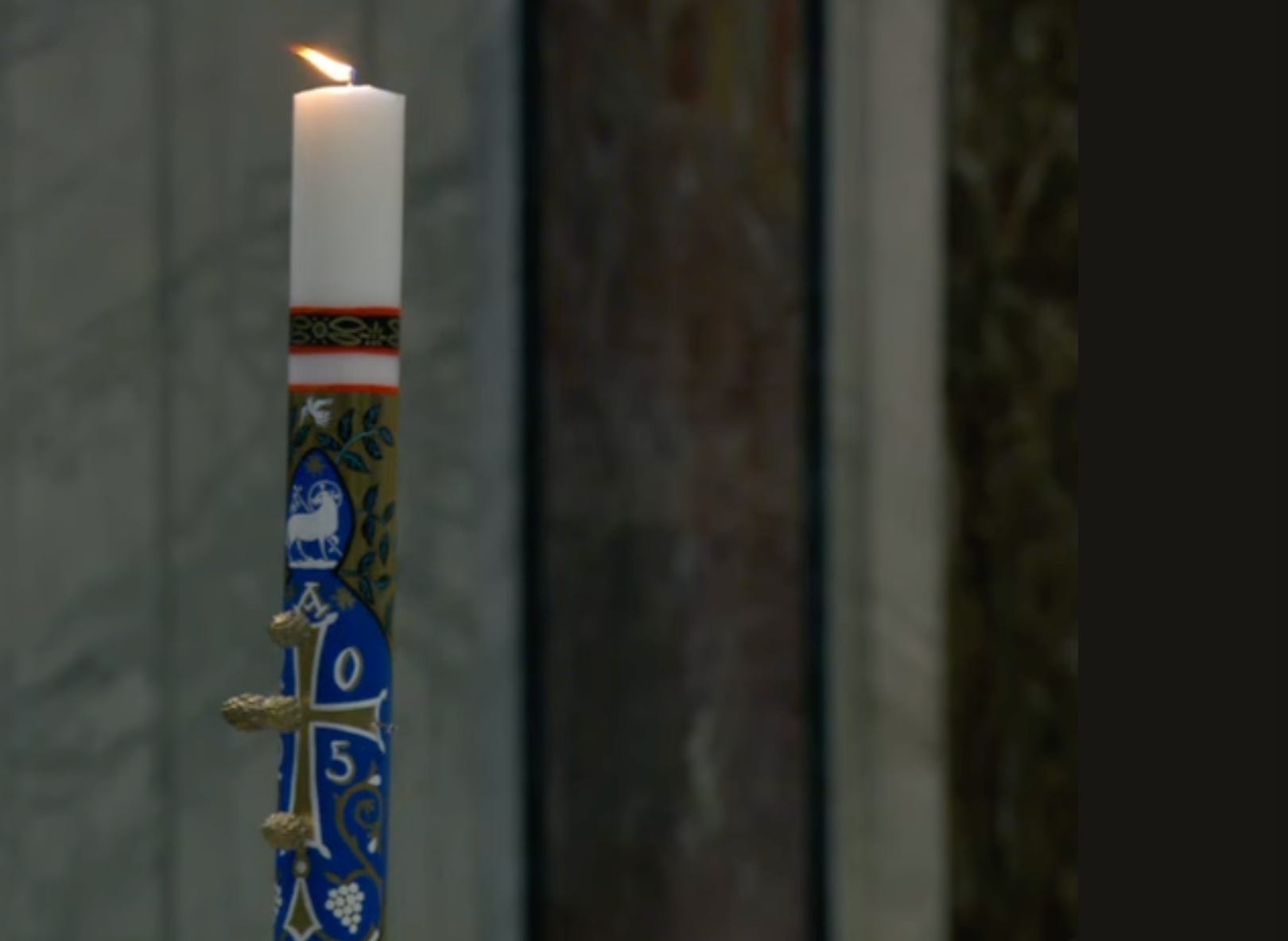
There is little for me to say, save for this: Go to confession, if you haven’t already this Lent. Hear more confessions than you planned, if you’re on the other side of that grille. Go to Tenebrae. Be present at the Mass of the Lord’s Supper, visit the altar of repose in your parish and others.
Take a risk, and bring your kids — if they’re too little, or if they’ll otherwise struggle — to the Easter Vigil anyway.
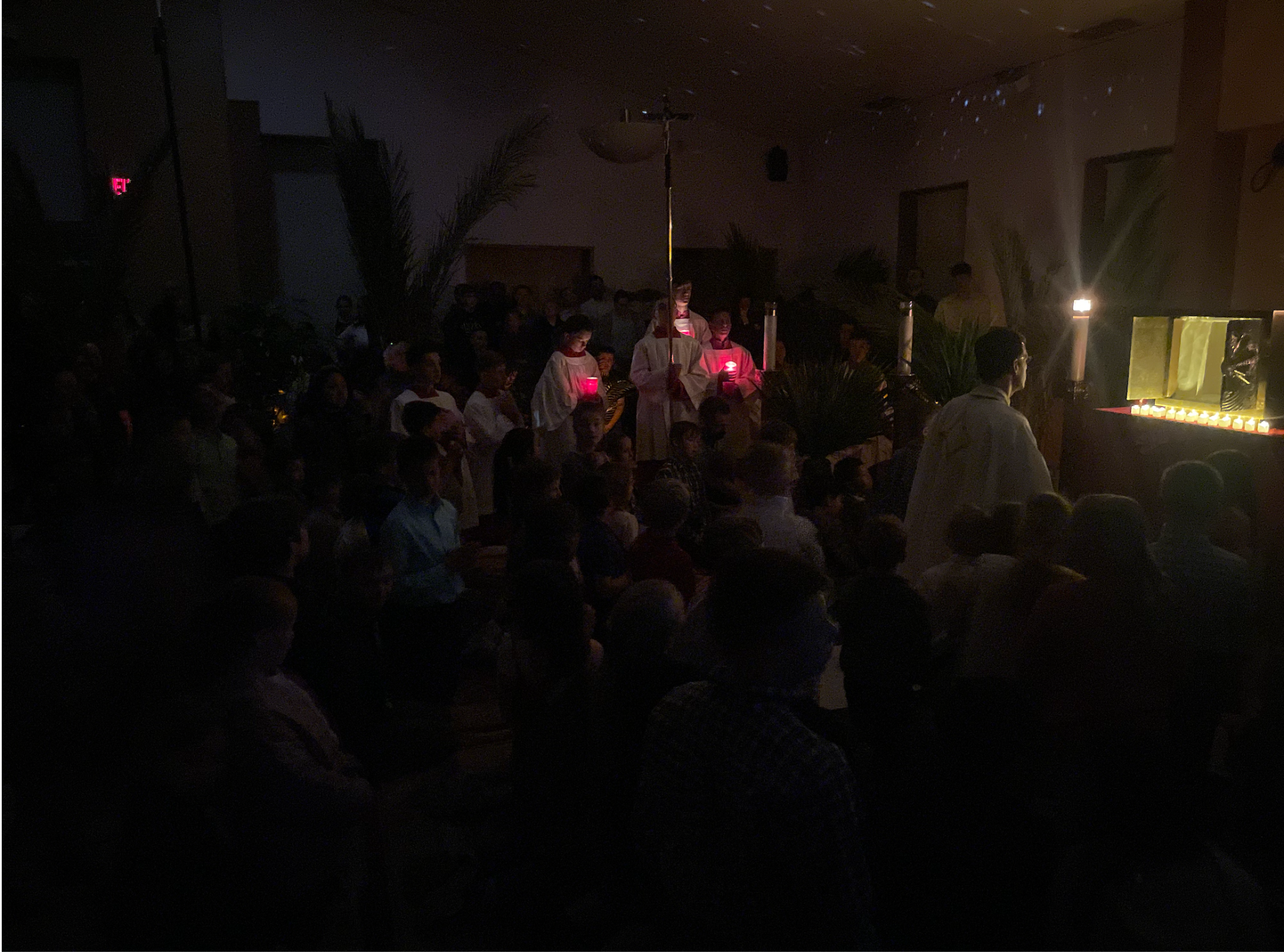
In other words, live the sacred Triduum.
Rest, and you’ll need to, on Easter Sunday. But first let these liturgies and customs and devotions imprint themselves on you, and on your family.
For 2,000 years, we’ve known that somehow the Easter Vigil and the liturgies surrounding it are central to the making and formation and initiation of Christians. That should be no less true today, with our families, and our own parishes, and our own hearts.
(And just as a reminder, we’ll be closed for the Sacred Triduum. I hope you can take off work for those days, too.)
The news
The appointment comes after a tumultuous tenure as Vatican sustituto for Peña Parra, who has been caught up in the Vatican’s London financial scandal, was the principal player in the Principi affair, and has given some … interesting … testimony in recent years about how he understood his own job.
Meanwhile, Rudelli comes to the role with a strong reputation within the Secretariat of State, according to the sources we spoke with.
We’ve been wondering that, too. So Ed Condon broke down the appointment, the job of Italy’s nuncio, and what all this could mean. Read up on it right here.
—
Meanwhile, Israeli police generated headlines around the world when they blocked Cardinal Pierbattista Pizzaballa from entering Jerusalem’s Church of the Holy Sepulchre on Sunday.
But what exactly happened — and what’s happened since?
The Pillar’s Luke Coppen breaks down the facts surrounding an international incident at the Church of the Holy Sepulchre.
(And while we’re talking about Pizzaballa, please allow me a plug. The cardinal is a man who, by all available evidence, loves the Holy Land and the people of the Holy Land, and is sincerely concerned with making peace. That love is informed by a deep theological appreciation for the land over which he is patriarch. And Pizzaballa expresses that theological appreciation in a book due to be published Wednesday — “Heart of All Nations,” published by Ignatius Press.
As it happens, your humble servant here wrote the foreword to that book. And I don’t get a royalty or anything, so you can trust that my recommendation here is for all the right reasons: This is a fascinating set of essays and speeches from a cardinal whose leadership has captivated the world. I was honored to write the foreword, mostly because it meant I had first crack at reading the text. But since it comes out tomorrow, you should buy it, read it too, and stick it in your children’s Easter basket.
Kids love in their Easter baskes theological essays and reflections on faith, evangelization, and history in the Holy Land. And if they don’t, you still will. Here’s the book.)
Caccia — soon to be apostolic nuncio to the U.S. — said the the U.N’s approach to the issue contained a “partial narrative” that “does not serve the cause of truth” — especially suggesting that the historical context and intent of some ecclesial documents was not fully understood.

University of Dallas President Jonathan J. Sanford reflects on one of the defining questions of our time: How should we respond to the promises and perils of artificial intelligence? As headlines swing between fear and hype, there’s a steadier path forward—one that doesn’t begin with machines, but with the human person. Subscribe now to follow along.
The announcement is the beginning of a consultative process about whether to merge some configuration of the eight dioceses of Scotland, which together serve fewer than 700,000 Catholics.
On the whole, the Catholic population of self-identified Catholics in Scotland is shrinking, and fast. But some urban areas have seen their populations buoyed by an influx of central and eastern European immigrants, and Scotland — like just about everywhere else in the known world — reports a high increase in the number of adults becoming Catholic this year.
What will happen is to-be-determined — though I suspect there will be some form of consolidation in Scotland in the next few years.
But just last week, I told you that Leo seems to be introducing the custom of open, transparent, and consultative processes for the discernment of diocesan mergers, as he did with the bishops of England. And here’s more evidence that’s becoming the case.
So for me, at this point, the only real question is when and where such a consultative process might be announced in the U.S.
The obvious answer is Ohio, where the merger saga of the Diocese of Steubenville is well-known, and where both total population and Catholic population of the state is declining. New York state is another possible candidate for merger talk, given the struggling financial condition (or bankruptcy status) of most NY dioceses, and the declining population of the Empire State. Pennsylvania, which has several small rural dioceses, is probably similarly situated, as are the states of the upper Midwest.
But it’s probably prudent that Pope Leo is developing a process in the British Isles before he brings it to the U.S. of A.
I can’t exactly predict what the consultative process will look like in England and Wales or Scotland. But in America, we do things big. I envision the immediate involvement in the consultative process of attorneys, and all kinds of backdoor lobbying and attempts at politicking — to say nothing of public advocacy on social media, various expressions of discontent about the process, and many other kinds of civic action.
There is, indeed, a set of U.S. Catholics who will view the pope’s invitation to prayerful consultation as an opportunity for shows-of-force, for and against, and pushes toward the kind of boundary gerrymandering that we just love when American boundary maps are redrawn.
In short, the invitation towards consultation and discussion in this country will unleash who-knows-what kind of firestorm, and I suspect Leo would like to see a more serene process unfold in other places first.
Which maybe is a lesson for us. When the pope eventually invites us American Catholics in a process of prayerful consultation and discernment about the future of our dioceses, let’s show him straight away that we’re up for that kind of a task.
Who’s King?
In my suburban town outside Denver on Saturday was a “No Kings” protest, similar to the thousands of rallies held in cities and towns across the U.S., and indeed around the world, reportedly drawing more than 8 million people altogether.
I have no objection to people who protest to express their political views in civic society, and, indeed, I have often been a protestor myself.
On Saturday, though, I was not a protestor, I was a baseball dad — which means I only observed the protest when our family went to lunch downtown after a game.
The restaurant we chose had more than a few protestors inside, and — again — I’ve no objection to political demonstrators eating lunch.
But near our table was a group of protestors whose signs were prominently displayed as they ordered lunch. One of those signs described in direct terms the allegation that President Donald Trump and House Speaker Mike Johnson engage regularly in a creative form of sexual congress.
The sign was crude. (To its credit, the sign did not make use of several ribald puns I devised in my head to describe with more wit the same alleged activity. Still, it was nonetheless graphic and crude — and, missing the puns, not even clever.)
So I approached the table, and told them that while I supported their civic engagement, I had no wish for my children — or any other — to read the vulgarity on their sign. I asked if they might put it away.