
Pillar paid subscribers can listen to JD read this Pillar Post here: The Pillar TL;DR
Hey everybody,
Today’s the feast of St. Katherine Drexel, the second Tuesday of Lent, and a good day — like so many right now — to pray for just, true, and lasting peace in our world.
When he was elected, Pope Leo greeted the world with “the peace of the risen Christ.”
That is, he said, “a peace that is unarmed and disarming, humble and persevering. A peace that comes from God, the God who loves us all, unconditionally.”
Let’s pray for that peace, through the name, and mercy, and victory of the risen Jesus Christ.
—
And before we get to the news, let’s talk for a minute about the Cardinal of Penzance.
Fifty years ago this week, a 44-year-old James Francis Stafford was consecrated a bishop at the primatial American cathedral in Baltimore, setting off a remarkable episcopal career, which tracks alongside the entire trajectory of American Catholicism.
Stafford was then running Baltimore’s Catholic Charities; he had a reputation as both a competent administrator and a consummate pastor, with a special interest in supporting family life.
He was eventually Bishop of Memphis, and then in 1986 the Archbishop of Denver.
He is most famous there for bringing World Youth Day to Denver, and with it, the launching of 1,000 apostolic ships — an event which sowed the seeds of vocations and apostolates and religious orders and projects and movements. Just three years later, he was in Rome, heading the Pontifical Council for the Laity, and then the apostolic penitentiary.
Stafford’s episcopal career saw him play a role in the major shift of American seminary formation, it saw him encourage the presence of new movements in the Church in the U.S., and it saw him urge on a vision for the Church’s universal call to holiness which sees lay people and families taking up a sense of co-responsibility for the Gospel, and a sense of apostolic purpose in their own vocations.
The cardinal is a big part of the development of American Catholic culture in the past half century. He’s been called, for that reason, a model for the modern major cardinal.
But in Denver, “old Colorado” families don’t remember Stafford as a figure. People tell me stories about the cardinal sitting in their living rooms — asking them what they think about Scripture, and praying with their children. They tell me about an erudite and well-read man who could talk with anyone, and give them a sense of being important to him. They talk about an archbishop who would make it a point to ask people what the Lord was doing in their life, and share something about what God was doing in his.
In our own family, we’ve had some experience of that in recent years, as my children have formed a friendship with Cardinal Stafford, and they’ve built a kind of mutual esteem for one another.
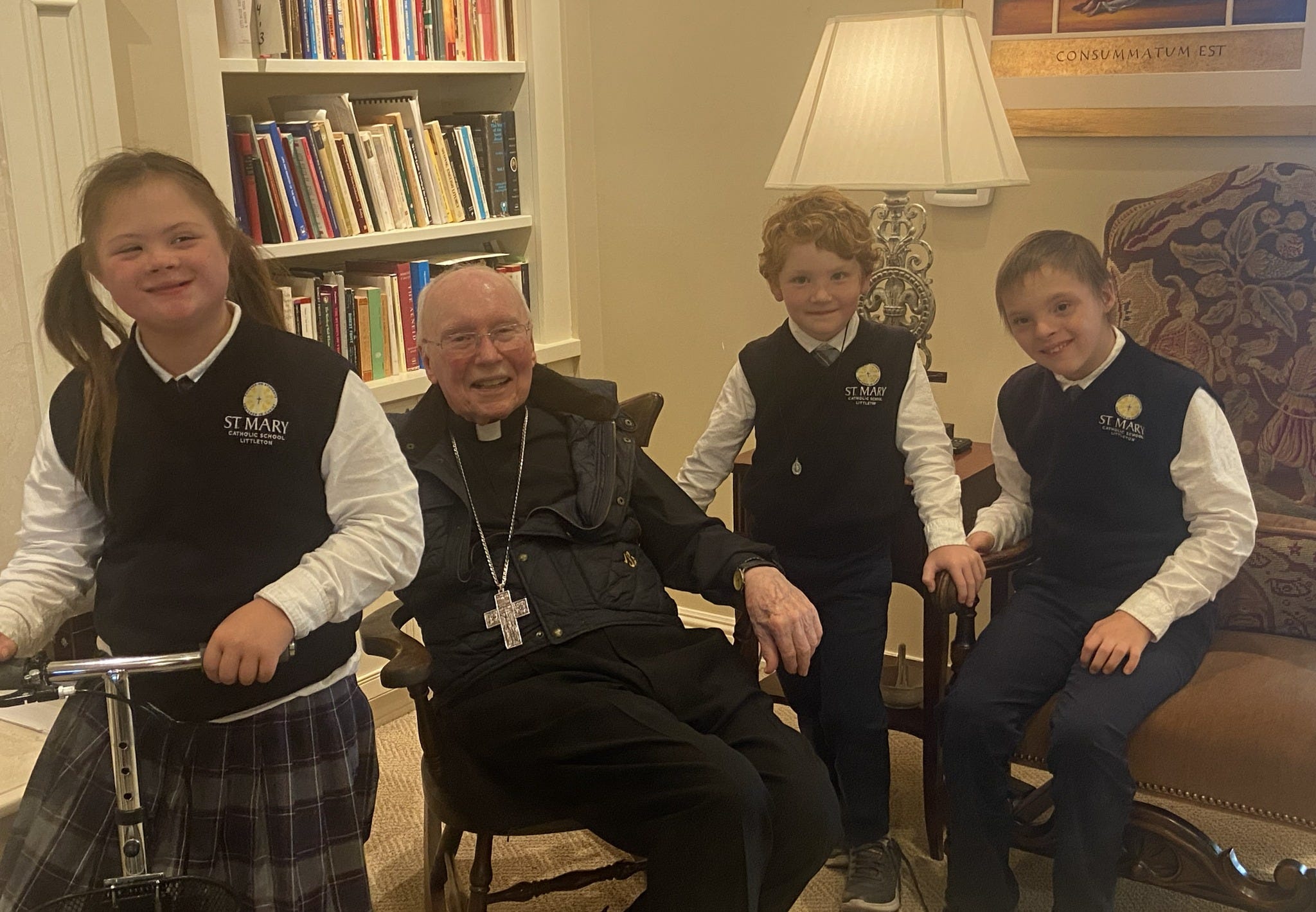
And what’s remarkable is that the man has celebrated only 12 anniversaries of episcopal life. By that count, he’s hardly been a bishop at all.
See, Cardinal Stafford was consecrated a bishop on February 29, 1976.
Like Frederick — the slave of duty to the Pirates of Penzance — Cardinal Stafford can count his episcopal “birthdays” only in leap years.
May he serve our little band, on the barque of Peter for years to come.
—
And by the way, here’s another cool piece of ecclesiastical trivia about my home Colorado.
As of today, Colorado is nearly a state without a diocesan bishop.
Denver is a vacant see, led by an apostolic administrator, as it awaits the installation of Bishop James Golka.
Colorado Springs is a vacant see, led by an apostolic administrator, after the appointment to Denver of Bishop James Golka.
Pueblo is now a super-annuated see, with Bishop Stephen Berg turning 75 today.
One state, three dioceses, all likely to have new leaders within a year. You don’t see that every day.
The news
As you know by now, University of Notre Dame professor Susan Ostermann withdrew last week from an appointment as director of the Liu Institute for Asia and Asian Studies, which had generated huge amounts of controversy because of her pointedly pro-abortion stance.
After that decision was announced, Notre Dame students gathered Friday for a procession to the university’s grotto, sang Marian hymns, prayed, and lit candles in thanksgiving for that result.
The event, organized by students, was originally planned as a protest — and shifted focus after Ostermann was no longer taking the job.
The Pillar’s got some reporting, from Notre Dame student reporter Andrew Blake, who was on the scene.
—
Juan Pablo Guanipa is one of the best-known faces of Venezuela’s political opposition.
He is widely considered to be Nobel Peace Prize Award winner María Corina Machado’s right-hand man. And for his efforts to champion a change in Venezuela, he spent more than nine months in prison, until he was freed last month after the U.S. capture of President Nicolas Maduro.
Guanipa is also committed to the faith — which he says helped carry him in prison.
Guanipa talked with The Pillar about prison, faith, and how Pope Leo can help Venezuela’s future.
Pottackal is a Carmelite, and a Syro-Malabar Catholic, who will soon become auxiliary bishop in the German Diocese of Mainz.
He talked with The Pillar about what he expects.

This Lent, join Catholics across the country as we gather again for Bible Across America—the nation’s biggest Catholic Bible study. During our Lenten Bible study, Shane Owens and guests will blend biblical expertise with lived experience, unpacking the Bible’s practical relevance as we prepare to celebrate the Lord’s resurrection.
He talked with The Pillar about Ratzinger’s intellectual legacy, his faith, and his enduring influence.
An excerpt:
Ratzinger finds a unity of life between what he teaches and what he lives, and this unity of life, at the center of which is Christ, can be well summarized with a moment when he was already pope emeritus: he was celebrating 65 years of priesthood, so it was exactly 10 years ago, and he appeared in the Apostolic Palace in front of Pope Francis and the cardinals, and he spoke at that moment about the experience of faith of the Eucharistic encounter with Christ as a transubstantiation of all reality.
Often, when we speak of this theological concept of transubstantiation, we speak of the Eucharistic bread that becomes something else, that becomes the body of Christ, but in Ratzinger’s view, transubstantiation also concerns the lives of all believers and, moreover, of the whole world.
In other words, his theological and experiential gaze led him to have this breadth of horizon, so much that a term that is often found in Ratzinger’s most popular texts is that of the “experience of Christ.” It is an experience that leads to a conversion of life and therefore to a transubstantiation of my personal reality and of the world around me.
The bishop’s decree is the most assertive episcopal action aimed at enforcing the norms of Traditionis custodes, Pope Francis’ 2023 motu proprio restricting use of the Extraordinary Form, to be reported so far.
Breis Pereira’s decision is an application of canon law previously unseen in contemporary diocesan governance, and is likely to be challenged for validity at the level of the Holy See.
I don’t expect the Apostolic See will say yes. On the other hand, at least the Germans are asking permission instead of just doing it. That’s gotta count for something, right?
Oh wait. From the story:
“The [synodal way] resolution noted that it was already a ‘long-standing practice’ in German dioceses for ‘persons who have qualified themselves through studies in theology and have been sent by the bishop into the ministry of proclaiming the Gospel’ to preach at Masses.”
—
Broad Shoulders
Please allow me space for a brief announcement.
The Pillar is headed to the Windy City!
That’s right, we’ll be in the Second City on March 19, the Feast of St. Joseph, for an awesome event:
The Pillar Chicago Dive Bar Birthday Live Show Extravaganza™
The details:
Nisei Lounge
3439 N Sheffield Ave
March 19, the Feast of St. Joseph
Starting at 7pm. But actually we won’t really start making the show until at least 8pm.
There are six reasons why you should come:
We’re going to raise money together to support some great causes.
The Pillar’s readership is a special community, and it’s a delight to spend time in their company. You will love it.
It’s a good place to meet a potential spouse.
It’s not everyday I get to speak in the Archdiocese of Chicago.
This will be an off-the-record evening. If you want to hear it, you’ve gotta be there.
The merch.
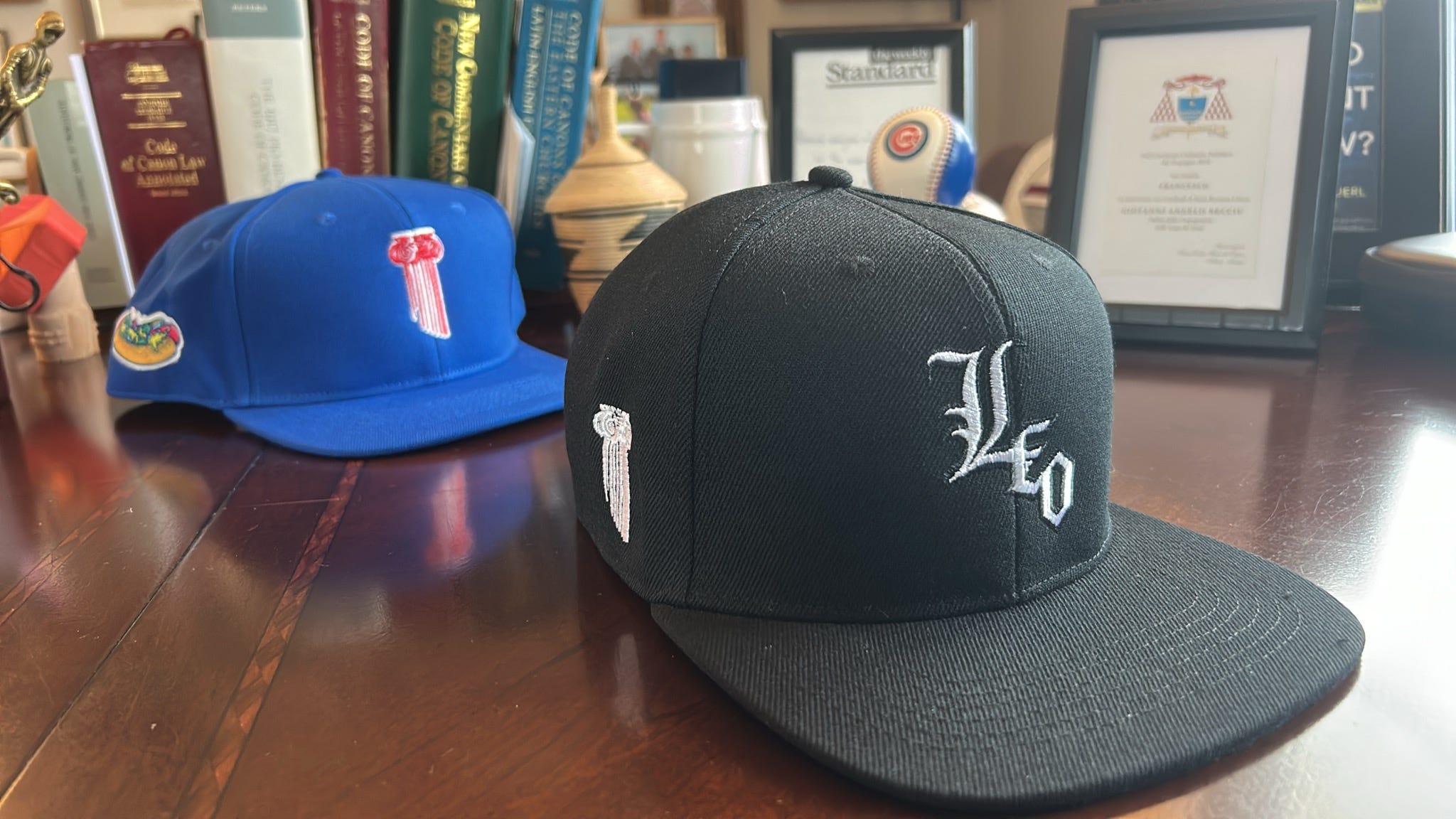
For real. This is going to be our best live show yet, including a couple of really fun surprises.
It’s worth the trip. It’s worth canceling your plans. It’s gonna be great.
Five camp commandments
Spring has sprung. The grass has riz. Don’t wonder where the birdies is.
And as spring springs, global affairs mean that gas is going to be about $700 a gallon this summer, airfares are going to jack way up, the economy is going to falter, and it will be, in general, a bad time for the exotic, expensive, and far-flung getaway family vacation you’ve spent the winter thinking about.
It is, instead, a good year to head to the National Parks reservation website, see what’s open near you, and think about a summer vacation engaged in one of America’s favorite leisure modes: Camping.
Readers, I have been a camper for basically all my life — my parents had me sleeping in tents outside of Willie Nelson or James Taylor concerts before the waters of baptism were even dry behind my ears.
But I am not what you call a “good camper.” I’m the kind of guy who loves taking the family for a few nights in a tent, but likes to do it in the most practical and affordable way possible, even if I take the sort of shortcuts which make lifetime REI-members cringe.
Along the way, I’ve become convinced that anyone can camp, and that everyone should. It’s a fast track to feeling good, clearing the mind, and building long-lasting memories.
Consider that I have not been back to my boyhood town in New Jersey in probably close to a decade. But if I went home right now, and popped into the local watering hole or QuickChek, there’s a coterie of people who’d greet me by asking about the location of my raincoat.
“JD,” I’ve been teased since I was seven-and-a-half years old, “where’s your raincoat?”
The reason is because of a story that’s entered local lore — a group of families spent a rainy weekend camping in the forest on Bulls Island at the Delaware River. During some deluge, I was spotted in soaked clothing, and when asked where my raincoat was, I explained that I’d left it “by a tree.”
For some friends and neighbors, this story became an encapsulation of my entire personality. And they weren’t completely wrong.
Anyway, in a lifetime of “good enough” camping, I’ve learned some tips, shortcuts, and essentials — and a few rules to guide you into a good camping trip.